Blog of Rights

Anna
Arceneaux

What Does $10,000 Buy in Alabama? Less-than-Truthful Testimony Used to Sentence Someone to Death

By Anna Arceneaux, Staff Attorney, ACLU Capital Punishment Project & Sarah Solon, Communications Strategist, ACLU at 11:22am

A trial is supposed to be a search for the truth. That can never be more important than in a death...

New Film Highlights the Gross Injustices of the West Memphis Three Case

By Anna Arceneaux, Staff Attorney, ACLU Capital Punishment Project at 3:44pm

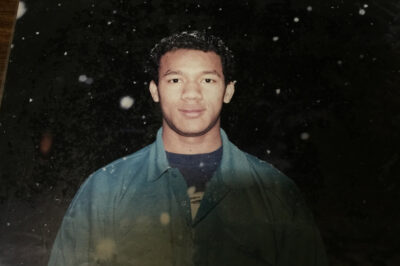
In June 1993, Damien Echols, 18, Jason Baldwin, 16, and Jessie Misskelley, 17, who would come to be known as the “West Memphis Three,” were wrongfully arrested for the murders of three young boys in the small Arkansas town of West Memphis, just across the Tennessee border.

You may be familiar with HBO’s Paradise Lost three-part series on the case, which helped expose the gross injustices that led to the convictions against these three young men – and a death sentence against Damien – for crimes they did not commit. Now, a new, powerful documentary,West of Memphis, tells the story from the defense team’s perspective as the prosecution’s case against the three teenagers unravels.

VICTORY! One Less Person Faces Execution in Alabama

By Anna Arceneaux, Staff Attorney, ACLU Capital Punishment Project at 5:13pm

One less person faces possible death at the hands of Alabama’s arbitrary capital punishment system, after the State agreed to stop seeking the death penalty for ACLU client LaSamuel Gamble late last week. Gamble, who has been on death row for nearly 16 years, was resentenced to life in prison without parole.

Gamble was a mere 18 years old when he accompanied his 16-year old friend Marcus Presley on a robbery of a pawn shop just outside of Birmingham. During the robbery, Presley shot and killed the two employees at the store. Both Gamble and Presley received death sentences for the crime, but Presley’s sentence was converted to life when the U.S. Supreme Court ruled in 2005 that the death penalty could not be imposed on defendants who were under 18 at the time of the crime.

Reporting from Guantánamo: "Trust Us"

By Anna Arceneaux, Staff Attorney, ACLU Capital Punishment Project at 5:08pm

This week, I've been in Guantánamo Bay observing a hearing in the first capital case before this latest iteration of military commissions, that of Abd al-Rahim Hussayn Muhammad al-Nashiri. As the hearing has progressed over the last few days, a recurring theme has surfaced: the military commission system will not provide basic legal protections inherent in every other American courtroom. But, the prosecution says, in essence, not to worry: even with these protections swept aside, you can trust us to do the right thing. As I wrote yesterday, the prosecution — and perhaps the judge — does not believe the Constitution applies to Guantánamo prisoners. Chief Prosecutor Brig. Gen. Mark Martins emphasized in a press conference yesterday that the Guantánamo military commissions will be held consistent with our country's values — but apparently just not our constitutional values. In court, Judge James Pohl similarly seems to follow a loose notion of "fundamental fairness" but has so far refused to ground that notion in constitutional law. But trust us.

Reporting from Guantánamo: Leaving the Constitution on the Mainland

By Anna Arceneaux, Staff Attorney, ACLU Capital Punishment Project at 4:15pm

This week I am in Guantánamo Bay observing a hearing in the case of Abd al-Rahim Hussayn Muhammad al-Nashiri (pronounced al-NAH-shiri), the first death penalty case to be tried by military commission. Mr. al-Nashiri faces charges for his alleged participation in the attack on the destroyer USS Cole over 11 years ago. Apprehended in 2002, he was held by the CIA for four years in secret before his transfer to military custody. U.S. officials brutally tortured Mr. al-Nashiri: he was waterboarded, and threatened with a power drill and handgun next to his head. Sadly, this week's pretrial hearing in his case continues to erode the commission's purported commitment to fairness, transparency, and justice and instead affirms a commitment to Guantánamo's shameful legacy of injustice.

Death Penalty Decline Continues

By Anna Arceneaux, Staff Attorney, ACLU Capital Punishment Project at 5:02pm

As 2011 comes to end, we’re taking a look back at the year in criminal justice. Over the next few days, we’ll run a series of blog posts on the developments, good and bad, that have shaped our justice system – from overincarceration and sentencing policy to the treatment of prisoners and capital punishment. Read the series here.

Alabama Court Recognizes Miscarriage of Justice for ACLU Client

By Anna Arceneaux, Staff Attorney, ACLU Capital Punishment Project at 12:43pm

On September 30, 2011, a unanimous Alabama Court of Criminal Appeals ordered a new trial for ACLU client Montez Spradley. Spradley, a young African-American man, has always maintained his innocence in the 2004 murder of a 58-year-old white grandmother in Birmingham, Alabama. No physical evidence or eyewitness testimony connected him to the murder.

Racial Inequities Live On in Georgia

By Anna Arceneaux, Staff Attorney, ACLU Capital Punishment Project at 4:38pm

Twenty years ago this week, Warren McCleskey, an African-American man convicted of killing a white police officer in Atlanta, was executed in the state of Georgia. His case became famous for highlighting the gross racial discrimination in Georgia's death penalty system, and for revealing the remarkable indifference of the United States Supreme Court to the evidence of racism in death penalty cases.

Georgia chose a tragic way to remember the anniversary with last week's execution of Troy Davis, also an African-American man convicted of killing a white police officer despite serious concerns about his guilt. Davis's execution should cause us great concern, not only because he was likely innocent, but because the racial disparities observed in Georgia's death penalty system more than 20 years ago still resonate in Georgia — and the rest of the country — today.

Louisiana Supreme Court Sees Problems with the Confederate Flag, but Allows it to Wave for Now

By Anna Arceneaux, Staff Attorney, ACLU Capital Punishment Project at 3:35pm

In 1951, in response to the burgeoning civil rights movement, Caddo Parish, Louisiana defiantly raised a Confederate flag outside the entrance to its courthouse. It flies there today.

In 2009, long-time Caddo Parish resident Carl Staples, an African-American man, was summoned to jury service for a capital case. During jury selection, Mr. Staples courageously told the judge his great concern with serving as a juror when the Confederate flag flew outside the courthouse:

Prosecutors Delay Historic Racial Justice Act Hearing

By Anna Arceneaux, Staff Attorney, ACLU Capital Punishment Project & Brian Stull, ACLU Capital Punishment Project at 3:17pm

More than two years after the North Carolina Legislature enacted an historic law barring race discrimination in death penalty cases, Marcus Robinson and his lawyers were in Cumberland County Superior Court earlier this week to argue his claim under the Racial Justice Act (RJA). They came prepared to present statistics showing that prosecutors across North Carolina discriminated against African-Americans who had come to court willing and able to serve on juries. A courtroom of concerned citizens came to hear this evidence. Prosecutors, however, were not ready to confront it. In fact, the entire hearing centered on why the prosecutors claimed not to be ready.

Statistics image