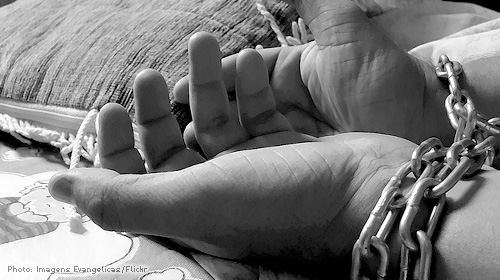
The State Department this week released its 2013 Trafficking in Persons Report (TIP Report), documenting the worldwide problem of human trafficking and other forms of modern-day slavery. This year's report highlighted the difficulty of identifying victims of this egregious practice. According to the report, "46,000 victims of trafficking were brought to light worldwide, compared to the 27 million that we know are enslaved."
In the United States, the identification of victims of labor trafficking remains a particularly difficult problem. As the report notes, in 2012, of the 4,746 convictions for trafficking offenses, only 518 were for labor trafficking. Of course, the actual number of victims is much higher, but in addition to the problems in victim identification, "workers fear seeking assistance because of blacklisting and other retaliation methods, including inciting fear of deportation."
The U.S. could improve this situation through more effective monitoring and enforcement of existing anti-trafficking laws, policies and practices, and the introduction of new measures where they are needed.
The H-2B temporary worker program is the perfect example. As it stands now, the current temporary labor scheme encourages rather than deters labor trafficking. Flaws in the program allow employers to exploit and abuse foreign workers, and facilitate labor trafficking. A prominent example is the Signal case, a horrifying example of modern-day slavery, where the ACLU and co-counsel represent men from India who were trafficked into the U.S. through the H-2B program with dishonest assurances of becoming lawful permanent U.S. residents and then subjected to squalid living conditions, fraudulent payment practices, and threats of serious harm.
But there are ways to improve the current system, prevent labor trafficking and adequately protect workers. A first step would be to insure that in all temporary worker programs:
- workers must have the ability to leave abusive U.S. employers and seek employment with other U.S. employers without having to leave the U.S. and return to their country of origin, a path to permanent residency and citizenship (with their families), robust governmental oversight of labor conditions, and enforcement mechanisms verifying that employers comply with the terms of the contract.
- employers must bear the recruitment/visa processing/travel costs of workers.
- the government must adopt a rigorous and streamlined process to deny visa applications of employers who have violated workers' rights under prior contracts.
Our government can and should do more to combat labor trafficking and to assist victims. As Secretary of State Kerry announced when he introduced the 2013 TIP Report "[f]rom heads of state and justice ministers to police officers and labor inspectors, we have to be tough in order to at last end modern slavery once and for all."
Learn more about human trafficking and other civil liberty issues: Sign up for breaking news alerts, follow us on Twitter, and like us on Facebook.
Related Issues
Related Content
-
News & CommentaryAug 2026
Criminal Law Reform
+2 Issues
States Are Punishing Women Who Survive Violence With Incarceration. They Deserve Clemency.. Explore News & Commentary.States are Punishing Women Who Survive Violence with Incarceration. They Deserve Clemency.
One woman violently forced into assisting a murder seeks clemency in Michigan. Author and journalist Justine van der Leun calls for states to enact laws protecting criminalized survivors. -
Press ReleaseJul 2026

Immigrants' Rights
Human Rights
New Aclu Report Examines How Trump Administration’s Anti-asylum Policies Undermine U.s. Immigration System Already On Brink Of Collapse. Explore Press Release.New ACLU Report Examines How Trump Administration’s Anti-Asylum Policies Undermine U.S. Immigration System Already on Brink of Collapse
WASHINGTON— The American Civil Liberties Union today released a new report, Improving Asylum at and Beyond the U.S. Border, which explores how the Trump administration’s attacks on asylum and other humanitarian protections are weakening the U.S. immigration system already on the brink of collapse. The report argues that gutting asylum not only sends people with valid asylum claims to countries where they face death but also fails to provide long-term solutions for the border. The report comes weeks after the Trump administration deported at least two dozen people, including people fleeing persecution in Iran and Afghanistan, to the Central African Republic, one of the most dangerous places in the world. Its release also comes just days before the 75th anniversary of the United Nation's adoption of the 1951 Refugee Convention, a landmark treaty that outlines core legal protections and rights that States must uphold to protect refugees. The report argues that attempts to gut our asylum system do nothing to prepare for future increases in arrivals along the U.S.-Mexico border. Adding obstacles to the asylum system means that political dissidents from Iran, LGBTQ persons from Uganda, children fleeing traffickers and many others can’t get the protection they deserve. At the same time, these restrictions don’t improve border processing, respond to new arrivals, or address the overdue need for lawful pathways, which has created demand at the border. Without needed reforms and legal options to come reunite with family, work, and seek safety, the government is sacrificing vulnerable people and its legal obligations while failing to create a sustainable alternative system that serves U.S. values, laws, and the economy. “The Trump administration’s cruel anti-asylum policies are predicated on the false notion that by gutting humanitarian protections, our broken immigration system will somehow be fixed – but deporting vulnerable people to war zones, detaining families, pushing kids through mass hearings, and arresting refugees who followed the rules do not create a functional system,” said Sarah Mehta, report author and deputy director for policy and government affairs, immigration at the ACLU. “If our policymakers want any semblance of a fair and workable immigration system, they must commit to rebuilding asylum and creating other legal pathways.” Though many of the arguments to close the border and the country to newcomers have focused on zero-sum thinking and promulgated claims about how people seeking asylum have strained local communities, the report highlights how asylum seekers and refugees are critical to a thriving U.S. economy and need support in getting to communities eager to receive them. For example, in 2024, asylees and refugees contributed an estimated $581 billion in revenue to federal, state, and local governments over a 15-year period, strengthening the case for improved access to asylum as communities nationwide, especially in rural areas, continue to feel economic strain. The report urges policymakers to recommit to protect asylum and other existing humanitarian protections and invest in modern solutions to our border. Recommendations include: Create additional lawful pathways for people to come to the U.S. to ensure that people can lawfully apply for and receive permission to come to the United States, without burdening the border arrival system. Invest in border processing and modernize the arrival triage system so that people arriving at the U.S.-Mexico border with valid asylum claims can be processed quickly. Support states and localities in welcoming newcomers through legislative solutions to improve coordination between arriving immigrants and the communities receiving them so that humanitarian needs and services are met and that communities have the support they need. Fund and bolster the immigration court and asylum processing system to address backlogs, streamline bureaucratic processes, and enhance due process through legal representation. It is the second report published as part of the ACLU’s affirmative vision series in which policy and legal experts will explore how the Trump administration’s immigration agenda has harmed communities nationwide, gutted asylum and other legal pathways, undermined our democracy, and wreaked havoc on key industries and weakened the American workforce. The series will also outline steps that members of Congress, as well as state and local policymakers, can take to reform the U.S. immigration system and inoculate against future attacks on immigrant communities. You can read the full report here: https://www.aclu.org/publications/improving-asylum-at-and-beyond-the-u-s-border-the-case-for-a-fair-and-effective-protection-framework-with-a-modern-border-and-reception-system -
Press ReleaseAug 2026
Human Rights
Muertes Y Negligencia En El Centro De Detención Migratoria De Fort Bliss. Explore Press Release.Muertes y Negligencia En El Centro de Detención Migratoria de Fort Bliss
WASHINGTON -- Las personas recluidas en el centro de detención migratoria Camp East Montana, ubicado en la base militar estadounidense de Fort Bliss, en El Paso (Texas), han sido víctimas de graves abusos, señalaron hoy Human Rights Watch y la Unión Estadounidense por las Libertades Civiles (ACLU) en un informe conjunto publicado hoy. Las personas detenidas en Camp East Montana sufren agresiones físicas indiscriminadas, negligencia médica que ponen en peligro sus vidas, expulsiones coercitivas a “terceros países” desconocidos para ellas y, en algunos casos, condiciones de detención que podrían constituir desaparición forzada. El informe de 84 páginas, “‘Solo saldrás deportado o muerto’: abusos en el sistema de detención migratoria estadounidense en Fort Bliss”, documenta las condiciones en el mayor centro de detención migratoria del país. El centro tiene capacidad para albergar hasta 5.000 personas y está formado por cinco grandes estructuras de lona similares a carpas que alojan a las personas detenidas en recintos cerrados. En su interior, las personas entrevistadas señalaron que se las obligaba a vivir en condiciones insalubres y de hacinamiento, con hasta 72 personas alojadas en cada módulo. Human Rights Watch encontró indicios de prácticas punitivas de control migratorio, entre ellas condiciones de detención crueles, degradantes e inhumanas; uso excesivo de la fuerza por parte del personal de seguridad; falta de acceso a atención médica y de salud mental; prácticas coercitivas de deportación; y obstáculos sistemáticos para acceder a representación legal. “Camp East Montana, gestionado por ICE, es un desastre en materia de derechos humanos”, afirmó Angélica César, becaria Aryeh Neier de Human Rights Watch y la ACLU. “El gobierno de Estados Unidos debería cerrar este centro, llevar a cabo investigaciones independientes sobre todos los abusos y muertes bajo custodia, y poner fin a las deportaciones masivas y a la detención migratoria obligatoria”. Los investigadores entrevistaron a 80 personas, entre ellas 71 mientras permanecían detenidas en Camp East Montana, además de cuatro familiares y cinco representantes de organizaciones que prestan asistencia jurídica, entre octubre de 2025 y junio de 2026. También analizaron investigaciones del Departamento de Seguridad Nacional (DHS, por sus siglas en inglés) y revisaron otros documentos relacionados con el centro de detención. Las personas entrevistadas señalaron que habían sido detenidas durante redadas en lugares de trabajo, controles de tráfico, citas con las autoridades migratorias y durante otras actuaciones de control migratorio en la vía pública. Más de 60 afirmaron haber sido arrestadas pese a presentar documentación que acreditaba su permanencia legal en Estados Unidos. De forma reiterada describieron arrestos llevados a cabo por agentes encapuchados que se negaban a identificarse y denunciaron casos en los que presuntamente se utilizó fuerza excesiva durante su detención, incluidas agresiones físicas y descargas con pistolas eléctricas. Las personas entrevistadas afirmaron haberse sentido como “secuestradas” ya que fueron trasladadas a distintas cárceles locales y centros temporales de detención sin posibilidad real de comunicarse con sus familiares ni con sus abogados. Human Rights Watch y la ACLU documentaron casos en los que los sistemas oficiales para localizar a personas detenidas no reflejaban correctamente su paradero. Familiares describieron la desesperación de buscar a sus seres queridos mientras el Servicio de Inmigración y Control de Aduanas (ICE, por sus siglas en inglés) no les proporcionaba información sobre dónde habían sido trasladados. En algunos casos, las circunstancias de la detención podrían constituir desaparición forzada en virtud del derecho internacional de los derechos humanos. Una vez en Fort Bliss, las personas entrevistadas afirmaron haber sido sometidas a condiciones de vida crueles, degradantes e inhumanas que ponían gravemente en riesgo su salud física y mental. Relataron que los baños estaban cubiertos de excrementos, que los módulos se inundaban con frecuencia, que la limpieza era insuficiente y que no tenían acceso a jabón, desinfectante ni a otros artículos básicos de higiene. Las personas entrevistadas también señalaron que permanecían encerradas durante largos periodos sin acceso regular al aire libre ni a actividades recreativas. Algunas dijeron haber pasado semanas enteras sin poder salir al exterior. Durante gran parte de 2025, según explicaron, solo se les permitía salir al aire libre una vez cada dos semanas durante aproximadamente 15 minutos. “Entre agosto y septiembre pasé un mes entero sin ver el sol”, contó una persona. “Los guardias simplemente no nos sacaban al exterior. Todos estábamos cada vez más angustiados y desesperados porque no había nada que hacer. Me sentía atrapado; era una tortura”. Las personas entrevistadas también describieron horarios irregulares para las comidas, alimentos en mal estado y esperas de hasta 12 horas entre una comida y otra. Personas con diabetes y otras enfermedades relataron haber sufrido dolores de cabeza, alteraciones en los niveles de azúcar en sangre y otras complicaciones de salud tras quedarse sin comer o recibir alimentos en mal estado, congelados o, sencillamente, incomibles. Los investigadores también documentaron numerosas denuncias de abusos físicos cometidos por guardias y otros miembros del personal del centro. “Los guardias irrumpen en nuestro módulo en grupos de 15; a veces parecen ser hasta 20”, contó un hombre. “Van vestidos completamente de negro, llevan máscaras que les cubren todo el rostro salvo los ojos y no llevan identificación. Cuando entran, simplemente agarran a la primera persona que encuentran y empiezan a golpearlo... Ellos tienen el control y pueden hacer con nosotros lo que quieran”. Las personas entrevistadas afirmaron que los guardias golpeaban a las personas detenidas como represalia por participar en huelgas de hambre, solicitar atención médica, denunciar las condiciones de detención o pedir que se les permitiera salir al aire libre tras largos periodos de encierro. Varias señalaron que los guardias imponían castigos colectivos, agrediendo a varias personas después de acusar a una sola de haber infringido las normas del centro. Otras describieron insultos, humillaciones, amenazas y represalias contra quienes pedían artículos de primera necesidad o intentaban ejercer sus derechos. Una investigación interna de ICE también documentó usos de la fuerza no autorizados y no reportados en Camp East Montana. Los investigadores entrevistaron a personas que presenciaron la muerte de Gerardo Lunas Campos el 3 de enero de 2026 en Camp East Montana. Según sus testimonios, los guardias aparentemente asfixiaron a Lunas Campos después de que solicitara medicación mientras se encontraba en la Unidad de Alojamiento Especial, destinada al aislamiento. Un hombre relató: “Parecía que los guardias estaban golpeando a Gerardo, como si le dieran puñetazos y lo estuvieran lanzando violentamente contra el suelo. Gerardo gritaba pidiendo ayuda. Repetía una y otra vez: ‘¡No puedo respirar!’. Ellos siguieron golpeándolo. Luego dijo: ‘Me están asfixiando’. Después todo quedó en silencio”. Los investigadores documentaron reiteradas denuncias de que las autoridades no proporcionaban atención médica ni de salud mental adecuada a las personas recluidas en Camp East Montana. Todas las personas entrevistadas describieron fallos en el sistema para solicitar y derivar la atención médica del centro. Relataron retrasos prolongados para recibir tratamiento, interrupciones en la administración de medicamentos prescritos, evaluaciones médicas inadecuadas y respuestas punitivas ante emergencias médicas. Los investigadores también concluyeron que algunas personas detenidas fueron sometidas a presiones coercitivas para que renunciaran a sus solicitudes migratorias y aceptaran ser expulsadas a terceros países cuando no era posible devolverlas a su país de origen. Según relataron, fueron amenazadas con violencia, procesos penales y detención indefinida si se negaban a ser deportadas. Personas cubanas y venezolanas detenidas describieron intentos de trasladarlas a México pese a que sus procedimientos judiciales seguían en curso y a que temían sufrir daños allí. El gobierno de Estados Unidos debería cerrar Camp East Montana y llevar a cabo investigaciones independientes sobre las muertes bajo custodia, el uso excesivo de la fuerza, la negligencia médica, las desapariciones forzadas y las prácticas coercitivas de deportación, señalaron Human Rights Watch y la ACLU. Las autoridades deberían exigir responsabilidades a quienes cometieron estos abusos, garantizar reparación a las personas afectadas y poner fin a las políticas de detención migratoria que contribuyen a violaciones generalizadas de derechos humanos. “Los abusos documentados en Fort Bliss son una consecuencia previsible de la política de deportaciones masivas de la administración Trump, de la expansión brutal de la detención migratoria y del debilitamiento de los mecanismos federales de supervisión”, afirmó César. “Las personas recluidas en Camp East Montana son seres humanos que merecen ser tratados con dignidad y protegidos frente a cualquier daño”. -
Press ReleaseJun 2026
Human Rights
Civil Liberties
Groups Representing Plaintiffs Respond To Supreme Court Birthright Citizenship Ruling. Explore Press Release.Groups Representing Plaintiffs Respond to Supreme Court Birthright Citizenship Ruling
WASHINGTON — In a major victory, the U.S. Supreme Court today ruled that President Donald Trump’s executive order seeking to restrict birthright citizenship is unconstitutional. The American Civil Liberties Union, ACLU of New Hampshire, ACLU of Maine, ACLU of Massachusetts, Legal Defense Fund, Asian Law Caucus, and the Democracy Defenders Fund brought the successful challenge in Trump v. Barbara on behalf of children who would have been denied citizenship under the order. In its 6-to-3 decision, the court struck down the president’s 2025 executive order, which sought to strip citizenship from American children born to undocumented parents. The decision reaffirms that birthright citizenship is guaranteed by the Constitution and rejects President Trump’s attempt to redefine who is an American citizen through executive action. The following are reactions to today’s ruling: “The court’s decision reaffirms a fundamental American promise — if you are born here, you are a citizen,” said ACLU National Legal Director Cecillia Wang, who argued the case at the Supreme Court. “A president cannot change the Constitution by executive fiat. Our brave clients and our legal team stand with millions of people around our country who spoke up for one of our most cherished rights. The Constitution’s guarantee of birthright citizenship stands strong.” “With a 6-3 judgment from the U.S. Supreme Court, President Trump suffered a stunning loss on a signature order he signed on day one of his presidency,” said ACLU Executive Director Anthony D. Romero. “This was one of the most important constitutional cases of the past 100 years. The president bet his legacy trying to secure this policy win — even attending the argument in person — and he lost. It was especially gratifying that the majority opinion was authored by Chief Justice Roberts, and that Trump appointees Brett Kavanaugh and Amy Coney Barrett agreed with the decision to strike down the order.” “The Constitution, not the president, defines who is a citizen. And the 14th Amendment makes clear that every child born on U.S. soil is a citizen. Today, a narrow majority of the U.S. Supreme Court affirmed these unequivocal truths,” said Janai Nelson, president and director-counsel of the Legal Defense Fund. “We cannot and will not turn our attention away from the fact that what should have been 9-0 decision instead revealed that four justices agreed to varying degrees with the president’s desecration of the Constitution. Nor does this absolve the court of its countless decisions that have violated decades of precedent and established doctrine at the expense of Black people, communities of color, and immigrants. Nonetheless, today, we applaud this significant win.” “This is an important victory for all Americans, including Asian Americans who have been told for generations that we don't belong here, and who have been part of the fight for birthright citizenship from the start,” said Aarti Kohli, executive director of the Asian Law Caucus. “Wong Kim Ark was born just blocks from the Asian Law Caucus. We and our immigrant clients have continued the same fight for full and equal membership in this country. Today, the court reaffirmed what we've always known: We are American, and we are here to stay.” Amb. Norm Eisen (ret.), co-founder and executive chair of Democracy Defenders Fund, said, “Today’s ruling is more than a legal landmark. It is a human one. For more than a century, birthright citizenship has been a cornerstone of equal citizenship and national belonging in our country. This decision reaffirms that fundamental guarantee — no president has the power to decide who is entitled to the rights our Constitution protects. Americans’ rights cannot simply be erased by the Trump administration’s reckless executive actions.” SangYeob Kim, director of the ACLU-NH Immigrants’ Rights Project, said, “This decision is about what it means to be an American under our Constitution, and the court’s unwavering opinion makes clear that if you are born here, you are a citizen. We thank the brave immigrant parents and their children who brought this lawsuit to the highest court in the land to protect what we have long known: no politician — including the president — can decide who is worthy of citizenship. We share in their overwhelming emotions, and relief, in our fight to protect the constitutional rights for all born in our nation.” “Today's decision is a victory for immigrant families and maintains over 150 years of legal and bipartisan consensus: that at our best, America is and has always been a nation of immigrants,” said ACLU of Maine Executive Director Molly Curren Rowles. “Our cultural diversity and openness to ideas, innovation, and free expression rest on the principle of equality under the law. While we never should have had to bring this case, this decision can form the foundation of a renewed commitment to our audacious and visionary multicultural democracy.” “This ruling affirms a fundamental and inescapable principle: that everyone born in the United States is entitled to the same rights and protections,” said Carol Rose, executive director at the ACLU of Massachusetts. “Bigotry and bluster cannot change that. And the president cannot rewrite the Constitution. This ruling should make that abundantly clear. The ACLU of Massachusetts is proud to be involved in this historic case, and together with our colleagues and allies across the nation, we will continue to build on the inviolable principles of liberty, equality, and justice for all.” The Supreme Court heard oral arguments on April 1, 2026.