Cell Phones & Smartphones

Federal Judge: Only Powered-Off Cell Phones Deserve Privacy Protections

By Chris Soghoian, Principal Technologist and Senior Policy Analyst, ACLU Speech, Privacy and Technology Project at 11:27am

A federal magistrate judge in New York recently ruled that cell phone location data deserves no protection under the Fourth Amendment and that accordingly, the government can engage in real-time location surveillance without a search warrant. In an opinion straight from the Twilight Zone, magistrate judge Gary Brown ruled two weeks ago that “cell phone users who fail to turn off their cell phones do not exhibit an expectation of privacy.”

The case in question involved a physician who the DEA believed had issued thousands of prescriptions for pain killers in exchange for cash. In March of this year, the DEA had obtained a warrant for his arrest, and,

New Document Sheds Light on Government’s Ability to Search iPhones

By Chris Soghoian, Principal Technologist and Senior Policy Analyst, ACLU Speech, Privacy and Technology Project & Naomi Gilens, ACLU Speech, Privacy and Technology Project at 10:11am

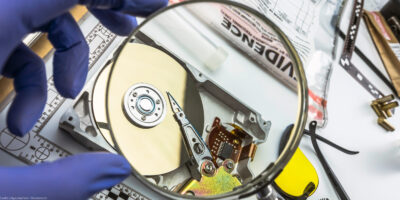
Cell phone searches are a common law enforcement tool, but up until now, the public has largely been in the dark regarding how much sensitive information the government can get with this invasive surveillance technique. A document submitted to court in connection with a drug investigation, which we recently discovered, provides a rare inventory of the types of data that federal agents are able to obtain from a seized iPhone using advanced forensic analysis tools. The list, available here, starkly demonstrates just how invasive cell phone searches are—and why law enforcement should be required to obtain a warrant before conducting them.

Keeping the Government Out of Your Smartphone

By Chris Soghoian, Principal Technologist and Senior Policy Analyst, ACLU Speech, Privacy and Technology Project at 11:48am

Smartphones can be a cop's best friend. They are packed with private information like emails, text messages, photos, and calling history. Unsurprisingly, law enforcement agencies now routinely seize and search phones. This occurs at traffic stops, during raids of a target's home or office, and during interrogations and stops at the U.S. border. These searches are frequently conducted without any court order.

Several courts around the country have blessed such searches, and so as a practical matter, if the police seize your phone, there isn't much you can do after the fact to keep your data out of their hands.

How Long Is Your Cell Phone Company Hanging On To Your Data?

By Allie Bohm, Advocacy & Policy Strategist, ACLU at 10:17am

A Justice Department chart released to the ACLU through a public records act request reveals the location data retention policies of the major mobile carriers. What's your carrier's policy?

Following Texas’s Lead on Location Tracking

By Allie Bohm, Advocacy & Policy Strategist, ACLU at 4:21pm

Yesterday, the Texas House of Representatives passed the first bill in the nation that would require law enforcement to obtain a probable cause warrant before tracking individuals’ location by collecting their cell phone location data. As Rebecca Robertson, legal and policy director for the ACLU of Texas put it, “By approving this amendment, our legislators would take a significant step to preserve the Fourth Amendment rights of Texas citizens, protecting them from potential unreasonable searches and seizures that could take place entirely outside judicial review.” They would also set a precedent that the rest of the country should be quick to follow.

Court Ruling Gives FBI Too Much Leeway on Surveillance Technology

By Linda Lye, Staff Attorney, ACLU of Northern California at 5:09pm

Today, a federal district judge in Arizona issued a very disappointing decision concerning the government’s obligations to be candid with courts about new technologies they are seeking a warrant to use.

The case involves Daniel Rigmaiden, who is being criminally prosecuted for an alleged electronic tax fraud scheme. The government used a surveillance device known as a stingray to locate Mr. Rigmaiden. A stingray operates by simulating a cell tower and tricking all wireless devices on the same network in the immediate vicinity to communicate with it, as though it were the carrier’s cell tower. In order to locate a suspect, a stingray scoops up information not only of the suspect, but all third parties on the same network in the area. This means that when the government uses a stingray to conduct a search, it is searching not only the suspect, but also tens or hundreds of third parties who have nothing to do with the matter. When the FBI sought court permission to use the device to locate Mr. Rigmaiden, it didn’t explain the full reach of stingrays to the court.

The ACLU and the Electronic Frontier Foundation filed an amicus brief arguing that when the government wants to use

ACLU Files FTC Complaint Over Android Smartphone Security

By Chris Soghoian, Principal Technologist and Senior Policy Analyst, ACLU Speech, Privacy and Technology Project at 9:55am

Yesterday, we filed a complaint with the Federal Trade Commission (FTC) asking the agency to investigate the major wireless carriers for failing to warn their customers about unpatched security flaws in the software running on their phones. These companies—AT&T, Verizon, Sprint and T-Mobile—have sold millions of smartphones to consumers running versions of Google’s Android operating system. Unfortunately, the vast majority of these phones never receive critical software security updates, exposing consumers and their private data to significant cybersecurity-related risks.

US Surveillance Law May Poorly Protect New Text Message Services

By Chris Soghoian, Principal Technologist and Senior Policy Analyst, ACLU Speech, Privacy and Technology Project at 9:44am

Internet-based text message apps are one of the most common means of communicating today. But when it comes to this relatively new technology, surveillance law is behind the times in important ways, and as is so often the case when the law lags technology, our privacy suffers as a result.

Text messages have for some time been a cash cow for the wireless carriers—back in 2007, annual global SMS revenue was estimated to be 60 billion dollars. Charging consumers 25 cents per 140 character text message is a great way to make money, but when those same consumers are already paying for internet connectivity to their smartphones, the market was ripe for disruption. In recent years, a number of internet companies have entered the text message market. In some cases, they have offered low-cost or free SMS services that interoperate with the carriers’ existing SMS system. In other cases, large companies like Facebook, Apple and WhatsApp have offered closed text message services to their smartphone using customers. Often seeking to reduce their monthly telephone bills, millions of consumers have migrated from smartphone text message services provided by the wireless carriers to smartphone text message services provided by internet companies.

Mobile Phone Surveillance by the Numbers

By Chris Calabrese, Legislative Counsel, ACLU Washington Legislative Office at 10:56am

Wow.  Sometimes one word says it all.  The New York Times reports that in response to letters from Rep. Edward Markey (D-MA) and Rep. Joe Barton (R-TX), mobile phone providers disclosed that they received approximately 1.3 million law enforcement requests for customer records last year alone. What an extraordinary number: more than a million accounts subject to at least some level of law enforcement investigation just in 2011. As we have discussed elsewhere, beyond what is reported by carriers in these letters, there is absolutely no reporting or tracking regarding how these numbers are handled.  

Even more amazing, as you dig into the article and read the underlying letters it becomes clear that this is actually a vast undercount of the number of Americans who have been affected by this tracking.  Sprint disclosed that it received approximately 500,000 subpoenas in 2011 (a subpoena is a written request for information from law enforcement that isn’t reviewed by a judge) and that “each subpoena typically requested subscriber information on multiple subscribers.” In addition, several carriers disclosed that they sometimes provide all the information from a particular cell tower or particular area.   Metro PCS for example charges:

$50 for Cell Tower Dump per tower for a 2 hour period
$100 for an Area Dump (if you know the location but do not know the cell towers that affect the area) for a maximum of 2 cell towers for a 2 hour period per cell tower search

Everyone whose phone has been used by a particular cell tower over a particular time period—likely hundreds or thousands of people—could have their data examined by investigators.  And these dragnet data requests are on the rise.  Verizon estimates that over the last 5 years it has seen an average increase of 15% annually, and T-Mobile reported increases of approximately 12%-16%.  This has also led to at least some possible abuse; T-Mobile disclosed that in the last three years it has referred two inappropriate law enforcement requests to the FBI. 

The House Hearing on Location Tracking Law (or the Lack Thereof)

By Jay Stanley, Senior Policy Analyst, ACLU Speech, Privacy and Technology Project at 1:44pm

My colleague Catherine Crump testified before Congress today on location tracking and privacy, and the GPS Act that would increase legal protections for our location data. The hearing was before the House Judiciary Subcommittee on Crime, Terrorism, Homeland Security and Investigations, and you can read her written testimony submitted here.

The chairman of the committee, Rep. Jim Sensenbrenner (D-Wis.), is a strong supporter of updating the law. He opened the hearing by acknowledging that the law has not kept pace with new technology—certainly a truism, and certainly true with regards to location tracking in particular, but one that is good to hear accepted as fact by powerful lawmakers.

Sensenbrenner also slammed the Justice Department for not sending a witness to the hearing. The reason, he reported, is that “it lacks a clear policy position on ECPA,” referring to the 1986 Electronic Communications Privacy Act. When Sensenbrenner was reading Catherine’s bio, which included mention of her efforts to find out how the DOJ is interpreting

Statistics image