Domestic Drones

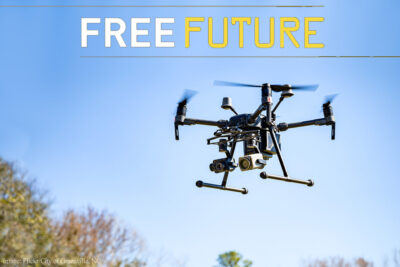
U.S. law enforcement is greatly expanding its use of domestic drones for surveillance. Routine aerial surveillance would profoundly change the character of public life in America. Rules must be put in place to ensure that we can enjoy the benefits of this new technology without bringing us closer to a “surveillance society” in which our every move is monitored, tracked, recorded, and scrutinized by the government. Drone manufacturers are also considering offering police the option of arming these remote-controlled aircraft with (nonlethal for now) weapons like rubber bullets, Tasers, and tear gas. Read the ACLU’s full report on domestic drones here. 

Numerous states are considering (and some have passed) legislation regulating the use of drones. You can see a chart summarizing the developments around the country here. Congress has ordered the Federal Aviation Administration to change airspace rules to make it much easier for police nationwide to use domestic drones, but the law does not include badly needed privacy protections. The ACLU recommends the following safeguards:

USAGE LIMITS: Drones should be deployed by law enforcement only with a warrant, in an emergency, or when there are specific and articulable grounds to believe that the drone will collect evidence relating to a specific criminal act.

DATA RETENTION: Images should be retained only when there is reasonable suspicion that they contain evidence of a crime or are relevant to an ongoing investigation or trial.

POLICY: Usage policy on domestic drones should be decided by the public’s representatives, not by police departments, and the policies should be clear, written, and open to the public.

ABUSE PREVENTION & ACCOUNTABILITY: Use of domestic drones should be subject to open audits and proper oversight to prevent misuse.

WEAPONS: Domestic drones should not be equipped with lethal or non-lethal weapons.

Click here for information on the U.S. government’s use of drones overseas for targeted killings.

Status of Domestic Drone Legislation in the States

By Allie Bohm, Advocacy & Policy Strategist, ACLU at 12:21pm


Updated 5/10/13

We’re currently seeing an unprecedented surge of activity in state legislatures across the country aimed at regulating domestic surveillance drones. (My colleagues Jay Stanley and Catherine Crump have this recent piece detailing the trend.) Working closely with our lobbyists in state capitols around the country, we have been tracking this activity and working hard to make sure these privacy-protective bills become law. The chart below shows the current status of state legislation as we understand it. We will update this as we receive new information.

Experts Discuss Surveillance Society at Domestic Drones Hearing

By Sandra Fulton, ACLU Washington Legislative Office at 5:14pm

An important Congressional subcommittee held a hearing today on domestic drone use. Members and witnesses didn't just rehash familiar concerns; they dug deeper to explore how advanced surveillance technology has become, and the real dangers of the surveillance society that it creates.

The hearing, held by the House Judiciary Committee's Subcommittee on Crime, Terrorism, Homeland Security, and Investigations began with testimony from the ACLU and three representatives from the academic community. (You can read the ACLU's complete testimony here.) While they had different ideas of what government regulation of domestic drone use should look like, the witnesses all stressed the increasing sophistication of drones, which will lead to levels of surveillance previously unseen. The testimony drove home the fact that drones are getting smaller, cheaper, and their use is about to blow up.

Drone Legislation: What’s Being Proposed in the States?

By Allie Bohm, Advocacy & Policy Strategist, ACLU at 3:15pm

It's a race to see which state will be the first to pass legislation governing domestic drone use. Coming out of the gate first was Florida, which passed a bill through several committees in the Senate back in January. This is notable since the Florida legislature didn’t officially convene until March 5—they thought this issue was so important that they moved the bill during their committee organizing sessions. Then Montana pulled up from behind, passing two drones bills all the way through their Senate by mid-February. But, Virginia raced ahead, sending two bills to their governor’s desk by the beginning of March, where they currently await signature.

We Already Have Police Helicopters, So What’s the Big Deal Over Drones?

By Jay Stanley, Senior Policy Analyst, ACLU Speech, Privacy and Technology Project at 11:26am

As drone regulation legislation works its way through Congress and the 30 (so far) state legislatures where it has been introduced, one question that we hear a lot these days is, “we’ve had police helicopters for a long time, what’s so different about drones?”

For one thing, police helicopters do raise privacy issues. Because of the expense of using manned police aircraft, privacy invasions have not risen to the level that legislators have felt compelled to address them, but incidents do happen. In 2005, for example, a police helicopter supposedly monitoring a street protest in New York City instead trained its infrared camera for a prolonged period on a couple making love on a pitch-black rooftop patio. Any police helicopter that followed a citizen around town for no reason, or hovered over the backyard of innocent homeowners whose daughter was sunbathing with her friends, would probably draw complaints. With drones, scenarios like those are bound to happen much more frequently. And that’s because there are some critical distinctions between manned and unmanned aircraft.

The First State Laws on Drones

By Allie Bohm, Advocacy & Policy Strategist, ACLU at 3:13pm

On Thursday, Idaho Governor Butch Otter signed into law the first bill in the nation protecting individuals from unfettered surveillance by unmanned aerial vehicles.

Virginia enacted the very first drones bill nationwide on April 3. Their bill imposes a two-year moratorium on law enforcement drone use, except in emergencies, in order to give the VA legislature time to put in place legal protections for domestic drone use. On Thursday, Idaho put those legal protections in place.

ACLU Submits Comments to the FAA Urging Increased Privacy Protection at Drone Test Sites

By Scott Bulua & Stephen Elkind, NYU School of Law ACLU Technology Law & Policy Clinic at 3:02pm

The ACLU today submitted comments to the FAA on the agency’s incorporation of privacy into its drone “test zones” program. (You can read our comments here.) Through the FAA Modernization and Reform Act of 2012, Congress has required the FAA to develop a plan for incorporating drones into the national airspace, including the establishment of six test sites where such integration can be tested. The FAA has faced delays on the establishment of the test sites, which the FAA has attributed to privacy issues that have, until now, gone unaddressed. So on February 14, 2013, the FAA published proposed privacy requirements for test site operators. The ACLU’s comments on those proposed requirements commend the FAA’s effort to focus on privacy impacts, while also advocating for more meaningful protections.

Congress Trying to Fast-Track Domestic Drone Use, Sideline Privacy

By Jay Stanley, Senior Policy Analyst, ACLU Speech, Privacy and Technology Project at 2:39pm

Congress is poised to give final passage to legislation that would give a big boost to domestic unmanned aerial surveillance — aka “drones.”

As we explained in our recent report, drone technology is advancing by leaps and bounds, and there is a lot of pent-up demand for them within the law enforcement community. But, domestic deployment of unmanned aircraft for surveillance purposes has largely been blocked so far by the Federal Aviation Administration (FAA), which is rightly concerned about the safety effects of filling our skies with flying robots (which crash significantly more often than manned aircraft).

Drone ‘Nightmare Scenario’ Now Has A Name: ARGUS

By Jay Stanley, Senior Policy Analyst, ACLU Speech, Privacy and Technology Project at 9:06am

The PBS series NOVA, “Rise of the Drones,” recently aired a segment detailing the capabilities of a powerful aerial surveillance system known as ARGUS-IS, which is basically a super-high, 1.8 gigapixel resolution camera that can be mounted on a drone. As demonstrated in this clip, the system is capable of high-resolution monitoring and recording of an entire city. (The clip was written about in DefenseTech and in Slate.)

In the clip, the developer explains how the technology (which he also refers to with the apt name “Wide Area Persistent Stare”) is “equivalent to having up to a hundred Predators look at an area the size of a medium-sized city at once.”

Eight Factors That Will Shape How America Adapts to Drones

By Jay Stanley, Senior Policy Analyst, ACLU Speech, Privacy and Technology Project at 2:25pm

How domestic drones will affect our privacy depends on how the technology is used and deployed. And that depends on a lot of factors. Technologies never exist in isolation—their impact on society is always the result of interactions between the technology's potential, existing institutions and interests, and the law, architecture, and culture around them. We should put good privacy protections in place no matter what, but as drone technology unfolds, here are some of the factors that could influence the size and scope of their deployment within the United States:

Newest Word to Take on Orwellian Overtones in Internet Age: “Trust”

By Jay Stanley, Senior Policy Analyst, ACLU Speech, Privacy and Technology Project at 5:44pm

What could be warmer and fuzzier than “trust”? Between two human beings, it’s a hard-won bond that binds them together. In society, it is a currency that helps create a prosperous and efficient economy and culture, as thinkers such as Francis Fukuyama and Bruce Schneier have argued. But recently the word has taken on a new cast of ambiguity, and seems to be fast becoming the newest entry in the lexicon of Orwellian formulations, along with such once purely warm and positive words such as “security,” “defense,” and “intelligence.”

Statistics image