
Automatic License Plate Readers
The ACLU works in courts, legislatures, and communities to defend and preserve the individual rights and liberties that the Constitution and the laws of the United States guarantee everyone in this country.

The Latest




Explore More
What's at Stake
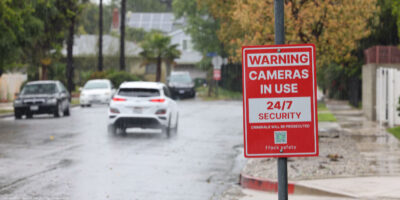
A little-noticed surveillance technology designed to track the movements of every passing driver is fast proliferating on America’s streets. Automatic license plate readers—mounted on police cars or on objects like road signs and bridges—use small high-speed cameras to photograph thousands of plates per minute.
The information captured by the readers—including the license plate number and the date, time, and location of every scan—is being collected and sometimes pooled into regional sharing systems. As a result, enormous databases of innocent motorists’ location information are growing rapidly. This information is often retained for years, or even indefinitely, with few or no restrictions to protect privacy rights.
In July 2012, ACLU affiliates in 38 states and Washington, D.C., sent public records act requests to almost 600 local and state police departments, as well as other state and federal agencies, to obtain information on how these agencies use license plate readers. In response, we received thousands of pages of documents detailing the use of the technology around the country.
The documents paint a startling picture of a technology deployed with too few rules that is becoming a tool for mass routine location tracking and surveillance. As the technology spreads, the ACLU calls for the adoption of legislation and law enforcement agency policies adhering to strict privacy principles to prevent the government from tracking our movements on a massive scale.
A little-noticed surveillance technology designed to track the movements of every passing driver is fast proliferating on America’s streets. Automatic license plate readers—mounted on police cars or on objects like road signs and bridges—use small high-speed cameras to photograph thousands of plates per minute.
The information captured by the readers—including the license plate number and the date, time, and location of every scan—is being collected and sometimes pooled into regional sharing systems. As a result, enormous databases of innocent motorists’ location information are growing rapidly. This information is often retained for years, or even indefinitely, with few or no restrictions to protect privacy rights.
In July 2012, ACLU affiliates in 38 states and Washington, D.C., sent public records act requests to almost 600 local and state police departments, as well as other state and federal agencies, to obtain information on how these agencies use license plate readers. In response, we received thousands of pages of documents detailing the use of the technology around the country.
The documents paint a startling picture of a technology deployed with too few rules that is becoming a tool for mass routine location tracking and surveillance. As the technology spreads, the ACLU calls for the adoption of legislation and law enforcement agency policies adhering to strict privacy principles to prevent the government from tracking our movements on a massive scale.