Military Commissions
The ACLU works in courts, legislatures, and communities to defend and preserve the individual rights and liberties that the Constitution and the laws of the United States guarantee everyone in this country.
The Latest
-
Connell v. CIA – FOIA Lawsuit Seeking Records About CIA “Operational Control” Over a Detention Facility at Guantánamo Bay
-


ACLU Statement on the 21st Anniversary of Guantánamo
-
ACLU Statement on Biden’s Long-Delayed Transfer of Man Detained at Guantánamo For Over 15 Years
-
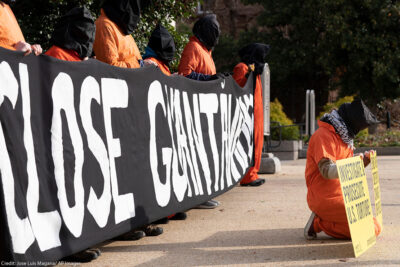
20 Years Later, Guantánamo Remains a Disgraceful Stain on Our Nation. It Needs to End.
Explore More
What’s at Stake
In Hamdan v. Rumsfeld (2006), the Supreme Court ruled that the original military commission system established by former President George W. Bush to try detainees at Guantánamo Bay was unlawful because it had not been authorized by Congress. Unfortunately, in 2006 and then again in 2009, Congress provided that authorization when it passed the Military Commissions Act (MCA), legitimizing a system of military tribunals that fails to meet fair trial and due process standards.
The Guantánamo military commission proceedings have been marred by legal and ethical problems from day one. Among other things, the proceedings allow the admission of secret evidence, hearsay, and evidence obtained through coercion in certain circumstances. Defendants’ access to counsel has been consistently obstructed, and even their testimony about torture and coercion can be censored, keeping the worst of the government’s post-9/11 abuses shielded from the public.
The ACLU has been present as an independent observer at nearly every commission hearing since 2004 and documented the ways in which the proceedings are unfair, unconstitutional, and plagued by excessive secrecy.
It’s time to shut down the military commissions and transfer the defendants to the United States to be tried in civilian court.
In Hamdan v. Rumsfeld (2006), the Supreme Court ruled that the original military commission system established by former President George W. Bush to try detainees at Guantánamo Bay was unlawful because it had not been authorized by Congress. Unfortunately, in 2006 and then again in 2009, Congress provided that authorization when it passed the Military Commissions Act (MCA), legitimizing a system of military tribunals that fails to meet fair trial and due process standards.
The Guantánamo military commission proceedings have been marred by legal and ethical problems from day one. Among other things, the proceedings allow the admission of secret evidence, hearsay, and evidence obtained through coercion in certain circumstances. Defendants’ access to counsel has been consistently obstructed, and even their testimony about torture and coercion can be censored, keeping the worst of the government’s post-9/11 abuses shielded from the public.
The ACLU has been present as an independent observer at nearly every commission hearing since 2004 and documented the ways in which the proceedings are unfair, unconstitutional, and plagued by excessive secrecy.
It’s time to shut down the military commissions and transfer the defendants to the United States to be tried in civilian court.