How the Supreme Court's GPS Tracking Case Can Affect Your Cell Phone Privacy
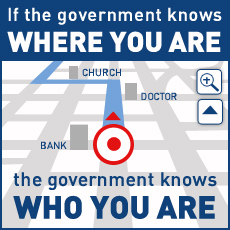
On Tuesday, the Supreme Court will confront the profound impact of new location-tracking technologies on Americans' privacy. The case, U.S. v. Jones, presents the question of whether law enforcement needs a warrant before planting a GPS tracking device on a person's car. The answer to this question is important in its own right, but the case is likely to have broader implications.
Attaching a GPS to a car isn't the only way the government can track people's movements. In fact, everyone with a cell phone is already carrying a device that the government can use to track his or her location. As a result, the principle at stake in this case may well shape our privacy rights in the years and decades to come.
Read the rest of this op-ed on CNN.com >>
Learn more about location tracking: Sign up for breaking news alerts, follow us on Twitter, and like us on Facebook.
Related Issues
Related Content
-
FloridaJul 2026

National Security
+2 Issues
Cair-foundation, Inc And Cair Florida, Inc. V. Desantis Et Al.. Explore Case.CAIR-Foundation, Inc and CAIR Florida, Inc. v. DeSantis et al.
The ACLU, the ACLU of Florida, the Southern Poverty Law Center, and their partners represent CAIR and CAIR-Florida in two federal lawsuits challenging Governor DeSantis’s unconstitutional and baseless designation of the nonprofits as “terrorist.” The lawsuits allege violations of CAIR and CAIR-Florida’s rights under the First Amendment and the due process clause of the Fourteenth Amendment. -
Press ReleaseJul 2026

National Security
Free Speech
Muslim Civil Rights Nonprofits Sue Florida Officials To Prevent Unconstitutional Designation That Threatens The Organizations’ Existence In The State. Explore Press Release.Muslim Civil Rights Nonprofits Sue Florida Officials to Prevent Unconstitutional Designation that Threatens the Organizations’ Existence in the State
TALLAHASSE, Fla. — The American Civil Liberties Union, the ACLU of Florida, Southern Poverty Law Center, Akeel & Valentine, PLC, and Bondurant Mixson & Elmore LLP today filed a federal lawsuit challenging Florida officials' imminent and baseless designation of the Council on American-Islamic Relations (CAIR) as a “domestic terrorist organization” under laws that went into effect today. The challenge comes hours after Gov. Ron DeSantis announced his intent to use the new laws against CAIR, one of America’s leading civil rights organizations. Although the governor did not mention CAIR-Florida, he has previously indicated that he also considers it a “terrorist organization.” If the nonprofits are designated, they face immediate and irreparable harm, including the shuttering of all their operations and advocacy in the state. In April 2026, Gov. DeSantis signed into law HB 1471 and HB 1473 despite outcry. These laws establish an unprecedented state designation regime and dramatically expand Florida’s authority to both label and punish groups — including nonprofits engaged in First Amendment-protected advocacy — that officials unilaterally decide are security threats. Under the regime, officials can brand nonprofit corporations with debilitating stigma and then use an array of state authorities to immediately silence and incapacitate the organization, its employees, its members, and a wide range of others associated with the group through extraordinarily broad and severe criminal, civil, and administrative penalties. “We thank the ACLU, SPLC, Akeel & Valentine, and Bondurant for standing up against Gov. DeSantis’ latest attack on the rule of law,” said CAIR’s national headquarters. “Throughout CAIR’s long history, our civil rights organization has worked to protect the Constitution’s guarantees of free speech, religious freedom and equality under the law. We have also pursued justice for all people, including American Muslims impacted by hate. This is exactly why Gov. DeSantis has repeatedly targeted our organization. We see through Gov. DeSantis’ latest biased attempt to punish us for our views and our values. We look forward to fighting these baseless attacks in court and proving once again that the Constitution is stronger than any politician’s bigotry.” Targeted organizations can receive no meaningful notice and have no meaningful opportunity to challenge the designation before a neutral decisionmaker — and before the designation and harsh penalties take effect. “Under Florida’s dangerous new regime, the governor and a few officials can play judge, jury, and nonprofit executioner. But the Constitution does not allow elected officials to punish American nonprofits and deny them the fundamentals of due process because of disagreement with their views,” said Hina Shamsi, director of the ACLU’s National Security Project. “Florida’s imminent designation of our clients is both dire and unmoored from reality. CAIR and CAIR-Florida’s speech and advocacy are protected by the First Amendment, which includes their right to criticize the governor, other officials, and their policies. We’re asking the court to protect our clients’ cardinal freedoms.” As the lawsuit explains, CAIR and CAIR-Florida are nonprofits organized under the laws of the District of Columbia and Florida. They do not engage in “terrorist activity.” Their shared mission, rooted in faith, is to enhance the public’s understanding of Islam, protect civil rights, promote justice, and empower American Muslims. Like other prominent nonprofits, they hold community events, post educational materials on social media, speak about elected leaders, and represent clients in advocacy and civil rights lawsuits. They have not been charged with, let alone convicted of, a crime. “Like any other faith-driven nonprofit, we host community events to promote religious tolerance and understanding, provide cultural education, and our work seeks to advance public policy that protects the equal treatment of Muslim Americans,” said CAIR-Florida. “Our work is critical to combatting prejudice, false stereotypes, and ensuring the promises of the Constitution cover us all — yet the governor has unfairly labeled us something we are not and threatens our very ability to continue this crucial work. We all share the same rights, and no group should be targeted simply because the governor disagrees with their constitutionally protected speech.” If the designation goes into effect, its impact will be instant and incapacitating for CAIR and CAIR-Florida’s work in the state. Specifically, the lawsuit claims that they would be caught in a kaleidoscope of criminal prohibitions that would stop them from carrying out even their most basic functions in Florida. Put bluntly, designation will completely shut down their speech, force them to shutter their offices in the state, and brand them with one of the most stigmatizing, infamous labels in our country. On top of the reputational and operational harm, the designation would also violate their right to counsel. That’s because, once designation becomes effective, any lawyer or legal organization that provides or attempts to provide legal services or representation to CAIR or CAIR-Florida faces a credible threat of criminal prosecution under this regime. “Florida’s attack on the largest Muslim civil rights organization in the country is dangerous and wrong,” said Daniel Tilley, legal director of the ACLU of Florida. “If we allow this undisguised attempt to restrict constitutionally protected speech and association to go unchallenged, it only ensures that the increasingly normalized censorship and discrimination at the hands of our state government will expand ever further.” The groups are suing under the First Amendment and the due process clause of the Fourteenth Amendment. “Gov. DeSantis does not have the power to unilaterally brand an organization with this vilifying designation and punish those who support it without due process or judicial review,” said Scott McCoy, deputy legal director, SPLC. “Denying due process and suppressing and punishing constitutionally protected speech and advocacy are clear violations of both the First and Fourteenth Amendments. SPLC will not stand idly by while civil rights groups like CAIR and CAIR-Florida have their rights trampled based on unfounded fear and prejudice by politicians trying to score political points.” CAIR and CAIR-Florida are also separately suing Florida officials over a related executive order that Gov. DeSantis was trying to use to target the nonprofit. In early March 2026, the U.S. District Court for the Northern District of Florida granted CAIR's request for a preliminary injunction blocking enforcement of his “blatantly unconstitutional” executive order, which unilaterally branded CAIR a “terrorist organization,” and would have stripped CAIR — and those associated with the group — of state and local contacts, employment opportunities, funding and other public benefits. Gov. DeSantis has since appealed to the Eleventh Circuit Court of Appeals. The complaint in the lawsuit can be viewed here. -
Press ReleaseJun 2026
Privacy & Technology
+2 Issues
In New Report, Aclu Warns Against Giving Private Companies Centralized Access To Police Data. Explore Press Release.In New Report, ACLU Warns Against Giving Private Companies Centralized Access to Police Data
WASHINGTON – The American Civil Liberties Union (ACLU) released a new report today about the increasingly central role that surveillance and tech companies are playing in US police departments and how that threatens to give private companies unfettered access to Americans’ sensitive data. The report examines the major companies involved, the potential ways this information could be abused or exploited, and the history of close ties between corporations and police. Every day, police across the country use body cameras, drones, dash cams, and fixed surveillance cameras gathering hours upon hours of footage of people going about their daily lives. And now, some of the biggest surveillance tech companies, including Axon, Flock, and Motorola, want to gather, analyze, and control this data by providing “operating systems” for police departments that, like operating systems on computers and phones, can see and control all the data in the system. This will threaten the civil rights and civil liberties of everyone who interacts with one of these cameras — knowingly or not. Part of this trend is the movement towards police cloud services, which facilitates the consolidation of data from thousands of U.S. police departments within corporate servers and gives these private actors live remote control over the surveillance tech even after it’s deployed in communities. Or as Axon puts it on their website, “integrating hardware devices and cloud software solutions” in “the Axon ecosystem” and connecting “every officer, responder and agency.” “Putting private, for-profit companies at the heart of modern police departments — what could go wrong? The answer is: plenty, and that’s what this paper outlines” said Jay Stanley, senior policy analyst with the ACLU’s Speech, Privacy and Technology Project.“Policymakers, the public, and the policing profession need to grapple with the implications of this corporatization of police departments — especially for people’s civil rights and liberties — and address it before this becomes normalized and leads to new forms of abuse we’ve never seen before.” These new corporate efforts to expand their work with police are especially worrying given how quickly surveillance technology is proliferating across the country — and how few places have strong guardrails or oversight in place. As the report details, there are many ways providers could exploit their insider access to this data, including using it to go after critics, journalists, labor unions, regulators, and competitors, or to try and fend off investigations into their products. The lack of safeguards also means that company employees could use this data to target exes, manipulate prediction markets, or even alter evidence. Unfortunately, it’s not just the companies selling these products that the public needs to be worried about. According to the report, there is another set of players that raise many of the same concerns about private companies’ access to police data and the corporate role in policing: cloud computing platforms like Amazon Web Services (AWS), Microsoft Azure, and Google Cloud Platform, which currently also have access to the growing mountain of data generated by surveillance-based policing. The report lays out six recommendations that policymakers could implement to protect their constituents. Recommendations include contract requirements restricting private vendors’ access to law enforcement data, mandating the use of local rather than cloud services, and passing both the Fourth Amendment Is Not For Sale Act and Community Control Over Police Surveillance (CCOPS) laws. -
Press ReleaseJun 2026
National Security
Court Hears Arguments On Releasing Trump Administration Memo Claiming To Justify Caribbean Boat Strikes. Explore Press Release.Court Hears Arguments on Releasing Trump Administration Memo Claiming to Justify Caribbean Boat Strikes
NEW YORK — A United States District Court in the Southern District of New York heard arguments today in a lawsuit seeking the immediate release of an Office of Legal Counsel (OLC) opinion that the Trump administration is using to justify and govern its illegal campaign of lethal strikes on civilian boats in international waters. In today’s hearing, the American Civil Liberties Union (ACLU), New York Civil Liberties Union (NYCLU), and the Center for Constitutional Rights argued that the Trump administration cannot keep its legal justification for the boat strikes campaign secret from the American people while repeatedly referencing it in public. The groups asked the presiding judge to order the release of the OLC opinion after personally reviewing it to ensure that the administration discloses all of the disclosable legal analysis to the public. Under the Freedom of Information Act, the government must by default disclose its records to the public. However, in court, the Trump administration took the radical position that the U.S. Constitution permits it to withhold from public view records protected by the presidential communications privilege — a privilege meant to protect advisory documents held closely to the president and his immediate staff — even if those records contain binding agency law or have been distributed to administration officials who play no role in presidential decision-making. The judge questioned the administration’s attorney about the limits and novelty of this expansive view of presidential privilege, which the government presented for the first time at oral argument, and asked him why the government has opted to keep its legal justification for the boat strikes campaign secret even after having made other similar types of legal memoranda public. During the hearing, the government’s attorney also acknowledged that there are parts of the memo’s legal analysis that could be isolated and released to the public without revealing classified information. “People across the country, politicians across the aisle, and the families of victims have been demanding answers as to how our government is justifying the cold-blooded murder of civilians,” said Jeffrey Stein, staff attorney with the ACLU’s National Security Project. “The Trump administration has murdered over 210 civilians with no sound legal or moral basis. At a minimum, the administration must disclose to the American people why it thinks this killing spree is lawful.” The groups are suing to force the disclosure of a legal opinion authored by OLC — a part of the Justice Department whose opinions are generally treated as binding within the executive branch — that supposedly validates the ongoing strikes as lawful acts in an alleged “armed conflict” with unspecified “drug cartels.” Reportedly, the memo also purports to immunize personnel who authorized or took part in these unlawful strikes from future criminal prosecution for what would otherwise simply be homicides. “The Trump administration is displacing the fundamental mandates of international law with the phony wartime rhetoric of a basic autocrat,” said Baher Azmy, legal director of the Center for Constitutional Rights. “If the OLC opinion seeks to dress up the obvious illegality of these serial homicides in legalese in order to provide cover, the public needs to see this analysis and ultimately hold accountable all those who facilitate murder in the United States’ name.” Contrary to the government’s public assertions, the U.S. is not, and could not be, in an armed conflict with Latin American drug cartels. Under international law, an armed conflict between a state and a non-state actor exists only if the non-state actor is an “organized armed group” that is structured and disciplined like regular armed forces and is engaged in “protracted armed violence” against the state. There is no plausible argument that any drug cartel satisfies this test vis-a-vis the United States. “The public deserves to know how the Trump administration is rubber-stamping the killing of civilians in the Caribbean,” said Ify Chikezie, staff attorney at the New York Civil Liberties Union. “By claiming that these attacks are legal while refusing to provide any evidence or rationale, President Trump shows once again his disdain for basic transparency, human rights, and the rule of law. The court must step in and order the administration to release these documents immediately.” Since Sept. 2, the Trump administration’s lethal strikes on boats have murdered at least 200 civilians, in clear violation of domestic and international law. In addition to a lawsuit enforcing a FOIA request on the OLC memo, the ACLU and Center for Constitutional Rights have also filed a lawsuit on behalf of two families from Trinidad & Tobago who are seeking redress after a U.S. boat strike killed their loved ones, and held a hearing at the Inter-American Commission on Human Rights on how the problematic lethal-strike policy violates international law and is an unconstitutional claim of executive power. This press release is available online here and here. To learn more about the case: see here and here.