ACLU of Massachusetts Welcomes New Hampshire Civil Unions Law
FOR IMMEDIATE RELEASE
CONTACT: media@aclu.org
BOSTON - Today, the American Civil Liberties Union of Massachusetts welcomed passage of legislation in New Hampshire to provide the option of civil unions for lesbian and gay couples, with important rights, benefits and protections at the state level.
"While we believe that civil unions are only a step toward the ultimate goal of marriage equality, it is heartening to see another state recognize that lesbian and gay couples need ways to protect one another and their families," said Carol Rose, Executive Director of the ACLU of Massachusetts.
The New Hampshire Senate voted 14-10 on Thursday in favor of civil unions. New Hampshire's House of Representatives had already passed a companion measure, and Gov. John Lynch has pledged to sign it. New Hampshire is the fourth state to provide civil unions, along with Vermont, Connecticut and New Jersey. Maine, Hawaii, California and the District of Columbia also offer some legal protections for lesbian and gay couples.
"The fact that three of our neighboring states now offer civil unions shows how important it is for us to stop the proposed constitutional amendment that would end marriage equality in Massachusetts," said Rose. "It would be terrible for Massachusetts to move backward while our neighbors move forward.”
"The ACLU of Massachusetts is proud that our commonwealth led the nation with marriage equality, which puts all couples and their families on the same footing. We oppose voting on the proposed constitutional amendment that would reverse that pioneering move. It's simply wrong to vote on whether or not to take anyone's rights away, and no one's marriage should be put to a popular vote."
Related Issues
Related Content
-
News & CommentaryJul 2026
LGBTQ Rights
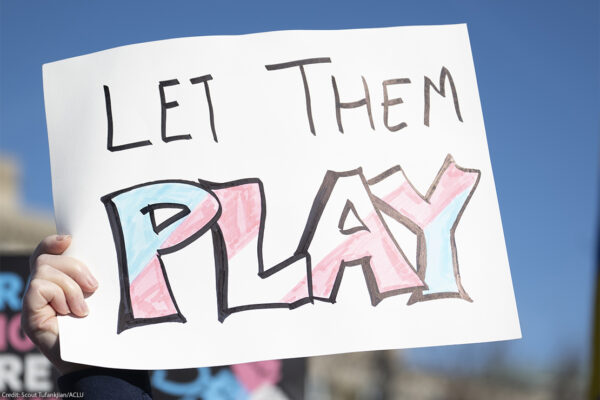
Your Questions Answered: What You Need To Know About The Bpj And Hecox Supreme Court Decision. Explore News & Commentary.Your Questions Answered: What You Need to Know About the BPJ and Hecox Supreme Court Decision
The Supreme Court recently ruled to uphold laws in Idaho and West Virginia banning transgender women and girls from school sports. Learn how the decision impacts transgender people, families, and educators. -
Press ReleaseJul 2026

Free Speech
LGBTQ Rights
Federal Appeals Court Strikes Down Florida’s Unconstitutional Classroom Censorship Law. Explore Press Release.Federal Appeals Court Strikes Down Florida’s Unconstitutional Classroom Censorship Law
MIAMI — The U.S. Court of Appeals for the 11th Circuit today struck down the higher education provisions of the Stop W.O.K.E. Act, a classroom censorship law in Florida that severely restricted educators from teaching about race and gender in schools and workplaces. The court ruled the higher education provision of the law was unconstitutional, saying: “Florida’s salary-for-speech rule is a breathtaking assertion of power to ban unpopular ideas from public discourse in the very places the State’s own statutes recognize as centers of inquiry—classrooms where students are trusted to puzzle through ideas that are good and bad, easy and hard, ideally getting ever closer to the truth.” The court goes on to say it does not matter if the State of Florida agrees or disagrees with the ideas. “Either way, in this context the First Amendment trusts students to figure it out for themselves.” “This ruling sets a strong precedent that higher education cannot be limited to the whims of politicians,” said Leah Watson, senior staff attorney with the ACLU’s Racial Justice Program. “All students and educators deserve to have a free and open exchange about ideas without government control. Students can’t fight racial discrimination that they don’t see; training and instruction is key to empowering future leaders to pursue racial justice.” The decision comes in Pernell v. Lamb, a 2022 lawsuit filed by the American Civil Liberties Union, ACLU of Florida, the Legal Defense Fund (LDF), and the law firm Ballard Spahr on behalf of a group of Florida professors at public universities whose teaching has been impacted by this law. “We are thrilled the court has stopped the erasure of topics that have real implications for our students, allowing them to learn, discuss, and develop tools for combatting the complex issue of racism in our country without being gagged by those who would dictate that only state-approved thought may be promoted,” said LeRoy Pernell, a Florida A&M University College of Law professor and the named plaintiff in this lawsuit. Championed by Gov. Ron DeSantis, this overreaching law specifically targeted and placed vague restrictions on educators’ ability to teach concepts such as racism, sexism, privilege, and unconscious bias. It also imposed harsh penalties, including ineligibility for millions of dollars in performance funding from the state for colleges and universities and termination for educators who had been found to violate the law. The court concluded, “[i]f the First Amendment offers any boundary of protection at all for public university classrooms, this statute crosses it.” “The Stop W.O.K.E Act is an egregious example of widespread efforts across the country, most notably in Florida, to force the public higher education system to adopt the viewpoints of those in power. Thankfully, we have a judicial system to protect First Amendment rights and ensure that professors have the academic freedom to foster the type of learning environment where all students can learn and thrive,” said Jin Hee Lee, Director of Strategic Initiatives at the Legal Defense Fund. “It is no coincidence that this state law aimed to censor the perspectives of Black people and LGBTQ+ people, the very same people who are currently under attack. With this decision, the federal appeals court has made clear that Florida cannot actively erase their history of discrimination or their lived experiences without running afoul of our Constitution.” This decision marked the first time an appellate court has considered the constitutionality of this censorship movement, and it will have implications for students and educators across the country who are subject to related laws. Since the Stop W.O.K.E Act went into effect, more than 30 states have moved to introduce and pass higher education classroom censorship bills. In May 2024, a federal court struck down a law in another ACLU lawsuit in New Hampshire, holding that the law's vagueness violated the 14th Amendment. A similar higher education classroom censorship law was struck down in an ACLU lawsuit in Oklahoma, ruling that many of its provisions were so vague that it was difficult for teachers to know what they could and could not teach in the classroom. “By upholding the district court’s ruling, the Eleventh Circuit ensured that our system of higher education is guided by the principle of free speech, not government censorship,” said Carrie McNamara, senior staff attorney at the ACLU of Florida. “Our classrooms are meant to be rooms of curiosity, creativity, and learning. When we stifle this kind of critical thinking, we risk losing our education system as we know it.” “The recent legislative efforts to undermine academic freedom and limit the rights of marginalized communities are incredibly harmful,” said Emmy Parsons, a litigator at Ballard Spahr who was a member of the legal team. “We are proud to be part of this historic case and will keep fighting to protect the First Amendment rights of those teaching the next generation of leaders.” The opinion can be viewed here. -
Press ReleaseJun 2026
LGBTQ Rights
Women's Rights
Attorneys For Transgender Student-athletes Respond To Supreme Court Ruling In Bpj And Hecox. Explore Press Release.Attorneys for Transgender Student-Athletes Respond to Supreme Court Ruling in BPJ and Hecox
WASHINGTON - This morning, the Supreme Court of the United States issued its ruling in two cases — West Virginia v. B.P.J. and Little v. Hecox — brought to the Supreme Court by states defending categorical bans on transgender women and girls participating on women’s and girls’ sports teams. The Supreme Court upheld Idaho and West Virginia’s sports bans, holding that these laws do not violate either Title IX or the Equal Protection Clause. “This is a heartbreaking ruling for our clients and transgender girls like them who’ve asked for nothing more than the same opportunities afforded to their peers.” said Joshua Block, Senior Counsel for the ACLU’s LGBTQ & HIV Rights Project. “The reality is that the equality of transgender women and girls takes nothing away from, and in fact promotes, the equality of all women and girls. We will continue to advance the fundamental principle that all young people deserve equal opportunity to thrive and succeed.” “This ruling is deeply harmful for transgender women and girls who only asked for the ability to participate in sports with their peers,” said Sasha Buchert, Senior Attorney and Director of the Non-Binary and Transgender Rights Project, Lambda Legal. “Countless studies have demonstrated the myriad benefits that come with participation in team sports. Now, one population, transgender youth and collegians, are targeted for specific and baseless discrimination. We will not be deterred and will continue to fight back to secure the equal participation that all youth, including transgender youth, deserve.” “It is profoundly unfair to deny a young person the benefits of teamwork and dedication because of who they are,” said Kelly O'Neill, Legal Voice’s Idaho attorney. “We should be removing barriers for girls and women in sports, not creating new ones.” The two cases argue that the bans violate the rights of two transgender female student-athletes under the Equal Protection Clause of the Fourteenth Amendment of the U.S. Constitution. In addition, West Virginia v. B.P.J. argues that the ban violates Title IX, the federal law prohibiting sex discrimination in educational programs. Federal courts have blocked enforcement of these bans in both lawsuits. Since 2020, 27 states have banned transgender youth from playing school sports. Many of these bans allow for invasive forms of sex testing that put all female student-athletes at risk and embolden intrusive challenges to student-athletes' sex. In Florida, a 15-year-old junior varsity volleyball player was the subject of a police investigation after an anonymous accusation, prompting local officials to draft a 500-page report investigating her medical history, body weight, and anatomy. In Utah, a teenage basketball player was accused of being transgender by a member of the state board of education, leading to threats of violence against her and her family, and a teenager in Maine faced a similar attack from a state senator. In May, President Donald Trump similarly targeted a 16-year-old transgender girl for participating in a high school track meet. Under an Arizona ban, a cisgender male student was prohibited from participating on the boys’ team at his high school because of a clerical error that listed him as female on his original birth certificate. Many women athletes have spoken out against bullying and discrimination against transgender student-athletes, including Billie Jean King, Megan Rapinoe, Dawn Staley, Sue Bird, and Brianna Turner, as well as leading organizations fighting for gender equality in athletics, including the Women’s Sports Foundation, the Women’s National Basketball Player’s Association, and the National Women’s Law Center. These cases are part of the ACLU’s Joan and Irwin Jacobs Supreme Court docket. -
Press ReleaseJun 2026
LGBTQ Rights
Judge Blocks Trump Administration Attempt To Seize Private Medical Records Of Trans Youth From New York Hospitals. Explore Press Release.Judge Blocks Trump Administration Attempt to Seize Private Medical Records of Trans Youth From New York Hospitals
NEW YORK - A judge for the United States District of the Southern District of New York has granted a request from transgender people and their families for a temporary restraining order blocking the disclosure of plaintiffs’ and class members’ medical information pursuant to subpoenas issued by the Trump administration to hospitals in New York City. “We’re thankful the court has granted our emergency request to protect the privacy interests of transgender New Yorkers and their families,” said Chase Strangio, Co-Director of the ACLU’s LGBTQ & HIV Rights Project. “Patients and families trust their doctors with their most intimate, private information and should trust in turn that this information will be protected from impermissible and harassing demands for disclosure from the federal government or anyone else. For the past year, the Trump administration has not only decided that it knows better than these families and their doctors what their medical needs are, but has also sought to obtain troves of sensitive information about patients in New York. We will continue to fight on behalf of these families and the fundamental liberty of all transgender New Yorkers and those who come here to seek needed medical care.” “Today’s order from the court is a victory for the basic privacy of our clients and all families like theirs across New York City. It is no secret that this administration will use every lever in its power to attack transgender people and fulfill its misguided goal to 'end' gender-affirming medical care--care that is legal and protected in New York State. Using subpoenas to attain the identities and sensitive health information of transgender young people to effectuate such goals should send chills down the spine of every American. Our laws and our Constitution recognize that we all have a right to confidentiality about the most intimate and private information about ourselves,” said Omar Gonzalez-Pagan, Senior Counsel and Health Care Strategist at Lambda Legal. “Whether a young person receives any type of medical care is a decision for that patient, their family, and their doctor, not for political appointees to decide, interfere with, or know. The government cannot abuse its powers to violate the constitutional rights of transgender young people and their families. It is an enormous relief for these families that the court has stopped them from doing so as this case proceeds.” “New York’s laws recognize that transgender youth deserve fundamental privacy protections for their sensitive medical records and unobstructed access to the care they need,” said Bobby Hodgson, Deputy Legal Director at the New York Civil Liberties Union. “As the Trump administration tries to bully transgender youth, scare families, and intimidate healthcare providers into dropping their patients, we’re thankful the court found these tactics are likely unconstitutional and put a stop to them here in New York.” In May 2026, NYU Langone Hospitals received a subpoena purportedly under the authority of a federal grand jury in Fort Worth, Texas, which demanded that they turn over the identities and sensitive health information of any patient who had received medical treatment for gender dysphoria while they were under 18 years old from NYU Langone, from January 2020 through May 2026. Other healthcare institutions in New York City, including Mount Sinai Health System, may have received similar subpoenas, though the nature of these is unclear. The grand jury subpoenas followed a year-long effort by the Department of Justice to obtain this same information from hospitals across the country through administrative subpoenas—efforts that were repeatedly blocked by at least eight federal district courts. One court dismissed the government’s reasoning as a “smokescreen,” while another concluded that DOJ “issued the subpoena first and searched for a justification second.” In June 2026, a lawsuit was filed in the United States District Court for the Southern District of New York by the American Civil Liberties Union, the New York Civil Liberties Union, and Lambda Legal on behalf of three families with transgender youth and two transgender young adults who were minors when they began care. It requests a temporary restraining order blocking the DOJ from violating the patients’ constitutional privacy rights by obtaining the identifying and sensitive health information as part of their purported investigation into unspecified health offenses through the subpoena to NYU Langone and any other similar subpoenas to healthcare institutions in New York City, including Mt. Sinai, that provide or have provided gender-affirming medical care to transgender minors. All plaintiffs have filed under pseudonyms to maintain their privacy and anonymity. The lawsuit asks the court to protect “all individuals who received any medical treatment for gender dysphoria, … while they were under eighteen years of age, from January 1, 2020, through May 5, 2026, at a healthcare institution located in New York City, including NYU Langone Hospitals (and any other NYU entity) and Mount Sinai Health System.” The plaintiffs argue that the Department of Justice’s demands to access this identifying and sensitive health information violate their Fourth and Fifth Amendment rights to privacy and to be free from unreasonable search and seizure. The plaintiffs also sued NYU Langone to prevent its release of information protected by doctor-patient privilege under New York state law. Click here for more on Coe et al v. Blanche