Al-Aulaqi v. Panetta - Constitutional Challenge to Killing of Three U.S. Citizens
What's at Stake
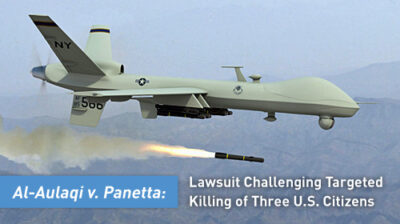
The American Civil Liberties Union and the Center for Constitutional Rights (CCR) filed a lawsuit in 2012 challenging the government’s targeted killing of three U.S. citizens in drone strikes far from any armed conflict zone. Oral argument was held in July 2013 in Washington, and the court dismissed the case in April 2014.
Summary
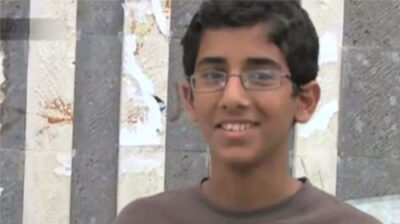
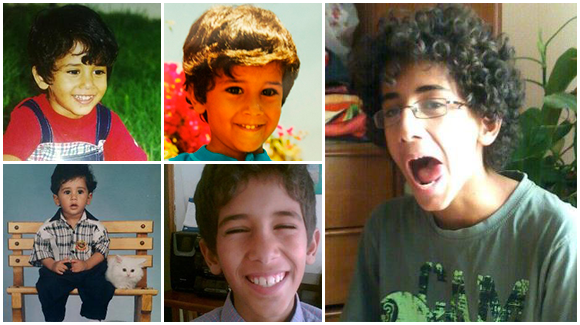
In Al-Aulaqi v. Panetta (sometimes called Al-Awlaki v. Panetta) the ACLU and CCR charge that the U.S. government’s killings of U.S. citizens Anwar Al-Aulaqi, Samir Khan, and 16-year-old Abdulrahman Al-Aulaqi in Yemen in 2011 violated the Constitution’s fundamental guarantee against the deprivation of life without due process of law.
The killings were part of a broader program of “targeted killing” by the United States outside the context of armed conflict. The program is based on vague legal standards, a closed executive decision-making process, and evidence never presented to the courts, even after the killing.
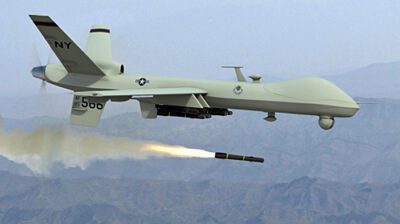
Since 2002, and routinely since 2009, the U.S. government has carried out deliberate and premeditated killings of suspected terrorists overseas. In some cases, including that of Anwar Al-Aulaqi, the targets were placed on “kill lists” maintained by the CIA and the Pentagon. According to news accounts, the targeted killing program has expanded to include “signature strikes” in which the government does not know the identity of individuals, but targets them based on “patterns” of behavior that have never been made public. The New York Times has reported that the government counts all military-age males in a strike zone as combatants unless there is explicit intelligence posthumously proving them innocent.
Outside of armed conflict, both the Constitution and international law prohibit killing without due process, except as a last resort to avert a concrete, specific, and imminent threat of death or serious physical injury. Even in the context of an armed conflict against an armed group (which did not exist in Yemen at the time of these killings), the government may use lethal force only against individuals who are directly participating in hostilities against the United States. Regardless of the context, whenever the government uses lethal force, it must take all possible steps to avoid harming civilian bystanders. In the Al-Aulaqi v. Panetta lawsuit, the ACLU and CCR argue that the senior CIA and military leaders who authorized and directed the killings violated these standards.
Anwar Al-Aulaqi and Samir Khan were killed in a U.S. drone strike in Yemen on September 30, 2011. Abdulrahman Al-Aulaqi, a 16-year-old boy born in Denver, was killed in a U.S. drone strike in Yemen on October 14, 2011, while he was eating dinner at an outdoor restaurant with his teenage cousin.
According to the groups’ legal complaint, the killings violated the right to due process under the Fifth Amendment to the Constitution, the prohibition on unreasonable seizures under the Fourth Amendment, and, with respect to Anwar Al-Aulaqi, the ban on extrajudicial death warrants imposed by the Constitution’s Bill of Attainder Clause. The killings also violated international law, which is incorporated through the Constitution.
The defendants moved to dismiss the lawsuit, arguing that the courts have no role to play in determining whether the killings of the three Americans were lawful. In July 2013, a federal district court in Washington, D.C., heard oral argument on the defendants’ motion, and we await the court’s decision.
This case follows a lawsuit filed by the ACLU and CCR in 2010 challenging Anwar Al-Aulaqi’s placement on government kill lists, before his death. A federal district court dismissed the case, holding that the plaintiff, Al-Aulaqi’s father, lacked standing to bring suit, and that the request for before-the-fact judicial review raised “political questions” that the court could not decide.
Nasser Al-Aulaqi speaks about the illegal killing of his 16-year-old grandson.
An American Teenager Killed, A Grandfather Seeks Accountability
This link will serve content from youtube.com.
More about Abdulrahman
- Tom Junod, The Lethal Presidency of Barack Obama, Esquire, July 9, 2012.
- Michelle Shepard, Drone Death in Yemen of an American Teenager, Toronto Star, April 14, 2012.
Other ACLU Targeted Killing Cases
Legal Documents
-
04/04/2014
Al-Aulaqi v. Panetta - Ruling Granting Government's Motion to Dismiss
Date Filed: 04/04/2014
Download Document-
01/13/2014
Al-Aulaqi v. Panetta - Defendants' Motion for Reconsideration of and to Stay the Courts' December 26, 2013 Order
Date Filed: 01/13/2014
Download Document-
12/26/2013
Al-Aulaqi v. Panetta - Court Order Requesting Government Explanation of Classified Information Implicated by Plaintiffs' Claims
Date Filed: 12/26/2013
Download Document-
07/19/2013
Al-Aulaqi v. Panetta - July 19, 2013 Oral Argument Transcript
Date Filed: 07/19/2013
Download Document-
06/11/2013
Al-Aulaqi v. Panetta - Motion for Leave to Reply to Defendants’ Response to the Court’s May 22, 2013 Order
Date Filed: 06/11/2013
Download Document-
06/05/2013
Al-Aulaqi v. Panetta - Defendants’ Response to the Court’s May 22, 2013 Order
Date Filed: 06/05/2013
Download Document-
05/23/2013
Al-Aulaqi v. Panetta - Exhibit 2 - President Obama’s May 23, 2013 Speech at National Defense University
Date Filed: 05/23/2013
Download Document-
05/22/2013
Al-Aulaqi v. Panetta - Exhibit 1 - Letter from AG Holder to Sen. Patrick Leahy Acknowledging U.S. Killings of Four Americans
Date Filed: 05/22/2013
Download Document-
03/18/2013
Al-Aulaqi v. Panetta - Legal Documents
-
03/07/2013
Al-Aulaqi v. Panetta – Government’s Reply in Support of Motion to Dismiss
Date Filed: 03/07/2013
Download Document-
02/05/2013
Al-Aulaqi v. Panetta - Plaintiffs’ Opposition to Defendants’ Motion to Dismiss
Date Filed: 02/05/2013
Download Document-
07/18/2012
Al-Aulaqi v. Panetta – Complaint
Press Releases
Court Dismisses Lawsuit Challenging U.S. Drone Killings of Three Americans
Court Hearing Friday in Lawsuit Challenging U.S. Drone Killings of Three Americans
U.S. Asks Court Not To Consider Targeted Killing Challenge
Rights Groups File Challenge To Killings of Three Americans in U.S. Drone Strikes