Ruling in ACLU Cases, Federal Judge Says Patriot Act “Gag” Provision is Undemocratic
FOR IMMEDIATE RELEASE
CONTACT: media@aclu.org
Appeals Court Paves Way for Gagged Librarians to Speak Publicly for the First Time
NEW YORK — A federal appeals court ruled yesterday on two constitutional challenges filed by the ACLU to the Patriot Act’s National Security Letter (NSL) provision, saying in one of the cases that a district court should consider the constitutionality of the provision in light of recent amendments made by Congress.
“Two separate lower courts found the Patriot Act’s National Security Letter provision to be undemocratic and unconstitutional,” said Jameel Jaffer, the ACLU attorney who argued the New York case before the Second Circuit Court of Appeals. “We believe that recent amendments to the law make the provision worse, not better, and we are confident the district court will agree.”
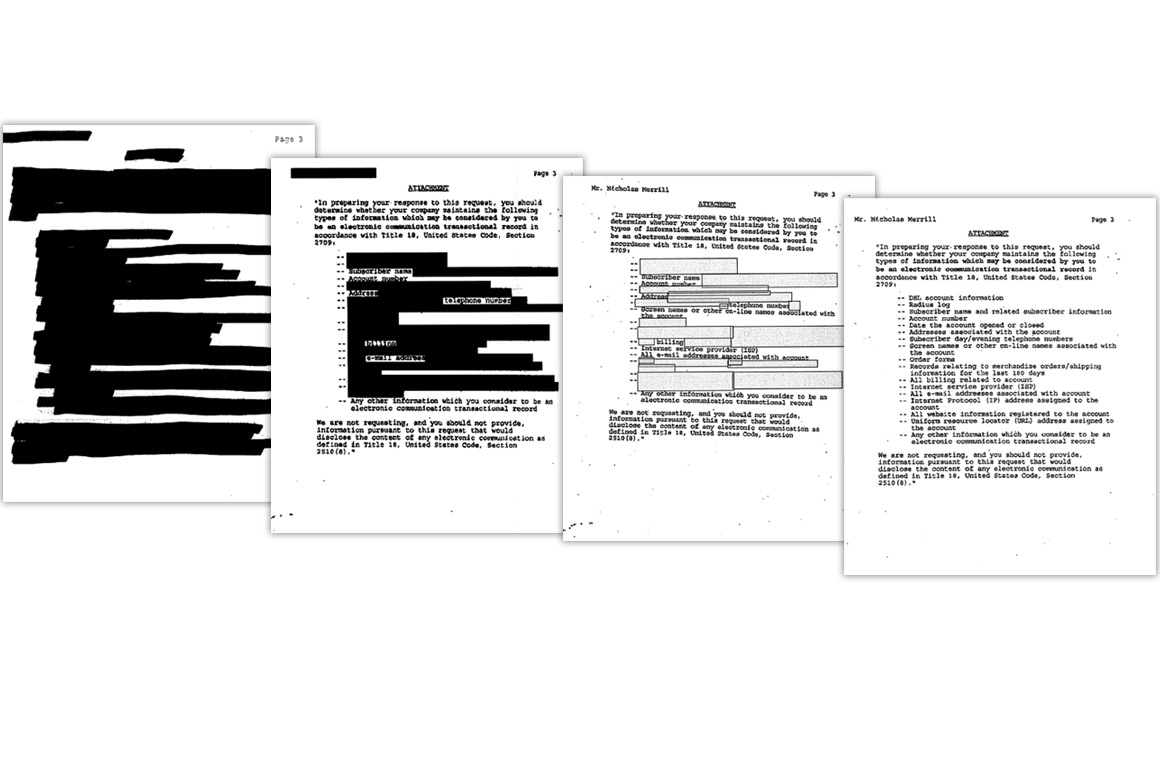
The controversial NSL provision authorizes the FBI to demand a range of personal records without prior court approval, including records of Web site visits, e-mail addresses, and certain library records. The statute includes a gag provision that prohibits anyone served with an NSL from disclosing to any other person that the FBI sought or obtained information from them.
Yesterday’s ruling addressed two cases, one from New York and another from Connecticut. The New York case concerns an anonymous Internet Service Provider that challenged the NSL statute after the FBI relied on the statute to demand some of its records. Judge Victor Marrero struck down the statute in September 2004, saying that “democracy abhors undue secrecy.” In that landmark ruling, Judge Marrero held that the unlimited gag imposed by the NSL law violates free speech rights protected by the First Amendment.
Concurring with yesterday’s ruling in a separate opinion, Judge Richard Cardamone strongly criticized the government for continuing to argue that a permanent ban on speech, as previously authorized by the NSL provision, would be permissible under the First Amendment.
“A ban on speech and a shroud of secrecy in perpetuity are antithetical to democratic concepts and do not fit comfortably with the fundamental rights guaranteed American citizens,” wrote Judge Cardamone. “Unending secrecy of actions taken by government officials may also serve as a cover for possible official misconduct and/or incompetence.”
Judge Cardamone added that national security concerns “should be leavened with common sense so as not forever to trump the rights of the citizenry under the Constitution.”
Addressing a related case from Connecticut, the appeals court effectively lifted a gag that has prevented Connecticut librarians who received an NSL from disclosing their identities. The ACLU said it will hold a news conference on Tuesday, May 30, to allow the gagged librarians to speak publicly for the first time about this case.
Attorneys in the New York case are Jaffer, Ann Beeson and Melissa Goodman of the National ACLU and Arthur Eisenberg, Legal Director of the New York Civil Liberties Union.
For more information on these cases, go to www.aclu.org/nsl
Stay Informed
Every month, you'll receive regular roundups of the most important civil rights and civil liberties developments. Remember: a well-informed citizenry is the best defense against tyranny.
Learn More About the Issues in This Press Release
-

ACLU Statement on Congress’ Latest Attempt to Ban TikTok and Restrict Free Speech Online
-
Despite Bipartisan Outcry, Senate Betrays the Fourth Amendment and Passes Bill to Expand Warrantless Government Surveillance
-
Chinese Immigrants Urge Appeals Court to Block Florida’s Discriminatory Housing Law
-
After House Passes Fourth Amendment Is Not For Sale Act, ACLU Urges Senate to Stop Government from Spying on Americans Without a Warrant