Margaret Moses
It is easy for Margaret Moses to explain why she came to the Women's Right Project in 1978. "Ruth Bader Ginsburg was my favorite professor in law school," Moses explains.
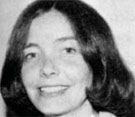 Prior to the ACLU offer, Moses had been doing Title VII cases at a private law firm, taking on major class action suits against large employers. She was very interested in women's rights, and when she received an offer from both the U.S. Attorney's office in New Jersey and WRP at the same time, she was torn between the two. The U.S. attorney's office tried to quell her doubts. In fact, her contact there particularly dismissed the ACLU as a valid alternative. Yet when Moses explained that she was considering WRP because Ruth Bader Ginsburg was one of the four general counsel, she noticed a funny look on his face. "He'd had Ruth as a professor at Rutgers," Moses recalls. "And at that point, I think he understood that I really might turn down the U.S. Attorney's office for WRP." Prior to the ACLU offer, Moses had been doing Title VII cases at a private law firm, taking on major class action suits against large employers. She was very interested in women's rights, and when she received an offer from both the U.S. Attorney's office in New Jersey and WRP at the same time, she was torn between the two. The U.S. attorney's office tried to quell her doubts. In fact, her contact there particularly dismissed the ACLU as a valid alternative. Yet when Moses explained that she was considering WRP because Ruth Bader Ginsburg was one of the four general counsel, she noticed a funny look on his face. "He'd had Ruth as a professor at Rutgers," Moses recalls. "And at that point, I think he understood that I really might turn down the U.S. Attorney's office for WRP."
And so she did. Moses did not regret her decision; the experience of working with Ginsburg proved illuminating. "She was an excellent role model; that combination of being brilliant and working very hard set a high standard to do the very best you could, to try to emulate her."
Ginsburg was largely involved in the process of choosing cases, and she reviewed all the briefs written by the attorneys, providing a general policy direction for overall policy. When Moses was hired, she was able to bring her own work to WRP as well. Midway through a sex discrimination case at her law firm challenging denial of tenure to female professors, she continued the litigation after joining WRP. The case was very close to her heart, she explains, as she had a Ph.D.of her own.
Moses was pleased to find her work at WRP invigorating and very closely linked to that of Ginsburg's. "I really enjoyed it," she says. "I particularly enjoyed the clinical aspect." Moses taught a gender discrimination class at Columbia while at WRP in conjunction with Ginsburg. As Clinical Director, she supervised the students who came to the ACLU to work on cases. For the last class in the fall of 1979, Moses invited all the students over to her apartment for dinner. "Ruth's husband, Marty, and mine cooked in the kitchen while we taught the class," Moses reminisces. "It was a nice way to end a gender discrimination seminar!"
Moses gave birth to her son in the spring of 1979, after arriving at the Project in 1978. She worked until the day she gave birth. Indeed, Moses found that pregnancy occasionally helped her in her work. In one case, in which the magistrate seemed to be dragging his feet, when she appeared in court six months along and "very pregnant," the magistrate took one look at her protruding belly, "and he realized we had a real deadline!"
Looking back, Moses feels that "WRP was a real leader in keeping gender issues at the forefront of not only the ACLU but also the consciousness of society." There was always an issue of having enough resources, but despite these obstacles, by the time Moses left in 1980, WRP had made an undeniable impact. "We were raising consciousness about these issues in the legal community."
Today, Moses assesses that "there are clearly still problems. There is still a glass ceiling in many areas, though it is more subtle and harder to fight against." She is distressed that the term "feminist" has taken on such negative connotations. As a professor at Loyola University Chicago School of Law, Moses takes a team of law students yearly to Vienna for an international moot arbitration competition. She meets with a group of women arbitrators who are trying to make women more visible in their male-dominated field. During one meeting, one of the women declared, "We are not feminists!" Moses was appalled that the term had become so loaded that some wished to renounce the label of feminist altogether. "Some of us still consider ourselves feminists," she objected.
Moses carried her sensibilities beyond WRP when she went to a small private firm. "I stayed involved in women's rights," she explains, pointing to her work for the Women's Equity Action League in Washington, D.C. Her next move took her to Paris to work for a French law firm, where she focused on international and transactional law. From Paris, Moses moved on to a firm on Wall Street, and then she set off on a private practice of her own before ultimately settling in as a professor at Loyola. "I've liked it all," she says of her career. "It's all been very good."
|


