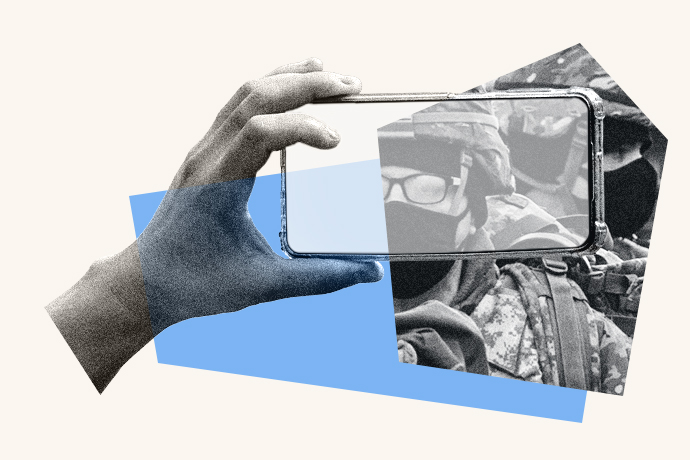
Recording and Documenting Police and Federal Agents
The First Amendment protects your right to record and document law enforcement and federal agents performing their duties in public.
Overview
The First Amendment protects your right to take photos and videos of law enforcement officers performing their duties in public. This applies to ICE agents, police, FBI, National Guard troops, and any other government officials. If you’re not under arrest, a law enforcement officer needs a warrant to confiscate your device or to view its contents without your consent. If you are arrested, an officer may take your phone but still needs a warrant to search its contents. The government may never delete your photographs or videos under any circumstances.
While the right to document and record law enforcement and federal agents is protected by the Constitution, we’re all too aware that our constitutionally protected rights have been disregarded and violated in the past. Some officers retaliate by making threats, spraying chemical irritants, and arresting people recording them. This resource is intended to give you the tools to exercise your rights, but it’s important to understand your risks.
All Scenarios
More Resources
Immigrants' Rights
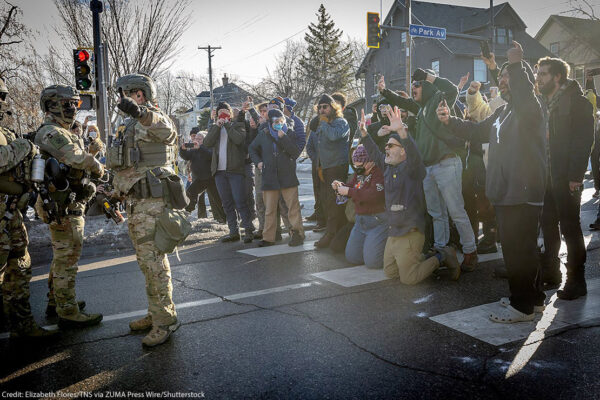
Your Questions Answered: Filming ICE Interactions Safely
Immigrants' Rights
Your Questions Answered: Filming ICE Interactions Safely

Civil Liberties
Join our Volunteer Teams
Civil Liberties