Trump, Immigration, Trans Rights: The Stories That Shaped 2025


This year, the ACLU’s most-read stories reflected the pressing issues shaping life in America: challenges to civil liberties, attacks on marginalized communities, and the ongoing struggle to hold those in power accountable.
From Trump’s unprecedented moves to expand domestic military operations and cut funding to public media, to the targeting of immigrant families and activists like Mahmoud Khalil, these stories reveal a society grappling with the consequences of abuse of power, political retaliation, and discrimination. Our work explaining Trump’s executive orders undermining protections for transgender people, and revealing how immigrant parents pushed back against Donald Trump’s attacks on birthright citizenship show our communities actively fighting for their rights.
These stories are not just headlines; they are evidence of the forces threatening democracy, free speech, and human dignity. They also show the resilience of individuals and advocates pushing back. Together, they offer a snapshot of the issues defining 2025 and the ongoing fight for justice.
Trump 2.0 and Abuse of Power
Starting mere hours after he was sworn in, Trump’s dangerous abuse of power threatens core democratic principles and civil liberties. These stories show how his expanded domestic deployment of the military and his attacks on press freedom risk silencing dissent and put vulnerable communities at risk.
Trump’s Expanded Domestic Military Use Should Worry Us All
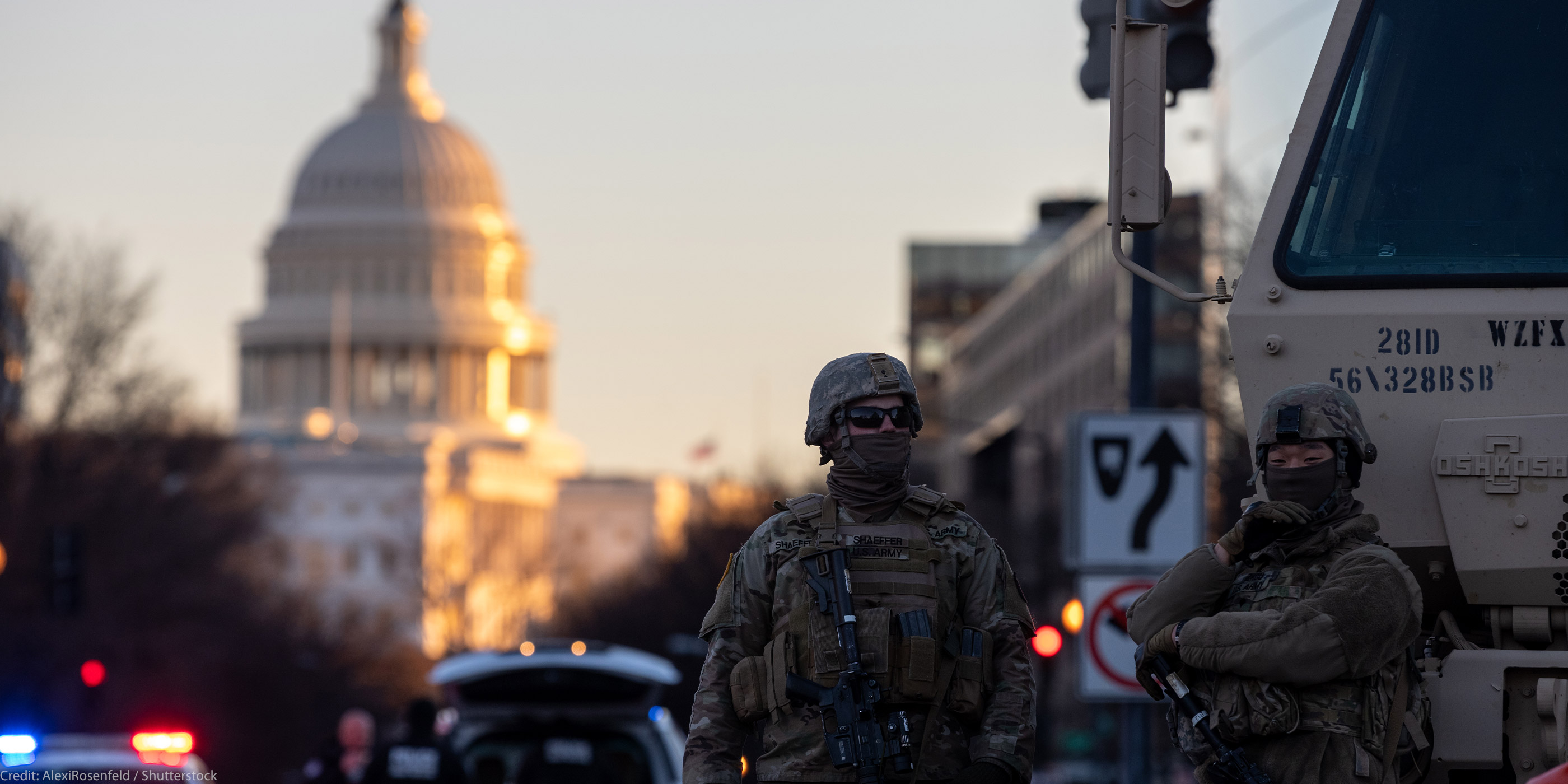
Starting in January, we sounded the alarm that military troops do not belong on our streets and should not be used to police civilians here at home. Since he took office, President Donald Trump has deployed military troops and federal agents in cities across the country in an effort to scare our communities, target political opponents and intimidate those who protest his policies.
This is all part of a continued effort by President Trump to abuse his power and deploy federal agents and military troops anywhere he wants, against whoever he wants. Cities and communities have pushed back, joining the ACLU and our partners to stop our neighborhoods from becoming places where people feel afraid to leave their homes.
What Happens Next: Courts have so far blocked the Trump administration’s attempts to federalize state National Guard troops and deploy them to multiple cities, including Portland and Chicago. But the government has now asked the Supreme Court to affirm its attempt to federalize and deploy troops to Chicago. The ACLU continues to urge both the courts and Congress to block these deployments and hold the Trump administration accountable for any abuses that stem from these activations.
Trump’s Attacks on Press Freedom Escalate: NPR, PBS Funding Cuts Explained

Trump’s efforts to defund NPR and PBS were a historic assault on press freedom. In a May 2025 executive order titled “Ending Taxpayer Subsidization of Biased Media,” Trump directed agencies to cut both direct and indirect federal funding to these public media outlets, accusing them of biased reporting. In response, NPR and several local stations filed a lawsuit, arguing that the order violates the First Amendment by retaliating against them for their editorial choices. The ACLU filed a friend-of-the-court brief in support.
What Happens Next: These lawsuits, and the fight for press freedom, is ongoing.
Safeguarding Immigration and Speech Rights
Trump’s immigration policies violate constitutional protections and basic human rights. Key concerns include threats to birthright citizenship, as well as the detention and deportation of individuals for political advocacy.
A Letter From Palestinian Activist Mahmoud Khalil

Our client, Palestinian activist Mahmoud Khalil wrote a powerful letter to his newborn son from an immigration detention center in Louisiana, where he was held for three months after ICE arrested him without a warrant in retaliation for his protected speech. In his letter, he appeals to students, advocates, and elected officials to defend the right to protest — framing his case not just as personal persecution but as part of a broader attack on immigrants, the rule of law, and people who spoke out in support of Palestinian human rights.
What Happens Next: Khalil was released from detention in June 2025 after a federal judge ordered his release and blocked the administration from deporting him as the case proceeds. His immigration case and his lawsuit challenging his unconstitutional detention are both ongoing.
‘My Child is Now a Political Debate’: Immigrant Families Battle Trump’s Birthright Citizenship Threats
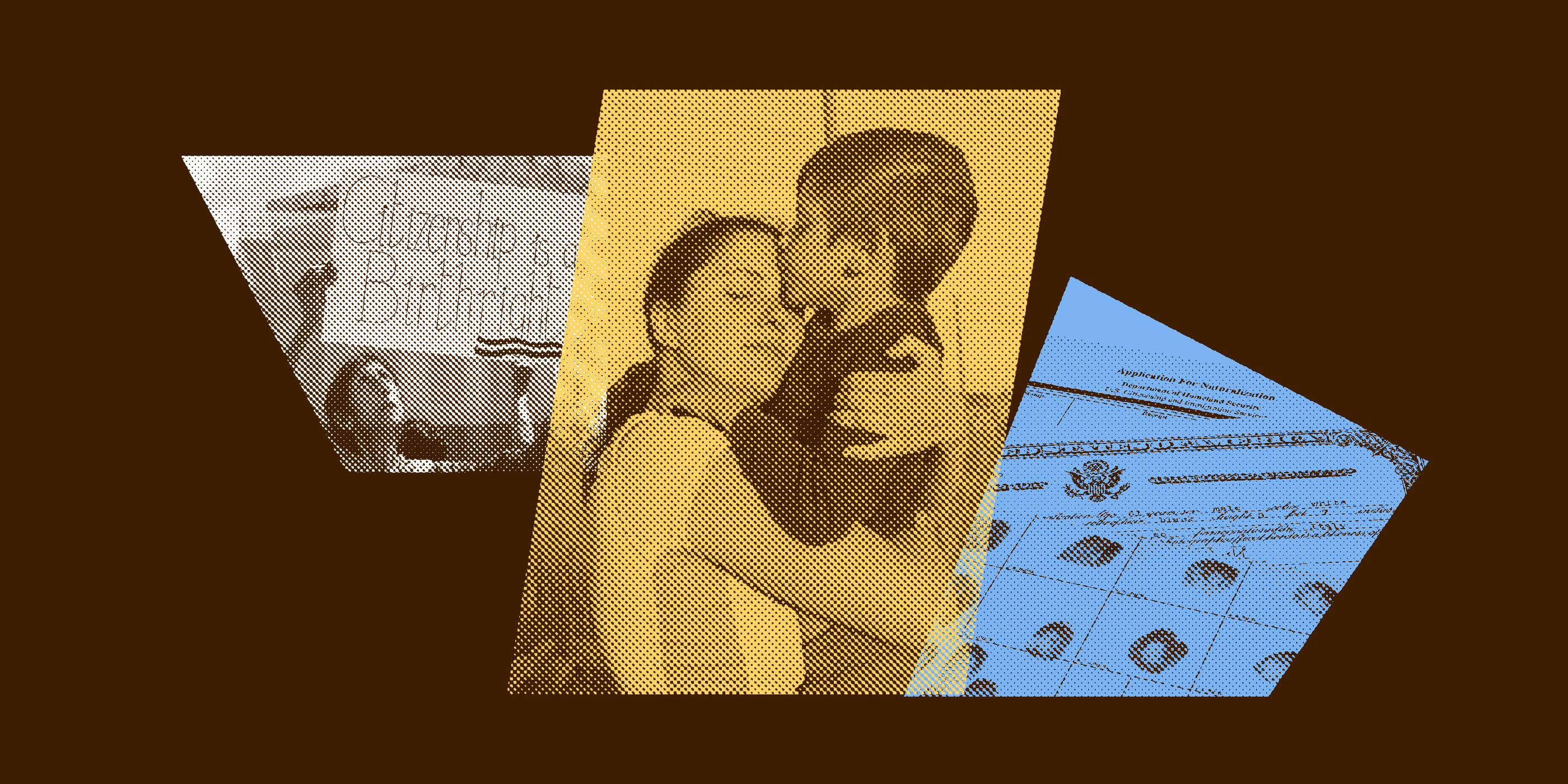
Across the country, iImmigrant parents—many of whom have U.S.-born children—had to confront the reality that their own kids could be treated like political bargaining chips. The ACLU represented several families in their lawsuit against the Trump administration’s unlawful executive order targeting birthright citizenship. They told us that revoking citizenship for children born in the U.S. was not only terrifying, but a violation of their constitutional rights.
What Happens Next: The Supreme Court announced in December that it will hear our case challenging Trump’s attempt to deny birthright citizenship to babies born in the U.S. We’re prepared to remind the court that the administration’s attempt to end birthright citizenship is a direct violation of the 14th Amendment.
Protecting Our Communities and Ourselves
Trump’s unlawful policies targeting transgender people endanger safety, compromise health, and strip transgender and intersex people of dignity and autonomy. We continue to challenge these actions in court
Trump’s Executive Orders Promoting Sex Discrimination, Explained

In January, Trump’s executive orders targeting transgender people ordered the Federal Bureau of Prisons and Department of Homeland Security to force transgender women into men’s prisons and detention centers, ignoring safety guidelines, and withdraw medically-necessary care, putting more than 2,000 incarcerated trans people at high risk of abuse. The order also blocked transgender and intersex people from updating sex markers on new passports, visas, and trusted traveler documents, effectively outing them and limiting their ability to travel.
What Happens Next: The Supreme Court allowed the government to enforce a discriminatory passport policy against transgender people. A federal judge, however, blocked the Trump administration from denying incarcerated people gender-affirming care.
Related Issues
Related Content
-
Press ReleaseOct 2026

Civil Liberties
Aclu Voter Education Fund And Aclu Of Georgia Launch $250k Campaign To Educate Georgia Voters Ahead Of Midterms. Explore Press Release.ACLU Voter Education Fund and ACLU of Georgia Launch $250K Campaign to Educate Georgia Voters Ahead of Midterms
ATLANTA – The ACLU of Georgia and the ACLU Voter Education Fund are spending $250,000 in select Georgia House races to inform voters that their civil rights and liberties, including voting rights and abortion, are on the ballot this November. The ACLU Voter Education Fund will send over 225,000 mail pieces to educate voters about candidates in State House Districts 48, 53, and 105. These state races include communities like Lawrenceville, Peachtree Corners, and Sandy Springs and are highly contested. The ACLU Voter Education Fund is investing in these races because the elected candidates will influence civil rights and liberties statewide for at least two years. Their decisions will affect voting rights, reproductive rights, privacy, and other fundamental liberties. On the voter guides, residents will see candidates’ responses to questions about those issues, such as whether they would vote to repeal Georgia’s six-week abortion ban or whether they will work to prevent unnecessary restrictions on early and absentee voting. “Georgia voters have a right to know the positions that the candidates take on the rights and freedoms that shape their lives,” said Christopher Bruce, deputy executive director, ACLU of Georgia. “We’re making sure voters get the information they need to understand the issues in these elections and what the candidates would do if they had the power of the Georgia House. From reproductive freedom and voting rights to safeguarding privacy and other liberties, the choices made under the Gold Dome can have a lasting impact on our communities.” While the ACLU Voter Education Fund does not endorse or oppose any candidates, the six-figure campaign will educate voters about the candidates’ positions on key civil rights issues, including abortion, birth control, marriage equality, and voting rights for Indigenous communities, through direct mail, radio ads, and digital ads. -
Minnesota Supreme CourtOct 2026

Civil Liberties
Housing First Minn. V. City Of Corcoran And Housing First Minn. V. City Of Dayton. Explore Case.Housing First Minn. v. City of Corcoran and Housing First Minn. v. City of Dayton
When a court rules that an issue is a “political question,” that issue becomes “nonjusticiable.” In other words, courts close their doors to political questions, even when an injured plaintiff seeks relief that a court could provide. The ACLU’s State Supreme Court Initiative and the ACLU of Minnesota filed an amicus brief in the Minnesota Supreme Court arguing that the Court should narrow, or at a minimum, not expand, the political question doctrine under the Minnesota Constitution. The brief urges the Court to preserve the justiciability of legal issues and thus ensure that provisions of the state Constitution are not just words on paper but meaningful guarantees for the people of Minnesota. -
News & CommentaryOct 2026
Civil Liberties
What 'let The Record Show' Reveals About A 200-year-old Petty Paperwork Problem That Gave Courts Its Power Today. Explore News & Commentary.What 'Let the Record Show' Reveals About a 200-Year-Old Petty Paperwork Problem That Gave Courts Its Power Today
In “Let the Record Show,” the ACLU’s newest podcast, we discuss how office politics gave courts the power to decide if political decisions are constitutional. It’s led to an array of landmark decisions that continue to protect our civil liberties today. -
Press ReleaseOct 2026
Civil Liberties
Aclu And Aclu Of North Carolina Launch Over $3.5 Million Campaign To Educate North Carolina Voters Ahead Of Midterm Elections. Explore Press Release.ACLU and ACLU of North Carolina Launch Over $3.5 Million Campaign to Educate North Carolina Voters Ahead of Midterm Elections
RALEIGH, N.C. – The American Civil Liberties Union of North Carolina and American Civil Liberties Union, Inc. today announced the launch of a joint campaign that will spend over $3.5 million to educate and engage North Carolina voters ahead of the Nov. 3 midterm elections. “For years, voters in North Carolina have watched as extreme politicians try over and over again to strip us of our rights – from our right to bodily autonomy to our right to fair representation,” said Liz Barber, ACLU of North Carolina director of policy and advocacy. “The ACLU is committed to ensuring that North Carolinians understand how state officials – like state supreme court justices and state legislators – can protect our rights, and where candidates for office this cycle stand on these important issues.” The organizations are spending $3.5 million on a series of statewide advertisements on social and digital media platforms and direct-to-voter mailers during the final weeks of the state Supreme Court race and key state legislative races. The advertisements will focus on educating voters about where candidates stand on key issues, including abortion rights and voting rights. This is the organizations’ largest electoral spend in North Carolina to date and will reach over 2.3 million voters. The spending is part of a multi-cycle strategy in North Carolina from the ACLU. In 2024, the ACLU of North Carolina and ACLU spent $750,000 on direct mail, digital ads, and grassroots outreach educating voters about issues at stake in the state Supreme Court and state legislative elections. The North Carolina Supreme Court is responsible for interpreting the state constitution and state laws. As the state’s highest court, it has the final say on many questions involving civil rights and civil liberties, and the North Carolina Constitution can provide broader protections than the U.S. Constitution. In 2022, for example, the court held that the North Carolina Constitution’s prohibition on cruel and unusual punishment can provide protections beyond those guaranteed by the Eighth Amendment. The ACLU of North Carolina, and ACLU are nonpartisan and do not support or oppose candidates for elected office. The organizations do, however, educate the voters about the issues at stake in elections and candidates’ positions and records on civil rights and civil liberties.