Back to
News & Commentary
How Much Do You Know about Redistricting?
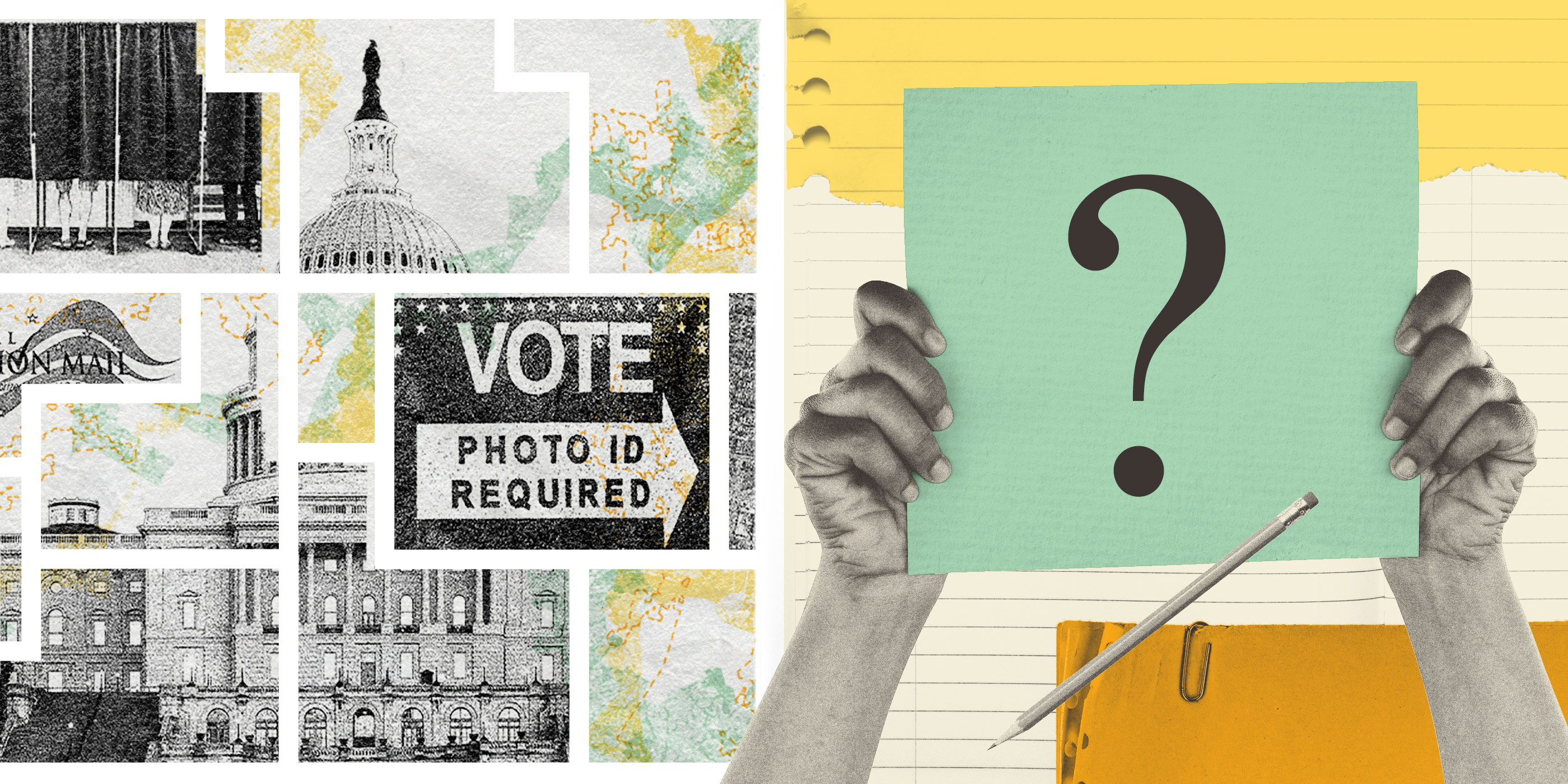
How does redistricting become gerrymandering, and what does that mean for your voting rights? Test your knowledge.
How does redistricting become gerrymandering, and what does that mean for your voting rights? Test your knowledge.
It’s official: The once-in-a-decade redistricting process has begun. Communities and jurisdictions across the country are crunching 2020 census data to redraw district lines. The way these lines are drawn will determine political representation, resource allocation, and the weight of your vote.
The stakes are high, so it’s critical we watch closely as our district lines take shape. Take this quiz on redistricting to test your understanding.
Related Issues
Related Content
-
Press ReleaseSep 2026

Voting Rights
Aclu And Aclu Voter Education Fund Invest $2.3 Million In Michigan House And Senate Races, And The Michigan Supreme Court Race. Explore Press Release.ACLU and ACLU Voter Education Fund Invest $2.3 Million in Michigan House and Senate Races, and the Michigan Supreme Court Race
DETROIT – The ACLU of Michigan, the American Civil Liberties Union, and the ACLU Voter Education Fund are spending $2.3 million in select Michigan House and Senate races, and the Michigan Supreme Court race. The commitment is part of the ACLU’s effort to inform voters that their civil rights and liberties, including voting rights and abortion, are on the ballot this November election. Voter guides and paid advertising will be utilized to educate voters about the candidates in these races. The ACLU Voter Education Fund is spending about $400,000 in the Michigan Supreme Court race, and the ACLU is spending about $1.9 million in select legislative races. State lawmakers shape civil rights and liberties, as does the Michigan Supreme Court. Their decisions impact the expansion or restriction of voting rights, reproductive rights, privacy rights, and other civil rights and liberties. The ACLU of Michigan and national American Civil Liberties Union, have invested in four Senate and House races, including Senate Districts 4, 9, 13 and 30, and House Districts 27, 44, 46, 109. The senate and House District races are highly contested. There are two open seats on the Michigan Supreme Court, and voters will choose two candidates out of six who are running. Though state parties nominate Michigan Supreme Court candidates, each will appear in the nonpartisan section of the November 3 election ballot. The ACLU and ACLU Voter Education Fund will reach voters through mailer guides and digital advertising. "Michigan voters overwhelmingly support reproductive freedom, including abortion, as they made clear when voting to amend our state constitution to include these protections," said Merissa Kovach, ACLU of Michigan political director. "Our aim is to ensure we preserve and expand upon the gains we have made in Michigan. It is imperative that voters are aware of each candidate’s record on reproductive freedom, voting rights, and other civil rights and liberties before casting their votes.” Click here to learn more about the Michigan Supreme Court race. -
News & CommentarySep 2026
Voting Rights
Let’s Make Your Voting Plan!. Explore News & Commentary.Let’s Make Your Voting Plan!
Are you prepared to cast your ballot? Make a voting plan with us ahead of Election Day! -
News & CommentarySep 2026
Voting Rights
Quiz Yourself: Can You Spot Voting Misinformation?. Explore News & Commentary.Quiz Yourself: Can You Spot Voting Misinformation?
Make sure you're well equipped against voting misinformation. -
Press ReleaseSep 2026
Voting Rights
U.s. Supreme Court Blocks Postal Service From Restricting Mail Ballots. Explore Press Release.U.S. Supreme Court Blocks Postal Service From Restricting Mail Ballots
WASHINGTON – In a major win for voting rights, election integrity, and democracy, the U.S. Supreme Court today left in place a preliminary injunction that blocks the U.S. Postal Service (USPS) from enforcing key parts of a new rule that would have significantly restricted mail voting and disenfranchised voters who rely on mail ballots. The preliminary injunction will remain in place through the Nov. 3 election. The decision means that all 50 states can continue to use their existing processes for mail voting, which have proven for decades to be safe, secure, and reliable. Hundreds of thousands of mail ballots are already being delivered to eligible voters, with millions more to follow this month. Many Americans rely on mail voting because disability, distance, or work or caregiving schedules make it difficult or impossible to get to their polling site in person. With the injunction in place, USPS cannot refuse to deliver mail ballots for the November election. Nor can it require states to upload personal voter information into its new and untested online portal. The USPS rule that has been blocked by the courts would have operationalized President Trump’s March 31 executive order to restrict mail voting. The injunction stems from a lawsuit filed by a coalition of nonpartisan voter service and civic organizations: the League of Women Voters of Massachusetts, League of Women Voters, Association of Americans Resident Overseas, U.S. Vote Foundation, OCA - Asian Pacific American Advocates, and Delta Sigma Theta Sorority, Inc. They are represented by the American Civil Liberties Union, ACLU of Massachusetts, Brennan Center for Justice at NYU Law, Legal Defense Fund (LDF), Asian Americans Advancing Justice – AAJC (Advancing Justice – AAJC), and LatinoJustice PRLDEF. Attorneys for the plaintiffs released the following statement: “This ruling is a critical step to ensuring free and fair elections this November by maintaining access to mail voting for millions of eligible voters across the United States and lifting the dire threat that the Postal Service would disenfranchise them. Mail voting is safe, secure, and reliable — and the Trump administration has presented no evidence to the contrary, as the courts have repeatedly recognized. We will remain vigilant in countering threats to free and fair elections and ensuring that every eligible voter is able to cast a ballot and have it count.” Read the Supreme Court’s order here: https://assets.aclu.org/live/uploads/2026/09/26A305_3756.pdf