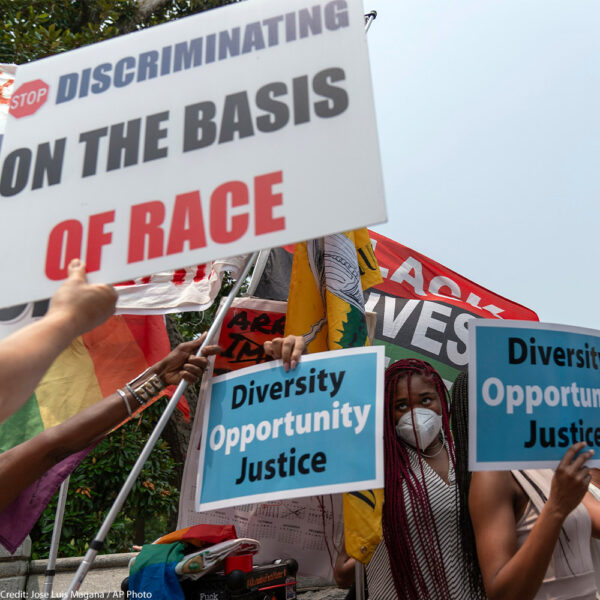
How to Dismantle the Anti-DEI Machine
February 8, 2024
Free speech on campus, book bans, education gag orders, the overturn of affirmative action, the resignation of former Harvard president Claudine Gay. All of these issues center on one hot-button topic: DEI.
Diversity, Equity, and Inclusion (DEI) has become a staple in national vocabulary after the so-called “racial reckoning” of 2020 brought demands for racial justice to the top of institutional priorities. From schools to Fortune 500 companies to the film industry, DEI efforts had a steady surge…until they didn’t.
The burgeoning anti-DEI movement, also coined the “war on woke,” has gone from a once-fringe conservative crusade to a political machine. Already this year, about three dozen bills restricting DEI efforts, like critical race theory, have been proposed in states across the country, with more likely to emerge. Need we again mention the overturn of affirmative action? But how did we go from a public seemingly-committed to DEI to one that denounces it in the span of just a few years?
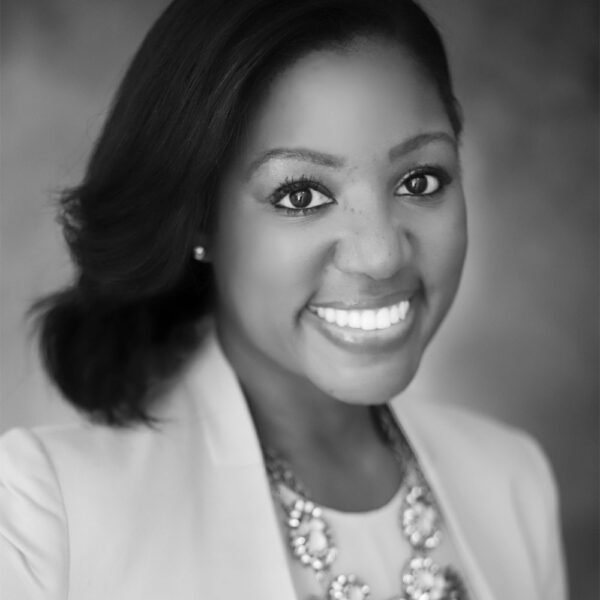
Joining us to help answer this question are Alvin B. Tillery, professor of political science at Northwestern University and director of the university’s Center for the Study of Diversity and Democracy, and Leah Watson, senior staff attorney with the ACLU’s Racial Justice Program. Together, we’ll trace the rise of the anti-DEI machine and its political ramifications for the year to come.
For more context on the ACLU’s litigation efforts against education gag orders, check out Leah’s law review article: https://journals.law.harvard.edu/crcl/wp-content/uploads/sites/80/2023/09/HLC208_Watson.pdf
In this episode
Kendall Ciesemier
Listen to this episode on
Apple Podcasts SpotifyThis Episode Covers the Following Issues
Related Content
-
CaliforniaOct 2026

Civil Liberties
+2 Issues
Salles, Et Al. V. National Institutes Of Health, Et Al.. Explore Case.Salles, et al. v. National Institutes of Health, et al.
Salles, et al. v. National Institutes of Health, et al. is a class action lawsuit challenging the censorship and termination of federally funded research by the National Institutes of Health (NIH). While ongoing litigation in APHA v. NIH successfully resulted in the reinstatement of hundreds of grants, NIH’s current policies continue to target viewpoints it opposes, threatening research because the government dislikes what it thinks the researchers believe or are likely to say, and continue to violate governing statutes and regulations. This is stymieing critical public health research, particularly related to climate change, the starkest health disparities including those faced by communities of color and LGBTQ+ populations, and other areas. -
Washington, D.C.Oct 2026
Racial Justice
Aaer V. Hsf. Explore Case.AAER v. HSF
The Hispanic Scholarship Fund's (HSF) ability to award scholarships to Hispanic students has been challenged by the American Alliance for Equal Rights. The plaintiff alleges that HSF's scholarships (1) constitute a contract between HSF and the awardees and (2) discriminate against qualified, non-Hispanic students. We represent HSF to defend their right to make higher education accessible to students by supporting them with charitable resources and opportunities. -
News & CommentaryOct 2026

Free Speech
Racial Justice
Nih Censors Crucial Research On Alzheimer's, Kidney Disease, And More, Researchers Share. Explore News & Commentary.NIH Censors Crucial Research on Alzheimer's, Kidney Disease, and More, Researchers Share
NIH is targeting and terminating grants for research studies that it thinks will communicate disfavored viewpoints on diversity, gender identity, climate change, and more, violating First Amendment rights and threatening the future of public health. -
Press ReleaseSep 2026

Racial Justice
Free Speech
Researchers Challenge Nih Screening Of Grants For Disfavored Viewpoints. Explore Press Release.Researchers Challenge NIH Screening of Grants for Disfavored Viewpoints
SAN FRANCISCO — Today, researchers filed a class action lawsuit challenging the National Institutes of Health’s (NIH) policy of blocking grants in order to censor views it disagrees with, on everything from DEI to gender identity to climate change. The lawsuit alleges that NIH, the world’s largest public funder of biomedical research, is unconstitutionally censoring research and allowing political ideology to override scientific expertise in determining which projects receive federal funding, contrary to congressional mandates. “Our study on Alzheimer’s disease was designed to better understand how to identify and reduce the risk of dementia in communities who are at high risk of developing the disease, who have been historically understudied. For more than a decade, our team has built trusted relationships with communities that have too often been excluded from research, giving us critical information that can help improve early detection and treatments for Alzheimer’s disease, work that benefits everyone,” said Ann D. Cohen, PhD, Associate Professor of Psychiatry at the University of Pittsburgh. “Losing this funding has forced us to abruptly cancel appointments for participants, preventing them from receiving promised research results, and slowing or stopping critical data analysis. This puts years of trust and scientific progress at risk.” “For more than 15 years, my research has focused on gender equity, sexual harassment, and the barriers that can push talented individuals out of science and medicine. Now, I can no longer accurately describe my research because using words like ‘gender,’ ‘equity,’ or ‘sexual harassment’ would be flagged as inconsistent with NIH priorities,” said Arghavan Salles, Double Board-Certified surgeon and Clinical Associate Professor at the Stanford University Department of Medicine. “Scientists should not have to scrub their research to receive federal funding, particularly after taxpayers have already invested years in supporting this work.” NIH is using a troubling list of 235 keywords as proxies to identify grants or researchers likely to express or support perspectives this administration does not like. The forbidden terms include “equity,” “advancing diversity,” “racist,” “gender,” “Latinx,” “climate change,” and “pregnant individual,” among others. This list is being used to review grant applications as well. Some grants and applications are summarily terminated or denied, while NIH has sought to renegotiate others, requiring researchers to scrub their grant materials of flagged words. If the researcher refuses, NIH terminates the grant or stops the application from advancing. The screening is being applied to already-funded awards and new funding applications, which have already passed through rounds of peer scientific review and been approved by the NIH officials that Congress has identified as the proper decisionmakers. This additional layer of ideological review is a departure from the NIH’s longstanding approach and contrary to congressional mandates designed to prevent the politicization of the NIH award process. Terminating or threatening to terminate grants injects an enormous amount of uncertainty into the scientific process, which relies on stable and predictable multi-year grants allowing the planning, relationship building, phased work, and implementation that scientific research requires. “My research focused on why people from different racial and ethnic backgrounds experience kidney disease and kidney failure at different rates, receive different treatments, and have different mortality outcomes. By understanding what drives these differences, we hoped to identify where patients are being left behind and develop better strategies to improve their care and outcomes,” said Jonathan Kyle Daw, Professor of Sociology and Demography at the Pennsylvania State University. “Our grant termination is a loss not only for my team and myself, but also the broader medical community and for public health, as this type of research is critical to achieving NIH’s mission and making sure we have a healthier society.” The lawsuit contends that NIH’s current viewpoint-based policies violate the First Amendment, which prohibits NIH from screening out projects or applicants because it thinks they’ll express views the government does not like. In addition, NIH is violating statutes designed to ensure federal public health grants are awarded based on scientific merit, not politics, and regulations limiting when the government can terminate grants. The plaintiffs are represented by the American Civil Liberties Union, the ACLU of Northern California, Protect Democracy, the Center for Science in the Public Interest, and Jacobson Lawyers Group. The lawsuit seeks class-wide relief for all researchers whose work was unjustifiably terminated but whose grants have not yet been reinstated by a court order, as well as all researchers currently being impacted by unlawful, viewpoint-based policies that would lead to additional terminations, forced renegotiations, delays or application denials. Below are statements from litigators: “The Trump administration is weaponizing federal research funding to suppress disfavored views, pressuring scientists to censor their work or risk losing funding for research that might produce results that don’t conform to the administration’s ideology. While NIH can make calls about what topics to fund, it cannot do so in a manner that is inconsistent with governing statutes and regulations. The First Amendment also ensures NIH cannot screen out projects or applicants because it thinks they’ll express views the government does not like. NIH has crossed each of these lines,” said Olga Akselrod, senior counsel, ACLU Racial Justice Program. “Censoring research based on political litmus tests has severe public health consequences, particularly when it targets areas of research designed to address the needs of underserved populations that disproportionately experience negative health outcomes and some of the most acute health disparities.” “Using NIH funding to censor scientific research because of the perceived viewpoints expressed—for example, that misinformation can harm public health or societal injustice can impact health outcomes—blatantly violates the First Amendment and has stymied research about all types of ailments, from Alzheimer's disease to kidney failure. This isn’t just illegal, it hurts every person served by this research and unravels years of work by the scientific community,” said Shalini Goel Agarwal, special counsel at Protect Democracy. “We are proud to bring this lawsuit to uphold the First Amendment rights of our clients and return to a system where NIH research is dictated by science, not the views of whomever is in office.” “Upending the work of experienced scientists by employing filters to flag research that mentions terms like ‘gender’ or ‘minorities’ is no way to evaluate research on HIV, addiction, climate change, misinformation, or other important public health issues,” said Lisa Mankofsky, senior litigation director at CSPI. “The Trump administration has created an unconstitutional and illegal system of ideological review that is stymieing research into the starkest health disparities, including those faced by communities of color and the LGBTQ+ population, and could deprive us all of the treatments, the cures, and even the climate solutions of tomorrow.” “The Trump administration is unlawfully penalizing scientists because their research does not support the government’s preferred viewpoint on issues such as race and gender,” said Grayce Zelphin, senior staff attorney at the ACLU of Northern California. “The NIH’s new policies, which are essentially a political litmus test, violate the First Amendment, undermine science and education, and have cost universities tens of millions of dollars in cancelled grants.” “The NIH's attempts to limit how doctors, researchers, and ultimately the public talk and think about medical research is unlawful,” said Lynn Eisenberg, partner at Jacobson Lawyers Group PLLC. “We are proud to stand with the brave biomedical researchers and scientists challenging the NIH's attempt to silence viewpoints that don't align with their own.” You can find the complaint here.