Imani Perry Thinks You’re Wrong About the South
February 24, 2022
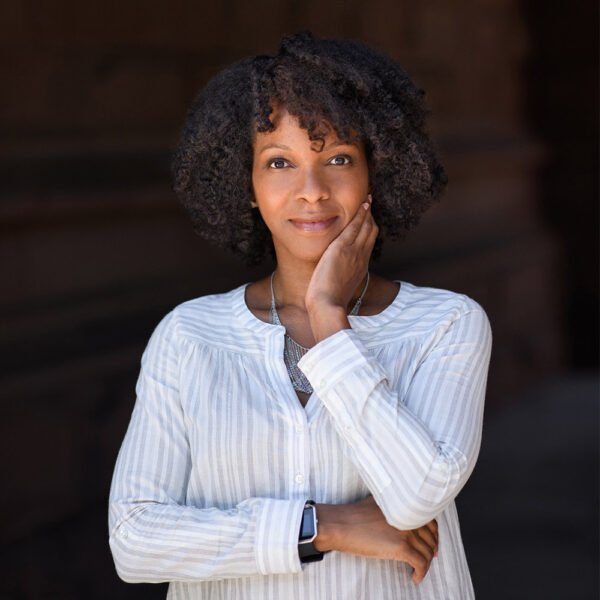
Our guest today is Imani Perry. Her latest book is “South to America: A Journey Below the Mason Dixon to Understand the Soul of a Nation.” In it she writes that understanding this country starts with the South. Imani challenges the idea of the South as a backward place, a repository for the U.S.’s shame over slavery, white supremacy, and poverty. To cast away the South, she writes, only props up a heroic self-mythology of the U.S. that fogs up the mirror of history.
Imani is based at the department for African American studies at Princeton University as an interdisciplinary scholar of law, literary and cultural studies. In addition to South to America, her books include “Breathe: A Letter to My Sons,” “Looking for Lorraine: The Radiant and Radical Life of Lorraine Hansberry” and other titles. She was born in Birmingham, Alabama and while she’s lived much of her life elsewhere, she still considers Birmingham home.
In this episode
Elizabeth Watson
This Episode Covers the Following Issues
Related Content
-
News & CommentarySep 2026
Free Speech
Racial Justice
Nih Censors Crucial Research In Alzheimer's, Kidney Disease, And More, Researchers Share. Explore News & Commentary.NIH Censors Crucial Research in Alzheimer's, Kidney Disease, and More, Researchers Share
NIH is targeting and terminating grants for research studies that it thinks will communicate disfavored viewpoints on diversity, gender identity, climate change, and more, violating First Amendment rights and threatening the future of public health. -
Press ReleaseSep 2026

Racial Justice
Free Speech
Researchers Challenge Nih Screening Of Grants For Disfavored Viewpoints. Explore Press Release.Researchers Challenge NIH Screening of Grants for Disfavored Viewpoints
SAN FRANCISCO — Today, researchers filed a class action lawsuit challenging the National Institutes of Health’s (NIH) policy of blocking grants in order to censor views it disagrees with, on everything from DEI to gender identity to climate change. The lawsuit alleges that NIH, the world’s largest public funder of biomedical research, is unconstitutionally censoring research and allowing political ideology to override scientific expertise in determining which projects receive federal funding, contrary to congressional mandates. “Our study on Alzheimer’s disease was designed to better understand how to identify and reduce the risk of dementia in communities who are at high risk of developing the disease, who have been historically understudied. For more than a decade, our team has built trusted relationships with communities that have too often been excluded from research, giving us critical information that can help improve early detection and treatments for Alzheimer’s disease, work that benefits everyone,” said Ann D. Cohen, PhD, Associate Professor of Psychiatry at the University of Pittsburgh. “Losing this funding has forced us to abruptly cancel appointments for participants, preventing them from receiving promised research results, and slowing or stopping critical data analysis. This puts years of trust and scientific progress at risk.” “For more than 15 years, my research has focused on gender equity, sexual harassment, and the barriers that can push talented individuals out of science and medicine. Now, I can no longer accurately describe my research because using words like ‘gender,’ ‘equity,’ or ‘sexual harassment’ would be flagged as inconsistent with NIH priorities,” said Arghavan Salles, Double Board-Certified surgeon and Clinical Associate Professor at the Stanford University Department of Medicine. “Scientists should not have to scrub their research to receive federal funding, particularly after taxpayers have already invested years in supporting this work.” NIH is using a troubling list of 235 keywords as proxies to identify grants or researchers likely to express or support perspectives this administration does not like. The forbidden terms include “equity,” “advancing diversity,” “racist,” “gender,” “Latinx,” “climate change,” and “pregnant individual,” among others. This list is being used to review grant applications as well. Some grants and applications are summarily terminated or denied, while NIH has sought to renegotiate others, requiring researchers to scrub their grant materials of flagged words. If the researcher refuses, NIH terminates the grant or stops the application from advancing. The screening is being applied to already-funded awards and new funding applications, which have already passed through rounds of peer scientific review and been approved by the NIH officials that Congress has identified as the proper decisionmakers. This additional layer of ideological review is a departure from the NIH’s longstanding approach and contrary to congressional mandates designed to prevent the politicization of the NIH award process. Terminating or threatening to terminate grants injects an enormous amount of uncertainty into the scientific process, which relies on stable and predictable multi-year grants allowing the planning, relationship building, phased work, and implementation that scientific research requires. “My research focused on why people from different racial and ethnic backgrounds experience kidney disease and kidney failure at different rates, receive different treatments, and have different mortality outcomes. By understanding what drives these differences, we hoped to identify where patients are being left behind and develop better strategies to improve their care and outcomes,” said Jonathan Kyle Daw, Professor of Sociology and Demography at the Pennsylvania State University. “Our grant termination is a loss not only for my team and myself, but also the broader medical community and for public health, as this type of research is critical to achieving NIH’s mission and making sure we have a healthier society.” The lawsuit contends that NIH’s current viewpoint-based policies violate the First Amendment, which prohibits NIH from screening out projects or applicants because it thinks they’ll express views the government does not like. In addition, NIH is violating statutes designed to ensure federal public health grants are awarded based on scientific merit, not politics, and regulations limiting when the government can terminate grants. The plaintiffs are represented by the American Civil Liberties Union, the ACLU of Northern California, Protect Democracy, the Center for Science in the Public Interest, and Jacobson Lawyers Group. The lawsuit seeks class-wide relief for all researchers whose work was unjustifiably terminated but whose grants have not yet been reinstated by a court order, as well as all researchers currently being impacted by unlawful, viewpoint-based policies that would lead to additional terminations, forced renegotiations, delays or application denials. Below are statements from litigators: “The Trump administration is weaponizing federal research funding to suppress disfavored views, pressuring scientists to censor their work or risk losing funding for research that might produce results that don’t conform to the administration’s ideology. While NIH can make calls about what topics to fund, it cannot do so in a manner that is inconsistent with governing statutes and regulations. The First Amendment also ensures NIH cannot screen out projects or applicants because it thinks they’ll express views the government does not like. NIH has crossed each of these lines,” said Olga Akselrod, senior counsel, ACLU Racial Justice Program. “Censoring research based on political litmus tests has severe public health consequences, particularly when it targets areas of research designed to address the needs of underserved populations that disproportionately experience negative health outcomes and some of the most acute health disparities.” “Using NIH funding to censor scientific research because of the perceived viewpoints expressed—for example, that misinformation can harm public health or societal injustice can impact health outcomes—blatantly violates the First Amendment and has stymied research about all types of ailments, from Alzheimer's disease to kidney failure. This isn’t just illegal, it hurts every person served by this research and unravels years of work by the scientific community,” said Shalini Goel Agarwal, special counsel at Protect Democracy. “We are proud to bring this lawsuit to uphold the First Amendment rights of our clients and return to a system where NIH research is dictated by science, not the views of whomever is in office.” “Upending the work of experienced scientists by employing filters to flag research that mentions terms like ‘gender’ or ‘minorities’ is no way to evaluate research on HIV, addiction, climate change, misinformation, or other important public health issues,” said Lisa Mankofsky, senior litigation director at CSPI. “The Trump administration has created an unconstitutional and illegal system of ideological review that is stymieing research into the starkest health disparities, including those faced by communities of color and the LGBTQ+ population, and could deprive us all of the treatments, the cures, and even the climate solutions of tomorrow.” “The Trump administration is unlawfully penalizing scientists because their research does not support the government’s preferred viewpoint on issues such as race and gender,” said Grayce Zelphin, senior staff attorney at the ACLU of Northern California. “The NIH’s new policies, which are essentially a political litmus test, violate the First Amendment, undermine science and education, and have cost universities tens of millions of dollars in cancelled grants.” “The NIH's attempts to limit how doctors, researchers, and ultimately the public talk and think about medical research is unlawful,” said Lynn Eisenberg, partner at Jacobson Lawyers Group PLLC. “We are proud to stand with the brave biomedical researchers and scientists challenging the NIH's attempt to silence viewpoints that don't align with their own.” You can find the complaint here. -
News & CommentaryAug 2026

Racial Justice
Montana Sets Gold Standard For Indigenous Education Nationwide. Explore News & Commentary.Montana Sets Gold Standard for Indigenous Education Nationwide
The ACLU, ACLU of Montana, and the Native American Rights Fund reached a landmark settlement to resolve a class action lawsuit over the state’s failure to implement its own Indigenous education law. -
Press ReleaseAug 2026
Racial Justice
Historic Agreement Strengthens Indian Education For All Across Montana Schools. Explore Press Release.Historic Agreement Strengthens Indian Education for All Across Montana Schools
HELENA, Mont. — The Montana Office of Public Instruction has agreed to a landmark settlement that would create long-awaited accountability measures to ensure Montana schools fully implement the state constitution’s guarantee that the unique cultural heritage and contributions of the Indigenous peoples of the region are recognized and taught across the state. The agreement marks a major milestone in fulfilling Montana’s constitutional and statutory commitment to teach all students — Native and non-Native alike — about the histories, cultures, governments, and contributions of Tribal Nations in Montana. The settlement was preliminary approved by the court Monday and is subject to final court approval following a notice period. Under the agreement, Indian Education for All (IEFA) would be incorporated into state accreditation and monitoring systems, making implementation a core expectation for Montana’s K-12 schools. It also formalizes Tribal consultation processes, ensuring Tribal Nations have an ongoing role in shaping how Indigenous education is developed and delivered statewide. “For too long, Tribes were expected to trust that things would improve without having a seat at the table,” said councilwoman Roxanne Gourneau, Ft. Peck Tribal Executive Board Member. “This settlement recognizes that Tribal Nations are essential partners in educating Montana’s students.” The class-action lawsuit, DuPuis-Pablo v. Montana Office of Public Instruction, was filed in 2021 by 18 Montana students and their guardians, together with Tribal Nations including the Assiniboine and Sioux Tribes of the Fort Peck Reservation, Confederated Salish and Kootenai Tribes of the Flathead Reservation, Fort Belknap Indian Community, Little Shell Tribe of Chippewa Indians of Montana, and Northern Cheyenne Tribe. At the heart of the case was a promise embedded in Montana’s constitution: that all students learn about the histories, cultures, and contributions of the Indigenous peoples of the region. Montana remains the only state in the nation with an explicit constitutional guarantee of Indian education. For more than two decades, IEFA has required Montana schools to provide education about Tribal histories, cultures, and contemporary Tribal governments. While nationally recognized as a model of Indigenous education, implementation has varied widely across school districts and lacked meaningful enforcement. “This agreement finally puts accountability behind Indian Education for All,” said Alex Rate, legal director, ACLU Montana. “For years, the law existed without meaningful oversight. Now there are clear systems to help ensure the state and school districts fulfill obligations that already exist under the Montana Constitution and IEFA.” The agreement requires schools to demonstrate that Indian Education for All is integrated across curriculum areas, that IEFA funds are used appropriately, and that Tribal Nations are meaningfully engaged in developing Indian education programs. For students, the changes are expected to bring more consistent and substantive instruction about Native history, culture, and contemporary Tribal governments — moving beyond isolated lessons or superficial coverage. For Native students, it also means classrooms that better reflect their identities, histories, and lived experiences. “As parents who were raised attending Montana schools, we have firsthand experience of what it looks like when Indian Education is not included in school curriculum and culture,” said Crystal and Tyler Amundson, two parent plaintiffs. “All public school students should have access to learning that promotes understanding, which is why we’re proud that our children now attend Montana public schools that mirror Montana’s diverse population. But this settlement isn’t just about celebrating diversity, it’s about ensuring that my children, who are not Native, experience a more accurate and inclusive version of Montana’s history, present, and future.” “Montana is the only state that has Indian Education for All, but how are we ensuring that it’s being carried out?” asked Cammie DuPuis-Pablo, a parent plaintiff. “Hopefully, this settlement will push back against the ignorance and lack of knowledge that is all too common. I didn’t get to see accurate representations of Native Americans when I was in school, my oldest kids didn’t get that when they were in school, but — with this settlement — maybe my youngest kids will. Because our ancestors’ story is meaningful, it’s what happened, and it should not be cut out from the history of America, or I would say Turtle Island.” “This agreement helps prevent classrooms where Native history is missing, misunderstood, or treated as optional,” said Mark Carter, senior staff attorney at Native American Rights Fund (NARF). “It makes clear that Indian Education for All is not a suggestion — it’s the law that was created by the people of Montana.” Crystal Pardue, senior staff attorney with ACLU, said the agreement could serve as a model beyond Montana. “This settlement shows what real accountability looks like,” Pardue said. “This lays out exactly what states must do: pair strong curriculum requirements with clear standards, consistent oversight, and meaningful partnership with Tribal Nations to ensure accurate, inclusive education in every classroom.” “This settlement is a long overdue step toward honoring the promise that Montana made to its students in 1972, that every child learns about the histories and cultures of our Tribal Nations,” said Michael Dolson, council chairman of the Confederated Salish and Kootenai Tribes. “Indian Education for All builds the understanding and respect that all of our communities need. This settlement means accountability for implementing that commitment, with real reporting, real curriculum developed with Tribes, and real consequences when schools fail to deliver.” The plaintiffs were represented by the ACLU of Montana, ACLU, Native American Rights Fund, K&L Gates, LLP and Venable LLP. A copy of the settlement is available here. A copy of the preliminary approval order is available here. The case page can be found here.