
Why the ACLU Opposes Kavanaugh
October 2, 2018
The nomination of Judge Brett Kavanaugh to the Supreme Court has turned into a full-blown national drama, amid credible sexual misconduct allegations against him. Late last week, Dr. Christine Blasey Ford testified before the Senate Judiciary Committee that Kavanaugh assaulted her when they were both in high school. Kavanaugh denied her claims in a combative and emotional response. The ACLU does not ordinarily oppose or support judicial nominations. However, the day after the Senate hearing, the ACLU’s national board voted to suspend that policy in order to formally oppose Kavanaugh’s nomination. ACLU President and Brooklyn Law School professor Susan Herman joins At Liberty to discuss the decision.
This Episode Covers the Following Issues
Related Content
-
News & CommentarySep 2026

Women's Rights
Aclu Women's Rights Advocate Honors Gloria Steinem's Legacy. Explore News & Commentary.ACLU Women's Rights Advocate Honors Gloria Steinem's Legacy
Attorney Ashley Johnson reflects how Gloria Steinem shares the work of the ACLU and how it lit the way for her own future in advocacy. -
Press ReleaseAug 2026

Women's Rights
Foia Request Seeks Records Related To Pentagon Review Of Women In Ground Combat Roles. Explore Press Release.FOIA Request Seeks Records Related to Pentagon Review of Women in Ground Combat Roles
NEW YORK – Today, the American Civil Liberties Union’s Women’s Rights Project (WRP), the National Women’s Law Center (NWLC), and the Service Women’s Action Network (SWAN) filed a request under the Freedom of Information Act (FOIA) seeking records from the Department of Defense (DoD) regarding its decision to undertake formal review of the “effectiveness” of women in ground combat roles. The request comes as DoD and Secretary Pete Hegseth have provided no meaningful explanation for why the review was ordered, what it will examine, or what its findings could mean for women’s continued ability to serve in ground combat roles. In December 2025, DoD launched a six-month review of women’s integration into ground combat units, a decade after lifting the remaining restrictions for women to compete for those roles, in which roughly 5,000 women have served. DoD directed the Army and Marine Corps to provide data on the “operational effectiveness” of those units, including internal studies about women’s integration, to the Institute for Defense Analyses (IDA), a nonprofit organization. DoD did not announce the formal review, which became public only after it was reported by a news outlet. In April 2026, DoD reassigned the review to Johns Hopkins University Applied Physics Laboratory (JHU/APL) and extended the study’s duration to one year. “During his tenure, Secretary Hegseth has repeatedly questioned women’s ability to serve in ground combat, including by misleadingly claiming that occupational standards have been lowered to accommodate women. Such standards have been gender-neutral, by statute, for over 30 years,” said Gillian Thomas, senior counsel, ACLU’s Women’s Rights Project. “This formal review raises serious concerns that the Department of Defense is laying the groundwork to once again restrict qualified women from serving in combat. The public has a right to know why DoD ordered the review, its intended scope, and whether women’s exclusion from combat jobs is on the table as a potential outcome.” “Excluding qualified women from ground combat would make our military weaker, not stronger,” said Elisa Cardnell, chief executive officer, SWAN. “Women have always served with distinction on the front lines. Since formally being integrated into combat jobs, they have excelled in some of the military’s most demanding roles, brought critical operational experience and capabilities to missions around the world, and strengthened recruitment and retention. Every qualified servicemember should have the opportunity to earn their place and serve.” “Investigating women’s effectiveness in the military is baseless, sexist, and offensive,” said Lauren Khouri, senior director of workplace justice at NWLC. “Hegseth has been explicit about his intentions to push women out of the military and today we’re filing to find out the extent and intention of this review. This is an attack on our servicemembers and the public deserves transparency.” Women have always been on the frontlines of our nation’s defense and have served in every major U.S. conflict. For decades, however, restrictions barred women from thousands of combat positions. Those restrictions were gradually dismantled as women proved themselves in increasingly demanding assignments, including during the wars in Iraq and Afghanistan, where women were killed, wounded, and decorated for valor. In 2016, all remaining ground combat roles were open to women following a lawsuit by WRP on behalf of SWAN and four servicewomen challenging the Pentagon’s policy barring women from serving in those positions. Today, this progress is at risk following a series of actions by Secretary Hegseth that have raised concerns about women’s ability to serve in the military on equal terms. In addition to questioning women’s ability to serve in ground combat positions, Secretary Hegseth has repeatedly denigrated women servicemembers and veterans and taken unprecedented action to fire women leaders – along with Black officers – and purge them from promotion lists. He has also initiated changes to physical eligibility criteria for combat jobs across the military branches, based on an asserted belief that women have been held to lower fitness standards. These actions raise concerns that the formal review serves as a prelude to restrict women’s continued service in ground combat roles. Earlier this year the top enlisted leaders of each of the military branches testified before the Senate Armed Services Committee that women’s integration into combat occupations has not compromised performance standards or operational readiness. Even under questioning from congressional leaders, Secretary Hegseth has not offered any evidence calling women’s combat “effectiveness” into question, let alone supporting the need for further study. The FOIA request seeks records related to the formal review assigned to the Institute for Defense Analyses and later reassigned to the Johns Hopkins University Applied Physics Laboratory, including records describing the scope, purpose, methodology, and anticipated use of the review. It also seeks records related to an earlier DoD review of combat jobs’ occupational standards. A copy of the FOIA request is available here. -
News & CommentaryAug 2026
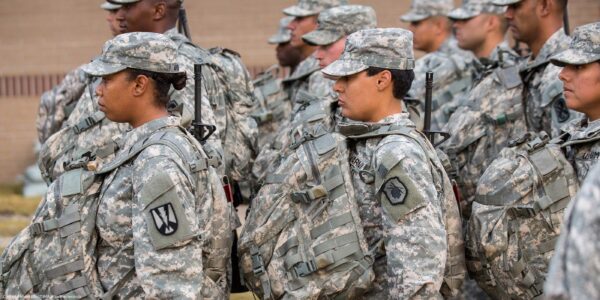
Women's Rights
Veterans Share Why The Military Is Stronger When Women Can Serve In Ground Combat Roles. Explore News & Commentary.Veterans Share Why the Military Is Stronger When Women Can Serve in Ground Combat Roles
Veterans reflect on their military service, the requirements of ground combat occupations, and the decade-long integration of women into those roles. -
News & CommentaryAug 2026

Criminal Law Reform
+2 Issues
States Are Punishing Women Who Survive Violence With Incarceration. They Deserve Clemency.. Explore News & Commentary.States are Punishing Women Who Survive Violence with Incarceration. They Deserve Clemency.
One woman violently forced into assisting a murder seeks clemency in Michigan. Author and journalist Justine van der Leun calls for states to enact laws protecting criminalized survivors.