ACLU Condemns Florida Supreme Court Decision Upholding Non-Unanimous Capital Juries
Florida’s law, allowing for juries split 8-4 to sentence people to death, is the most extreme in the country
TALLAHASSEE – The Florida Supreme Court upheld Florida’s law allowing non-unanimous juries to sentence people to death upon a vote of 8-4, meaning a person can be sentenced to death in the state even if a third of the jury votes for life. The court’s decision came in a pair of cases, Jackson v. Florida and Hunt v. Florida, brought by two men sentenced to death by non-unanimous juries.
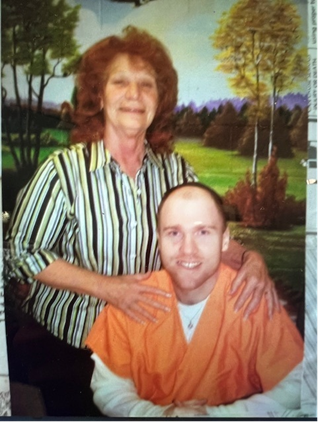
The American Civil Liberties Union represents Mr. Michael Jackson, who was sentenced to death in 2007, despite 4 jurors voting for a life sentence. In 2016, the Florida Supreme Court declared non-unanimous sentencings unconstitutional after a Supreme Court decision ruled that Florida’s capital sentencing statute violated the Sixth Amendment. For years, Mr. Jackson waited to be re-sentenced under the law of unanimity, but weeks before his long-awaited retrial, the Florida legislature reinstated non-unanimous juries, and he was sentenced to death by another 8-4 jury.
“Allowing a death sentence by a divided jury betrays the founders’ vision of the jury as a cornerstone of democracy and a protection against government overreach,” said Megan Byrne, senior staff attorney at the ACLU’s Capital Punishment Project. “Non-unanimous juries increase the risk of wrongful convictions and can operate to silence the voices of jurors of color. Florida’s high court has made clear that the state values speed and finality over accuracy and justice. We will be asking the Supreme Court to review this decision and reaffirm that the Constitution provides the right to a fair trial and a unanimous jury when life is at stake.”
Florida is one of only two states to allow divided juries to sentence people to death and has the most extreme law in the country. As Justice Labarga of the Florida Supreme Court acknowledged in his separate opinion, “the 8-4 threshold renders Florida the absolute outlier among states that impose the death penalty. Florida now has the lowest standard in the nation, requiring the fewest number of jurors to recommend the death penalty.”
Florida legislators enacted the non-unanimity law in 2023 despite a recent U.S. Supreme Court decision holding that unanimity is required for guilty verdicts in all cases where a defendant is charged with a serious offense. In that decision, the Supreme Court called out the racist origins of non-unanimity laws which states specifically designed to silence the voices of Black jurors.
Non-unanimous sentencing schemes also heighten the risk of executing the innocent. Florida has had 30 exonerations from death row — the most capital exonerations of any state in the country. Of those, the vast majority (19) of exonerees were sentenced by non-unanimous juries.
“More than 200 innocent people have been exonerated from death rows across America since 1976,” said Daniel Tilley, legal director of the ACLU of Florida. “Non-unanimous juries only amplify the risk that innocent people will be sentenced to death. Dissenting jurors often raise concerns about credibility, evidence, or mitigation, and non-unanimity allows someone to be sentenced to death despite unresolved doubt. When the stakes are life or death, we cannot afford to settle for anything less than what the Constitution promises.”
Michael Hunt, the second man challenging non-unanimity, was arrested and charged with capital murder in 2018, when Florida law required the jury to be unanimous in any death recommendation. His trial was delayed until 2023, by which point the Florida legislature and courts had walked back the protection of unanimity. The jury convicted him unanimously, but voted only 10-2 for his death sentence. Had the jury issued this decision only six months earlier, Florida law would have required a life sentence.
Read more about Mr. Jackson’s case here: https://www.aclu.org/cases/michael-jackson-v-state-of-florida
Capital Punishment
Michael Jackson v. State of Florida
Capital Punishment
Michael Jackson v. State of Florida
Related Issues
Related Content
-
News & CommentaryOct 2026
Civil Liberties
+4 Issues
This Supreme Court Term: Our Rights And Freedoms At Stake. Explore News & Commentary.This Supreme Court Term: Our Rights and Freedoms at Stake
The ACLU could have its busiest Supreme Court term ever, with potential cases on immigration, voting rights, and religious freedom in schools. -
Press ReleaseOct 2026

Capital Punishment
Nh Supreme Court Rules “disproportionality” Of Death Penalty For Only Man On Death Row Cannot Be Reviewed. Explore Press Release.NH Supreme Court Rules “Disproportionality” of Death Penalty for Only Man on Death Row Cannot be Reviewed
CONCORD, N.H. – The New Hampshire Supreme Court ruled today that the “disproportionality” of the death penalty cannot be reviewed for Michael Addison, a Black man convicted in 2008 of killing a white police officer. Addison is the only person on the state’s death row and was sentenced to die prior to New Hampshire’s repeal of the death penalty in 2019. Today’s decision is not the last word on the legality of this execution, including whether it is constitutional in light of the legislature’s repeal of the death penalty. “Today is a sad day that could lead New Hampshire down the path of becoming the first and only state to execute someone under a repealed death penalty statute,” said Gilles Bissonnette, Legal Director of the ACLU of New Hampshire. “New Hampshire repealed the death penalty in 2019 because it is inhumane, unjust, racist, and error-prone—things that are all still true today. The penalty of death cannot be proportionate in this case when someone convicted of an identical crime today would not receive the death penalty. While today's decision ignores this reality, the fight against the death penalty in this case will continue.” The ACLU and several death penalty scholars submitted a friend-of-the-court brief in this case in October 2025, urging the New Hampshire Supreme Court to disallow this execution from ever taking place and highlighting that New Hampshire could become the first and only state to execute someone under a repealed death penalty statute. "It is extremely disappointing that the Court did not take this opportunity to address the disproportionate and inequitable death sentence imposed on Mr. Addison, the only person on New Hampshire’s death row and a Black man,” said Megan Byrne, senior staff attorney at the ACLU’s Capital Punishment Project. “New Hampshire repealed the death penalty in 2019 because it recognized that the punishment is unjust, inhumane, and infected with racial bias. Mr. Addison's case puts those very problems on full display. New Hampshire should not move backward by defending a sentence under a law it has already rejected." The brief also asked the Court to consider the ways that racism contributed to Addison’s death sentence, saying, “this Court should consider the legion of social science research explaining the ways that race likely contributed to the death sentence of a poor, Black man who did not ‘purposefully kill’ the victim, particularly when the sentence came in the same year that a rich, white man was given a life sentence after purposefully bludgeoning someone to death with a sledgehammer alongside two others he had hired to kill the victim.” The decision today comes amid renewed national scrutiny of the death penalty following Tennessee’s botched execution of Christa Pike last week. The horrific execution attempt was Tennessee’s second botched execution in less than 6 months. -
Press ReleaseSep 2026
Capital Punishment
Aclu And Aclu Of Mississippi Urge Court To Consider Racial Discrimination In Willie Manning Case. Explore Press Release.ACLU and ACLU of Mississippi Urge Court to Consider Racial Discrimination in Willie Manning Case
JACKSON, Ms. – The American Civil Liberties Union, the ACLU of Mississippi, and partners filed an amicus brief today urging the Mississippi Supreme Court to consider Willie Manning’s claim that prosecutors unconstitutionally excluded Black prospective jurors from his 1994 capital trial. The brief warns that racial discrimination in jury selection was one of several alarming problems that undermine the reliability of Manning’s conviction and death sentence. At trial, prosecutors systematically excluded Black jurors from Manning’s jury, resulting in a nearly all white jury in a county where Black people made up 34% of the population. Prosecutors struck six of the nine Black prospective jurors, for reasons including that the prospective juror read “Ebony” or “Jet” magazines or lived in an “extremely bad neighborhood” – in other words, a predominantly Black neighborhood. Manning’s lawyers challenged the strikes under Batson v. Kentucky, the Supreme Court case that prohibits prosecutors from striking jurors based on race, but the trial judge accepted the prosecutor’s purportedly race-neutral explanations without conducting the proper legal analysis to determine whether they were simply pretexts for discrimination. “Juries are supposed to reflect the communities that they represent, and that’s for good reason: diverse juries deliberate more thoroughly, consider a wider range of evidence, and make fewer mistakes,” said Anna Arceneaux, deputy director of the ACLU’s Capital Punishment Project. “When racial discrimination shapes who can serve on a jury, it undermines the fairness of the entire process for the accused and for prospective jurors alike. In Mr. Manning’s case, the evidence suggests that racial discrimination played a major role in shaping the jury that decided whether he would live or die, and when a person’s life is on the line, the court cannot afford to look past that.” The racial discrimination in jury selection is particularly concerning in this case considering the broader questions surrounding Manning’s conviction and death sentence and known Batson violations in similar cases in Mississippi. Examples of prosecutorial misconduct, the known leading cause of wrongful convictions, run rampant throughout Manning’s case. The same district attorney who prosecuted Manning was responsible for sending several innocent people to prison who were later exonerated. At least twice in the last 7 years, the Supreme Court has sharply condemned Mississippi prosecutors' Batson violations in two cases with striking similarities to Manning’s (Flowers and Pitchford). “To date, the justice system has failed Mr. Manning,” said Ayanna Hill, racial justice attorney, at the ACLU of Mississippi. “We are hopeful that can change, and the Court finds that a lower court’s lack of meaningful review of a prosecutor’s jury strikes undermines the validity of a conviction and death sentence.” The ACLU and ACLU of Mississippi are asking the Mississippi Supreme Court to grant Manning permission to file a post-conviction relief petition to address the prosecution’s systematic and unconstitutional discrimination against Black prospective jurors. The amicus brief is available here. -
Tennessee Supreme CourtAug 2026

Capital Punishment
Free Speech
Assoc. Press V. Nelsen. Explore Case.Assoc. Press v. Nelsen
Tennessee's execution policies prevent the press from witnessing critical stages before and after a state execution. However, the public needs to know how they work—or don't work—to participate in informed public debate. The ACLU's State Supreme Court Initiative, alongside the ACLU of Tennessee, filed an amicus brief explaining why a provision in the Tennessee Constitution that guarantees access to government proceedings requires greater press access to executions.