Federal Appeals Court Revives Challenge to Wisconsin’s Voter ID Law
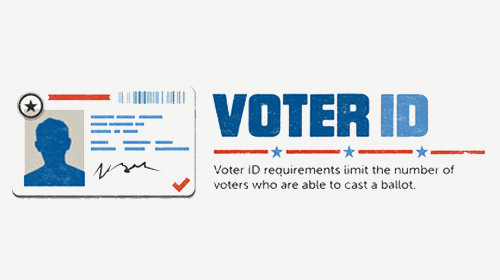
CHICAGO – A federal appeals court has directed a lower court to consider the claims of voters who have trouble obtaining identification under Wisconsin’s strict voter ID law.
During oral arguments last week, the American Civil Liberties Union asked the U.S. Court of Appeals for the Seventh Circuit to give voters that opportunity.
Sean Young, an attorney with the ACLU’s Voting Rights Project, said:
“The court ruled that eligible voters facing difficulty obtaining ID have the right to challenge Wisconsin’s strict voter ID law. This ruling gives them the chance to go back to the lower court to make their case. This is a victory for the voters of Wisconsin.”
The ruling is at: https://www.aclu.org/legal-document/frank-v-walker-ruling
More information about this case, Frank v. Walker, is at: https://www.aclu.org/cases/frank-v-walker-fighting-voter-suppression-wisconsin
Voting Rights
Frank v. Walker: Fighting Voter Suppression in Wisconsin
Voting Rights
Frank v. Walker: Fighting Voter Suppression in Wisconsin
Learn More About the Issues in This Press Release
Related Content
-
Press ReleaseApr 2026
Voting Rights
Aclu Announces Campaign To Educate Voters In Georgia Supreme Court Election. Explore Press Release.ACLU Announces Campaign to Educate Voters in Georgia Supreme Court Election
ATLANTA – The American Civil Liberties Union of Georgia today announced the launch of a joint campaign with the national ACLU to engage Georgia voters ahead of the state Supreme Court election on May 19. The organizations are nonpartisan and do not support or oppose candidates for office. The ACLU is spending $750,000 on radio advertisements and direct-to-voter mailers during the final weeks of the campaign. These advertisements and mailers will focus on educating voters about where candidates stand on key civil liberties and civil rights issues, including abortion rights and voting rights. “On May 19, the citizens of Georgia have an opportunity to elect three justices of the Georgia Supreme Court. The Georgia Supreme Court has the power to defend the rights of the people. This could not be more important when the FBI is confiscating ballots; Homeland Security is violating due process and other important civil rights and civil liberties are at risk.” said Andrea Young, executive director of the ACLU of Georgia. “The people have a real choice. In the final weeks of this campaign, we’re educating voters on where these judicial candidates stand on basic issues like the people’s right to vote and the right to make private, personal decisions about when, whether and with whom to have a family.” Georgia Supreme Court justices hold six-year terms and interpret the state constitution and state laws, serving as the often-final defense against attacks on our rights and liberties. And the court often recognizes more expansive protections than those provided by the U.S. Constitution.Affiliate: Georgia -
Press ReleaseApr 2026
Voting Rights
Voting Rights Groups Sue Doj To Block National Voter Surveil-and-purge Database. Explore Press Release.Voting Rights Groups Sue DOJ to Block National Voter Surveil-and-Purge Database
Washington, D.C. — Today, Common Cause and four individual members sued the Trump Administration to block the Department of Justice (DOJ) from illegally stockpiling millions of Americans’ confidential voter data and creating a national voter database to surveil and purge voters. The complaint argues that the DOJ’s actions are unconstitutional, illegal, and a key component of the Trump Administration’s attempts to take over elections from states and subvert the 2026 midterms. For the first time in American history, the DOJ has demanded confidential voter information from all 50 states and Washington, D.C. and is compiling that information into a single record system. At least twelve states, including Alaska, Arkansas, Indiana, Louisiana, Mississippi, Nebraska, Ohio, Oklahoma, South Dakota, Tennessee, Texas, and Wyoming, have voluntarily complied with the DOJ’s data demands, putting their voters’ data at risk of security breaches and misuse. In their complaint, the plaintiffs explain that the DOJ’s endgame in collecting this data is to conduct its own state-by-state voter list maintenance operation and compel states to purge eligible voters from their voter rolls. The plaintiffs are represented by Citizens for Responsibility and Ethics in Washington (CREW), the American Civil Liberties Union (ACLU), Protect Democracy, the American Civil Liberties Union of the District of Columbia (ACLU-D.C.), and the Democracy and Rule of Law Clinic at Harvard Law School. “This is a blatant, partisan power grab designed to cast doubt on the validity of our elections and whose vote should be counted,” said Virginia Kase Solomón, Common Cause President and CEO. “By attempting to interrogate and exploit voter data for political purposes, President Trump’s DOJ isn’t just threatening the privacy of every American—they are building a system designed to imprison the ballot box and silence millions of eligible voters. We won’t stand by while Americans’ rights to privacy and voting are under attack.” In their complaint, the plaintiffs argue the DOJ’s actions: Usurp state authority to oversee election administration and voter list maintenance as outlined in the Constitution and federal statutes; Could prevent eligible voters from voting due to DOJ’s plans to run the data it collects through its flawed and inaccurate Systematic Alien Verification Entitlements (SAVE) database; and Ignore critical safeguards mandated by federal law designed to protect the public before the government collects the very type of sensitive information that DOJ is demanding states turn over. “The Department of Justice is entrusted with protecting the fundamental right to vote — not exploiting its position to get its hands on sensitive voter data without justification,” said Ming Cheung, senior staff attorney with the ACLU’s Voting Rights Project. “We are filing this lawsuit because these actions cross a dangerous line, threatening both the privacy of millions of Americans and public trust in our elections. No administration is above the law.” “This effort to consolidate millions of Americans’ confidential voter data in a master federal database is part of a larger illegal scheme to take over states’ constitutional roles and federalize election administration,” said Nikhel Sus, Chief Counsel at CREW. “The states’ responsibility for maintaining their voter rolls is enshrined in the Constitution and federal law, and we look forward to stopping this egregious overreach in court.” “Collecting, consolidating, and misusing highly sensitive personal voter data is part of the Trump administration’s strategy to usurp control of elections in order to baselessly cast doubt on and ultimately overturn any unfavorable election results," said Sara Chimene-Weiss, counsel for Protect Democracy. “The Constitution and federal laws place strict limits on the federal government’s role in our elections and ability to surveil Americans through consolidation of their personal data, and this administration cannot ignore these guardrails.” “The courts need to step in to stop this unprecedented power grab, to protect the freedom of our democratic elections, and to safeguard the privacy of voters across the country,” said Laura Follansbee, staff attorney at ACLU-D.C. “The Constitution is very clear that no president has the power to nationalize election administration, including maintenance of the voter rolls,” said Larry Schwartztol, Professor of Practice and faculty director of the Democracy and Rule of Law Clinic at Harvard Law School. “Any attempt by a President to seize control of that function violates federal law.” Since 2025, the DOJ has sued 30 states to force them to turn over their non-public voter files. The ACLU has taken action in 25 of these states plus D.C., and judges in five states — Michigan, Oregon, California, Massachusetts, and Rhode Island — have dismissed the DOJ’s lawsuits, ending the DOJ’s attempts to take hold of the data. View the complaint here.Affiliate: Washington, D.C. -
Press ReleaseApr 2026
Voting Rights
Pro-voter Groups Move To Join Louisiana’s Lawsuit Seeking Additional And Illegal Proof Of Citizenship To Register To Vote In Federal Elections. Explore Press Release.Pro-Voter Groups Move to Join Louisiana’s Lawsuit Seeking Additional and Illegal Proof of Citizenship to Register to Vote in Federal Elections
MONROE, LA. – Today a coalition of pro-voter organizations filed a motion to intervene as defendants in Louisiana v. EAC. On Tuesday, Louisiana filed a lawsuit against the U.S. Election Assistance Commission because the agency denied the state’s requests to modify the federal form — the national mail voter registration form used across the country. Louisiana wants its state-specific instructions to require voters to provide extra information about their citizenship, such as a unique immigration number. These new requirements violate the National Voter Registration Act and are unnecessary and burdensome. The motion to intervene was filed by the League of Women Voters of Louisiana, League of Women Voters of Louisiana Education Fund, League of Women Voters of the United States, League of Women Voters Education Fund, Voice of the Experienced, NAACP, Louisiana State Conference, and the Power Coalition for Equity and Justice. These organizations are represented by the ACLU, the ACLU of Louisiana, the Brennan Center for Justice at NYU Law, Campaign Legal Center, the Lawyers’ Committee for Civil Rights, and the Southern Poverty Law Center. The coalition filing this motion to intervene shared the following statements: “Louisiana is demanding a federal agency to rewrite the national voter registration form to impose new proof-of-citizenship requirements that Congress never authorized, threatening to turn a uniform federal safeguard into a vehicle for voter suppression. We stopped President Trump’s unlawful effort to force that result with an Executive Order, and we are now going to stop Louisiana from achieving it.” — Sophia Lin Lakin, ACLU Voting Rights Project director, ACLU “This is Louisiana’s latest attempt to burden voter registration for all Louisianans. Instead of standing up for its voters, Louisiana is suing a neutral voter protection agency—the Election Assistance Commission--to ensure it can further limit voter registration. The Louisiana League has already filed a lawsuit to oppose the state’s discriminatory proof of citizenship law, and we are proud to continue the fight against its implementation.” — M. Christian Green, president of the League of Women Voters of Louisiana “This lawsuit is a direct attack on voters and an attempt to weaponize both federal law and the court system to initiate illegal voter purges based on racist and xenophobic narratives. There is no credible evidence of widespread voter fraud, yet Louisiana is pushing burdensome proof-of-citizenship requirements that will inevitably block eligible Americans from registering to vote. The League of Women Voters is yet again stepping in and we will keep defending voters from laws and actors that seek to harm our democracy.” — Celina Stewart, CEO of the League of Women Voters “Adding burdensome proof-of-citizenship requirements to the federal voter registration form is a solution in search of a problem, one that will disproportionately block elderly voters, rural residents, and low-income families who may not have immediate access to the specific documents demanded. The NAACP has fought for generations to remove obstacles to voting, not add new ones. We are intervening to fight back against this latest attempt to restrict Black Louisianans' ability to register and have their voices heard. On our watch, voter suppression will not be rebranded as election integrity.”— Derrick Johnson, President and CEO, NAACP “Based on my service on various voter commissions for the State of Louisiana, the state does not have a voter fraud problem but a voter participation problem. More legislation needs to be done to make it easier for persons to have their voices heard and not suppressed.” — Michael McClanahan, NAACP Louisiana State Conference president “Louisiana continues its attempt to suppress the voices of Black voters and other communities of color under the false pretense of protecting election integrity. Louisiana should be working to expand access to the ballot, not entrenching new forms of voter suppression. We joined this lawsuit because our communities deserve fairness, and the full protection of their rights.” — Ashley Shelton, Founder/CEO, Power Coalition for Equity and Justice (PCEJ) “It was not that long ago when the federal Dept. of Justice would litigate against Louisiana’s deep history of disenfranchisement tactics and schemes. Unfortunately we are at a point in history where community organizations must stand up for the liberty and freedom this country claims to believe in.” — Bruce Reilly, Deputy Director, Voice of the Experienced (VOTE) “Make no mistake: the state’s actions have nothing to do with voter integrity and everything to do with the disenfranchisement of the people,” said Nora Ahmed, legal director for the ACLU of Louisiana. “The manufactured issue of voter fraud is a weak justification for yet another attack on the rights of Louisianans. We are proud to stand with a powerful coalition of organizations on the right side of history. And Louisiana will relearn a lesson it seems determined to forget: you cannot suppress the will of the people.” — Nora Ahmed, legal director, ACLU of Louisiana “The state of Louisiana wants to extend its burdensome proof-of-citizenship law to federal elections. This is an unnecessary and unlawful hurdle that would block many Louisianans from the ballot box.” — Eliza Sweren-Becker, Deputy Director of the Voting Rights and Elections program, Brennan Center for Justice “Louisiana is attempting to command a federal agency to break its own rules — and we’re not letting it happen. Louisiana’s excessive efforts to require burdensome and unnecessary registration requirements for voters to make their voices heard are not only egregious, but they run afoul of federal laws intended to safeguard access to voter registration for all Americans. Almost a year ago, we sued to stop the implementation of the law in question, and the facts remain the same: The law is unconstitutionally vague and risks disproportionate harm to historically disenfranchised communities. We remain committed to safeguarding the freedom to vote for Louisiana voters.” — Danielle Lang, vice president of voting rights and the rule of law, Campaign Legal Center “Thousands of Louisiana citizens potentially will lose the right to vote if the Louisiana Attorney General pushes this proposal through. Every voter in Louisiana should be concerned. This would hit voters of color and women voters especially hard. There's a very disturbing trend of politicians erecting unjustified barriers to voting that will make it more difficult for eligible voters to cast their ballots. The Lawyers' Committee runs the Election Protection Hotline with the help of several nonprofits and volunteer attorneys. We encourage voters to call or text the Election Protection Hotline with questions at 866-OUR-VOTE." — Robert Weiner, Voting Rights Project director, Lawyers’ Committee for Civil Rights Under Law “Once again, Louisiana is attempting to disenfranchise eligible Black and Brown voters. We refuse to stand idle as a right so many sacrificed their lives to secure is stripped away. The SPLC is proud to stand alongside the intervenors defending voting rights in Louisiana against those who are reviving the suppressive tactics of the Jim Crow era. We will continue to advocate for this constitutional right for all Louisianans.” — Bradley Heard, deputy legal director, Southern Poverty Law Center -
Press ReleaseApr 2026
Voting Rights
Judge Blocks Doj's Attempt To Access Rhode Islanders' Data. Explore Press Release.Judge Blocks DOJ's Attempt to Access Rhode Islanders' Data
PROVIDENCE, R.I. — In a win for data privacy, U.S. District Court Judge Mary S. McElroy today granted a motion from voting rights groups to dismiss the U.S. Department of Justice’s lawsuit to obtain Rhode Islanders’ sensitive voter data. ACLU and ACLU of RI filed the motion on behalf of Common Cause and three individual voters to stop the federal government’s overreach and protect Rhode Islanders’ voter data. The decision also applies to a separate motion to dismiss that was filed by the Rhode Island Secretary of State. “Today’s ruling is a massive victory for voter privacy and a rejection of federal overreach. The decision ensures voters are protected from an unauthorized national database that would have been a goldmine for hackers and a tool for intimidation. Our elections remain safe, secure, and in the hands of Rhode Islanders where they belong,” said John Marion, Common Cause’s Rhode Island Executive Director. “There is no reason the Department of Justice needs this extremely sensitive data other than for questionable, potentially unlawful, and almost certainly privacy-invasive purposes,” said Steven Brown, executive director of the ACLU of RI. “We’re pleased the court agreed with our position, and we remain staunchly dedicated to protecting the privacy and voting rights of all Rhode Islanders.” In December 2025, the DOJ requested Rhode Island’s entire non-public voter file, including sensitive information like birth dates, driver’s license numbers, and Social Security numbers. State officials offered to provide publicly available voter data, but the Department of Justice instead sued the State. During the March 26 hearing, the federal government failed to justify why they needed this information. The Department of Justice’s attorney also acknowledged that the information would be shared with the Department of Homeland Security and could be used for additional purposes. Advocacy and civil liberties groups have raised concerns about how this data could be used to assemble a national voter database, which Congress has never authorized and could be used to disenfranchise legitimate voters. Centralizing this sensitive information would also make it more vulnerable to hackers and scammers. Three other federal courts have also rejected the DOJ’s efforts to obtain private voter data. “This Administration cannot bully the States,” said Ari Savitzky, senior staff attorney with the ACLU’s Voting Rights Project. “It cannot seize voters’ private data. It cannot take over our elections. Today’s dismissal order is more proof that voters, not the federal government, hold the keys to our democracy.” “Every voter deserves to know their personal information is secure, protected, and used only for its intended purpose of maintaining accurate voter registration records,” said Maryam Jazini Dorcheh, Senior Director of Litigation at Common Cause. “This ruling defends voters’ rights and privacy in Rhode Island, and we will continue advocating to ensure those protections are upheld nationwide.” You can view the filing here. You can view the decision here.Court Case: United States v. Amore