Supreme Court Reinstates Racially Discriminatory Map for Alabama’s 2026 Congressional Elections
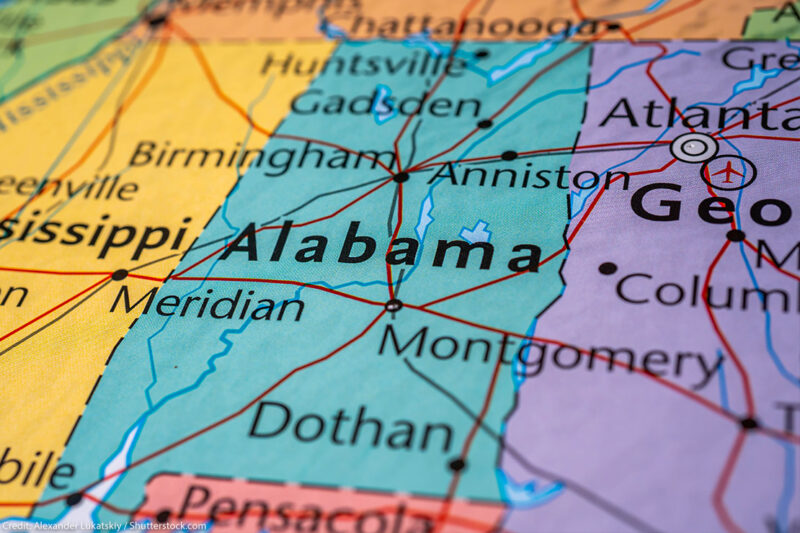

Today, the U.S. Supreme Court granted Alabama a stay in the ongoing voting rights case, Milligan v. Allen, allowing Alabama to use its 2023 racially discriminatory congressional map. Last month, a three-judge district court found that the Alabama Legislature intentionally discriminated against Black voters when it enacted the 2023 map with only one district where Black voters had any opportunity to elect the candidates of their choice. The district court ordered Alabama to instead use a race-neutral map drawn by an independent special master. Alabama previously used this court-ordered map with two opportunity districts in the 2024 congressional elections. But today’s order makes it easier for Alabama to reinstate the discriminatory 2023 map for this year’s elections.
“The Court’s decision allowing Alabama to use a racially discriminatory map in its congressional elections this year cannot be squared with the Constitution or Voting Rights Act,” said Davin Rosborough, deputy director of the ACLU’s Voting Rights Project. “Today’s ruling delays relief for voters who have already spent years fighting for an equal opportunity to elect candidates of their choice and to have their voices heard. We remain committed to pursuing equal opportunities in Congress for our clients and Black Alabamians. We will fight for those rights even in the face of those who continue to move the goalposts and undo our nation’s progress in realizing its promise as a multi-racial democracy.”
The district court had already found, after a full trial in 2025, that Alabama’s 2023 map violated both Section 2 of the Voting Rights Act and the Constitution. But, in early May, the Supreme Court sent this case back to the district court to review again in light of the Supreme Court’s April decision in Louisiana v. Callais, which changed the standard under Section 2. Alabama then attempted to return to its discriminatory 2023 map, but the district court ruled that Alabama’s 2023 map still violates the Constitution, even after Callais. The stay granted today pauses that ruling for now.
“The Supreme Court’s decision gives cover to Alabama and others to deliberately and openly discriminate against Black voters without fear of any consequence,” said Deuel Ross, Director of Litigation at the Legal Defense Fund. “The Court’s shameless decision to reinstate a racially discriminatory map defies any thoughtful or consistent application of the law. We will continue to throw all of our resources into the fight to ensure that Alabama voters have the fair representation that they deserve in Congress.”
“Alabama’s political leadership has made it absolutely clear that without protections for Black voters in place, they will not stop pursuing a congressional map that results in a delegation without Black representation-even after votes to the contrary are cast and counted,” said JaTaune Bosby Gilchrist, the executive director of ACLU of Alabama. “The Supreme Court may have granted Alabama’s request, but it has not changed the facts and what we know to be true. The fight for equity and justice continues, and we will continue to show up wherever the work demands.”
“When politicians are worried about staying in power, they come for Black voters first,” said the Milligan plaintiffs in a joint statement. “This effort to silence our communities through an intentionally discriminatory map cannot be permitted to stand. We deserve a fair shot at electing officials, regardless of party, who understand our lives and our goals, and are responsive to our concerns. Our fight for that opportunity is not over and we will continue to pursue all pathways to a fair map so that every Alabama voter has an equal opportunity to ensure they have a real voice in their government.”
The plaintiffs in the Milligan case are Evan Milligan, Khadidah Stone, Letetia Jackson, Shalela Dowdy, Greater Birmingham Ministries, and the Alabama State Conference of the NAACP, who are represented by the Legal Defense Fund, American Civil Liberties Union, ACLU of Alabama, Hogan Lovells LLP, and Wiggins, Childs, Pantazis, Fisher & Goldfarb.
The district court has set this case to be ready for re-trial no later than January 2027.
Voting Rights
Racial Justice
Allen v. Milligan
Voting Rights
Racial Justice
Allen v. Milligan
Related Issues
Related Content
-
AlaskaOct 2026
Voting Rights
United States V. Alaska. Explore Case.United States v. Alaska
Representing two Alaska voters, the League of Women Voters of Alaska, and Common Cause, the American Civil Liberties Union and ACLU of Alaska moved to intervene in United States v. Alaska, a frivolous lawsuit seeking to prevent from the State of Alaska from certifying its election results if the incumbent U.S. Senator does not win the election. The lawless suit asserts a single claim based on the purpose language of the National Voter Registration Act (NVRA), that has no basis in any case, legal principle, or arguably tenable reading of the NVRA. We are seeking dismissal of this suit that aims to deprive Alaskans of their right to vote and right to representation. -
Press ReleaseOct 2026

Voting Rights
Federal Court Sides With Voters, Ruling Doj Data Demands Violate Voter Privacy, States’ Election Authority. Explore Press Release.Federal Court Sides With Voters, Ruling DOJ Data Demands Violate Voter Privacy, States’ Election Authority
WASHINGTON, D.C. — A federal court sided with Common Cause and voters in their lawsuit against the Department of Justice (DOJ), ruling the DOJ’s campaign to consolidate sensitive voter data violates voter privacy and illegally intrudes on states’ authority over elections. The court’s decision protects eligible voters’ freedom to cast a ballot without fear that their personal information will be misused, shared without authorization, or weaponized to challenge their eligibility. “The Trump administration has repeatedly taken extreme measures to interfere with how elections are run, undermine confidence in the results, and create confusion,” said Ming Cheung, Senior Staff Attorney with the ACLU’s Voting Rights Project. “This effort to seize sensitive voter data is part of that same pattern, and today’s ruling makes clear that the administration cannot use the federal government to disrupt elections or put voters’ rights at risk.” Over the past year, the DOJ has demanded full, unredacted voter rolls from 49 states and Washington, D.C. These records vary by state but include sensitive personal data like home addresses, social security numbers, and voting history. The agency intended to compare state voter list data with the Department of Homeland Security’s (DHS) notoriously inaccurate Systematic Alien Verification for Entitlements (SAVE) system in an effort to identify suspected noncitizens on state voter rolls and demand that states revoke their voter registration. The SAVE system has repeatedly and mistakenly flagged lawful U.S. citizens as ineligible to vote. The ruling states that the court “vacates a policy that has removed United States citizens from the voter rolls in their home states and risks disenfranchising many more—a policy that flies in the face of duly enacted laws designed to protect Americans. When the federal government defies federal laws, our system of checks and balances permits individuals to turn to federal courts for recourse. And if they prevail, courts are duty-bound to step in under the Constitution.” This ruling comes after federal judges in 26 states plus the 6th Circuit dismissed the DOJ’s demands, ruling the agency’s attempts to consolidate voter data unlawful. With the 2026 midterms rapidly approaching, the DOJ’s actions are part of a coordinated attempt by the Trump administration to deceive the public with false election claims, disrupt how states run their elections, and deny results they don’t like. This ruling demonstrates how federal courts can serve as an important check on the Trump administration’s authority. “I never imagined I’d have to worry about whether my personal information was safe just for exercising my right to vote,” said Plaintiff Ruth Nasrullah from Texas. “Today’s ruling means that I can head into November’s election with more trust that my data – and my vote – are protected.” “After I found out I’d been removed from the voter rolls as an eligible voter, it felt like I had my right to vote wrongly taken away,” said Plaintiff Anthony Nel from Texas. “No other voter should have to go through what I did, and this ruling protects every eligible voter from having their registration mistakenly revoked for no reason.” “This is a victory for voters and yet another loss for the Department of Justice. It’s time the Trump administration stop these desperate attempts to seize voters’ private data and take control of our elections,” said Virginia Kase Solomón, Common Cause President and CEO. “Every voter deserves to know their private data is secure and that they won’t be wrongly denied their freedom to vote. We are proud to win this protection for those whose election officials failed them.” The plaintiffs are represented by Citizens for Responsibility and Ethics in Washington (CREW), the American Civil Liberties Union (ACLU), Protect Democracy, the American Civil Liberties Union of the District of Columbia (ACLU-D.C.), and the Democracy and Rule of Law Clinic at Harvard Law School. “The Constitution and federal law are clear: states are responsible for maintaining their voter rolls, not the federal government,” said Nikhel Sus, Chief Counsel at CREW. “We are grateful for this decision, which is yet another setback in the Trump administration’s larger illegal scheme to take over states’ constitutional roles and federalize election administration.” “If the federal government were genuinely concerned about election security, it would not even consider compiling sensitive voter records in a massive centralized database with so little regard for the risks,” said Jane Bentrott, counsel at Protect Democracy. “This database violates federal privacy laws and puts millions of eligible voters’ data in harm’s way. Today’s ruling is a win for voters, a win for national security, and a win for free and fair elections.” “This decision reaffirms a simple principle: safeguarding voters’ personal information isn’t optional.” said Laura Follansbee, staff attorney at ACLU-D.C. “We applaud this decision and remain committed to ensuring that every eligible voter can participate in our democracy without fear that their private information will be improperly collected or misused.” “It’s no surprise that the Trump administration’s misguided attempts to take over elections have failed once again,” said Larry Schwartztol, Professor of Practice and Faculty Director of the Democracy and Rule of Law Clinic at Harvard Law School. “Today’s ruling joins a growing list of courts that have rejected this administration’s efforts to seize control of voter data and election administration. The Trump administration does not have the authority to nationalize elections, seize voter data, or override the states’ role in election administration — no matter how many times it tries.” -
News & CommentaryOct 2026
Civil Liberties
+4 Issues
This Supreme Court Term: Our Rights And Freedoms At Stake. Explore News & Commentary.This Supreme Court Term: Our Rights and Freedoms at Stake
The ACLU could have its busiest Supreme Court term ever, with potential cases on immigration, voting rights, and religious freedom in schools. -
News & CommentarySep 2026
Voting Rights
Your Questions Answered: How The Aclu Is Safeguarding The 2026 Midterms. Explore News & Commentary.Your Questions Answered: How the ACLU Is Safeguarding the 2026 Midterms
President Trump and his allies are trying to interfere with the 2026 midterm elections. Here’s what that means for your vote, and how the ACLU is fighting back to ensure power remains where it belongs — in the hands of voters.