Texas Professors Seek Relief from Censorship Policy That Banned Plato, “Moonlight,” Teaching 14th Amendment History
The Board of Regents has restricted teaching of race, gender, and sexual orientation at one of the country’s largest public universities
HOUSTON — The American Association of University Professors (AAUP) and four plaintiff professors shared detailed allegations of censorship in a motion for preliminary injunction filed Thursday. The professors are asking the court to block the university system from enforcing the new policy until a final judgement is made.
This filing comes after a complaint was filed in August challenging the Texas A&M Board of Regent’s censorship policy earlier this month. The professors have argued that the vague policy has prohibited them from teaching material that is critical to their discipline and have asked the court to block the policy from being enforced.
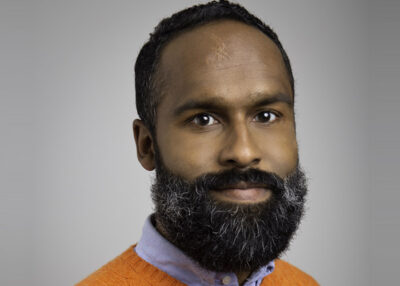
“Texas A&M has been my academic home for over 15 years, and for the majority of this time, my students and I have enjoyed the academic freedom to pursue the truth in our learning and scholarship. But this censorship policy restricts our scholarly inquiry in the classroom and prevents me from fully preparing my students for their future lives and careers,” said Vanita Reddy (she/her), professor of English at Texas A&M. “Public universities are pillars of our democracy, but when a university starts banning texts and censoring knowledge, it stops being a university and becomes a propaganda machine that serves certain political interests.”
The censorship policy, which restricts professors’ ability to teach material related to race, gender, and sexual orientation, was enacted in late 2025. As a result of the policy change, numerous classes have been cancelled or forced to remove content. The women’s and gender studies program has been shuttered altogether because the program could not be reconciled with the new censorship policy.
"The Board of Regents has abandoned its central mission — to provide a high quality and comprehensive education to students — by banning the mere discussion of so-called ‘gender and race ideology’,” said Emerson Sykes (he/him), senior staff attorney with the ACLU’s Speech, Privacy, and Technology Project. “To make matters worse, university officials have provided little or confusing guidance to professors who must figure out how to comply with the new censorship policy. This situation is untenable for our clients, detrimental to their students’ learning, and should be deeply troubling to anyone who values rigorous academic inquiry. We’ve asked the court to step in and safeguard the freedom to learn.”
The new filings include statements from eight professors, who work in departments as diverse as English, women’s and gender studies, sociology, fine arts, history, and government & public service, and allege that a diverse array of critical materials have been banned from their classrooms, impacting their ability to teach. They also describe difficulty parsing what is allowed under the vague policy, causing them to self-censor out of fear; others describe how the policy has been weaponized against LGBTQ+ content:
- A professor of history was prohibited from discussing the expansion of 14th Amendment rights to cover LGBTQ+ communities but was allowed to teach a reading from a prominent anti-feminist conservative activist titled “What’s The Problem with Equal Rights for Women”: “If the administration wanted to prohibit instruction on any topics having to do with gender identity or sexual orientation, then this reading assignment . . . would certainly have been prohibited, too. This indicates to me that enforcement of the Censorship Policy is clearly biased to favor politically conservative views.
- A professor of English was prohibited from teaching the film Moonlight (dir. Barry Jenkins) but permitted to teach Barbie (dir. Greta Gerwig) and the musical Hamilton by Lin Manuel-Miranda: “Topics that related especially to queer or transgender identity appear to be subject to more exacting scrutiny even though the policy at no point states that. ... I’m left wondering if I can teach any books with LGBTQ+ characters, or does the censorship hinge on how ‘major’ the identity of the characters are?”
- A professor of English and women’s and gender studies was told that LGBTQ+ content was under particular scrutiny: “The departmental clarification explicitly declares that the phrase ‘topics related to sexual orientation or gender identity’ ‘will not be applied to heteronormative orientation or identity.’”
- A sociology professor was unable to teach a textbook related to the sociology of gender because the cover featured a person’s face that was half feminine-presenting with stage makeup, and half masculine-presenting without makeup: “In the current environment, books are sometimes judged by their cover and the opening pages rather than their full substance.”
The complaint was filed in early August on behalf of the AAUP and Professors Leonard Bright, Vanita Reddy, Landon Sadler, and Aaron George in the U.S. District Court for the Southern District of Texas. The plaintiffs are represented by the American Civil Liberties Union (ACLU), the ACLU of Texas, and Yetter Coleman LLP.