|
|
Rendition Victims Seek Justice Before International TribunalFour victims of “extraordinary rendition” — a Bush administration CIA-run program of abduction, enforced disappearance, and torture — are demanding justice in a case filed yesterday against the United States with the Inter-American Commission on Human Rights. On behalf of our clients — Binyam Mohamed, Bisher al-Rawi, Abou Elkassim Britel, and Mohamed Bashmilah — the petition seeks an apology for and acknowledgment of their forced disappearance and torture. The case also challenges the U.S. government’s misuse of the “state secrets” privilege in its effort to block the victims’ cases for redress from being heard in U.S. courts. The government used the “state secrets” privilege to persuade U.S. courts to dismiss the case previously brought in the federal courts by the ACLU on behalf of the same victims against Jeppesen Dataplan, Inc., a flight logistics company that facilitated CIA “torture flights” across the globe. “I want to get justice for what the American CIA did to me, because they were responsible for everything that happened,” said Mohamed Bashmilah, when asked about his decision to pursue a claim before the human rights Commission. After 9/11, the CIA devised and implemented a program involving abduction, secret detention and torture of individuals it suspected of having links to terrorism. Many of these men were held for years — before being released without charge or explanation. Our clients recounted the torture they experienced in the CIA-run program as part of their federal suit against Jeppesen Dataplan, Inc. The men were beaten, kicked, cut with scalpels, chained to the walls and floors of filthy cells, left naked for extended periods in frigid temperatures, and deprived of sleep for days on end. These abuses all violate the most basic human rights protections that the United States government is obligated to uphold. Although the Obama Administration has ended the practice of “extraordinary rendition” and shut down secret prisons, the U.S. government has waged a legal battle to keep survivors from having their day in U.S. court. As in the earlier cases of Maher Arar and Khaled El-Masri, the United States used claims of national security and the “state secrets” privilege to torpedo the litigation immediately after it had begun. Claiming that U.S. national security interests would be undermined if the government were forced to discuss the issues of these cases in court (despite the whole world being aware of much of the information related to their rendition and torture), the government has successfully blocked any U.S. court from ruling on the legality of the Bush administration’s torture program. The Inter-American Commission case offers another opportunity for Mohamed Bashmilah, Binyam Mohamed, Bisher al-Rawi, and Abou Elkassim Britel to have their day in court, and for the United States to finally acknowledge and apologize for their abduction and years of secret detention and torture. Stay tuned for more information about their case. Learn more about extraordinary rendition: Sign up for breaking news alerts, follow us on Twitter, and like us on Facebook. Tags: Abou Elkassim Britel, accountability for torture, Binyam Mohamed, Bisher al-Rawi, CIA, Jeppesen Dataplan, Khaled el-Masri, Maher Arar, Mohamed Bashmilah, Rendition, Torture
The Accountability Shell Game There are many awful legacies of the Bush administration's criminal embrace of torture in the months and years following the 9/11 attacks. Among the most agonizing — for the torture victims themselves, and for the lawyers who have represented them — is that not a single one of those victims has had his day in court. And not a single court that has been faced with a torture suit has addressed the core question of whether the victims' legal rights were violated. This is, of course, a tragedy for the victims, who must live with the twin traumas of having been tortured by the state and turned away by its courts. But it is also a grave threat to the rule of law. Without definitive adjudication of the legality of torture, we face the risk that the door has been left open to future abuses.
Of course, the courts are not alone in turning a blind eye to torture victims; both the Bush and Obama administrations have actively subverted victims' attempts to obtain compensation and redress. Indeed, each of the democratic institutions that should have provided a check on abuses — and a remedy for the abused — has instead engaged in a kind of accountability shell game. ACLU client Khaled El-Masri's case is illustrative. In a notorious case of mistaken identity, El-Masri, a German citizen, was kidnapped by the CIA in Macedonia, "rendered" to a CIA black site in Afghanistan, detained and tortured for several months, then released without apology or explanation. When a German reporter asked Secretary of State Condoleezza Rice whether the United States would provide redress for its horrific abuse of El-Masri, she responded: "When mistakes are made, we work very hard to rectify them. I believe that this will be handled in the proper courts, here in Germany and if necessary in American courts as well." El-Masri sought to bring his claims to those "proper courts," both in the United States and in Germany. But this was a bait and switch: rather than "handle" El-Masri's claims, the American courts told El-Masri, at the insistence of the executive, that he had come to the wrong place. "If El-Masri's allegations are true or essentially true," wrote a federal judge, "then all fair-minded people . . . must also agree that El-Masri has suffered injuries as a result of our country's mistake and deserves a remedy. Yet, it is also clear . . . that the only sources of that remedy must be the Executive Branch or the Legislative Branch, not the Judicial Branch." We now know — through documents released by Wikileaks — that Secretary Rice's State Department expended considerable diplomatic resources in seeking to terminate El-Masri's judicial proceedings in Germany, as well. El-Masri was not alone. When five other victims of the CIA's extraordinary rendition program, also represented by the ACLU, sought judicial redress against a government contractor that had knowingly profited from arranging their torture flights, the court told them, in effect, to look elsewhere: "Our holding today is not intended to foreclose — or to prejudge — possible nonjudicial relief, should it be warranted for any of the plaintiffs." The executive branch, the court insisted could "determine whether plaintiffs' claims have merit and whether misjudgments or mistakes were made that violated plaintiffs' human rights." And if that didn't work, "Congress also has the power to enact private bills." This was doubly absurd: Congress, of course, had already enacted public bills prohibiting torture — the very laws that the executive had violated and the courts had disregarded. ACLU client Jose Padilla encountered a different version of the accountability shell game: two courts pointing the finger at each other. Padilla, an American citizen, was seized by the military from a New York jail, unilaterally designated an "enemy combatant" by the president, detained incommunicado without charge or trial in a Naval brig in Charleston, South Carolina, and subjected to vicious interrogations, chilling sensory deprivation, and total isolation. After three years and eight months of illegal military detention, Padilla was returned to the civilian justice system and prosecuted for crimes wholly unrelated to his dubious "enemy combatant" designation. When Padilla sued his torturers, seeking one dollar in compensation as well as recognition that his rights had been violated, he was told, remarkably, that he had already had ample opportunity to air his grievances. "It is not as if the American judicial system has failed to afford [Padilla] significant opportunities to vindicate his legal rights," opined the judge. In particular, Padilla "was allowed in his criminal proceeding to raise issues of his detention in support of his motion to dismiss the criminal charges." But the judge declined to mention that when Padilla had attempted to raise those issues in his criminal case, he was told that he was in the wrong venue, and that he was "free to institute . . . an action for monetary damages or any other form of redress that he is legally entitled to pursue." "It ain't me, babe," sings Bob Dylan in a famous lyric. "It ain't me you're looking for." This has been the unvarying response of our courts and our Presidents to the powerful legal and moral claims of torture victims. The best that can be said about this chronic institutional buck-passing is that it betrays a degree of shame. That shame now belongs to all Americans. These terrible things were done in our name. And the failure to acknowledge the victims has been carried out in our name as well. Learn more about accountability for torture: Sign up for breaking news alerts, follow us on Twitter, and like us on Facebook. Tags: accountability, accountability for torture, Jeppesen Dataplan, Khaled el-Masri, Rendition, Torture
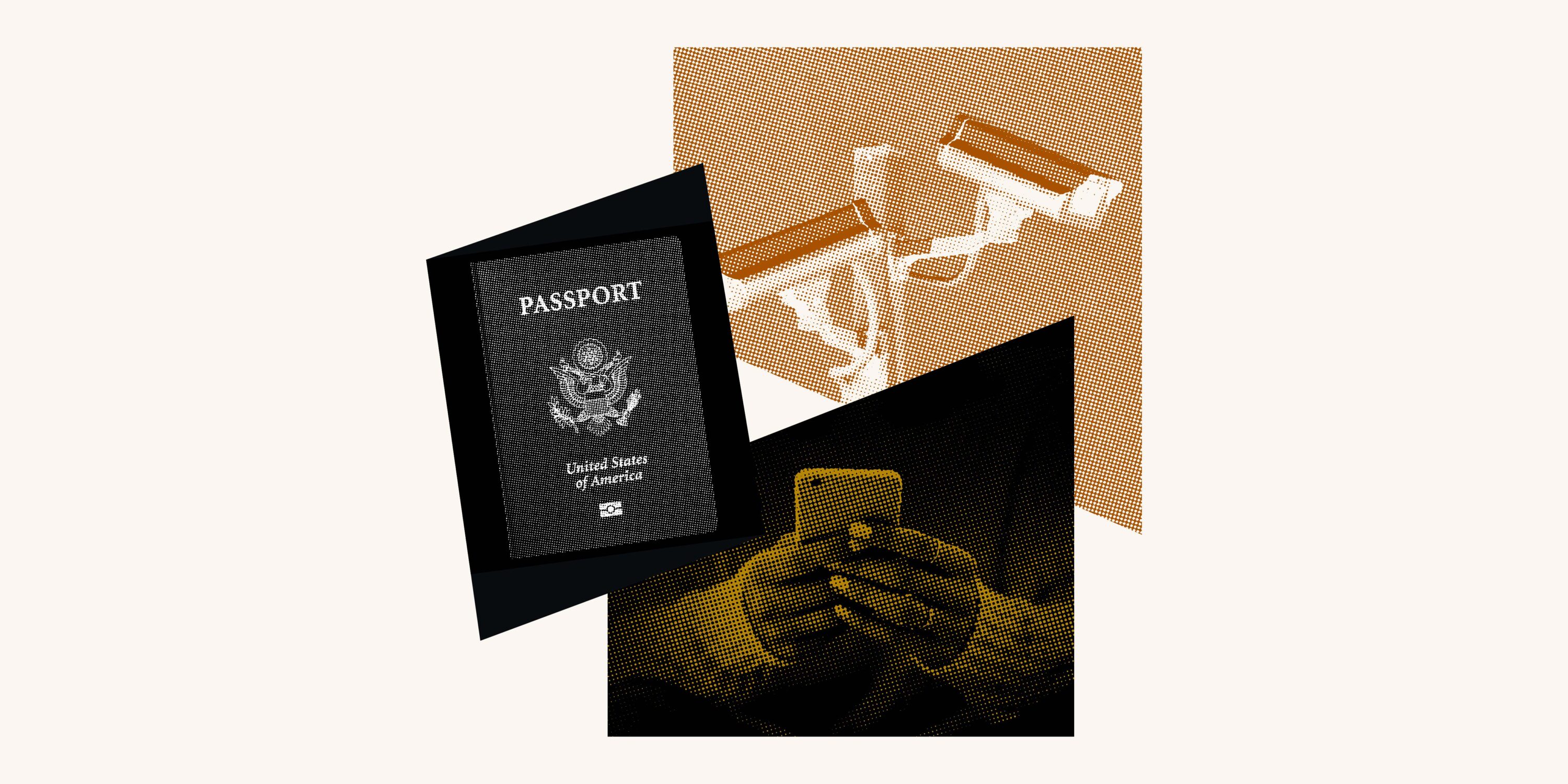
A Decade LaterAs the 10-year anniversary of 9/11 approaches, the ACLU joins all Americans in remembering the unspeakable losses suffered on that tragic day. This solemn occasion provides opportunity to reflect on the turbulent decade behind us, and to recommit ourselves to values that define our nation. Ten years ago, we could not have imagined that over the following decade, our nation would engage policies that were so at odds with our fundamental values: torture and extraordinary rendition, indefinite detention without charge or trial, racial profiling, and warrantless wiretapping. Over the next couple of weeks, we’ll discuss these policies, and others, in a series of blog posts on the state of civil liberties since 9/11. We invite you to join our conversation. On Thursday, September 15 at 4 p.m. EDT, we’ll be hosting a live chat on Facebook, and we hope you’ll join us to discuss how we can reclaim our liberties. Send your questions to @ACLU with a #9/11 hashtag or leave them in the comments section below. In the meantime, the ACLU of Massachusetts and TruthOut have launched a 9/11 series that will detail the ways in which the government's surveillance powers have expanded dramatically over the last decade, at the expense of our civil liberties. As their inaugural blog says, Over the decade, the government's powers of surveillance have expanded dramatically. They are directed not just at people suspected of wrongdoing, but at all of us. Our phone calls, our emails and web site visits, our financial records, our travel itineraries, and our digital images captured on powerful surveillance cameras are swelling the mountain of data that is being mined for suspicious patterns and associations.Check it out. Learn more about civil liberties after 9/11: Sign up for breaking news alerts, follow us on Twitter, and like us on Facebook. Tags: detention, Massachusetts, Rendition, Secrecy, spying, surveillance, Torture, TruthOut
This Torture Awareness Month, Honor Those Who Opposed Rendition and TortureLast month, the Supreme Court announced it would not hear the case we brought against Boeing subsidiary Jeppesen Dataplan on behalf of five victims of the CIA's extraordinary rendition program. Our lawsuit charged that the company knowingly provided direct logistical support to the aircraft and crews used by the CIA for the kidnapping and torture program. We filed the lawsuit back in May 2007, and while the federal government wasn't named as a defendant in the suit, the government intervened in the case anyway to shield Jeppesen with the "state secrets" privilege, asserting that even allowing the case to be heard in a court of law would jeopardize national security. But as ACLU legal director Steve Shapiro said after the Supreme Court's refused to hear the case: "In a nation committed to the rule of law, unlawful activity should be exposed, not hidden behind a 'state secrets' designation." One of the victims of the rendition program, Canadian citizen Maher Arar, who also asked the Supreme Court to hear his case and was also refused, is among the subjects of Amnesty International's 50 Years of Human Rights campaign, marking the 50th anniversary of the organization's founding. (You guys are just babies! We turned 90 last year!) This cool infographic encapsulates Arar's story (click to enlarge): Today is the first day of Torture Awareness Month. Ask President Obama to honor those who stood against rendition, torture and abuse by sending a letter to the White House today. Learn more about rendition and torture: Subscribe to our newsletter, follow us on Twitter, and like us on Facebook. Tags: Rendition
The Secrecy Double-StandardFor almost a decade, the American public has been told time and time again that some of our government's most controversial national security policies and programs are "secret." From warrantless wiretapping to the CIA's torture and "targeted killing" programs, the government has often insisted that our security requires secrecy, and that information about these programs is too sensitive to be shared with the public — even claiming state secrets to have the information shielded from judicial scrutiny. But an op-ed in the LA Times today by the ACLU's Jameel Jaffer brings up a disturbing trend: Jameel points out numerous instances where the government insisted on secrecy in one context only to later disclose its supposed "secrets" in another – be it an interview with the media or a national book tour. Jameel discusses a recent interview with former CIA lawyer John Rizzo in Newsweek magazine in which Rizzo discusses the scope, process and methods of the CIA's "targeted killing" program — a highly controversial counterterrorism program that had previously been cloaked in official secrecy. Jameel writes: "What was most remarkable about the interview, though, was not what Rizzo said but that it was Rizzo who said it. For more than six years until his retirement in December 2009, Rizzo was the CIA's acting general counsel — the agency's chief lawyer. On his watch the CIA had sought to quash a Freedom of Information Act lawsuit by arguing that national security would be harmed irreparably if the CIA were to acknowledge any detail about the targeted killing program, even the program's mere existence. The public absolutely has a right to know what our government does in our name. President Obama himself has declared that, "A democracy requires accountability, and accountability requires transparency." While there may be some instances where secrecy is indeed a necessity to security, there are too many examples of the government's secrecy double standard for the American pubic to continue buying this argument. Jameel notes that the courts themselves are partly to blame, explaining that "both the Constitution and the Freedom of Information Act invest the courts with the power to determine whether claimed state secrets are actually state secrets and whether classified information is properly classified, courts too often accept executive claims without scrutiny." One of the most egregious examples of excessive secrecy is with regard to survivors of the Bush administration's torture program. Despite the fact that there is a significant and ever growing body of public information about the abuse and torture of prisoners in CIA custody, the government's misuse of the so-called 'state secrets privilege' has enabled it to deny all survivors of U.S. sponsored torture their day in court and shielded their torturers from accountability. The ACLU will continue to challenge this notion of secrecy in our lawsuit on behalf of five survivors of the U.S. "extraordinary rendition" program, Mohamed v. Jeppesen. You can add your support by sending a letter to the Obama administration letting them know that the American public deserves to know why prisoners were tortured in America's name. Learn more about secrecy: Subscribe to our newsletter, follow us on Twitter, and like us on Facebook. Tags: drone, Rendition, spying, Torture, warrantless wiretapping
European Court to Review Macedonia's Role in El-Masri's RenditionLast Friday, in yet another example of other countries pursuing justice for the victims of the U.S. rendition and torture program, the European Court of Human Rights announced that it will review Macedonia's role in the CIA's kidnapping and subsequent torture of German citizen Khaled el-Masri. The case was brought before the court by the Open Society Justice Initiative. El-Masri was kidnapped from Macedonia in 2003 at the behest of the U.S. government and transferred to the "Salt Pit," a secret prison in Afghanistan, where he was held for four months and tortured. He was then dumped, "like a piece of luggage," on a hillside in Albania. He was never charged with a crime, and despite ample evidence, the U.S. has never admitted its involvement with el-Masri's abduction and torture. The ACLU represented el-Masri in a lawsuit brought in 2005 charging then-CIA director George Tenet violated U.S. and universal human rights laws when he authorized agents to abduct and torture el-Masri. The "merits" of the case—whether Tenet did indeed break the law by authorizing el-Masri's rendition—were never heard in a court of law. Instead, the case was dismissed on state secrets grounds in the district and appeals courts, and the U.S. Supreme Court declined to hear the case. So while el-Masri's case will never see the light of day in a U.S. court, Germany, Spain and Poland are investigating his rendition. Poland, Lithuania, and the U.K. are also engaged in investigations about extraordinary rendition more broadly. But back here in the U.S., not so much. Tags: Khaled el-Masri, Rendition
Canadian Torture and Rendition Victim Denied Supreme Court ReviewIt's déjà vu for another victim of the Bush administration's extraordinary rendition program. This morning, the Supreme Court announced that it would not hear the case of extraordinary rendition victim Maher Arar. Arar, a Canadian citizen, was stopped in 2002 during a layover at JFK and subsequently sent to Syria, where he was confined in an underground grave-like cell for nearly a year and tortured. While detained, he was given limited access to Canadian government officials, but denied access to a lawyer. Without substantiating its claims, the Bush administration accused Arar of ties to al Qaeda. However, neither the U.S. nor Syria ever charged him with a crime during his incarceration, and 10 months and 10 days after his transfer to Syria for interrogation and torture, he was released without explanation or apology. The Center for Constitutional Rights represented Arar in a case against U.S. officials for their participation in his rendition and torture. However, like the ACLU's case against the CIA on behalf of Khaled El-Masri, another victim of the extraordinary rendition program, Arar's case was dismissed by lower courts in the United States without any consideration of his claims of U.S. involvement. And, just as in the El-Masri case in October 2007, today, the country's highest court, the U.S. Supreme Court, refused to hear Arar's case. The Supreme Court, without comment, declined to hear the case despite the findings of a two-year long public inquiry in Canada into that country's officials' involvement in Arar's rendition and torture. In a report published in 2007, the inquiry found that Canadian officials had given "misleading information" to U.S. officials that led to Arar's arrest. The Canadian government subsequently apologized to Arar for its wrongdoing and awarded him $10 million in compensation. The United States, in contrast, has done nothing to make amends for its unlawful actions. In October 2007, then-Secretary of State Condoleezza Rice, in testimony before the House Foreign Affairs Committee, admitted that the government had mishandled Arar's case. Yet no investigation has been conducted and no apology has been made. Indeed, the United States has added insult to injury by maintaining Arar's name on a watchlist prohibiting him from entering this country. By refusing to review Arar's case, the Supreme Court has effectively slammed the door on the possibility of any U.S. official being held accountable before U.S. courts for Arar's rendition and torture. In a statement issued today, Arar said: Today's decision eliminates my last bit of hope in the judicial system of the United States. When it comes to 'national security' matters the judicial system has willingly abandoned its sacred role of ensuring that no one is above the law. My case and other cases brought by human beings who were tortured have been thrown out by U.S. courts based on dubious government claims. Unless the American people stand up for justice they will soon see their hard-won civil liberties taken away from them as well. June is Torture Awareness Month. Tell Attorney General Eric Holder to hold those who authorized torture and rendition accountable. Send him a message today. Tags: Rendition
7 Years and 7 Paragraphs Underscore Need for Accountability for TortureToday, the English Court of Appeals ordered the publication of previously secret information pertaining to the abuse of Binyam Mohamed, a former British detainee who was held in U.S. custody. Today's decision affirmed an earlier High Court ruling that ordered the release of seven paragraphs that the British government sought to suppress. The paragraphs reveal what the whole world already knew: the British government's complicity with the United States in the torture of Mohamed. As the Court of Appeals noted in their decision, the information at issue had already been placed in the public domain through a U.S. court decision in November 2009. In that case the judge, after reviewing extensive evidence of Mohamed's allegations of torture, noted that the government did "not challenge or deny the accuracy of Binyam Mohamed's story of brutal treatment." Larry Siems discusses this particular decision in detail over at The Torture Report. As Larry also reminds us today, the reason the U.K. government sought the suppression of those seven paragraphs is because the Obama administration "explicitly threatened that publishing the information would harm the intelligence-sharing relationship between the two nations." British Foreign Secretary David Miliband argued that the publication of those seven paragraphs would endanger Britain's national security. While Mohamed's case has wound its way through the English courts, he has also sought justice in American courts as the lead plaintiff in the ACLU's lawsuit against Jeppesen DataPlan. That lawsuit, Mohamed v. Jeppesen, charges that Jeppesen, a wholly owned subsidiary of the Boeing Aerospace company, knowingly participated in the CIA's forced disappearance and torture of Mohamed and four other men through the provision of critical flight planning and logistical support services to the aircraft and crews used by the CIA in its "extraordinary rendition" program. The Obama administration has sought to dismiss the Jeppesen case at the very outset by invoking the state secrets privilege, claiming that allowing this case to proceed will endanger national security. Last December, the case was reheard by an en banc panel of 11 judges in the 9th Circuit Court of Appeals. We await their decision. Binyam Mohamed was under the control or in the custody of U.S. authorities for seven years before his release back to his home in England in February last year. For those seven long years he was subjected to torture and other horrific abuse. And, as the English Court of Appeals notes in today's judgment: There is no secret about the treatment to which Mr Mohamed was subjected while in the control of the US authorities. We are no longer dealing with the allegations of torture and ill-treatment: they have been established in the judgment of the court, publicly revealed by the judicial processes within the USA itself. Although we learned nothing new from the publication of the seven paragraphs in the U.K., what their publication confirms is that in the case against Jeppesen, the U.S. government's invocation of the state secrets privilege is not about protecting our national security; rather it's all about our government side-stepping any legal accountability for the torture and abuse. You can take action today to let the Obama administration know that its victims of torture — and the American public — deserve to know why prisoners were tortured in America's name. Tags: Rendition
Arguments in Extraordinary Rendition Case TodayToday, at 10:00 a.m. PST, we'll be in federal appeals court in San Francisco to argue that our lawsuit against Boeing subsidiary Jeppesen DataPlan Inc. for its role in the Bush administration's unlawful "extraordinary rendition" program should go forward. The government has repeatedly misused the state secrets privilege in an attempt to have the case thrown out. To this day, not a single victim of the Bush administration's torture policies has had his day in court. As The New York Times pointed out in an editorial today, "It is up to the courts to fulfill their constitutional role by checking executive power and providing accountability. The precedent set by the federal Court of Appeals for the Ninth Circuit will be critical." We hope you'll stand with us to let the government know that victims of torture — and the American public — deserve to know why prisoners were abused and tortured in America's name. To learn more about the case against Jeppesen and extraordinary rendition you can visit our website and read previous blog entries related to the case. Tags: Rendition
A Framework for Impunity(Originally posted on Daily Kos.) Since 2003, the ACLU and other U.S. human rights organizations have filed dozens of cases relating to the abuse and torture of prisoners. Some of these cases seek to enforce requests under the Freedom of Information Act. Others seek to impose civil liability on those who authorized or perpetrated the abuse. Since 2005, the ACLU has also advocated for the appointment of an independent prosecutor to examine issues of criminal responsibility. Since a prosecutor was appointed in August, we have advocated for an expansion of the prosecutor's mandate. These efforts have been intended to serve several ends: To create a public record of the Bush administration's policies and their consequences; to obtain recognition and compensation for torture victims; to ensure that government officials who violated the law are held to account; and to reduce the likelihood that the abuses of the last administration are repeated by the current administration, or by a future one. We had hoped, and expected, that the Obama administration would share our commitment to most if not all of these ends. The administration promised accountability, and initially it seemed ready to deliver. Immediately after taking office, President Obama disavowed torture and shuttered the CIA's black sites. Two months later, he agreed to release the Justice Department legal memos that sought to authorize torture. But notwithstanding those early decisions, the administration has not made good on its promise of accountability. Now the administration is suppressing the evidence rather than disclosing it, and protecting torturers instead of investigating them. It is shielding Bush administration officials from civil liability, criminal investigation, and even public scrutiny.
The issue of accountability will come to the fore once again over the next few weeks. On December 15th, the ACLU will argue before an en banc panel of the Ninth Circuit in Mohamed, et al. v. Jeppesen, a case concerning the CIA's rendition program. On December 16th and 23rd, the CIA is due to hand over to the ACLU documents relating to secret prisons overseas. And the Justice Department is expected imminently to release a report, written by the Office of Professional Responsibility, that examines the conduct of the lawyers who wrote the torture memos. It's not too late for the Obama administration to reconsider the positions it has taken in court. And it's not too late for the Justice Department to expand the scope of the criminal investigation it initiated in August. But if the administration doesn't change course, it will accomplish something that the Bush administration never managed: It will institutionalize a sweeping immunity doctrine for torturers. Tags: Rendition |
|
|
© ACLU, 125 Broad Street, 18th Floor New York, NY 10004 |