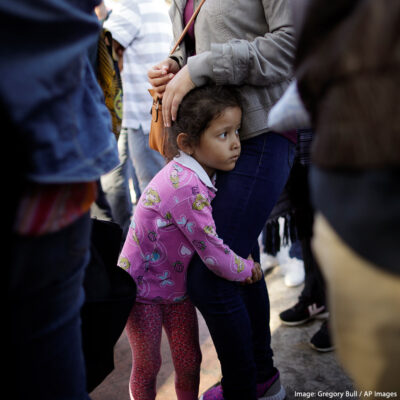
A Georgia student's story highlights the need for immigration reform that includes a path to citizenship for the 11 million people who have become part of the American fabric, and aspire to become citizens, but currently have no way to attain legal status.
I came to the U.S. from India at the age of 7. Living in the U.S. has provided me with a life that I would have never been able to have back in India. The U.S. has always been and will always be my home. I have received a great high school education, which helped me graduate from Georgia Tech, a college that has the second-best program in my chosen field, biomedical engineering.
By Michael Tan, Staff Attorney, Immigrants' Rights Project, ACLU at 9:37am
One year ago, the immigrant youth movement won the most important immigrants' rights victory in recent memory: the federal Deferred Action for Childhood Arrivals (DACA) program, which grants young immigrants who came to the U.S. as children—or Dreamers—the ability to live and work in the country legally. As of this May, about 365,000 young immigrants have been granted DACA, and are working hard, going to school, and giving back to their communities—a preview of the benefits all of us stand to gain should Congress pass immigration reform this year.
Every movement needs a face – someone whose story transcends traditional dividing lines and has the capacity to change hearts and minds. For immigration reform, it's not just one story, but rather the collective stories of DREAMers, undocumented youth who came to the U.S. as children. By sharing their powerful stories of how they are American in all but paperwork, DREAMers have shifted public opinion in a way that wouldn't have seemed possible a few short years ago: A poll released yesterday found that there is overwhelming bipartisan support for immigration reform (up to 78 percent support in some states).
I recently learned about a group of young people who did something extremely brave. They were invited to lunch with Nebraska's Governor, Dave Heineman...
By Diana Scholl, Communications Strategist, ACLU at 12:45pm
Another day, another amendment to the Senate immigration reform legislation from Sen. Chuck Grassley (R-Iowa) that would harm immigrants' civil liberties. Amendment 17, which will be up for consideration this week in the Senate Judiciary Committee's markup of the immigration reform bill, would unwisely (and unconstitutionally) restrict the ability of immigrants to correct erroneous denials of legalization by barring the courthouse door to them.
Today Maryland and Oregon are celebrating the signing of new laws expanding access to driver's licenses to all residents, including undocumented immigrants. We are part of a movement. Our hope is that our success inspires the passage of bills in more than a dozen other states considering similar measures.
In most states today, it is difficult, if not impossible, for people to go about their daily lives without the ability to drive. Simple but essential tasks such as driving kids to school or to extracurricular activities, picking up groceries, going to the doctor, and traveling to workbecome riddled with hardship. As a result, people without access to driver's licenses are faced with the difficult "choice" of either not meeting their basic needs or driving and risking arrest and other negative repercussions.
By Dulce Matuz, Chairwoman, Arizona Dream Act Coalition at 12:00am
Create obstacles to access higher education? Check. Require outrageous tuition rates? Check. Make immigrants live in fear of being deported for simply driving to work or school? Check. Ban DREAMers from the roads? Check.
It seems that officials like Arizona Governor Jan Brewer must carry this checklist of anti-immigrant policies with them at all times. That's certainly how I felt growing up in Arizona as one of many immigrants who came to this country as children known as "DREAMers," named after the Development, Relief, and Education for Alien Minors (DREAM) Act."
By Michael Tan, Staff Attorney, Immigrants' Rights Project, ACLU at 4:24pm
Alabama officials have announced that young immigrants who came to the country as children—also known as DREAMers—will be allowed to apply for state driver's licenses. The decision affects an estimated 10,000 to 20,000 DREAMers who stand to benefit from the federal government's Deferred Action for Childhood Arrivals ("DACA") program.
The decision is a huge victory for young immigrants like Victor Palafox, a community organizer and aspiring history teacher who lives in the suburbs of Birmingham. Born in Mexico City, he was raised in Alabama, and is actively involved with helping organize communities throughout the state. Alabama's decision will help Victor and DREAMers like him get on with their daily lives—drive to work, go to church, buy groceries, and attend school—and make even greater contributions to their communities.
By Michael Tan, Staff Attorney, Immigrants' Rights Project, ACLU at 4:42pm
Today Michigan announced that it will allow young immigrants who came to the country as children—or DREAMers—to apply for driver’s licenses, reversing the state’s previous decision to ban them from the roads. The ACLU filed a lawsuit in December challenging the prior policy. The announcement affects an estimated 15,000 DREAMers who stand to benefit from the federal government’s Deferred Action for Childhood Arrivals (“DACA”) program.
By Michael Tan, Staff Attorney, Immigrants' Rights Project, ACLU at 12:46pm
This week the Iowa Department of Transportation announced that young immigrants who came to the country as children—or “DREAMers”—will be eligible for driver’s licenses—reversing the state’s decision a month ago to ban them from the roads. The decision affects an estimated 5,000 DREAMers benefiting from the Deferred Action for Childhood Arrivals (“DACA”) program, which permits certain young immigrants to remain in the country and apply for work permits on a two-year, renewable basis.