Equal Pay
The ACLU works in courts, legislatures, and communities to defend and preserve the individual rights and liberties that the Constitution and the laws of the United States guarantee everyone in this country.
The Latest



Explore More
What's at Stake
The ACLU works to end discrimination in the workplace and ensure that all workers—regardless of gender, race, national origin, age, or disability—are able to bring home every dollar they rightfully earn. As a result of discrimination, including employers’ reliance on gender stereotypes, women lack parity with men in earnings.
In addition to wage discrimination, women often lack full access to traditionally male occupations and are steered into lower-paying and less desirable sectors. Industries dominated by women remain the least valued, and women are disproportionately represented in lower-paying and less powerful jobs. No family should have trouble making ends meet because of illegal discrimination.
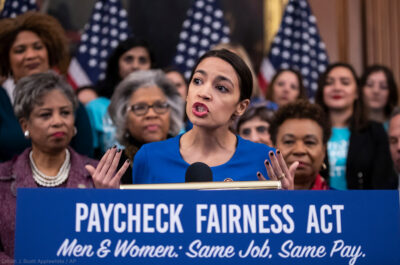
The ACLU also advocates for the passage of federal legislation and executive branch action to protect access to the right to go to court to fight discrimination and reduce pay disparities, such as the Lilly Ledbetter Fair Pay Act, which in 2009 gave back to employees their day in court to challenge discriminatory pay practices, and the Paycheck Fairness Act, which will give employees the legal tools they need to challenge the wage gap itself. While the ACLU works toward final passage of the Paycheck Fairness Act in Congress, we were instrumental in securing recent executive action on equal pay, including President Barack Obama’s executive order banning retaliation for wage disclosure in federal contracting and a presidential memoranda requiring the U.S. Department of Labor to collect much-needed wage data from federal contractors.
The ACLU also works to change unfair employment practices that disproportionately harm women suffering from intersecting forms of discrimination and perpetuate inequality on racial, ethnic, and national origin grounds, such as the exclusion of home care workers from wage and overtime protections under federal law.
The ACLU works to end discrimination in the workplace and ensure that all workers—regardless of gender, race, national origin, age, or disability—are able to bring home every dollar they rightfully earn. As a result of discrimination, including employers’ reliance on gender stereotypes, women lack parity with men in earnings.
In addition to wage discrimination, women often lack full access to traditionally male occupations and are steered into lower-paying and less desirable sectors. Industries dominated by women remain the least valued, and women are disproportionately represented in lower-paying and less powerful jobs. No family should have trouble making ends meet because of illegal discrimination.
The ACLU also advocates for the passage of federal legislation and executive branch action to protect access to the right to go to court to fight discrimination and reduce pay disparities, such as the Lilly Ledbetter Fair Pay Act, which in 2009 gave back to employees their day in court to challenge discriminatory pay practices, and the Paycheck Fairness Act, which will give employees the legal tools they need to challenge the wage gap itself. While the ACLU works toward final passage of the Paycheck Fairness Act in Congress, we were instrumental in securing recent executive action on equal pay, including President Barack Obama’s executive order banning retaliation for wage disclosure in federal contracting and a presidential memoranda requiring the U.S. Department of Labor to collect much-needed wage data from federal contractors.
The ACLU also works to change unfair employment practices that disproportionately harm women suffering from intersecting forms of discrimination and perpetuate inequality on racial, ethnic, and national origin grounds, such as the exclusion of home care workers from wage and overtime protections under federal law.