School-to-Prison Pipeline
The ACLU works in courts, legislatures, and communities to defend and preserve the individual rights and liberties that the Constitution and the laws of the United States guarantee everyone in this country.
The Latest
-

ACLU of Wisconsin Files Brief in Case Advocating For the Rights of Students During School Interrogations
-
ACLU Urges College and University Leaders to Protect Free Speech and Academic Freedom
-
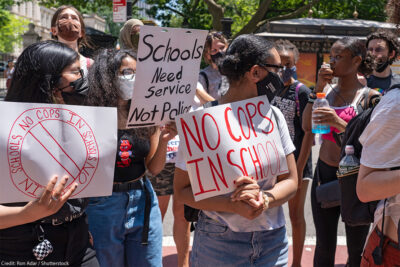
The Consequences of Police in Schools: A North Carolina Case Study
-
This Student Fought a School Fine for Four Years
Explore More
What We're Focused On
-
Police Presence in Schools
The ACLU works in courts, legislatures, and communities to defend and preserve the individual rights and liberties that the Constitution and the laws of the United States guarantee everyone in this country.
-
Search and Seizure in Public Schools
The ACLU works in courts, legislatures, and communities to defend and preserve the individual rights and liberties that the Constitution and the laws of the United States guarantee everyone in this country.
What's at Stake
The ACLU is committed to challenging the “school-to-prison pipeline,” a disturbing national trend wherein youth are funneled out of public schools and into the juvenile and criminal legal systems. Many of these youth are Black or Brown, have disabilities, or histories of poverty, abuse, or neglect, and would benefit from additional supports and resources. Instead, they are isolated, punished, and pushed out.
“Zero-tolerance” policies criminalize minor infractions of school rules, while cops in schools lead to students being criminalized for behavior that should be handled inside the school. Students of color are especially vulnerable to push-out trends and the discriminatory application of discipline. Related Resources
The ACLU believes that children should be educated and supported in schools, not incarcerated. We are working to challenge numerous policies and practices within public school systems and the juvenile justice system that contribute to the school-to-prison pipeline.
For a growing number of students, the path to incarceration includes the "stops" below.
Failing Public Schools
For most students, the pipeline begins with inadequate resources in public schools. Overcrowded classrooms, a lack of qualified teachers, and insufficient funding for "extras" such as counselors, special education services, and even textbooks, lock students into second-rate educational environments. This failure to meet educational needs increases disengagement and dropouts, increasing the risk of later court involvement. (1) Even worse, schools may actually encourage dropouts in response to pressures from test-based accountability regimes such as the No Child Left Behind Act, which create incentives to push out low-performing students to boost overall test scores. (2)
Zero-Tolerance and Other School Discipline
Lacking resources, facing incentives to push out low-performing students, and responding to a handful of highly-publicized school shootings, schools have embraced zero-tolerance policies that automatically impose severe punishment regardless of circumstances. Under these policies, students have been expelled for bringing nail clippers or scissors to school. Rates of suspension have increased dramatically in recent years—from 1.7 million in 1974 to 3.1 million in 2000 (3) — and have been most dramatic for children of color.
Overly harsh disciplinary policies push students down the pipeline and into the juvenile justice system. Suspended and expelled children are often left unsupervised and without constructive activities; they also can easily fall behind in their coursework, leading to a greater likelihood of disengagement and drop-outs. All of these factors increase the likelihood of court involvement. (4)
As harsh penalties for minor misbehavior become more pervasive, schools increasingly ignore or bypass due process protections for suspensions and expulsions. The lack of due process is particularly acute for students with disabilities, who are disproportionately represented in the pipeline despite the heightened protections afforded to them under law.
Policing School Hallways
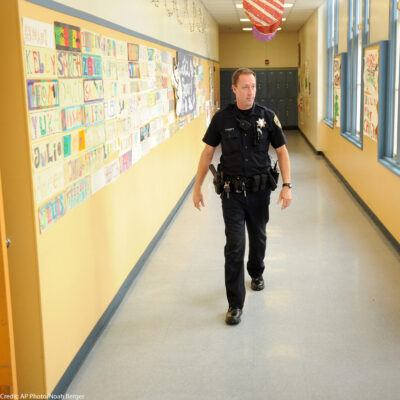
Many under-resourced schools become pipeline gateways by placing increased reliance on police rather than teachers and administrators to maintain discipline. Growing numbers of districts employ school police officers to patrol school hallways, often with little or no training in working with youth. As a result, children are far more likely to be subject to school-based arrests—the majority of which are for non-violent offenses, such as disruptive behavior—than they were a generation ago. The rise in school-based arrests, the quickest route from the classroom to the jailhouse, most directly exemplifies the criminalization of school children.
Disciplinary Alternative Schools
In some jurisdictions, students who have been suspended or expelled have no right to an education at all. In others, they are sent to disciplinary alternative schools.
Growing in number across the country, these shadow systems—sometimes run by private, for-profit companies—are immune from educational accountability standards (such as minimum classroom hours and curriculum requirements) and may fail to provide meaningful educational services to the students who need them the most. As a result, struggling students return to their regular schools unprepared, are permanently locked into inferior educational settings, or are funneled through alternative schools into the juvenile justice system.
Court Involvement and Juvenile Detention
Youth who become involved in the juvenile justice system are often denied procedural protections in the courts; in one state, up to 80% of court-involved children do not have lawyers. (5) Students who commit minor offenses may end up in secured detention if they violate boilerplate probation conditions prohibiting them from activities like missing school or disobeying teachers.
Students pushed along the pipeline find themselves in juvenile detention facilities, many of which provide few, if any, educational services. Students of color — who are far more likely than their white peers to be suspended, expelled, or arrested for the same kind of conduct at school (6) — and those with disabilities are particularly likely to travel down this pipeline. (7)
Though many students are propelled down the pipeline from school to jail, it is difficult for them to make the journey in reverse. Students who enter the juvenile justice system face many barriers to their re-entry into traditional schools. The vast majority of these students never graduate from high school.
Endnotes:
1. American Academy of Pediatrics, Committee on School Health, "Out-of-School Suspension and Expulsion," PEDIATRICS (Vol. 112 No. 5, Nov. 2003), p. 1207. See also: Johanna Wald & Dan Losen, "Defining and Re-directing a School-to-Prison Pipeline," NEW DIRECTIONS FOR YOUTH DEVELOPMENT (No. 99, Fall 2003), p. 11.
2. David N. Figlio "Testing, Crime and Punishment," JOURNAL OF PUBLIC ECONOMICS (Vol. 90 Iss. 4-5, May 2006).
3. Advancement Project, EDUCATION ON LOCKDOWN: THE SCHOOLHOUSE TO JAILHOUSE TRACK (Mar. 2005), p. 15.
4. American Academy of Pediatrics, Committee on School Health, "Out-of-School Suspension and Expulsion," PEDIATRICS (Vol. 112 No. 5, Nov. 2003), p. 1207. See also: Johanna Wald & Dan Losen, "Defining and Re-directing a School-to-Prison Pipeline," NEW DIRECTIONS FOR YOUTH DEVELOPMENT (No. 99, Fall 2003), p. 11.
5. ACLU, The Children's Law Center & The Office of the Ohio State Public Defender, A CALL TO AMEND THE OHIO RULES OF JUVENILE PROCEDURE TO PROTECT THE RIGHT TO COUNSEL (Jan. 2006), p. 1.
6. Russel J. Skiba, ZERO TOLERANCE, ZERO EVIDENCE (2000), pp. 11-12; The Advancement Project & The Civil Rights Project, OPPORTUNITIES SUSPENDED: THE DEVASTATING CONSEQUENCES OF ZERO TOLERANCE AND SCHOOL DISCIPLINE POLICIES (June 2000), pp. 7-9; Russell J. Skiba, et al., THE COLOR OF DISCIPLINE: SOURCES OF RACIAL AND GENDER DISPROPORTIONALITY IN SCHOOL PUNISHMENT (2000).
7. David Osher et al., "Schools Make a Difference: The Overrepresentation of African American Youth in Special Education and the Juvenile Justice System," RACIAL INEQUITY IN SPECIAL EDUCATION (Daniel J. Losen & Gary Orfield eds., 2002), p. 98.
The ACLU is committed to challenging the “school-to-prison pipeline,” a disturbing national trend wherein youth are funneled out of public schools and into the juvenile and criminal legal systems. Many of these youth are Black or Brown, have disabilities, or histories of poverty, abuse, or neglect, and would benefit from additional supports and resources. Instead, they are isolated, punished, and pushed out.
“Zero-tolerance” policies criminalize minor infractions of school rules, while cops in schools lead to students being criminalized for behavior that should be handled inside the school. Students of color are especially vulnerable to push-out trends and the discriminatory application of discipline. Related Resources
The ACLU believes that children should be educated and supported in schools, not incarcerated. We are working to challenge numerous policies and practices within public school systems and the juvenile justice system that contribute to the school-to-prison pipeline.
For a growing number of students, the path to incarceration includes the "stops" below.
Failing Public Schools
For most students, the pipeline begins with inadequate resources in public schools. Overcrowded classrooms, a lack of qualified teachers, and insufficient funding for "extras" such as counselors, special education services, and even textbooks, lock students into second-rate educational environments. This failure to meet educational needs increases disengagement and dropouts, increasing the risk of later court involvement. (1) Even worse, schools may actually encourage dropouts in response to pressures from test-based accountability regimes such as the No Child Left Behind Act, which create incentives to push out low-performing students to boost overall test scores. (2)
Zero-Tolerance and Other School Discipline
Lacking resources, facing incentives to push out low-performing students, and responding to a handful of highly-publicized school shootings, schools have embraced zero-tolerance policies that automatically impose severe punishment regardless of circumstances. Under these policies, students have been expelled for bringing nail clippers or scissors to school. Rates of suspension have increased dramatically in recent years—from 1.7 million in 1974 to 3.1 million in 2000 (3) — and have been most dramatic for children of color.
Overly harsh disciplinary policies push students down the pipeline and into the juvenile justice system. Suspended and expelled children are often left unsupervised and without constructive activities; they also can easily fall behind in their coursework, leading to a greater likelihood of disengagement and drop-outs. All of these factors increase the likelihood of court involvement. (4)
As harsh penalties for minor misbehavior become more pervasive, schools increasingly ignore or bypass due process protections for suspensions and expulsions. The lack of due process is particularly acute for students with disabilities, who are disproportionately represented in the pipeline despite the heightened protections afforded to them under law.
Policing School Hallways
Many under-resourced schools become pipeline gateways by placing increased reliance on police rather than teachers and administrators to maintain discipline. Growing numbers of districts employ school police officers to patrol school hallways, often with little or no training in working with youth. As a result, children are far more likely to be subject to school-based arrests—the majority of which are for non-violent offenses, such as disruptive behavior—than they were a generation ago. The rise in school-based arrests, the quickest route from the classroom to the jailhouse, most directly exemplifies the criminalization of school children.
Disciplinary Alternative Schools
In some jurisdictions, students who have been suspended or expelled have no right to an education at all. In others, they are sent to disciplinary alternative schools.
Growing in number across the country, these shadow systems—sometimes run by private, for-profit companies—are immune from educational accountability standards (such as minimum classroom hours and curriculum requirements) and may fail to provide meaningful educational services to the students who need them the most. As a result, struggling students return to their regular schools unprepared, are permanently locked into inferior educational settings, or are funneled through alternative schools into the juvenile justice system.
Court Involvement and Juvenile Detention
Youth who become involved in the juvenile justice system are often denied procedural protections in the courts; in one state, up to 80% of court-involved children do not have lawyers. (5) Students who commit minor offenses may end up in secured detention if they violate boilerplate probation conditions prohibiting them from activities like missing school or disobeying teachers.
Students pushed along the pipeline find themselves in juvenile detention facilities, many of which provide few, if any, educational services. Students of color — who are far more likely than their white peers to be suspended, expelled, or arrested for the same kind of conduct at school (6) — and those with disabilities are particularly likely to travel down this pipeline. (7)
Though many students are propelled down the pipeline from school to jail, it is difficult for them to make the journey in reverse. Students who enter the juvenile justice system face many barriers to their re-entry into traditional schools. The vast majority of these students never graduate from high school.
Endnotes:
1. American Academy of Pediatrics, Committee on School Health, "Out-of-School Suspension and Expulsion," PEDIATRICS (Vol. 112 No. 5, Nov. 2003), p. 1207. See also: Johanna Wald & Dan Losen, "Defining and Re-directing a School-to-Prison Pipeline," NEW DIRECTIONS FOR YOUTH DEVELOPMENT (No. 99, Fall 2003), p. 11.
2. David N. Figlio "Testing, Crime and Punishment," JOURNAL OF PUBLIC ECONOMICS (Vol. 90 Iss. 4-5, May 2006).
3. Advancement Project, EDUCATION ON LOCKDOWN: THE SCHOOLHOUSE TO JAILHOUSE TRACK (Mar. 2005), p. 15.
4. American Academy of Pediatrics, Committee on School Health, "Out-of-School Suspension and Expulsion," PEDIATRICS (Vol. 112 No. 5, Nov. 2003), p. 1207. See also: Johanna Wald & Dan Losen, "Defining and Re-directing a School-to-Prison Pipeline," NEW DIRECTIONS FOR YOUTH DEVELOPMENT (No. 99, Fall 2003), p. 11.
5. ACLU, The Children's Law Center & The Office of the Ohio State Public Defender, A CALL TO AMEND THE OHIO RULES OF JUVENILE PROCEDURE TO PROTECT THE RIGHT TO COUNSEL (Jan. 2006), p. 1.
6. Russel J. Skiba, ZERO TOLERANCE, ZERO EVIDENCE (2000), pp. 11-12; The Advancement Project & The Civil Rights Project, OPPORTUNITIES SUSPENDED: THE DEVASTATING CONSEQUENCES OF ZERO TOLERANCE AND SCHOOL DISCIPLINE POLICIES (June 2000), pp. 7-9; Russell J. Skiba, et al., THE COLOR OF DISCIPLINE: SOURCES OF RACIAL AND GENDER DISPROPORTIONALITY IN SCHOOL PUNISHMENT (2000).
7. David Osher et al., "Schools Make a Difference: The Overrepresentation of African American Youth in Special Education and the Juvenile Justice System," RACIAL INEQUITY IN SPECIAL EDUCATION (Daniel J. Losen & Gary Orfield eds., 2002), p. 98.