Privacy at Borders and Checkpoints
The ACLU works in courts, legislatures, and communities to defend and preserve the individual rights and liberties that the Constitution and the laws of the United States guarantee everyone in this country.

The Latest





Explore More
What We're Focused On
-

Airport Security
The ACLU works in courts, legislatures, and communities to defend and preserve the individual rights and liberties that the Constitution and the laws of the United States guarantee everyone in this country.
-
Electronic Device Searches
The ACLU works in courts, legislatures, and communities to defend and preserve the individual rights and liberties that the Constitution and the laws of the United States guarantee everyone in this country.
What's at Stake
The Fourth Amendment to the U.S. Constitution protects all people within the United States from unreasonable stops and searches. While federal authorities enjoy broader powers at ports of entry, this power is not unlimited. However, the government has repeatedly developed programs—increasingly involving new technologies—that subject travelers to unreasonable stops and searches at the border, violating the basic tenets of our Constitution.
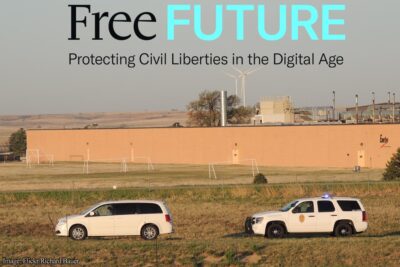
The government has asserted that U.S. Customs and Border Protection (CBP) officers may operate immigration checkpoints anywhere within 100 miles of the external boundary of the United States. This expanded border zone includes roughly two-thirds of the U.S. population and was established by the U.S. Department of Justice in 1953, when there were fewer than 1,100 Border Patrol agents around the country; today, there are over 21,000. The U.S. Supreme Court has held that these checkpoints can conduct only brief and limited inquiries into residency status and cannot be used predominantly for drug interdiction or other law enforcement efforts. Also, pursuant to the Fourth Amendment, no law enforcement or CBP agent may pull anyone over without a “reasonable suspicion” of wrongdoing (which is more than just a “hunch”) or search a vehicle without a warrant or “probable cause” (which is a reasonable belief, based on the circumstances, that an immigration violation or crime has occurred). However, at checkpoints every day, border agents are unlawfully stopping, interrogating, and searching individuals with no suspicion of wrongdoing, and often in racially biased ways.
These alarming and unconstitutional practices coincide with the spread of other border-related powers, exacerbating government intrusion into our private lives. Examples include suspicionless searches of electronic devices, watchlist and database systems, advanced identification and tracking systems, and intrusive technological schemes (such as a “virtual border fence” and surveillance drones). The government’s dragnet approach to immigration and law enforcement both at the border and farther inland is one that turns us all into suspects. The ACLU has documented border and checkpoint rights violations and continues to file lawsuits to defend our right to privacy against government abuses of power.
The Fourth Amendment to the U.S. Constitution protects all people within the United States from unreasonable stops and searches. While federal authorities enjoy broader powers at ports of entry, this power is not unlimited. However, the government has repeatedly developed programs—increasingly involving new technologies—that subject travelers to unreasonable stops and searches at the border, violating the basic tenets of our Constitution.
The government has asserted that U.S. Customs and Border Protection (CBP) officers may operate immigration checkpoints anywhere within 100 miles of the external boundary of the United States. This expanded border zone includes roughly two-thirds of the U.S. population and was established by the U.S. Department of Justice in 1953, when there were fewer than 1,100 Border Patrol agents around the country; today, there are over 21,000. The U.S. Supreme Court has held that these checkpoints can conduct only brief and limited inquiries into residency status and cannot be used predominantly for drug interdiction or other law enforcement efforts. Also, pursuant to the Fourth Amendment, no law enforcement or CBP agent may pull anyone over without a “reasonable suspicion” of wrongdoing (which is more than just a “hunch”) or search a vehicle without a warrant or “probable cause” (which is a reasonable belief, based on the circumstances, that an immigration violation or crime has occurred). However, at checkpoints every day, border agents are unlawfully stopping, interrogating, and searching individuals with no suspicion of wrongdoing, and often in racially biased ways.
These alarming and unconstitutional practices coincide with the spread of other border-related powers, exacerbating government intrusion into our private lives. Examples include suspicionless searches of electronic devices, watchlist and database systems, advanced identification and tracking systems, and intrusive technological schemes (such as a “virtual border fence” and surveillance drones). The government’s dragnet approach to immigration and law enforcement both at the border and farther inland is one that turns us all into suspects. The ACLU has documented border and checkpoint rights violations and continues to file lawsuits to defend our right to privacy against government abuses of power.