Supreme Court Term 2025-2026
We’re breaking down the cases we've asked the court to consider this term.

Latest Case Updates
Closed
Updated November 5, 2026
Ongoing
Updated November 3, 2026
Updated September 10, 2026
Ongoing
Updated September 8, 2026
Featured
Florida
Nov 2026

National Security
+2 Issues
CAIR-Foundation, Inc and CAIR Florida, Inc. v. DeSantis et al.
The ACLU, the ACLU of Florida, the Southern Poverty Law Center, and their partners represent CAIR and CAIR-Florida in two federal lawsuits challenging Governor DeSantis’s unconstitutional and baseless designation of the nonprofits as “terrorist.” The lawsuits allege violations of CAIR and CAIR-Florida’s rights under the First Amendment and the due process clause of the Fourteenth Amendment.
Court Case
Nov 2026
National Security
Human Rights
FOIA Case Seeking the Trump Administration’s Legal Justification for Deadly Boat Strikes
The Department of Justice’s Office of Legal Counsel (“OLC”) authored a legal opinion that reportedly claims to justify the Trump administration’s illegal lethal strikes on civilians in boats in the Caribbean Sea and eastern Pacific Ocean. Media reports indicate that, in addition to claiming that the strikes are lawful acts in an alleged “armed conflict” with unspecified drug cartels, the OLC opinion also purports to immunize personnel who authorized or took part in the strikes from future criminal prosecution. Because the public deserves to know how our government is justifying these illegal strikes, and why they think the people who carried them out should not be held accountable, the ACLU is seeking immediate release of the OLC legal opinion and related documents pursuant to the Freedom of Information Act.
Colorado Supreme Court
Nov 2026
Civil Liberties
Criminal Law Reform
People v. Eatinger
In 2023, the State of Colorado admitted to the public that a state DNA analyst, Missy Woods, had manipulated data and tampered with evidence in potentially thousands of criminal cases. But the State did not learn of Woods’s malfeasance in 2023. In fact, Woods’s supervisors had been aware of it since 2014. Instead of investigating her fraud and disclosing it to defendants in affected cases, however, the supervisors covered it up and allowed her to continue working on cases—including Daniel Eatinger’s case here—for another decade.
The ACLU’s State Supreme Court Initiative, the ACLU of Colorado, and the Exoneration Project filed an amicus brief with the Colorado Supreme Court arguing that Woods and her supervisors violated their constitutional duty to disclose her misconduct, and that the Court should order systemic remedies for the thousands of defendants who have been harmed.
Alaska
Nov 2026
Voting Rights
United States v. Alaska
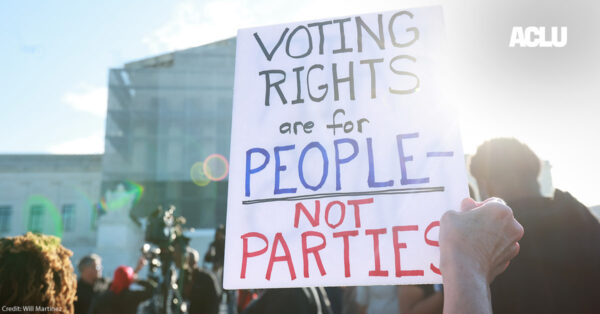
Representing two Alaska voters, the League of Women Voters of Alaska, and Common Cause, the American Civil Liberties Union and ACLU of Alaska moved to intervene in United States v. Alaska, a frivolous lawsuit seeking to prevent from the State of Alaska from certifying its election results if the incumbent U.S. Senator does not win the election. The lawless suit asserts a single claim based on the purpose language of the National Voter Registration Act (NVRA), that has no basis in any case, legal principle, or arguably tenable reading of the NVRA.
We are seeking dismissal of this suit that aims to deprive Alaskans of their right to vote and right to representation.
Ohio
Nov 2026
Reproductive Freedom
Planned Parenthood Southwest Ohio Region et al., v. Ohio Department of Health, et al.
The American Civil Liberties Union, the ACLU of Ohio, Planned Parenthood Federation of America, the law firm WilmerHale, and Fanon Rucker of the Cochran Law Firm, on behalf of Planned Parenthood Southwest Ohio Region, Planned Parenthood of Greater Ohio, Preterm-Cleveland, Women’s Med Group Professional Corporation, Dr. Sharon Liner, and Julia Quinn, MSN, BSN, amended a complaint in an existing lawsuit against a ban on telehealth medication abortion services to bring new claims under the Ohio Reproductive Freedom Amendment, including additional challenges to other laws in Ohio that restrict access to medication abortion in the state.
California
Oct 2026

Voting Rights
OCA-Asian Pacific American Advocates v. Department of Homeland Security
The Department of Homeland Security and United States Citizenship and Immigration Services are subjecting thousands of naturalized American citizens to improper investigations questioning their voting eligibility, and they’re using outdated, faulty data and methods to do so. As a result, these citizens face increasing, unwarranted scrutiny from the federal government and, potentially, disenfranchisement. We’re challenging these unlawful actions and the unreliable data behind them to ensure no eligible voter is targeted or silenced because of them.
Colorado Supreme Court
Oct 2026
Civil Liberties
Criminal Law Reform
Daves v. Mosley
Section 131 of the newly enacted Enhance Law Enforcement Integrity Act gives Coloradans a cause of action to seek damages or equitable relief when state or local police officers violate the Colorado Constitution. In 2022, Christopher Mosley sued Officer Brendan Daves for conducting a warrantless search of his car, which Daves argued was lawful under the federal protective sweep doctrine. After Mosley prevailed at trial and the court of appeals affirmed, Daves appealed to the Colorado Supreme Court. The ACLU’s State Supreme Court Initiative and the ACLU of Colorado filed an amicus brief agreeing with Mosley’s argument that Daves has misapprehended the federal doctrine whilst focusing on a separate point: the Court’s interpretation of Section 131 is not bound by federal law.
Washington, D.C.
Oct 2026

Voting Rights
Common Cause v. U.S. Department of Justice
The U.S. Department of Justice has launched an unprecedented and unlawful effort to invade the privacy of millions of American voters and threaten their right to vote. It has demanded that every state and the District of Columbia turn over their entire voter database, including Social Security Numbers, political party affiliation, and voter participation history. And at least a dozen states have complied, submitting their voters’ information for federal review. But the Department of Justice has no authority to dictate when a voter registration should be cancelled, and we are suing to stop the federal government’s overreach and ensure that voters’ information remains secure and free from unlawful interference.
Massachusetts
Sep 2026

Voting Rights
League of Women Voters of Massachusetts v. Trump
On March 31, 2026, President Trump issued a sweeping Executive Order titled “Ensuring Citizen Verification and Integrity in Federal Elections,” seeking once again to seize control of election administration from Congress and the states. The Order directs federal agencies to compile lists of U.S. citizens and transmit them to states before every election, directs the U.S. Postal Service — an independent agency established by Congress — to create a list of “approved” mail voters, and instructs USPS to refuse to deliver ballots from voters not on that federally created list. If implemented, the Order would threaten the ability of millions of eligible citizens to cast their ballots, particularly military members, overseas citizens, the elderly, recently naturalized citizens, and voters with disabilities who rely on mail voting.
All Cases
1,771 Court Cases

U.S. Supreme Court
Jul 2025
National Security
+2 Issues
TikTok Inc., et al. v. Garland (Amicus)
The Supreme Court will decide whether a law that effectively bans TikTok in the United States violates the First Amendment rights of more than 170 million Americans who use the social media platform. The law also allows the President to ban other foreign-owned apps deemed a national security threat, opening the door to future abuse and censorship. The ban on TikTok is set to go into effect on January 19, 2025.
Explore case
U.S. Supreme Court
Jul 2025
National Security
+2 Issues
TikTok Inc., et al. v. Garland (Amicus)
The Supreme Court will decide whether a law that effectively bans TikTok in the United States violates the First Amendment rights of more than 170 million Americans who use the social media platform. The law also allows the President to ban other foreign-owned apps deemed a national security threat, opening the door to future abuse and censorship. The ban on TikTok is set to go into effect on January 19, 2025.
U.S. Supreme Court
Jul 2025
Free Speech
LGBTQ Rights
Free Speech Coalition, Inc. v. Paxton
Whether a content-based regulation that burdens adults’ access to protected speech has to be merely reasonable to satisfy the First Amendment because it was passed in the name of protecting children from sexual material online.
Explore case
U.S. Supreme Court
Jul 2025
Free Speech
LGBTQ Rights
Free Speech Coalition, Inc. v. Paxton
Whether a content-based regulation that burdens adults’ access to protected speech has to be merely reasonable to satisfy the First Amendment because it was passed in the name of protecting children from sexual material online.
U.S. Supreme Court
Jul 2025
Prisoners' Rights
Perttu v Richards
The Seventh Amendment gives people a constitutional right to a jury trial in civil cases seeking money damages. The Supreme Court held that incarcerated plaintiffs have a right to a jury trial on questions of administrative exhaustion under the Prison Litigation Reform Act, when the facts underlying exhaustion would also decide the merits of their case.
Explore case
U.S. Supreme Court
Jul 2025
Prisoners' Rights
Perttu v Richards
The Seventh Amendment gives people a constitutional right to a jury trial in civil cases seeking money damages. The Supreme Court held that incarcerated plaintiffs have a right to a jury trial on questions of administrative exhaustion under the Prison Litigation Reform Act, when the facts underlying exhaustion would also decide the merits of their case.
U.S. Supreme Court
Jul 2025
Capital Punishment
Glossip v. Oklahoma
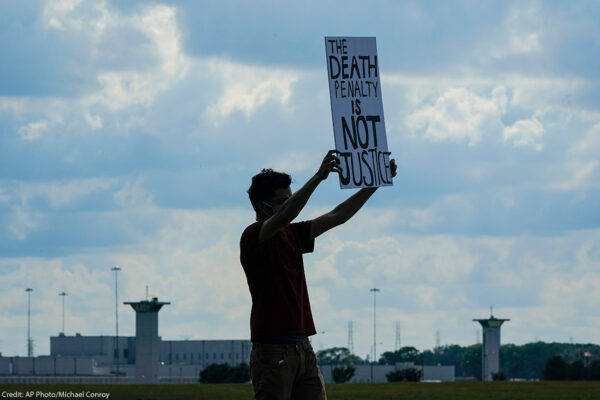
This long-running Oklahoma death-penalty case raised two issues:
1) Would the State of Oklahoma be permitted to execute Glossip, despite overwhelming evidence that he is innocent, and despite a confession by the State’s Attorney General that the state obtained his conviction by hiding crucial evidence impeaching its star witness?; and
2) Would the Court reaffirm its longstanding commitment to Due-Process-Clause precedent requiring the government to disclose favorable evidence in its possession to the accused and to correct false testimony introduced against the accused?
Explore case
U.S. Supreme Court
Jul 2025
Capital Punishment
Glossip v. Oklahoma
This long-running Oklahoma death-penalty case raised two issues:
1) Would the State of Oklahoma be permitted to execute Glossip, despite overwhelming evidence that he is innocent, and despite a confession by the State’s Attorney General that the state obtained his conviction by hiding crucial evidence impeaching its star witness?; and
2) Would the Court reaffirm its longstanding commitment to Due-Process-Clause precedent requiring the government to disclose favorable evidence in its possession to the accused and to correct false testimony introduced against the accused?

U.S. Supreme Court
Jul 2025
Capital Punishment
Tabler v. Lumpkin
In Tabler v. Lumpkin, the ACLU represented a Texas death row prisoner whose lawyers refused to represent him at a hearing to determine his capacity to decide whether to give up his state post-conviction appeals, leaving him effectively unrepresented at that hearing. Our petition asked the Supreme Court to review Richard Tabler’s case and to hold that when a defendant’s lawyers abandon him, his waiver of further appeals should not bar his access to federal habeas corpus review of the constitutionality of his conviction.
Explore case
U.S. Supreme Court
Jul 2025
Capital Punishment
Tabler v. Lumpkin
In Tabler v. Lumpkin, the ACLU represented a Texas death row prisoner whose lawyers refused to represent him at a hearing to determine his capacity to decide whether to give up his state post-conviction appeals, leaving him effectively unrepresented at that hearing. Our petition asked the Supreme Court to review Richard Tabler’s case and to hold that when a defendant’s lawyers abandon him, his waiver of further appeals should not bar his access to federal habeas corpus review of the constitutionality of his conviction.