Fighting Voter Suppression

Common Cause v. U.S. Department of Justice
The U.S. Department of Justice has launched an unprecedented and unlawful effort to invade the privacy of millions of American voters and threaten their right to vote. It has demanded that every state and the District of Columbia turn over their entire voter database, including Social Security Numbers, political party affiliation, and voter participation history. And at least a dozen states have complied, submitting their voters’ information for federal review. But the Department of Justice has no authority to dictate when a voter registration should be cancelled, and we are suing to stop the federal government’s overreach and ensure that voters’ information remains secure and free from unlawful interference.
Status: Ongoing
View Case
Learn About Fighting Voter Suppression
Featured
Massachusetts
Sep 2026
Fighting Voter Suppression
League of Women Voters of Massachusetts v. Trump
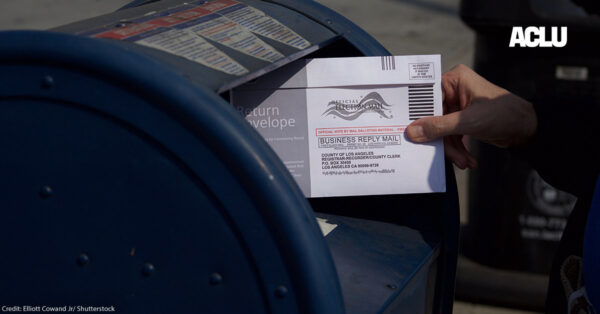
On March 31, 2026, President Trump issued a sweeping Executive Order titled “Ensuring Citizen Verification and Integrity in Federal Elections,” seeking once again to seize control of election administration from Congress and the states. The Order directs federal agencies to compile lists of U.S. citizens and transmit them to states before every election, directs the U.S. Postal Service — an independent agency established by Congress — to create a list of “approved” mail voters, and instructs USPS to refuse to deliver ballots from voters not on that federally created list. If implemented, the Order would threaten the ability of millions of eligible citizens to cast their ballots, particularly military members, overseas citizens, the elderly, recently naturalized citizens, and voters with disabilities who rely on mail voting.
Washington, D.C.
Oct 2025
Fighting Voter Suppression
League of Women Voters Education Fund v. Trump
On March 25, 2025, in a sweeping and unprecedented Executive Order, President Trump attempted to usurp the power to regulate federal elections from Congress and the States. Among other things, the Executive Order directs the Election Assistance Commission—an agency that Congress specifically established to be bipartisan and independent—to require voters to show a passport or other citizenship documentation in order to register to vote in federal elections. If implemented, the Executive Order would threaten the ability of millions of eligible Americans to register and vote and upend the administration of federal elections.
On behalf of leading voter registration organizations and advocacy organizations, the ACLU and co-counsel filed a lawsuit to block the Executive Order as an unconstitutional power grab.
All Cases
103 Fighting Voter Suppression Cases
Massachusetts
Jan 2026
Fighting Voter Suppression
California v. Trump (Amicus)
On March 25, 2025, in a sweeping and unprecedented Executive Order, President Trump attempted to usurp the power to regulate federal elections from Congress and the States. Among other things, the Executive Order directs the Election Assistance Commission—an agency that Congress specifically established to be bipartisan and independent—to require voters to show a passport or other citizenship documentation in order to register to vote in federal elections. If implemented, the Executive Order would threaten the ability of millions of eligible Americans to register and vote and upend the administration of federal elections.
Explore case
Massachusetts
Jan 2026
Fighting Voter Suppression
California v. Trump (Amicus)
On March 25, 2025, in a sweeping and unprecedented Executive Order, President Trump attempted to usurp the power to regulate federal elections from Congress and the States. Among other things, the Executive Order directs the Election Assistance Commission—an agency that Congress specifically established to be bipartisan and independent—to require voters to show a passport or other citizenship documentation in order to register to vote in federal elections. If implemented, the Executive Order would threaten the ability of millions of eligible Americans to register and vote and upend the administration of federal elections.
Montana
Dec 2025
Fighting Voter Suppression
Chippewa Cree Indians of the Rocky Boy's Reservation v. Chouteau County
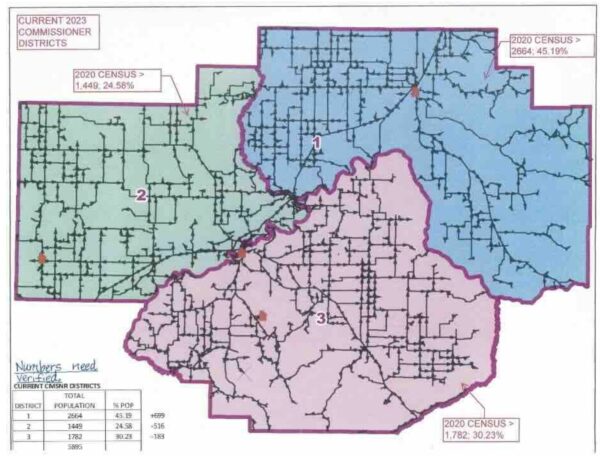
Representing the Chippewa Cree Indians of the Rocky Boy’s Reservation and two Native American voters living in Chouteau County, Montana, the American Civil Liberties Union, ACLU of Montana, and Native American Rights Fund (NARF) challenged the holding of at-large elections for the Chouteau County Board of Commissioners. The suit alleges the system unlawfully dilutes the voting strength of Native American voters in the county and has denied them any representation on the county commission for more than a decade.
Explore case
Montana
Dec 2025
Fighting Voter Suppression
Chippewa Cree Indians of the Rocky Boy's Reservation v. Chouteau County
Representing the Chippewa Cree Indians of the Rocky Boy’s Reservation and two Native American voters living in Chouteau County, Montana, the American Civil Liberties Union, ACLU of Montana, and Native American Rights Fund (NARF) challenged the holding of at-large elections for the Chouteau County Board of Commissioners. The suit alleges the system unlawfully dilutes the voting strength of Native American voters in the county and has denied them any representation on the county commission for more than a decade.
New Mexico
Dec 2025
Fighting Voter Suppression
United States v. Oliver
The Department of Justice sued New Mexico Secretary of State Maggie Toulouse Oliver, demanding the state produce its full, unredacted voter file, which contains highly sensitive and personal data on every voter in the state. This suit appears to be part of the federal government’s efforts to build a national voter database without congressional authorization and to improperly question the validity of state voter rolls.
Explore case
New Mexico
Dec 2025
Fighting Voter Suppression
United States v. Oliver
The Department of Justice sued New Mexico Secretary of State Maggie Toulouse Oliver, demanding the state produce its full, unredacted voter file, which contains highly sensitive and personal data on every voter in the state. This suit appears to be part of the federal government’s efforts to build a national voter database without congressional authorization and to improperly question the validity of state voter rolls.
Oregon
Nov 2025
Fighting Voter Suppression
United States v. Oregon (Amicus)
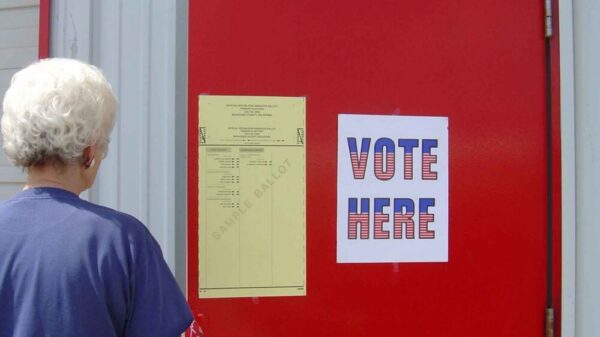
Representing the ACLU of Oregon, the ACLU Voting Rights Project and the ACLU of Oregon filed an amicus brief in a federal lawsuit over the federal government’s demand that Oregon turn over its entire voter registration rolls, including with voters’ sensitive personal data such as drivers’ license numbers and partial social security numbers.
Explore case
Oregon
Nov 2025
Fighting Voter Suppression
United States v. Oregon (Amicus)
Representing the ACLU of Oregon, the ACLU Voting Rights Project and the ACLU of Oregon filed an amicus brief in a federal lawsuit over the federal government’s demand that Oregon turn over its entire voter registration rolls, including with voters’ sensitive personal data such as drivers’ license numbers and partial social security numbers.
Washington, D.C.
Oct 2025
Fighting Voter Suppression
Comments on Petition of America First Legal for Rulemaking Before the Election Assistance Commission
The ACLU, along with several partner organizations, is opposing a request to the U.S. Election Assistance Commission from the America First Legal Foundation (AFL) for a new rulemaking to consider changing the federal voter registration form to add a requirement for documentary proof of citizenship.
The federal voter registration form was created by the National Voter Registration Act (NVRA), and under federal law almost all states in the country have to accept it as a form of mail voter registration. As intended by the NVRA, the form is a one page, streamlined application that an individual can complete and mail-in without providing any additional documentation. If the rules about the federal form are changed so that additional documentation is required, it is likely that many states would also change their own state voter registration forms to require documentary proof of citizenship.
This change would potentially disenfranchise millions of eligible U.S. citizens.
Explore case
Washington, D.C.
Oct 2025
Fighting Voter Suppression
Comments on Petition of America First Legal for Rulemaking Before the Election Assistance Commission
The ACLU, along with several partner organizations, is opposing a request to the U.S. Election Assistance Commission from the America First Legal Foundation (AFL) for a new rulemaking to consider changing the federal voter registration form to add a requirement for documentary proof of citizenship.
The federal voter registration form was created by the National Voter Registration Act (NVRA), and under federal law almost all states in the country have to accept it as a form of mail voter registration. As intended by the NVRA, the form is a one page, streamlined application that an individual can complete and mail-in without providing any additional documentation. If the rules about the federal form are changed so that additional documentation is required, it is likely that many states would also change their own state voter registration forms to require documentary proof of citizenship.
This change would potentially disenfranchise millions of eligible U.S. citizens.