Alaska
United States v. Alaska
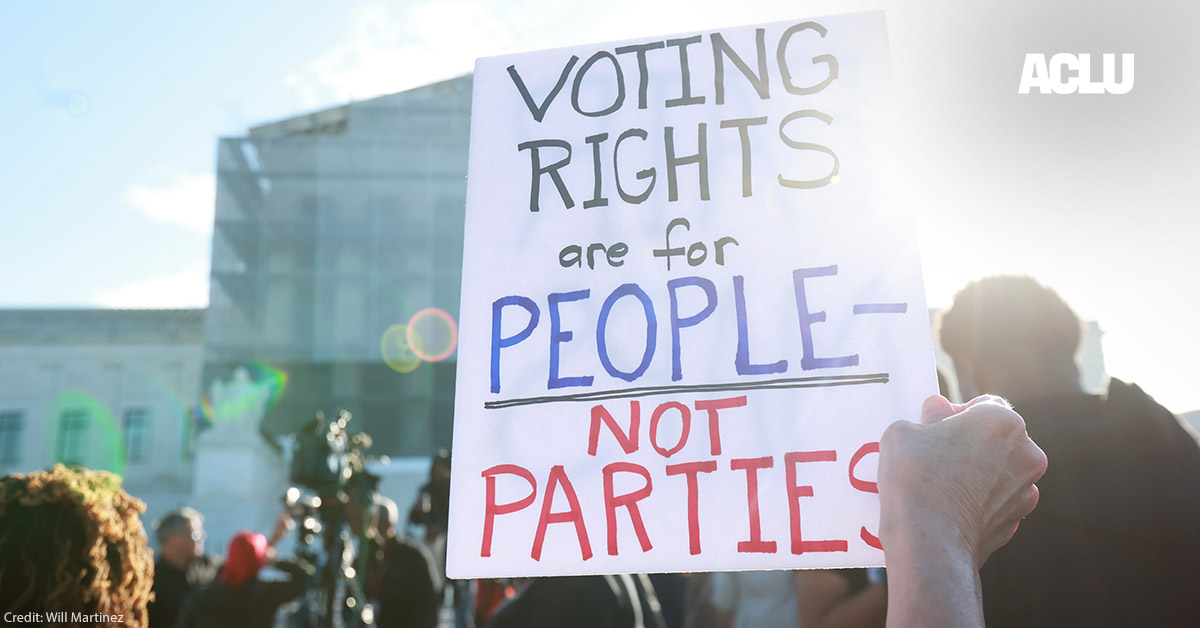
Representing two Alaska voters, the League of Women Voters of Alaska, and Common Cause, the American Civil Liberties Union and ACLU of Alaska moved to intervene in United States v. Alaska, a frivolous lawsuit seeking to prevent from the State of Alaska from certifying its election results if the incumbent U.S. Senator does not win the election. The lawless suit asserts a single claim based on the purpose language of the National Voter Registration Act (NVRA), that has no basis in any case, legal principle, or arguably tenable reading of the NVRA.
We are seeking dismissal of this suit that aims to deprive Alaskans of their right to vote and right to representation.
Status: Ongoing
View Case
Visit ACLU of Alaska
All Cases
11 Alaska Cases

Alaska
Sep 2026
Reproductive Freedom
Planned Parenthood Great Northwest, Hawaiʻi, Alaska, Indiana, and Kentucky v. State of Alaska et al.
Planned Parenthood Great Northwest, Hawaiʻi, Alaska, Indiana, and Kentucky, represented by attorneys from Planned Parenthood Federation of America, the American Civil Liberties Union, the ACLU of Alaska, and Davis Wright Tremaine LLP, is challenging an Alaska law that bans direct-to-patient telehealth medication abortion.
Explore case
Alaska
Sep 2026
Reproductive Freedom
Planned Parenthood Great Northwest, Hawaiʻi, Alaska, Indiana, and Kentucky v. State of Alaska et al.
Planned Parenthood Great Northwest, Hawaiʻi, Alaska, Indiana, and Kentucky, represented by attorneys from Planned Parenthood Federation of America, the American Civil Liberties Union, the ACLU of Alaska, and Davis Wright Tremaine LLP, is challenging an Alaska law that bans direct-to-patient telehealth medication abortion.

Alaska
Sep 2026
Voting Rights
Racial Justice
Smith v. State of Alaska (Amicus)
The ACLU and ACLU of Alaska have filed an amicus in support of Tupe Smith, a woman born in American Samoa who now lives in Whittier, Alaska charged with falsely affirming that she was a U.S. citizen when she registered to vote. But Tupe Smith is not an “alien” under the law. People, like her, born in the U.S. territory of American Samoa are the only remaining individuals recognized as “non-citizen U.S. nationals,” a unique status that falls short of “citizen” but nonetheless recognizes that American Samoa has been part of the United States for over 125 years.
All evidence indicates that Ms. Smith believed that, as a non-citizen U.S. national, she was eligible to vote in local elections when she registered to vote. In fact, local election officials encouraged her to check the box labeled “U.S. citizen” when she registered, given the fact that there was no option for “U.S. national.”
Our amicus brief urges Alaska’s Court of Appeals to dismiss Tupe Smith’s indictment because of well-settled principles that election-crime statutes should be construed to avoid punishing innocent mistakes. Separately, we warn that upholding a different view of the law would make Alaska an outlier among the states.
Explore case
Alaska
Sep 2026
Voting Rights
Racial Justice
Smith v. State of Alaska (Amicus)
The ACLU and ACLU of Alaska have filed an amicus in support of Tupe Smith, a woman born in American Samoa who now lives in Whittier, Alaska charged with falsely affirming that she was a U.S. citizen when she registered to vote. But Tupe Smith is not an “alien” under the law. People, like her, born in the U.S. territory of American Samoa are the only remaining individuals recognized as “non-citizen U.S. nationals,” a unique status that falls short of “citizen” but nonetheless recognizes that American Samoa has been part of the United States for over 125 years.
All evidence indicates that Ms. Smith believed that, as a non-citizen U.S. national, she was eligible to vote in local elections when she registered to vote. In fact, local election officials encouraged her to check the box labeled “U.S. citizen” when she registered, given the fact that there was no option for “U.S. national.”
Our amicus brief urges Alaska’s Court of Appeals to dismiss Tupe Smith’s indictment because of well-settled principles that election-crime statutes should be construed to avoid punishing innocent mistakes. Separately, we warn that upholding a different view of the law would make Alaska an outlier among the states.
Alaska
May 2026
Voting Rights
League of Women Voters of Alaska v. Nancy Dahlstrom
On behalf of the League of Women Voters of Alaska, the Alaska Black Caucus, and the Alaska Public Interest Research Group, the ACLU Voting Rights Project, the ACLU of Alaska, and the Electronic Privacy Information Center have filed a lawsuit against the Lieutenant Governor of Alaska and the Director of Alaska’s Division of Elections over the state’s compliance with the U.S. Department of Justice’s request for Alaska’s full, unredacted voter file. The Department of Justice demanded the complete voter record, which includes voters’ sensitive personal data, such as drivers’ license numbers and partial Social Security numbers.
Explore case
Alaska
May 2026
Voting Rights
League of Women Voters of Alaska v. Nancy Dahlstrom
On behalf of the League of Women Voters of Alaska, the Alaska Black Caucus, and the Alaska Public Interest Research Group, the ACLU Voting Rights Project, the ACLU of Alaska, and the Electronic Privacy Information Center have filed a lawsuit against the Lieutenant Governor of Alaska and the Director of Alaska’s Division of Elections over the state’s compliance with the U.S. Department of Justice’s request for Alaska’s full, unredacted voter file. The Department of Justice demanded the complete voter record, which includes voters’ sensitive personal data, such as drivers’ license numbers and partial Social Security numbers.
Alaska Supreme Court
Oct 2020
Voting Rights
Arctic Village Council v. Meyer
The lawsuit, Arctic Village Council v. Meyer, sought to waive a provision of state law for the November general election that requires voters who submit a mail-in absentee ballot to have a witness sign their ballot return envelope even in the midst of a highly contagious and deadly pandemic.
Explore case
Alaska Supreme Court
Oct 2020
Voting Rights
Arctic Village Council v. Meyer
The lawsuit, Arctic Village Council v. Meyer, sought to waive a provision of state law for the November general election that requires voters who submit a mail-in absentee ballot to have a witness sign their ballot return envelope even in the midst of a highly contagious and deadly pandemic.