Voting Rights
United States v. Alaska
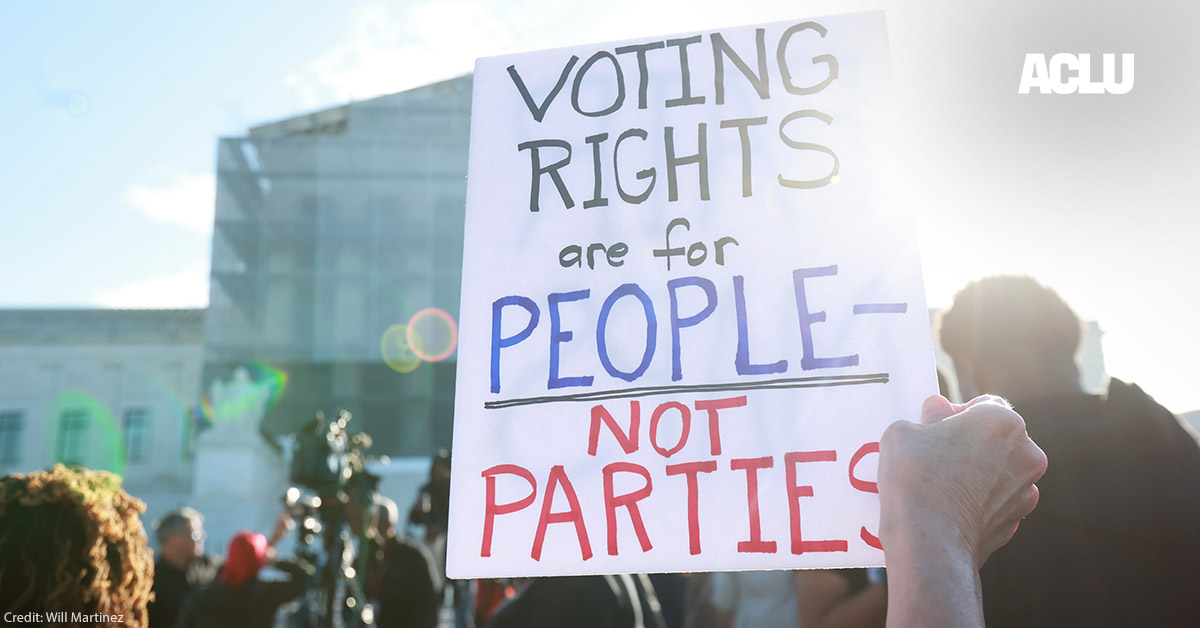
Representing two Alaska voters, the League of Women Voters of Alaska, and Common Cause, the American Civil Liberties Union and ACLU of Alaska moved to intervene in United States v. Alaska, a frivolous lawsuit seeking to prevent from the State of Alaska from certifying its election results if the incumbent U.S. Senator does not win the election. The lawless suit asserts a single claim based on the purpose language of the National Voter Registration Act (NVRA), that has no basis in any case, legal principle, or arguably tenable reading of the NVRA.
We are seeking dismissal of this suit that aims to deprive Alaskans of their right to vote and right to representation.
Status: Ongoing
View Case
Learn About Voting Rights
Featured
California
Oct 2026
Voting Rights
OCA-Asian Pacific American Advocates v. Department of Homeland Security
The Department of Homeland Security and United States Citizenship and Immigration Services are subjecting thousands of naturalized American citizens to improper investigations questioning their voting eligibility, and they’re using outdated, faulty data and methods to do so. As a result, these citizens face increasing, unwarranted scrutiny from the federal government and, potentially, disenfranchisement. We’re challenging these unlawful actions and the unreliable data behind them to ensure no eligible voter is targeted or silenced because of them.
Washington, D.C.
Oct 2026

Voting Rights
Common Cause v. U.S. Department of Justice
The U.S. Department of Justice has launched an unprecedented and unlawful effort to invade the privacy of millions of American voters and threaten their right to vote. It has demanded that every state and the District of Columbia turn over their entire voter database, including Social Security Numbers, political party affiliation, and voter participation history. And at least a dozen states have complied, submitting their voters’ information for federal review. But the Department of Justice has no authority to dictate when a voter registration should be cancelled, and we are suing to stop the federal government’s overreach and ensure that voters’ information remains secure and free from unlawful interference.
Massachusetts
Sep 2026
Voting Rights
League of Women Voters of Massachusetts v. Trump
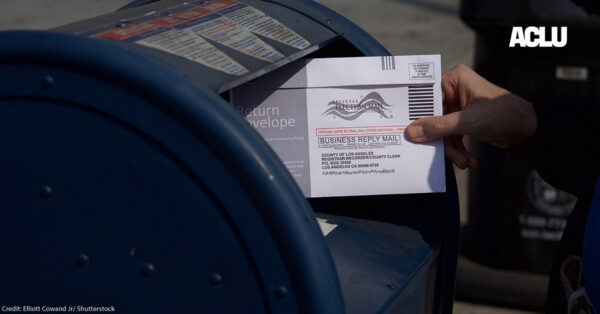
On March 31, 2026, President Trump issued a sweeping Executive Order titled “Ensuring Citizen Verification and Integrity in Federal Elections,” seeking once again to seize control of election administration from Congress and the states. The Order directs federal agencies to compile lists of U.S. citizens and transmit them to states before every election, directs the U.S. Postal Service — an independent agency established by Congress — to create a list of “approved” mail voters, and instructs USPS to refuse to deliver ballots from voters not on that federally created list. If implemented, the Order would threaten the ability of millions of eligible citizens to cast their ballots, particularly military members, overseas citizens, the elderly, recently naturalized citizens, and voters with disabilities who rely on mail voting.
U.S. Supreme Court
May 2026
Voting Rights
Racial Justice
Allen v. Milligan
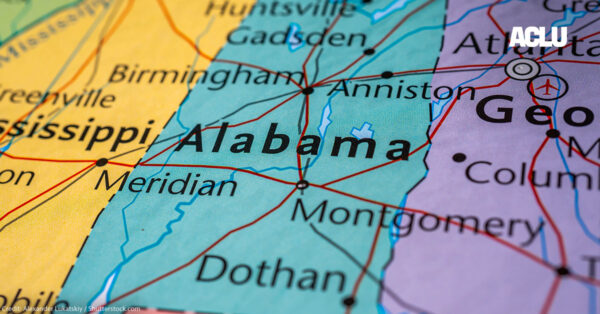
Whether Alabama’s congressional districts violate Section 2 of the Voting Rights Act because they discriminate against Black voters. We succeeded in winning a new map for 2024 elections which, for the first time, has two congressional district that provide Black voters a fair opportunity to elect candidates of their choosing despite multiple attempts by Alabama to stop us at the Supreme Court. Despite this win, Alabama is still defending its discriminatory map, and a trial was held in February 2025 to determine the map for the rest of the decade.
In May 2025, a federal court ruled that Alabama’s 2023 congressional map both violates Section 2 of the Voting Rights Act and was enacted by the Alabama Legislature with racially discriminatory intent.
U.S. Supreme Court
Apr 2026

Voting Rights
Louisiana v. Callais (Callais v. Landry)
Whether the congressional map Louisiana adopted to cure a Voting Rights Act violation in Robinson v. Ardoin is itself unlawful as a gerrymander.
Washington, D.C.
Oct 2025
Voting Rights
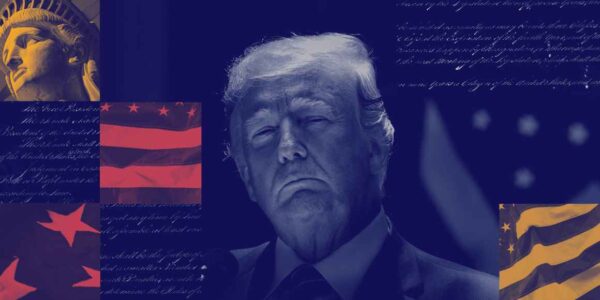
League of Women Voters Education Fund v. Trump
On March 25, 2025, in a sweeping and unprecedented Executive Order, President Trump attempted to usurp the power to regulate federal elections from Congress and the States. Among other things, the Executive Order directs the Election Assistance Commission—an agency that Congress specifically established to be bipartisan and independent—to require voters to show a passport or other citizenship documentation in order to register to vote in federal elections. If implemented, the Executive Order would threaten the ability of millions of eligible Americans to register and vote and upend the administration of federal elections.
On behalf of leading voter registration organizations and advocacy organizations, the ACLU and co-counsel filed a lawsuit to block the Executive Order as an unconstitutional power grab.
All Cases
213 Voting Rights Cases
Louisiana
Dec 2023
Voting Rights
Robinson v. Landry
Robinson challenged the congressional map that Louisiana enacted after the 2020 Census. ACLU and partners represented Plaintiffs the Louisiana State Conference of the NAACP, Power Coalition for Equity and Justice, and several impacted voters, and argued that the enacted plan violated Section 2 of the Voting Rights Act. In June 2022, the district court found Louisiana’s congressional map unlawfully denied Black voters a second district in which Black voters had an equal opportunity to elect their candidates of choice. After appeals, the legislature passed a new map containing two majority Black districts in January 2024.
Explore case
Louisiana
Dec 2023
Voting Rights
Robinson v. Landry
Robinson challenged the congressional map that Louisiana enacted after the 2020 Census. ACLU and partners represented Plaintiffs the Louisiana State Conference of the NAACP, Power Coalition for Equity and Justice, and several impacted voters, and argued that the enacted plan violated Section 2 of the Voting Rights Act. In June 2022, the district court found Louisiana’s congressional map unlawfully denied Black voters a second district in which Black voters had an equal opportunity to elect their candidates of choice. After appeals, the legislature passed a new map containing two majority Black districts in January 2024.
Texas
Dec 2023
Voting Rights
Vote.Org v. Callanen (Amicus)
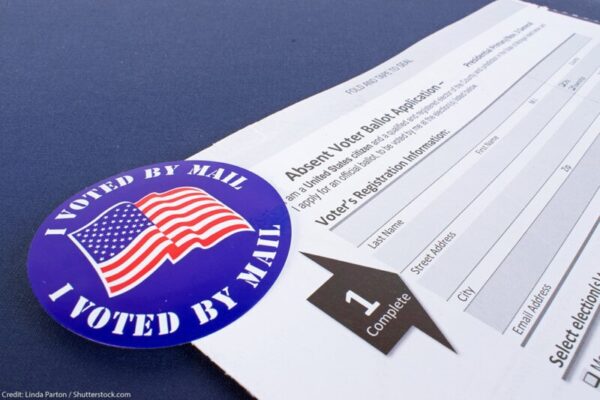
Texas requires voters who register to vote electronically or via fax to mail an original copy with the voter’s “wet signature” to the applicable registrar. A voter may be denied registration merely because the mailed copy of the form has a scanned signature on it rather than a “wet ink” one. But the Civil Rights Act prohibits states from disenfranchising voters based on immaterial paperwork errors. We’re fighting to make sure that every vote counts and supported Vote.org’s challenge to the “wet ink” law as unlawful under the Civil Rights Act.
Explore case
Texas
Dec 2023
Voting Rights
Vote.Org v. Callanen (Amicus)
Texas requires voters who register to vote electronically or via fax to mail an original copy with the voter’s “wet signature” to the applicable registrar. A voter may be denied registration merely because the mailed copy of the form has a scanned signature on it rather than a “wet ink” one. But the Civil Rights Act prohibits states from disenfranchising voters based on immaterial paperwork errors. We’re fighting to make sure that every vote counts and supported Vote.org’s challenge to the “wet ink” law as unlawful under the Civil Rights Act.
Florida
Dec 2023
Voting Rights
Supporting Defendants in Unlawful Florida Prosecutions of Returning Citizens (Amicus)
Florida has arrested and prosecuted many returning citizens—persons with felony convictions who are no longer incarcerated—for registering and voting while ineligible. These prosecutions have occurred amid widespread confusion about voting rights restoration in Florida and have been initiated by an Office of Statewide Prosecutor (“OSP”) that has no authority to bring these criminal actions.
Explore case
Florida
Dec 2023
Voting Rights
Supporting Defendants in Unlawful Florida Prosecutions of Returning Citizens (Amicus)
Florida has arrested and prosecuted many returning citizens—persons with felony convictions who are no longer incarcerated—for registering and voting while ineligible. These prosecutions have occurred amid widespread confusion about voting rights restoration in Florida and have been initiated by an Office of Statewide Prosecutor (“OSP”) that has no authority to bring these criminal actions.
Mississippi
Dec 2023
Voting Rights
Hopkins v. Watson (Amicus)
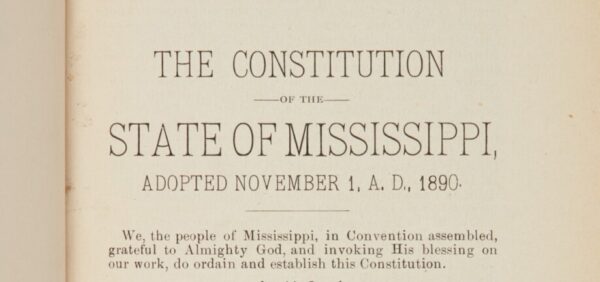
Mississippi is home to one of the strictest felon disenfranchisement schemes in the nation. The Mississippi Constitution permanently disenfranchises citizens upon a single felony conviction for certain crimes, including minor offenses like writing a bad check. As a result, the loss of rights under Mississippi’s scheme is mandatory, permanent, and effectively irrevocable. In Hopkins, plaintiffs, a class of formerly incarcerated individuals who lost their right to vote despite completing their sentences, argued that their disenfranchisement violated the Eighth Amendment’s prohibition on cruel and unusual punishment. A three-judge panel of the U.S. Court of Appeals for the Fifth Circuit ruled in the plaintiffs’ favor and struck down Mississippi’s disenfranchisement scheme as cruel and unusual punishment. But the Fifth Circuit decided to rehear the case en banc, a rare occurrence in which a case is reconsidered by the entire panel of the circuit’s active judges.
Explore case
Mississippi
Dec 2023
Voting Rights
Hopkins v. Watson (Amicus)
Mississippi is home to one of the strictest felon disenfranchisement schemes in the nation. The Mississippi Constitution permanently disenfranchises citizens upon a single felony conviction for certain crimes, including minor offenses like writing a bad check. As a result, the loss of rights under Mississippi’s scheme is mandatory, permanent, and effectively irrevocable. In Hopkins, plaintiffs, a class of formerly incarcerated individuals who lost their right to vote despite completing their sentences, argued that their disenfranchisement violated the Eighth Amendment’s prohibition on cruel and unusual punishment. A three-judge panel of the U.S. Court of Appeals for the Fifth Circuit ruled in the plaintiffs’ favor and struck down Mississippi’s disenfranchisement scheme as cruel and unusual punishment. But the Fifth Circuit decided to rehear the case en banc, a rare occurrence in which a case is reconsidered by the entire panel of the circuit’s active judges.
New Hampshire Supreme Court
Dec 2023
Voting Rights
Brown v. Secretary of State (Amicus)
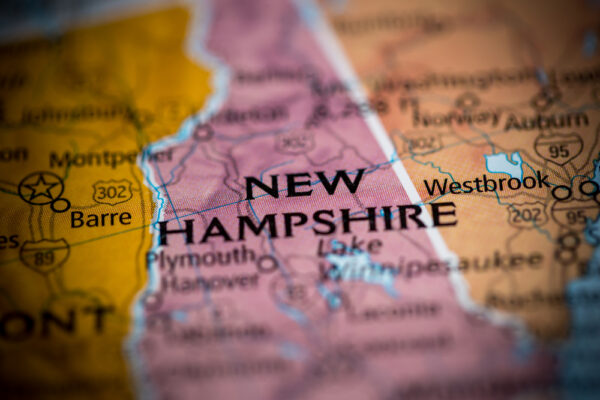
This case involved a state constitutional challenge to New Hampshire’s 2022 statewide Executive Council redistricting plan, which bore the hallmarks of a stark partisan gerrymander. The ACLU and the ACLU of New Hampshire filed an amicus brief in support of a challenge to the map in the New Hampshire Supreme Court.
Explore case
New Hampshire Supreme Court
Dec 2023
Voting Rights
Brown v. Secretary of State (Amicus)
This case involved a state constitutional challenge to New Hampshire’s 2022 statewide Executive Council redistricting plan, which bore the hallmarks of a stark partisan gerrymander. The ACLU and the ACLU of New Hampshire filed an amicus brief in support of a challenge to the map in the New Hampshire Supreme Court.