Utah

Natalie R. v. State of Utah
In recent years, federal courts have relied on what’s called the “political question doctrine” to refuse to review legal claims of wrongdoing, even those involving egregious constitutional harm. Using the political question doctrine, federal courts have turned away claims from people seeking justice on the theory that court review of those claims would embroil the courts in matters best left to the political process. Whether state courts should adopt a parallel political question doctrine—and thus limit access to justice for people whose civil rights and liberties have been violated—is an open question in many states. This case involves the scope of Utah courts’ authority to review important constitutional claims.
View Case
Visit ACLU of Utah
All Cases
12 Utah Cases
Utah Supreme Court
Nov 2023
Civil Liberties
Human Rights
Barrani v. Salt Lake City
Hundreds if not thousands of Salt Lake City, Utah, residents have nowhere safe to stay and must live and sleep in public. This case—brought by a small group of residents and businesses—involves the question whether this citywide homelessness crisis constitutes a nuisance under Utah state law. It also presents the question whether Salt Lake City can be ordered to clear encampments, forcibly relocate people who are unhoused, and enforce vague and overbroad laws criminalizing homelessness where doing so will likely, if not certainly, violate unhoused people’s state and federal constitutional rights. The ACLU’s State Supreme Court Initiative and Trone Center for Justice and Equality, along with the ACLU of Utah and the Salt Lake Legal Defenders Association, represent amici curiae in the trial court who oppose the plaintiffs’ nuisance claims and their request for relief.
Explore case
Utah Supreme Court
Nov 2023
Civil Liberties
Human Rights
Barrani v. Salt Lake City
Hundreds if not thousands of Salt Lake City, Utah, residents have nowhere safe to stay and must live and sleep in public. This case—brought by a small group of residents and businesses—involves the question whether this citywide homelessness crisis constitutes a nuisance under Utah state law. It also presents the question whether Salt Lake City can be ordered to clear encampments, forcibly relocate people who are unhoused, and enforce vague and overbroad laws criminalizing homelessness where doing so will likely, if not certainly, violate unhoused people’s state and federal constitutional rights. The ACLU’s State Supreme Court Initiative and Trone Center for Justice and Equality, along with the ACLU of Utah and the Salt Lake Legal Defenders Association, represent amici curiae in the trial court who oppose the plaintiffs’ nuisance claims and their request for relief.
Utah
Jun 2023
Free Speech
LGBTQ Rights
Southern Utah Drag Stars, LLC v. City of St. George
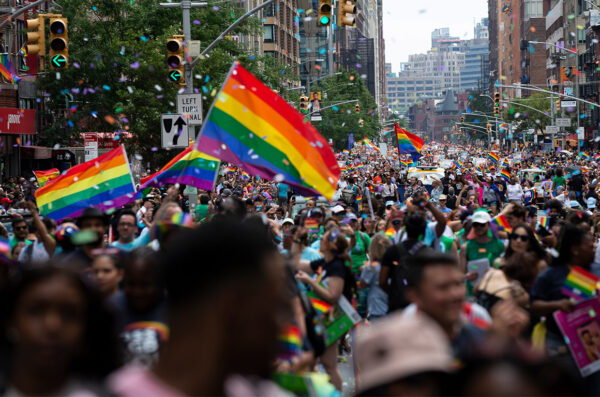
This case is about whether a city government’s selective and discriminatory refusal to permit a family-friendly drag event in a public park violated the event organizers’ First Amendment right to free speech and the Fourteenth Amendment’s guarantee of equal protection, and related provisions contained in the Utah Constitution.
Explore case
Utah
Jun 2023
Free Speech
LGBTQ Rights
Southern Utah Drag Stars, LLC v. City of St. George
This case is about whether a city government’s selective and discriminatory refusal to permit a family-friendly drag event in a public park violated the event organizers’ First Amendment right to free speech and the Fourteenth Amendment’s guarantee of equal protection, and related provisions contained in the Utah Constitution.
Utah Supreme Court
May 2023
Reproductive Freedom
Planned Parenthood Association of Utah v. State of Utah
This case involves a challenge to Utah Senate Bill (“S.B.”), a law that criminalizes nearly all abortions in Utah. In June 2022, Planned Parenthood Association of Utah (“PPAU”), one of only two abortion providers in the state, challenged S.B. 174 in Utah state court. It is currently litigating in the Utah Supreme Court to ensure the law remains blocked while courts consider the case. PPAU is represented in the appeal by the ACLU’s State Supreme Court Initiative, along with the ACLU of Utah, Planned Parenthood Federation of America, and the Utah law firm Zimmerman Booher. In August 2024, in a major win for Utahns, the Court affirmed the lower court order blocking SB 174. As a result, abortion remains legal in Utah until 18 weeks of pregnancy.
Explore case
Utah Supreme Court
May 2023
Reproductive Freedom
Planned Parenthood Association of Utah v. State of Utah
This case involves a challenge to Utah Senate Bill (“S.B.”), a law that criminalizes nearly all abortions in Utah. In June 2022, Planned Parenthood Association of Utah (“PPAU”), one of only two abortion providers in the state, challenged S.B. 174 in Utah state court. It is currently litigating in the Utah Supreme Court to ensure the law remains blocked while courts consider the case. PPAU is represented in the appeal by the ACLU’s State Supreme Court Initiative, along with the ACLU of Utah, Planned Parenthood Federation of America, and the Utah law firm Zimmerman Booher. In August 2024, in a major win for Utahns, the Court affirmed the lower court order blocking SB 174. As a result, abortion remains legal in Utah until 18 weeks of pregnancy.
Utah
Oct 2015
LGBTQ Rights
Roe v. Patton
The ACLU of Utah and the national ACLU LGBT Project filed a lawsuit to force the State Office of Vital Records and Statistics to recognize a married same-sex couple as legal parents of their child. The lawsuit was filed in Utah federal court on behalf of Angie and Kami Roe, who seek to both be recognized as parents to their daughter, Lucy.
Under Utah’s assisted reproduction statute, the husband of a woman who conceives with donated sperm is automatically recognized as the child’s parent. But because Angie is Kami’s wife instead of her husband, the State Office of Vital Records and Statistics refuses to recognize Angie as Lucy’s parent.
Explore case
Utah
Oct 2015
LGBTQ Rights
Roe v. Patton
The ACLU of Utah and the national ACLU LGBT Project filed a lawsuit to force the State Office of Vital Records and Statistics to recognize a married same-sex couple as legal parents of their child. The lawsuit was filed in Utah federal court on behalf of Angie and Kami Roe, who seek to both be recognized as parents to their daughter, Lucy.
Under Utah’s assisted reproduction statute, the husband of a woman who conceives with donated sperm is automatically recognized as the child’s parent. But because Angie is Kami’s wife instead of her husband, the State Office of Vital Records and Statistics refuses to recognize Angie as Lucy’s parent.