Supreme Court Term 2025-2026
We’re breaking down the cases we've asked the court to consider this term.

Latest Case Updates
Updated September 10, 2026
Ongoing
Updated September 8, 2026
Ongoing
Updated August 31, 2026
Closed
Updated August 31, 2026
Featured
Florida
Oct 2026

National Security
+2 Issues
CAIR-Foundation, Inc and CAIR Florida, Inc. v. DeSantis et al.
The ACLU, the ACLU of Florida, the Southern Poverty Law Center, and their partners represent CAIR and CAIR-Florida in two federal lawsuits challenging Governor DeSantis’s unconstitutional and baseless designation of the nonprofits as “terrorist.” The lawsuits allege violations of CAIR and CAIR-Florida’s rights under the First Amendment and the due process clause of the Fourteenth Amendment.
Court Case
Sep 2026
National Security
Human Rights
FOIA Case Seeking the Trump Administration’s Legal Justification for Deadly Boat Strikes
The Department of Justice’s Office of Legal Counsel (“OLC”) authored a legal opinion that reportedly claims to justify the Trump administration’s illegal lethal strikes on civilians in boats in the Caribbean Sea and eastern Pacific Ocean. Media reports indicate that, in addition to claiming that the strikes are lawful acts in an alleged “armed conflict” with unspecified drug cartels, the OLC opinion also purports to immunize personnel who authorized or took part in the strikes from future criminal prosecution. Because the public deserves to know how our government is justifying these illegal strikes, and why they think the people who carried them out should not be held accountable, the ACLU is seeking immediate release of the OLC legal opinion and related documents pursuant to the Freedom of Information Act.
Ohio
Sep 2026
Reproductive Freedom
Planned Parenthood Southwest Ohio Region et al., v. Ohio Department of Health, et al.
The American Civil Liberties Union, the ACLU of Ohio, Planned Parenthood Federation of America, the law firm WilmerHale, and Fanon Rucker of the Cochran Law Firm, on behalf of Planned Parenthood Southwest Ohio Region, Planned Parenthood of Greater Ohio, Preterm-Cleveland, Women’s Med Group Professional Corporation, Dr. Sharon Liner, and Julia Quinn, MSN, BSN, amended a complaint in an existing lawsuit against a ban on telehealth medication abortion services to bring new claims under the Ohio Reproductive Freedom Amendment, including additional challenges to other laws in Ohio that restrict access to medication abortion in the state.
Massachusetts
Sep 2026

Voting Rights
League of Women Voters of Massachusetts v. Trump
On March 31, 2026, President Trump issued a sweeping Executive Order titled "Ensuring Citizen Verification and Integrity in Federal Elections," seeking once again to seize control of election administration from Congress and the states. The Order directs federal agencies to compile lists of U.S. citizens and transmit them to states before every election, directs the U.S. Postal Service -- an independent agency established by Congress -- to create a list of "approved" mail voters, and instructs USPS to refuse to deliver ballots from voters not on that federally created list. If implemented, the Order would threaten the ability of millions of eligible citizens to cast their ballots, particularly military members, overseas citizens, the elderly, recently naturalized citizens, and voters with disabilities who rely on mail voting.
Oregon Supreme Court
Aug 2026
LGBTQ Rights
Prisoners' Rights
Zyst v. Miller
Following the Oregon Department of Corrections’ unconstitutional treatment of a transgender prisoner, a habeas court ordered her removal from segregated housing, an individualized gender-affirming care assessment, a psychiatric evaluation, and identification of an appropriate cellmate. However, the Oregon Court of Appeals reversed the psychiatric-evaluation and cellmate orders, finding them “too attenuated” to qualify as habeas relief. The ACLU’s State Supreme Court Initiative, alongside the ACLU of Oregon, joined an amicus brief by the law firm Sugerman Dahab arguing that habeas courts have broad discretion to remedy violations and resulting harms. The brief explains that the Court of Appeals’ “close connection” test unduly constricts habeas relief, and which should be construed to encompass not only the need to halt ongoing constitutional violations, but also the need to mitigate various harms that may arise from those violations.
Arizona
Jul 2026

Prisoners' Rights
Jensen v. Thornell
UPDATE: On July 17, 2026, U.S. District Judge Roslyn O. Silver issued an order formally appointing a receiver to assume control and management of health care provided to more than 25,000 people incarcerated in Arizona Department of Corrections, Rehabilitation, and Reentry (ADCRR) prisons, in a long-running lawsuit against the state prison system brought by the Prison Law Office, the American Civil Liberties Union (ACLU), ACLU of Arizona, and Disability Rights Arizona. More details here.
New Hampshire
Jul 2026
Voting Rights
Coalition for Open Democracy v. Scanlan
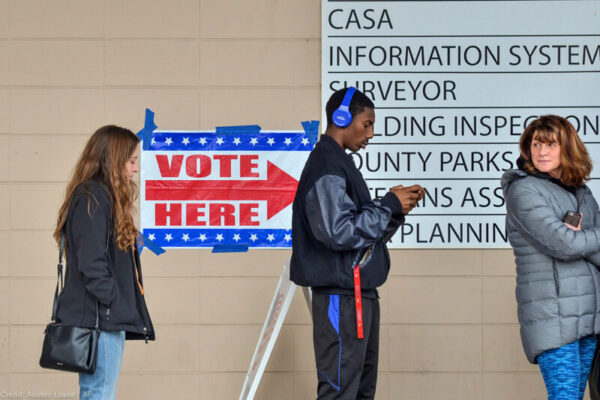
This lawsuit challenges HB 1569, a new law that will make New Hampshire the only state to require every person to produce documentary proof of citizenship when they register to vote for both state and federal elections. It also challenges HB 1569’s elimination a preexisting protection for voters—namely, an affidavit option that allowed voters who faced surprise challenges to their eligibility at the polls to swear to their qualifications and cast a ballot. Accordingly, HB 1569 violates the First and Fourteenth Amendments of the U.S. Constitution by placing substantial burdens on New Hampshirites at all stages of the voting process, and will arbitrarily disenfranchise hundreds, if not thousands of qualified voters.
U.S. Supreme Court
May 2026

Voting Rights
Racial Justice
Allen v. Milligan
Whether Alabama’s congressional districts violate Section 2 of the Voting Rights Act because they discriminate against Black voters. We succeeded in winning a new map for 2024 elections which, for the first time, has two congressional district that provide Black voters a fair opportunity to elect candidates of their choosing despite multiple attempts by Alabama to stop us at the Supreme Court. Despite this win, Alabama is still defending its discriminatory map, and a trial was held in February 2025 to determine the map for the rest of the decade.
In May 2025, a federal court ruled that Alabama's 2023 congressional map both violates Section 2 of the Voting Rights Act and was enacted by the Alabama Legislature with racially discriminatory intent.
U.S. Supreme Court
Apr 2026

Voting Rights
Louisiana v. Callais (Callais v. Landry)
Whether the congressional map Louisiana adopted to cure a Voting Rights Act violation in Robinson v. Ardoin is itself unlawful as a gerrymander.
All Cases
1,755 Court Cases
New York
Sep 2026
LGBTQ Rights
Coe v. Blanche
Three New York families with adolescent transgender children and two transgender New Yorkers filed a class action lawsuit to protect patient identifying and sensitive health information from being turned over to the Department of Justice in response to federal grand jury subpoenas issued as part of a widespread effort to "end” necessary health care for transgender adolescents.
Explore case
New York
Sep 2026
LGBTQ Rights
Coe v. Blanche
Three New York families with adolescent transgender children and two transgender New Yorkers filed a class action lawsuit to protect patient identifying and sensitive health information from being turned over to the Department of Justice in response to federal grand jury subpoenas issued as part of a widespread effort to "end” necessary health care for transgender adolescents.

Kansas
Sep 2026
LGBTQ Rights
Loe v. Kansas
In May 2025, two transgender adolescents and their parents filed a challenge in Kansas state court against SB 63, a state law prohibiting access to gender-affirming medical treatments for transgender people under 18. Access to gender-affirming medical care, such as hormone therapies and pubertal suppressants, for transgender adolescents is supported by the American Medical Association, the American Psychological Association, and the American Academy of Pediatrics.
Explore case
Kansas
Sep 2026
LGBTQ Rights
Loe v. Kansas
In May 2025, two transgender adolescents and their parents filed a challenge in Kansas state court against SB 63, a state law prohibiting access to gender-affirming medical treatments for transgender people under 18. Access to gender-affirming medical care, such as hormone therapies and pubertal suppressants, for transgender adolescents is supported by the American Medical Association, the American Psychological Association, and the American Academy of Pediatrics.
Texas
Sep 2026
LGBTQ Rights
PFLAG v. Office of the Attorney General of Texas
Following a request from the Office of the Attorney General of Texas for records and documents related to its advocacy on behalf of families with transgender youth, PFLAG National sued to block the request in February 2024. Represented by the American Civil Liberties Union and other LGBTQ legal organizations, PFLAG is also a plaintiff in two lawsuits in Texas relating to gender-affirming care for minors.
Explore case
Texas
Sep 2026
LGBTQ Rights
PFLAG v. Office of the Attorney General of Texas
Following a request from the Office of the Attorney General of Texas for records and documents related to its advocacy on behalf of families with transgender youth, PFLAG National sued to block the request in February 2024. Represented by the American Civil Liberties Union and other LGBTQ legal organizations, PFLAG is also a plaintiff in two lawsuits in Texas relating to gender-affirming care for minors.
Texas
Sep 2026
LGBTQ Rights
Doe v. Abbott
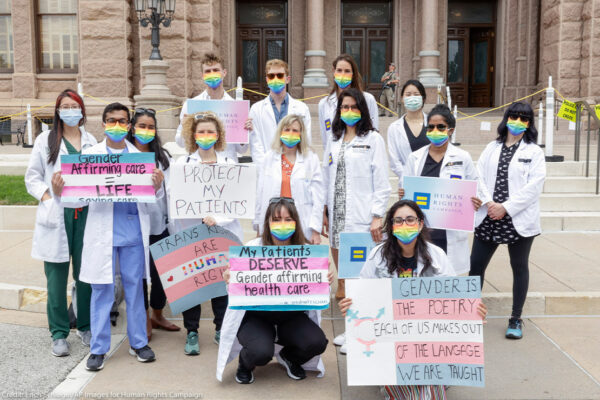
A family in Texas had a child welfare investigator arrive at their home due to a directive from Governor Greg Abbott stating that health care that is medically necessary for treating gender dysphoria should be considered a form of child abuse. This family — an employee of DFPS, her husband, and their transgender teen — sued Governor Abbott and the Texas Department of Family and Protective Services. Dr. Megan Mooney, a licensed psychologist who works with transgender youth and their families, also joined the lawsuit.
Explore case
Texas
Sep 2026
LGBTQ Rights
Doe v. Abbott
A family in Texas had a child welfare investigator arrive at their home due to a directive from Governor Greg Abbott stating that health care that is medically necessary for treating gender dysphoria should be considered a form of child abuse. This family — an employee of DFPS, her husband, and their transgender teen — sued Governor Abbott and the Texas Department of Family and Protective Services. Dr. Megan Mooney, a licensed psychologist who works with transgender youth and their families, also joined the lawsuit.
North Carolina
Sep 2026
LGBTQ Rights
Zayre-Brown v. North Carolina Department of Adult Corrections
The North Carolina Department of Public Safety has continually denied Kanautica Zayre-Brown, an incarcerated transgender woman in their custody, access to gender-affirming surgery.
Explore case
North Carolina
Sep 2026
LGBTQ Rights
Zayre-Brown v. North Carolina Department of Adult Corrections
The North Carolina Department of Public Safety has continually denied Kanautica Zayre-Brown, an incarcerated transgender woman in their custody, access to gender-affirming surgery.