Location Tracking

Carpenter v. United States
The Supreme Court ruled that the government needs a warrant to access a person’s cellphone location history. The court found in a 5 to 4 decision that obtaining such information is a search under the Fourth Amendment and that a warrant from a judge based on probable cause is required.
Status: Closed (Judgment)
View Case
Learn About Location Tracking
All Cases
8 Location Tracking Cases

Virginia
Apr 2026
Location Tracking
Schmidt v. Norfolk
Explore case
Virginia
Mar 2026
Location Tracking
United States v. Chatrie
Whether law enforcement agencies can conduct searches using geofence warrants, a novel and invasive dragnet surveillance technique.
Explore case
Virginia
Mar 2026
Location Tracking
United States v. Chatrie
Whether law enforcement agencies can conduct searches using geofence warrants, a novel and invasive dragnet surveillance technique.
Court Case
Jun 2024
Location Tracking
United States v. Hunt
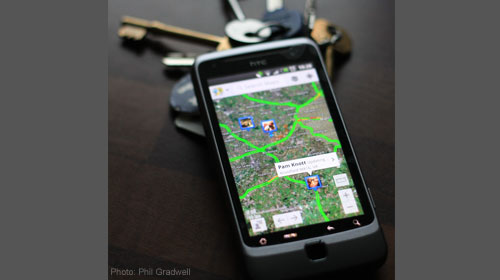
This case concerns whether a warrant is required to search the information stored on a cell phone when the device itself may be properly deemed “abandoned.”
Explore case
Court Case
Jun 2024
Location Tracking
United States v. Hunt
This case concerns whether a warrant is required to search the information stored on a cell phone when the device itself may be properly deemed “abandoned.”
Massachusetts Supreme Court
Nov 2023
Location Tracking
+2 Issues
Commonwealth v. Arrington
In this amicus brief, the ACLU and its coalition partners urged robust application of the legal standard governing the admissibility of expert testimony and technical evidence, especially in cases involving opaque or proprietary algorithms.
Explore case
Massachusetts Supreme Court
Nov 2023
Location Tracking
+2 Issues
Commonwealth v. Arrington
In this amicus brief, the ACLU and its coalition partners urged robust application of the legal standard governing the admissibility of expert testimony and technical evidence, especially in cases involving opaque or proprietary algorithms.
Court Case
May 2023
Location Tracking
National Security
The Warrant Clause in the Digital Age
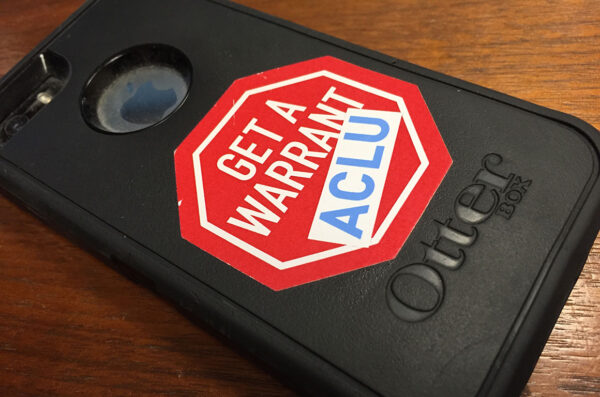
The information generated by today’s digital devices and online services reveals private matters far beyond what one could learn from physical analogs. In a series of legal filings and a white paper, available below, the ACLU has argued that to keep apace with technological developments and adequately protect our privacy, the Fourth Amendment's warrant requirement must be interpreted robustly. Seizures and searches of digital data must be cabined to probable cause, limited to specific categories of information relevant to the investigation, and closely overseen by a neutral magistrate.
Explore case
Court Case
May 2023
Location Tracking
National Security
The Warrant Clause in the Digital Age
The information generated by today’s digital devices and online services reveals private matters far beyond what one could learn from physical analogs. In a series of legal filings and a white paper, available below, the ACLU has argued that to keep apace with technological developments and adequately protect our privacy, the Fourth Amendment's warrant requirement must be interpreted robustly. Seizures and searches of digital data must be cabined to probable cause, limited to specific categories of information relevant to the investigation, and closely overseen by a neutral magistrate.