Right to Counsel

People v. Taylor
In 2013, Michigan passed the Michigan Indigent Defense Commission Act (MIDCA) to ensure that indigent criminal defendants—that is, those who cannot afford to pay for counsel themselves—received constitutionally adequate counsel, paid for by the state. This case concerns whether and under what circumstances trial courts can, consistent with MIDCA, order indigent criminal defendants to pay the state back for their attorneys. The ACLU’s State Supreme Court Initiative, the ACLU of Michigan, and the Michigan State Planning Body filed an amicus brief in the Michigan Supreme Court arguing that MIDCA, properly construed, partially abrogated a different statute authorizing trial courts to assess attorney fees against indigent defendants and explaining that allowing such orders would undermine Michiganders' right to counsel.
Status: Ongoing
View Case
Learn About Right to Counsel
All Cases
5 Right to Counsel Cases
Utah Supreme Court
Oct 2025
Right to Counsel
Criminal Law Reform
State v. Uptain
This case asks whether the trial record, without more, demonstrates that a defendant’s constitutional right to adequate legal representation has been violated, where the record reveals that the defendant’s attorney never sought to suppress the only incriminating evidence that the State had against them. The ACLU’s State Supreme Court Initiative and the ACLU of Utah filed an amicus brief arguing that the defendant’s trial counsel in this case was indeed ineffective and that holding otherwise would undermine the right to effective assistance of counsel.
Explore case
Utah Supreme Court
Oct 2025
Right to Counsel
Criminal Law Reform
State v. Uptain
This case asks whether the trial record, without more, demonstrates that a defendant’s constitutional right to adequate legal representation has been violated, where the record reveals that the defendant’s attorney never sought to suppress the only incriminating evidence that the State had against them. The ACLU’s State Supreme Court Initiative and the ACLU of Utah filed an amicus brief arguing that the defendant’s trial counsel in this case was indeed ineffective and that holding otherwise would undermine the right to effective assistance of counsel.
Nevada
Aug 2020
Right to Counsel
Davis v. Nevada
Every state has a constitutional obligation to provide legal representation to criminal defendants who cannot afford an attorney. Nevada is failing to fulfill this obligation for low income people in its rural counties on a daily basis. Many of these underfunded rural counties lack a true public defense system, and instead mainly rely on flat-fee or defacto flat fee contract attorneys to act as public defenders. These contract attorneys operate without the oversight, resources, or time necessary to ensure they are providing an adequate defense to low income Nevadans. In fact, very often they fail to communicate with clients in basic ways, advocate effectively for pretrial release at bail hearings, or conduct independent investigations necessary to defend their clients. Worse, they at times pressure clients into taking plea bargains against the clients’ express wishes. This is not justice.
Explore case
Nevada
Aug 2020
Right to Counsel
Davis v. Nevada
Every state has a constitutional obligation to provide legal representation to criminal defendants who cannot afford an attorney. Nevada is failing to fulfill this obligation for low income people in its rural counties on a daily basis. Many of these underfunded rural counties lack a true public defense system, and instead mainly rely on flat-fee or defacto flat fee contract attorneys to act as public defenders. These contract attorneys operate without the oversight, resources, or time necessary to ensure they are providing an adequate defense to low income Nevadans. In fact, very often they fail to communicate with clients in basic ways, advocate effectively for pretrial release at bail hearings, or conduct independent investigations necessary to defend their clients. Worse, they at times pressure clients into taking plea bargains against the clients’ express wishes. This is not justice.
South Carolina
Oct 2019
Right to Counsel
Smart Justice
Bairefoot v. City of Beaufort et al
In South Carolina’s municipal courts today, defendants are prosecuted, convicted, and jailed without ever having a lawyer appointed to their case or even being advised of their right to counsel. Hundreds of these defendants who were deprived of counsel—including Tina Bairefoot, Dae’Quandrea Nelson, and Nathan Fox—have been and are incarcerated in local jails and state prisons every year. Cities and towns can decide whether they have municipal courts—they are optional—but if they decide to have them they must follow the Constitution, which includes the right to counsel.
Explore case
South Carolina
Oct 2019
Right to Counsel
Smart Justice
Bairefoot v. City of Beaufort et al
In South Carolina’s municipal courts today, defendants are prosecuted, convicted, and jailed without ever having a lawyer appointed to their case or even being advised of their right to counsel. Hundreds of these defendants who were deprived of counsel—including Tina Bairefoot, Dae’Quandrea Nelson, and Nathan Fox—have been and are incarcerated in local jails and state prisons every year. Cities and towns can decide whether they have municipal courts—they are optional—but if they decide to have them they must follow the Constitution, which includes the right to counsel.
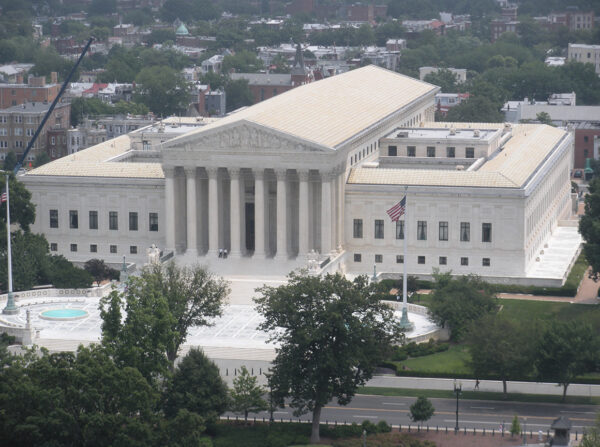
U.S. Supreme Court
Feb 2016
Right to Counsel
Simmons v. Himmelreich
Whether a tort action against the federal government that is dismissed for reasons unrelated to the merits bars a subsequent action for the same tort against the responsible employee.
Explore case
U.S. Supreme Court
Feb 2016
Right to Counsel
Simmons v. Himmelreich
Whether a tort action against the federal government that is dismissed for reasons unrelated to the merits bars a subsequent action for the same tort against the responsible employee.