Alabama Supreme Court Declines to Hear Challenge to Unnecessary “Hospital” Licenses for Birth Centers
Case will continue in the lower court to protect access to essential midwifery care in birth centers across the state
MONTGOMERY, Ala. — The Alabama Supreme Court today declined to review a January 2026 state appellate court decision that allows the Alabama Department of Public Health (ADPH) to require birth centers to obtain burdensome and unnecessary licenses as “hospitals.” Litigation is ongoing to challenge specific restrictions in the licensing rules. However, by declining to hear this case, the Alabama Supreme Court has opened the door for regulations that could threaten the ability of birth centers to continue operating long-term in the state, despite evidence that these independent facilities safely provide much-needed midwifery care to low-risk pregnant patients in a homelike setting.
“Birth centers have been a lifeline for pregnant Alabamians and their families,” said Dr. Yashica Robinson, founder of the Alabama Birth Center. “Birth centers fill a critical gap in access to prenatal, pregnancy, and postpartum care across our state, especially for Black women, people living in rural communities, and people with low incomes. Our birth center was founded to expand access to high-quality midwifery care and help combat our state’s maternal and infant health crisis. We will do everything we can to continue providing this essential care to our communities.”
Amid the state’s maternal and infant health crisis — which disproportionately impacts Black women and families, Alabamians with low incomes, rural communities, and others impacted by widespread maternity care deserts — birth centers play a critical role in expanding access to pregnancy-related care. Evidence shows that the midwifery care provided at birth centers is safe and improves patient outcomes, including by reducing preterm births, unnecessary cesarean sections, and health disparities.
“By declining to hear this case, the Alabama Supreme Court has rubber-stamped state overreach into pregnant Alabamians’ health care decisions,” said Whitney White, senior staff attorney for the Reproductive Freedom Project of the American Civil Liberties Union. “The Alabama Department of Health’s regulatory scheme for birth centers is misaligned not only with state law, but with clinical evidence. Birth centers provide safe, essential midwifery care to low-risk pregnant Alabamians — and communities need access to them. Despite this setback, we remain committed to fighting for Alabamians and their families to have access to the essential care that they need, and we will continue fighting for birth centers as the case continues.”
"While we are disappointed that the Alabama Supreme Court declined to review this case, we remain committed to ensuring that every Alabamian has the opportunity to give birth where and how they choose,” said JaTaune Bosby Gilchrist, executive director of the ACLU of Alabama. “We look forward to making our case that regulations cannot be so restrictive as to essentially ban birth centers in our state."
Plaintiff Oasis Family Birthing Center in Birmingham, Alabama’s first freestanding birth center, first opened and began safely providing essential care for pregnant Alabamians in 2022. Additional birth centers, including Plaintiff Alabama Birth Center in Huntsville, have also opened since an Alabama state trial court first blocked the Alabama Department of Public Health’s attempt to restrict access to birth center-provided care at an earlier stage in this case.
The lawsuit, Oasis Family Birthing Center et. al. v. Alabama Department of Public Health, was originally filed in the Fifteenth Judicial Circuit Court in Montgomery in August 2023. The plaintiffs – Oasis Family Birthing Center in Birmingham, Heather Skanes, M.D., Alabama Birth Center in Huntsville, Yashica Robinson, M.D., the Alabama affiliate of the American College of Nurse-Midwives, Jo Crawford, CPM, and Tracie Stone, CPM – are represented by the American Civil Liberties Union, the ACLU of Alabama, Covington & Burling LLP, and Bobby Segall of Copeland Franco.

Reproductive Freedom
Oasis Family Birthing Center et. al. v. Alabama Department of Public Health
Reproductive Freedom
Oasis Family Birthing Center et. al. v. Alabama Department of Public Health
Related Issues
Related Content
-
Press ReleaseSep 2026

Reproductive Freedom
Federal Appeals Court Hears Baseless Challenge To The Abortion Pill Mifepristone — Again. Explore Press Release.Federal Appeals Court Hears Baseless Challenge to the Abortion Pill Mifepristone — Again
NEW ORLEANS — A federal appeals court today will again hear a lawsuit designed to restrict abortion access nationwide by banning mail and pharmacy dispensing of mifepristone, a safe and effective medication used in two-thirds of U.S. abortions as well as for miscarriage care. The hearing before the U.S. Court of Appeals for the Fifth Circuit in Louisiana v. U.S. Food and Drug Administration is the latest step in a legal battle in which anti-abortion politicians are seeking to make abortion harder for patients to access, even in states where abortion is protected. Today, nearly 30 percent of people who have abortions in the U.S. access care through telemedicine and pharmacy dispensing. “Abortion opponents will stop at nothing to try to end medication abortion in every state,” said Julia Kaye, senior staff attorney with the ACLU’s Reproductive Freedom Project. “Preventing people from getting their mifepristone prescription by mail and at pharmacies is just the start. But we’re not standing by as the courts and the Trump administration weigh whether to reduce access based on tired anti-abortion lies. The ACLU will use every tool we have to protect access to this safe and effective medication for people across the country.” In May, the Fifth Circuit ruled for Louisiana, resulting in a brief disruption of telehealth access to mifepristone before the U.S. Supreme Court temporarily paused the appeals court’s decision while the litigation continues. The case is widely expected to return to the Supreme Court. Any decision from the Fifth Circuit to limit telehealth access will be on hold until then. Legal challenges are not the only threat to patients’ ability to access mifepristone. Despite use by millions of patients, hundreds of studies, and decades of evidence proving mifepristone’s safety, including when prescribed through telemedicine, the Trump administration, after intense lobbying from abortion opponents and their allies in Congress, is conducting yet another review of mifepristone as a pretext for imposing extreme and medically unjustified restrictions on access to the medication. The administration announced the review citing one self-published report that grossly distorts mifepristone’s safety record. This report has since been widely debunked, including by more than 250 experts. Regardless of whether restrictions on mifepristone come from the courts or from the Trump administration, ending telehealth and pharmacy access will devastate patients’ ability to get this essential medication. Without telemedicine and pharmacy access, patients using mifepristone would be forced to travel, sometimes hundreds of miles, to a health center just to pick up a pill, a requirement that leading medical authorities agree has no safety benefit. Both the public and experts agree: the federal government should not further restrict mifepristone. A July 2026 survey found that two-thirds of U.S. adults oppose nationwide restrictions on mifepristone and medication abortion. And a wide range of experts — from emergency medicine physicians to experts in intimate partner violence to drug developers — submitted amicus briefs in the Supreme Court and in the court of appeals opposing this nationwide restriction as medically unjustified and harmful to people seeking care. -
Press ReleaseSep 2026
Reproductive Freedom
In Wide-ranging Amicus Briefs, Experts Again Urge The Fifth Circuit To Reject Restrictions On Telehealth Access To Mifepristone. Explore Press Release.In wide-ranging amicus briefs, experts again urge the Fifth Circuit to reject restrictions on telehealth access to mifepristone
TO: Interested Parties FROM: American Civil Liberties Union DATE: September 2, 2026 SUBJECT: In wide-ranging amicus briefs, experts again urge the Fifth Circuit to reject restrictions on telehealth access to mifepristone Ahead of oral argument in Louisiana v. U.S. Food and Drug Administration (FDA) on September 9, a wide range of experts — including the American College of Obstetricians and Gynecologists, American College of Emergency Physicians, the National Domestic Violence Hotline, the Disability Rights Education & Defense Fund, the NAACP Legal Defense & Educational Fund, pharmaceutical and biotech manufacturers, and former military officials — are urging the U.S. Court of Appeals for the Fifth Circuit to reject anti-abortion politicians’ effort to end telemedicine and mail and pharmacy access to mifepristone nationwide. Mifepristone is used in nearly two-thirds of U.S. abortions, with more than 1 in 4 patients getting care through telemedicine. It is also crucial for miscarriage care. Earlier this year, the Fifth Circuit briefly disrupted telemedicine and mail and pharmacy access to mifepristone before the U.S. Supreme Court blocked that ruling while litigation continues. This suite of amicus briefs sends a powerful message to the Fifth Circuit that ending telehealth access to mifepristone is not only scientifically unjustified: it would cause irreparable harm to patients across the country. The evidence is clear: mifepristone is safe, effective, and essential, whether prescribed in person or via telemedicine. The American College of Obstetricians and Gynecologists and other leading medical organizations detail the wealth of evidence demonstrating mifepristone’s safety, including when prescribed by telemedicine. Another brief, from emergency medicine physicians, explains why anti-abortion attempts to equate emergency room visits with complications are baseless, describes the serious impact restricting mifepristone would have on hospitals’ ability to treat patients experiencing miscarriages, and affirms the medication’s safety when dispensed by telemedicine. Telemedicine makes the difference for people seeking abortion and miscarriage care. Patients describe how being able to safely get their mifepristone prescription at home, instead of being forced to travel long distances just to pick up a pill, removed a substantial barrier to getting timely care. This is especially crucial for parents and caregivers, people living in rural areas, and people living on lower incomes as well as servicemembers, whose responsibilities often restrict their ability to travel, even briefly, for care. Without telehealth access to mifepristone, some patients would be significantly delayed in accessing abortion care, and some would have to forego such care altogether and be forced to carry a pregnancy and have a child. Getting mifepristone by mail or a pharmacy is a lifeline for people surviving intimate partner violence (IPV). A brief from IPV experts warns that eliminating telehealth access needlessly jeopardizes the health and lives of IPV survivors, who often must navigate surveillance or control by their partners that can make it dangerous or impossible to get in-person care. At the same time, continuing pregnancy and having a child can tie them to their abuser and increase the danger to their lives. Eliminating telemedicine access to mifepristone threatens the health of Black women, disabled people, and other vulnerable communities: A brief by the NAACP Legal Defense & Educational Fund raises the specific harm to Black women, who already face significant barriers to getting abortion and miscarriage care — including state scrutiny of their reproductive health decision — that jeopardize their health and lives. The stakes are also grave for disabled people, who already face barriers to getting reproductive health care and who face dramatically higher risks of severe pregnancy complications and death than their nondisabled peers. This lawsuit threatens routine telemedicine and access to medications far beyond mifepristone. The impact of a decision in Louisiana v. FDA restricting mifepristone could have far-reaching implications for telemedicine and medical research generally. Healthcare experts demonstrate that high-quality, accessible telemedicine, for a vast array of medical care, is now routine — and every bit as good, if not better, for patients. A telehealth restriction on mifepristone would undermine patients’ autonomy and ability to get care they might not otherwise receive. Pharmaceutical manufacturers, former FDA officials, and more than 250 members of Congress also raise alarms about how a court ruling overriding science-based decision making to deprive the public of access to a safe and effective medication could destabilize the nation’s drug regulation system, stifling innovation and research with grave consequences for patients far beyond abortion. Below are excerpts from key amicus briefs urging the Fifth Circuit to deny Louisiana’s request to impose medically unnecessary and harmful restrictions on access to mifepristone nationwide. The American College of Obstetricians & Gynecologists and numerous other medical groups: “Mifepristone—whether dispensed in person or via telehealth—is extremely safe. More than two decades, hundreds of medical studies, and vast amounts of data have confirmed this. The scientific evidence is overwhelming: serious adverse events occur in less than one-third of 1% of patients—whether mifepristone is dispensed in person or not—and the risk of death is almost nonexistent.” “Since the removal of mifepristone’s in-person dispensing requirement, there has been no significant difference reported in mifepristone’s safety. One recent study analyzing known abortion outcomes of over 4,450 patients in twenty states concluded, ‘[t]elehealth medication abortion is effective, safe, and comparable to published rates of in-person medication abortion care.’” FemInEM Foundation, American College of Emergency Physicians, American Academy of Emergency Medicine, and Emergency Medicine Residents’ Association: “Emergency departments are the only place where any person at any time of day regardless of their financial resources or ability to pay can obtain the healthcare they need. . . [Most emergency room] visits involve patients seeking reassurance or observation without receiving any treatment. In fact, emergency visit data supports the conclusion that mifepristone is a safe and effective medication, whether dispensed in person or by mail or pharmacy.” “In emergency departments, mifepristone is part of the standard and recommended treatment for the management of early pregnancy loss. . . . Because hospitals stock a fixed number of medications onsite—and health centers face particular barriers to stocking mifepristone as a result of the FDA’s ongoing REMS requirements—emergency departments frequently prescribe and dispense it through retail pharmacies, as permitted by the 2023 REMS. Limiting mifepristone to in-person dispensing, and prohibiting retail pharmacy access, would inhibit emergency departments’ ability to provide standard-of-care treatment for miscarriage and other pregnancy complications, resulting in reduced access to important reproductive healthcare and worse patient outcomes.” Legal Voice, National Domestic Violence Hotline, National Network to End Domestic Violence, Ujima: the National Center for Violence Against Women in the Black Community, Center for Survivor Agency & Justice, and Individual IPV Expert Researchers: “[The in-person dispensing requirement] needlessly jeopardize[s] the health and safety of IPV survivors by forcing them to travel in person to a health center to access medication, which will be dangerous or impossible for many survivors who must navigate surveillance or the impacts of coercive control by abusive partners.” “The need for telehealth-based abortion care is especially acute for survivors who live in rural areas. . . . [They] are more likely to face chronic and severe IPV and have worse psychosocial and physical health outcomes. If rural survivors cannot access mifepristone by mail, many will have to travel long distances to get the medication they need, increasing the risk that their abuser will find out—with potentially deadly consequences. Indeed, reinstating the in-person dispensing requirement would jeopardize not only their ability to end their pregnancy but also their lives.” “[L]osing access to abortion, including access to mifepristone through telehealth and mail or pharmacy delivery, can worsen survivors’ circumstances. Research shows that “having a baby from an unwanted pregnancy appears to result in sustained physical violence over time.” In contrast, “having an abortion was associated in a reduction over time in physical violence” from the abuser. Survivors should have access to all available options, including abortion and medication abortion using mifepristone, when making choices about their health and safety.” Telehealth Abortion Providers, Sharing Their Patients’ Own Descriptions of the Importance of Telehealth Access to Care: “Timeliness concerns are particularly profound for patients living in rural or medically underserved areas. Geographic isolation, provider shortages, and limited public transportation often mean that even a single clinic visit may require substantial time off work, long-distance travel, and significant financial outlay. These barriers can delay care, potentially forcing patients into more complex and costly procedures, or, for some, out of options altogether . . . Unfortunately the nearest in person clinic was more than 200 miles away. I’m not sure what I would have done without [Telehealth Provider].” “Balancing work, childcare, household responsibilities, and school activities makes in-person visits difficult, and delays can jeopardize [patients’] ability to support their families. Telehealth removes those barriers making it an essential option for parents with complicated schedules or limited ability to travel. This experience helped me so much. I am a single working mother in a small town[;]to have to get time off from work and child care to go to an appointment let alone finding help close by would have been extremely different.” “Some patients describe weighing their own health and safety against responsibilities to the children they are already raising. For these patients, abortion care is largely about preserving their ability to remain present, healthy, and dependable for the children who rely on them. Telehealth can help these patients access care while prioritizing their families. This was the hardest decision of my life, and as much as I want more kids I had a really rough first pregnancy almost resulting in my death and the death of my daughter. I couldn’t go through that again, and possibly leave my daughter without her mother. [Telehealth Provider] made everything incredibly easy, and helped ease the stress I was facing. Every step was outlined perfectly and made everything easy to follow. And allowing me to be able to do this at home [versus] going out somewhere was even better. Thank you so much for giving me this option so I can be here for my baby girl.” Former Military Officials, Former Civilian National Security Leaders, and Vet Voice Foundation: “When access to care is restricted, servicemembers face delays, extended absences, and structural barriers that impair their ability to serve. The nature of military life compounds these burdens. Servicemembers cannot choose where they are stationed, must operate within rigid schedules and chains of command, and cannot easily arrange leave or travel for an in-person appointment. Nationwide abortion restrictions, layered on top of these constraints, make it harder for servicemembers to receive timely care and stay available for duty. These burdens carry systemic consequences: they undermine recruitment, increase attrition, and disrupt unit cohesion.” NAACP Legal Defense & Educational Fund: “Black pregnant people must navigate economic, medical, and legal burdens that serve as barriers to abortion care. These include diminished economic resources, elevated health risks, and violations of their privacy rights stemming from increased surveillance. The availability of telehealth significantly eases these burdens. The critical interests of pregnant people who have relied upon expanded access to mifepristone via telehealth must be considered by the FDA in its ongoing review of the REMS, particularly for Black pregnant people who face heightened barriers in access to reproductive healthcare.” “[C]omprehensive reproductive healthcare access for Black women is not a single-issue concern, but a thread running through maternal health equity, economic justice, and the broader right to self-determination. . . . [R]estricting access to mifepristone would only add to the challenges Black people already face in accessing equitable, quality, and comprehensive healthcare, supporting existing families, and achieving economic security.” Disability Rights Education and Defense Fund and Other Disability Rights Scholars and Advocates: “[T]he stakes are grave. Disabled people become pregnant at rates similar to nondisabled people yet face dramatically elevated risks of severe complications and death; they are approximately eleven times more likely to die during childbirth. For some, timely access to mifepristone is the difference between life and death.” “Reinstating the in-person dispensing requirement would predictably delay or prevent access to care for precisely those patients who face the greatest medical risk. The harm is concrete and irreversible: disabled people who depend on mail and pharmacy access to mifepristone face the complete loss of access if an in-person requirement is reinstated, and for some that loss carries life-threatening consequences.” 159 Professors, Health Organizations, and Health Care Providers: "Millions of Americans of all ages and in all communities use telehealth for diverse health needs, from pregnancy to palliative care. Telehealth has many benefits. Most fundamentally, it makes health care services more accessible for patients, removing the burden and expense of travel. Telehealth allows patients in remote and rural areas lacking adequate providers or pharmacies to see a provider, consult a specialist, and obtain medication; it helps parents of small children seek care without needing to find childcare or miss work; and for patients with rare diseases, it opens the door to accessing specialists across the globe. Indeed, telehealth makes it possible for many people to secure care they otherwise would not receive. For many kinds of routine and specialized services, health care provided via telehealth is as safe and as good as in-person services—and in some instances, even better. During the COVID-19 pandemic, millions of Americans received health care through telehealth. After the pandemic, telehealth rates have remained high, and it has become a popular and accepted way to deliver care in virtually all specialties." Pharmaceutical and Biotech Companies, Executives, and Investors: “FDA’s approach to the in-person dispensing requirement bears the hallmarks of quality science. Its data was objective. Its literature was peer-reviewed. It examined multiple sources of evidence and considered the limitations of each. That rigorous approach is exactly what Congress entrusted FDA to carry out. Plaintiffs’ critiques provide no basis for overriding this considered scientific judgment. If accepted, these critiques would upend safety surveillance and drug development—wreaking havoc far beyond this case.” “Drug approval and distribution is already subject to access restrictions that Congress has entrusted FDA to determine through evidence-based review by medical and scientific experts. Plaintiffs’ claims, if successful, would create uncertainty in the drug regulation process that would limit drug innovation and development, depriving the public of critical life- and health-preserving medications. Companies that invest in drug research and development must be able to rely on the science-based approval processes that Congress designed, and that FDA has executed for the last 50 years.” More than 250 Members of Congress: “FDA’s decision to eliminate the in-person dispensing requirement for mifepristone complied with Congress’s mandate that any restrictions FDA imposes on access to an approved medication must (a) be rooted in sound scientific evidence and (b) not impose unnecessary access burdens. . . . Decades after FDA’s initial approval of mifepristone and years after the in-person dispensing requirement was eliminated, Louisiana now seeks to re-impose this onerous nationwide restriction on all Americans. Granting such relief would undermine the science-based statutory framework Congress requires and threatens patient access to reproductive health care.” “Women deserve access to mifepristone for reproductive health care, and all Americans deserve integrity in the congressionally mandated, evidence-based process for FDA’s drug regulatory decisions. Congress commanded that FDA’s drug regulatory decisions be rooted in sound scientific evidence and prioritize patient access to essential medications, and Amici call on this Court to give due weight to Congress’s mandate.” Former U.S. Food and Drug Administration Commissioners and Acting Commissioners: “The record demonstrates, however, that FDA was extremely thorough and careful in approving mifepristone and subsequently modifying its REMS, and that the Agency’s adjustments to the drug’s postmarketing restrictions in 2021 and 2023 were based on 20 years of adverse event reporting and a thorough review of the data and the literature.” “FDA has used adverse event reporting data in some form to inform its assessments of drug safety for over half a century. In its expert judgment, FDA has determined that it is appropriate to only require mandatory reporting from manufacturers—not physicians—for the vast majority of approved drugs because this system generates sufficient data to inform the Agency about the safety profile of approved drugs. The orderly system that Congress and FDA have established would screech to a halt if litigants could weaponize the widely accepted limitations of FAERS data to support successful challenges to drug approvals.” -
Press ReleaseAug 2026
Reproductive Freedom
Federal Appeals Court Upholds Ruling Permanently Blocking Law Censoring Planned Parenthood’s Abortion-related Speech. Explore Press Release.Federal Appeals Court Upholds Ruling Permanently Blocking Law Censoring Planned Parenthood’s Abortion-Related Speech
CHICAGO – The U.S. Court of Appeals for the Seventh Circuit yesterday upheld a ruling permanently blocking Indiana from punishing Planned Parenthood for giving minors truthful information about legal abortion services in other states or helping connect them with out-of-state providers. The case stems from Indiana’s so-called “aid-or-assist” law, which made it illegal to knowingly or intentionally help an unemancipated minor obtain an abortion without first obtaining a parent’s written, notarized consent or getting court approval. Planned Parenthood Great Northwest Hawai‘i, Alaska, Indiana, Kentucky (PPGNHAIK) sued before the law took effect and won a preliminary injunction in 2017, blocking its enforcement. In 2024, a federal district court permanently blocked Indiana from using the aid-or-assist law to punish Planned Parenthood for giving minors information about legal abortion services outside Indiana, providing referrals, or contacting out-of-state providers on their behalf. The State of Indiana appealed, and the Seventh Circuit affirmed that ruling, finding that the information and referrals are protected by the First Amendment. “Young people should not have to navigate a complicated and deeply personal health care decision without clear, honest information,” said Rebecca Gibron, CEO and President of PPGNHAIK. “For years, Indiana has tried to make that harder. We’re relieved that we can continue helping all our patients understand their options and find legal care, even if it means traveling out of state. We will continue to fight for our patients’ right to access accurate information, including abortion services in other states.” “Free speech protections mean very little if the government can silence truthful information whenever it dislikes the subject,” said Gavin Rose, Deputy Legal Director at the ACLU of Indiana. “Indiana spent nearly a decade defending that kind of restriction. We’re glad the court rejected it and protected the right of providers to speak openly with their patients.” PPGNHAIK is represented by attorneys from the ACLU of Indiana, the ACLU, and Planned Parenthood Federation of America. The decision is available here. -
News & CommentarySep 2026
Reproductive Freedom
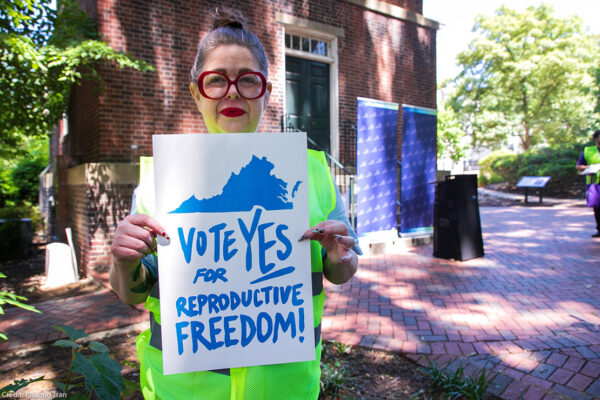
Access To Abortion Saved The Life Of One Virginia Mother. Now She’s Fighting To Expand Reproductive Freedom. Explore News & Commentary.Access to Abortion Saved the Life of One Virginia Mother. Now She’s Fighting to Expand Reproductive Freedom
Heather St. Amand is a mother, an organizer with the ACLU of Virginia, and an advocate for reproductive freedom. Having access to abortion saved her life and put her on the path to fight for reproductive rights.