Diversity and Inclusion in Higher Education
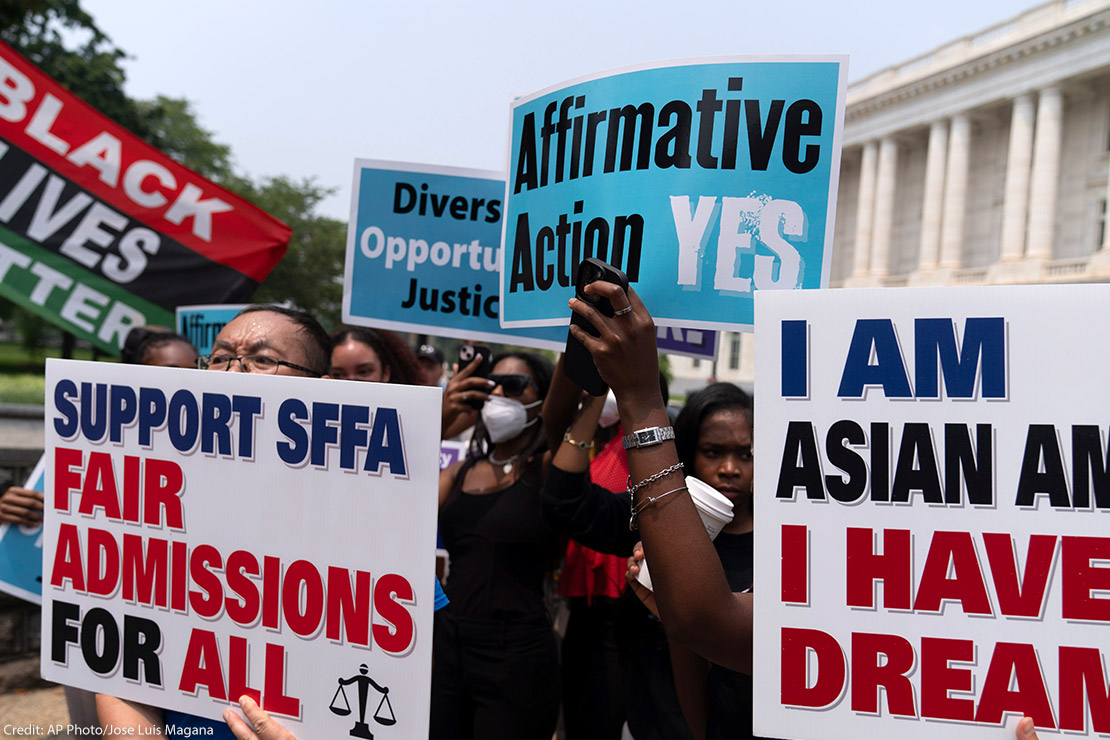
The ACLU Racial Justice Program supports and advocates for admissions policies that increase access to underrepresented groups who face systemic barriers to higher education and acknowledge students’ relevant experiences with race, and recognizes colleges and universities responsibility to open campuses to students of color, even after the Supreme Court’s ruling against affirmative action.

What you need to know
FAQ
The Latest
-

Special Edition: The Supreme Court Overturns Affirmative Action
-

Student Debt is a Racial Justice Issue. Here’s What President Biden Can Do to Help.
-


Department of Education Backs Down on Unlawful Directive Targeting Educational Equity
-
ACLU Comment on Department of Education’s Dismantling of Core Civil Rights and Education Offices
Explore More
What's at Stake
Our nation’s future as a thriving multiracial democracy depends on students having the freedom and opportunity to learn, work together, and understand what unites us. The Supreme Court’s decision to restrict the consideration of race in admissions processes does not change the responsibility of colleges and universities to increase educational opportunities for students across all races and ethnicities and to create thriving campuses that include people from all backgrounds.
Colleges and university systems must remain committed to examining and revising existing policies to ensure every student gets a fair shot, including eliminating the use of standardized test scores in admissions, increasing guaranteed financial support, and developing robust middle and high school pipelines in underserved communities. We must invest in pathways that increase access to opportunities for students across all races and ethnicities, and address discrimination and systemic racial inequalities that persist. The ACLU is committed to challenging unconstitutional disciplinary policies that disparately target students of color and infringe on their right to a safe learning environment.
Our nation’s future as a thriving multiracial democracy depends on students having the freedom and opportunity to learn, work together, and understand what unites us. The Supreme Court’s decision to restrict the consideration of race in admissions processes does not change the responsibility of colleges and universities to increase educational opportunities for students across all races and ethnicities and to create thriving campuses that include people from all backgrounds.
Colleges and university systems must remain committed to examining and revising existing policies to ensure every student gets a fair shot, including eliminating the use of standardized test scores in admissions, increasing guaranteed financial support, and developing robust middle and high school pipelines in underserved communities. We must invest in pathways that increase access to opportunities for students across all races and ethnicities, and address discrimination and systemic racial inequalities that persist. The ACLU is committed to challenging unconstitutional disciplinary policies that disparately target students of color and infringe on their right to a safe learning environment.