By Jesselyn McCurdy, ACLU Washington Legislative Office at 11:20am
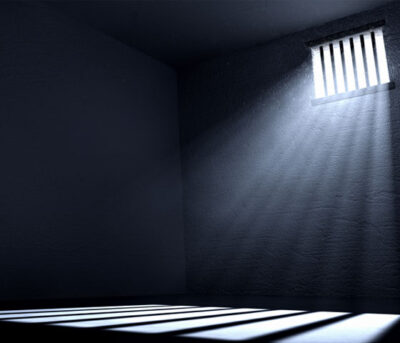
It's estimated that more than 80,000 prisoners are held in solitary confinement or restricted housing across the United States on any given day. According to a new report released last week by the U.S. General Accounting Office, it's about time the Federal Bureau of Prisons (BOP) started evaluating its use of solitary and monitoring its effects on those prisoners.
The GAO finally released its long-awaited report on the use of solitary confinement in the federal prison system. The report, which was requested by several members of Congress, attempts to solve the mystery surrounding how many prisoners in federal prison are subjected to solitary confinement and how BOP monitors individuals while in solitary.
By Michael Risher, Staff Attorney, ACLU of Northern California at 5:29pm
The Supreme Court's 5-4 decision upholding Maryland's arrestee DNA testing law is a serious blow to genetic privacy. The ruling allows the police to seize the DNA of innocent Americans who have never been convicted of any sort of crime, without a search warrant. And as Justice Scalia makes clear in his scathing dissent, the majority opinion goes against decades of precedent that makes it clear that the police cannot search an individual for evidence of a crime (and that's clearly what they are doing here) without a specific reason to think that the search will actually uncover some evidence.
My name is ______ and I am 23 years old and although my past criminal record isn't at its best, at heart I'm still a great kid!
After being locked up for about six months, I suffered from something many young males would hate to speak on and that's rape. I was raped at Eastern Mississippi Correctional Facility in Meridian, MS. I was beat brutally and faced several facial and rectum injuries from this attack. I was raped, robbed, and assaulted by several other prisoners.
East Mississippi Correctional Facility is hyper-violent, grotesquely filthy and dangerous. Patients with severe psychiatric disabilities go without basic mental health care. Many prisoners attempt suicide. This video is the story of a young man who succeeded.
By Zachary Katznelson, Senior Staff Attorney, ACLU National Security Project at 9:30am
The hunger strike in Guantánamo is now in its fourth month. At the military’s latest count, 100 of the 166 prisoners are on strike, motivated in large part by their indefinite imprisonment without charge or trial. Twenty-nine of those men are being force-fed, the largest number yet during this hunger strike. Force-feeding in Guantánamo is a brutal, degrading experience.
Eighteen months after the first state-owned prison sold to a for-profit prison company, and there is no doubt that the Corrections Corporation of America (CCA) is woefully unfit for the job. From dirty conditions, rampant drug use, and staggering increases in violence, the Lake Erie Correctional Institution is in a dangerous decline, leaving many to questions whether the state needs to step in and assume greater control. To illustrate the deterioration of the for-profit prison, the ACLU of Ohio released a timeline showing the disturbing series of events at Lake Erie.
By Ian Kysel, Aryeh Neier Fellow, ACLU Human Rights Program at 5:07pm
There are more than 80,000 people in solitary confinement in the United States. Last week, the widespread misuse and abuse of solitary confinement in jails and prisons across the country drew international condemnation when the Inter-American Commission on Human Rights criticized the United States following weeks of hearings on human rights practices across the Americas region.