By Zachary Katznelson, Senior Staff Attorney, ACLU National Security Project at 9:30am
The hunger strike in Guantánamo is now in its fourth month. At the military’s latest count, 100 of the 166 prisoners are on strike, motivated in large part by their indefinite imprisonment without charge or trial. Twenty-nine of those men are being force-fed, the largest number yet during this hunger strike. Force-feeding in Guantánamo is a brutal, degrading experience.
Eighteen months after the first state-owned prison sold to a for-profit prison company, and there is no doubt that the Corrections Corporation of America (CCA) is woefully unfit for the job. From dirty conditions, rampant drug use, and staggering increases in violence, the Lake Erie Correctional Institution is in a dangerous decline, leaving many to questions whether the state needs to step in and assume greater control. To illustrate the deterioration of the for-profit prison, the ACLU of Ohio released a timeline showing the disturbing series of events at Lake Erie.
By Amy Fettig, ACLU National Prison Project at 11:00am
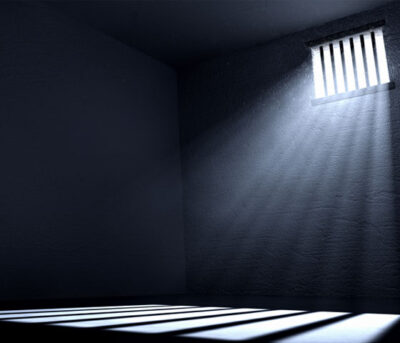
Here’s to starting the New Year right. The notorious Tamms Correctional Center in Illinois, with its practice of housing human beings alone in cells for 22-24 hours per day with little or no human interaction or outside stimulus, officially shut its doors today.
By Ian Kysel, Aryeh Neier Fellow, ACLU Human Rights Program at 5:07pm
There are more than 80,000 people in solitary confinement in the United States. Last week, the widespread misuse and abuse of solitary confinement in jails and prisons across the country drew international condemnation when the Inter-American Commission on Human Rights criticized the United States following weeks of hearings on human rights practices across the Americas region.
For the past two years, the ACLU and the Southern Poverty Law Center have been investigating and exposing a horrifying pattern of abuse against juveniles and the mentally ill in two Mississippi prisons operated by the GEO Group, one of the biggest for-profit prison operators in the world.
By Kara Dansky, Senior Counsel, ACLU Center for Justice at 3:35pm
As everyone who follows criminal justice policy knows, the last 40 years have witnessed an American correctional system dominated by tough-on-crime policies and unrelenting growth. Under this four-decade long regime, criminal justice reform has faced an unrelenting wall of resistance.
But there are signs that change is on the horizon. State lawmakers, strapped for resources, have been forced to scrutinize proposals to increase their prison populations. And other issues, such as health care and immigration, have to some extent replaced fear of crime in the public discourse.
I entered a system that stated in its mission statement that I would be rehabilitated and prepared for society upon my return. That is so far from the truth. I have been subjected to a system that belittled me and literally made fun of me and my illness. There were times when I felt less than human.
I am hopeful that Judge Thompson’s decision will dramatically change the misconceptions about HIV. We are human beings and we deserve to be treated as such. It is true that I am a convicted felon and I have been sentenced to do my time, but being HIV-positive in the Alabama Department of Corrections (ADOC) system has convicted me twice.
Today a federal judge in Montgomery, Alabama entered a historic decision in the quarter-century-old fight for equality for prisoners living with HIV. It’s the culmination of a month-long trial in a class-action lawsuit by the ACLU that put Alabama’s discriminatory and dehumanizing treatment of prisoners with HIV under a national spotlight.
Driven by stubborn prejudice and willful ignorance, Alabama has been categorically excluding prisoners with HIV from a host of rehabilitative, educational, trade skills and vocational programs—even barring those with serious mental health needs and substance abuse problems from critically important treatment programs. Alabama houses them in HIV-only dormitories, and forces all male prisoners with HIV to wear a white wrist-band night and day—a latter-day yellow star.