U.S. Supreme Court
Joan and Irwin Jacobs Supreme Court Docket
- Select Term
- 2025 Term
- 2024 Term
- 2023 Term
- 2022 Term
- 2021 Term
- 2020 Term
- 2019 Term
- 2018 Term
- 2017 Term
- 2016 Term
- 2015 Term
- 2014 Term
- 2013 Term
- 2012 Term
- 2011 Term
- 2010 Term
- 2009 Term
- 2008 Term
- 2007 Term
- 2006 Term
- 2005 Term
- 2004 Term
- 2003 Term
- 2002 Term
- 2001 Term
- 2000 Term
- 1999 Term
- 1998 Term
- 1997 Term
- 1996 Term
Supreme Court Term 2025-2026
We’re breaking down the cases we've asked the court to consider this term.
Immigrants' Rights
Barbara v. Donald J. Trump
Voting Rights
Louisiana v. Callais (Callais v. Landry)

LGBTQ Rights
West Virginia v. B.P.J.
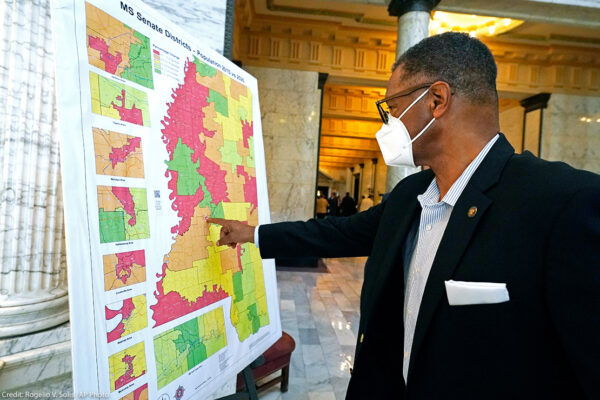
Voting Rights
State Board of Election Commissioners v. Mississippi State Conference of the NAACP
-
PodcastDec 2025

Immigrants' Rights
+2 Issues
What’s On The Docket: A 2026 Scotus Briefing. Explore Podcast.What’s On The Docket: A 2026 SCOTUS Briefing
-
News & CommentarySep 2025

LGBTQ Rights
What’s At Stake As The Supreme Court Takes Up Transgender Sports Bans. Explore News & Commentary.What’s at Stake as the Supreme Court Takes Up Transgender Sports Bans
How one West Virginia teenager could shape the future of Title IX and civil rights protections for transgender youth. -
News & CommentaryDec 2025
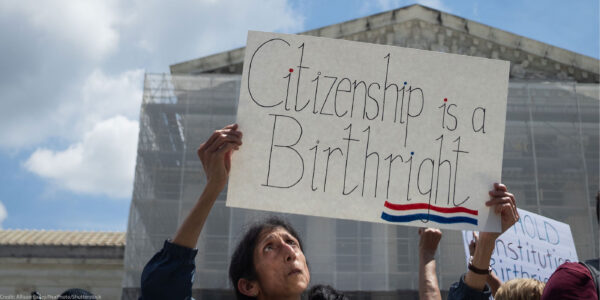
Immigrants' Rights
Trump's Birthright Citizenship Executive Order: What Happens Next. Explore News & Commentary.Trump's Birthright Citizenship Executive Order: What Happens Next
Children born to parents who are undocumented or have temporary status will retain their right to birthright citizenship, but the fight is heading to the Supreme Court. -
News & CommentaryOct 2025
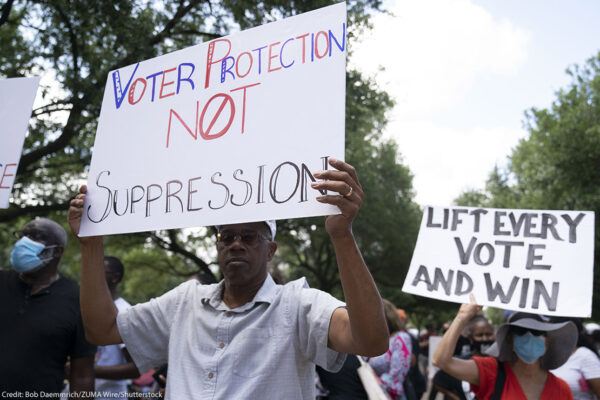
Voting Rights
Louisiana’s Black Voting Power Is On The Line In Redistricting Fight. Explore News & Commentary.Louisiana’s Black Voting Power is on the Line in Redistricting Fight
Dr. Press Robinson won a case challenging Louisiana's congressional map last year. Now, the state is trying to dilute the voting power of Black citizens again.
Learn More About the Issues Before the Court
All Cases
575 Supreme Court Cases

Reproductive Freedom
State of Louisiana v. U.S. Food and Drug Administration
Reproductive Freedom
State of Louisiana v. U.S. Food and Drug Administration
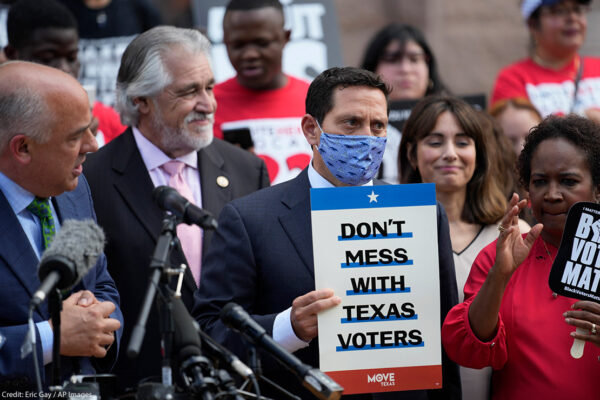
Voting Rights
OCA-Greater Houston v. Paxton
Voting Rights
OCA-Greater Houston v. Paxton
LGBTQ Rights
Little v. Hecox
LGBTQ Rights
Little v. Hecox
Criminal Law Reform
US v. Hemani
Criminal Law Reform
US v. Hemani
LGBTQ Rights
West Virginia v. B.P.J.
LGBTQ Rights
West Virginia v. B.P.J.
How Do Terms Work?
Between October and late June or early July the Supreme Court is “in session,” meaning it hears oral arguments, issues written decisions, and decides whether to take additional cases.
Submitting petitions
Our legal team at the ACLU files a cert petition to the U.S. Supreme Court, a type of petition that usually argues that a lower court has incorrectly decided an important question of law that violates civil rights and should be fixed to prevent similar confusion in similar cases.
U.S. Supreme Court decides to take a case
On average, the Court considers about 7,000 ‐ 8,000 petitions each term and accepts about 80 for oral argument.
Oral arguments
This is the period where the U.S. Supreme Court listens to our case in court.
U.S. Supreme Court makes final decisions
While the U.S. Supreme Court makes decisions throughout the term, many are released right before the term ends. If a decision doesn't go in our favor, we fight back!