The 1920s
Share
1920
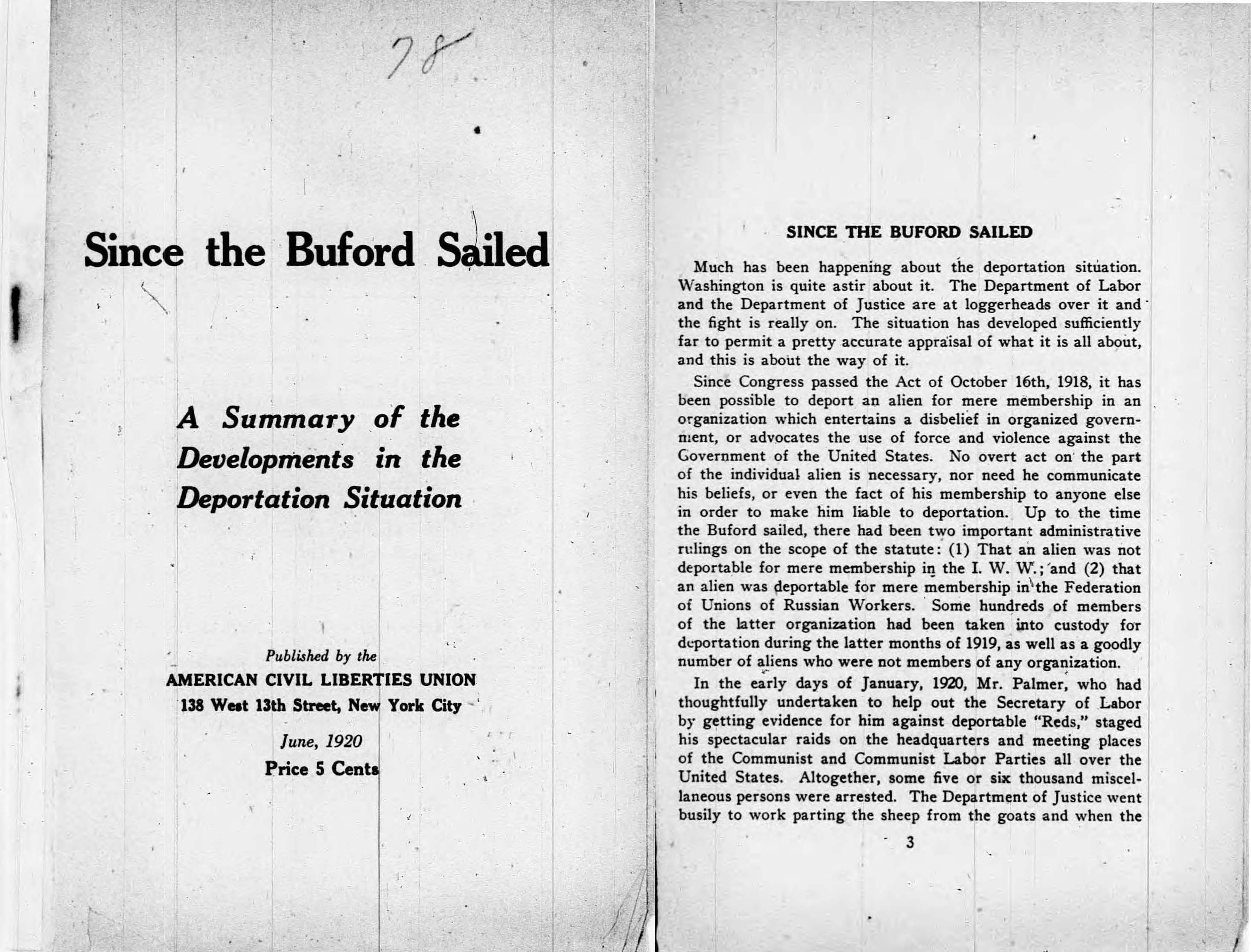
ACLU Pamplet "Since the Buford Sailed: A Summary of the Developments in the Deportation Situation"
As a result of the 1918 Immigration Act, the ship USAT Buford in 1919 was used to deport more than 200 people accused of being communists and political radicals from the United States during the first Red Scare. This 1920 report from the ACLU summarizes the mass deportations and outlines the risks to democracy posed by the Immigration Act.
1921
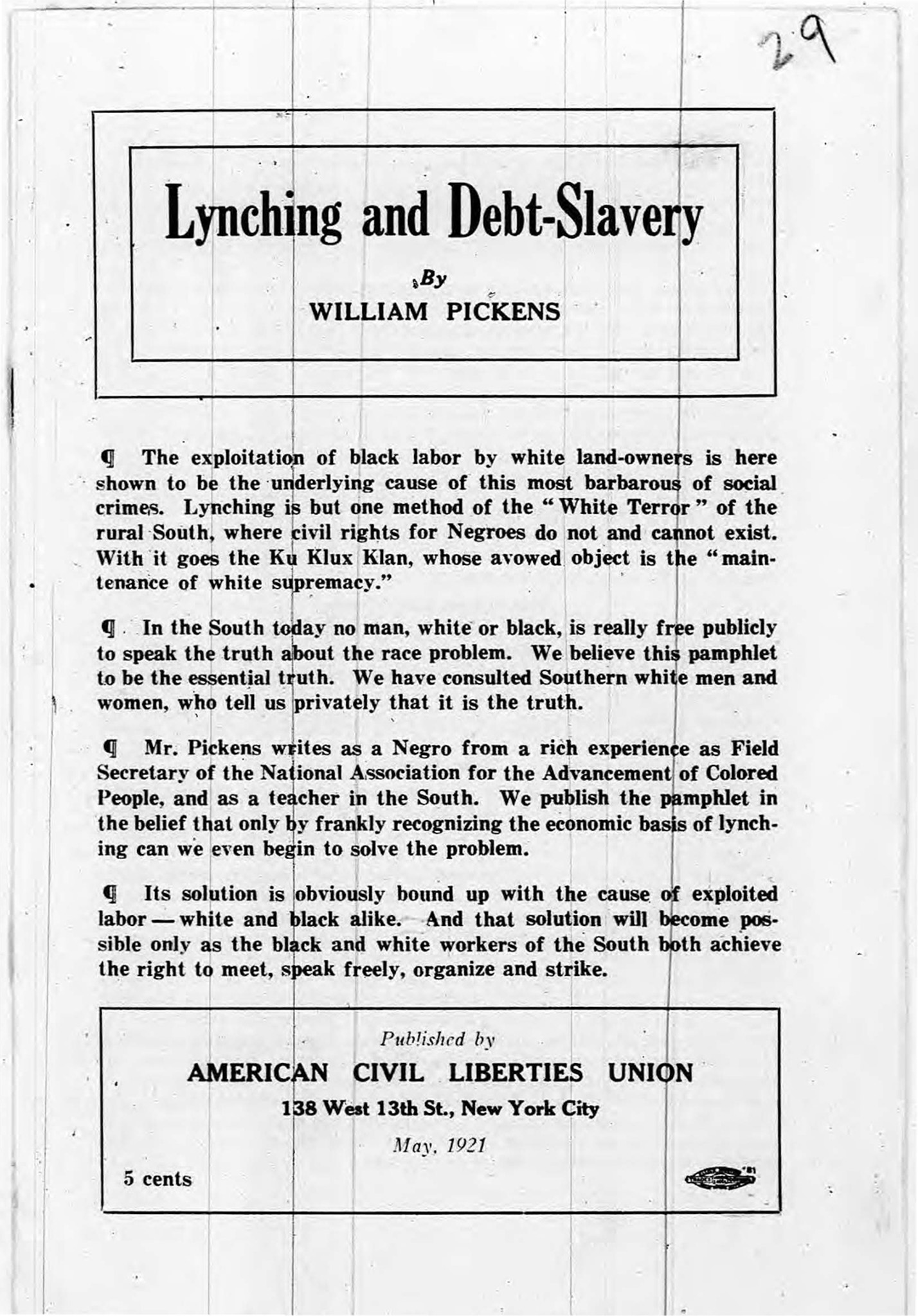
ACLU's Article On Exploitation of Black Communities: "Lynching and Debt-Slavery"
This article features private testimonies from white Southerners and the personal testimony of William Pickens, a Black field secretary for the NAACP, to expose the exploitation of Black labor and argue for the protection of both Black and white workers' civil liberties.
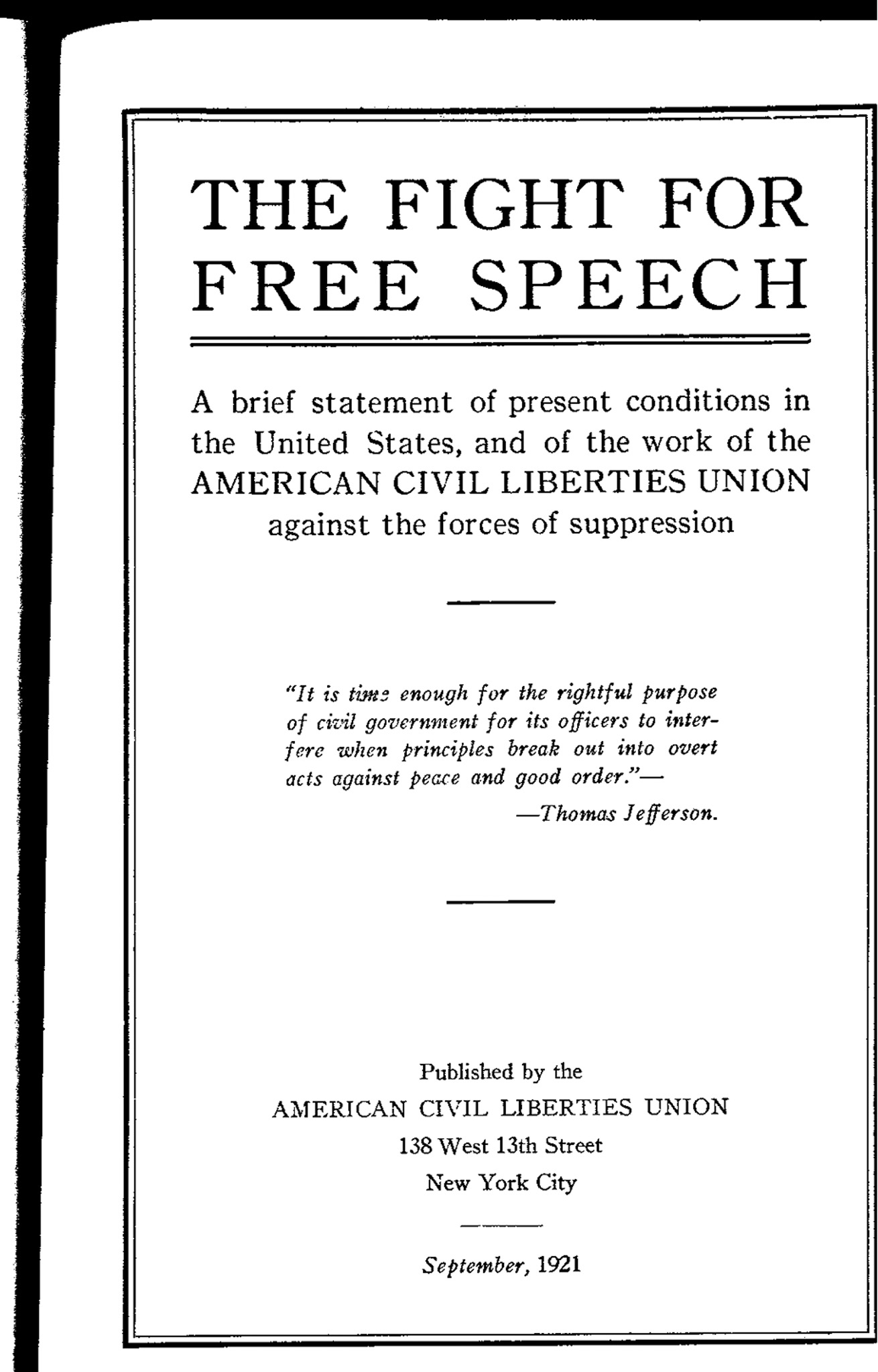
ACLU 1921 Annual Report on the Fight for Free Speech
In the ACLU's first annual report in 1921, Directors Roger Baldwin and Albert De Silver wrote: "Opposed from various angles we are pushing ahead more vigorously than ever, confident in the soundness of our position and in the worth of the daily human services to the hundreds of devoted men and women attacked for their loyalty to their principles."
1922
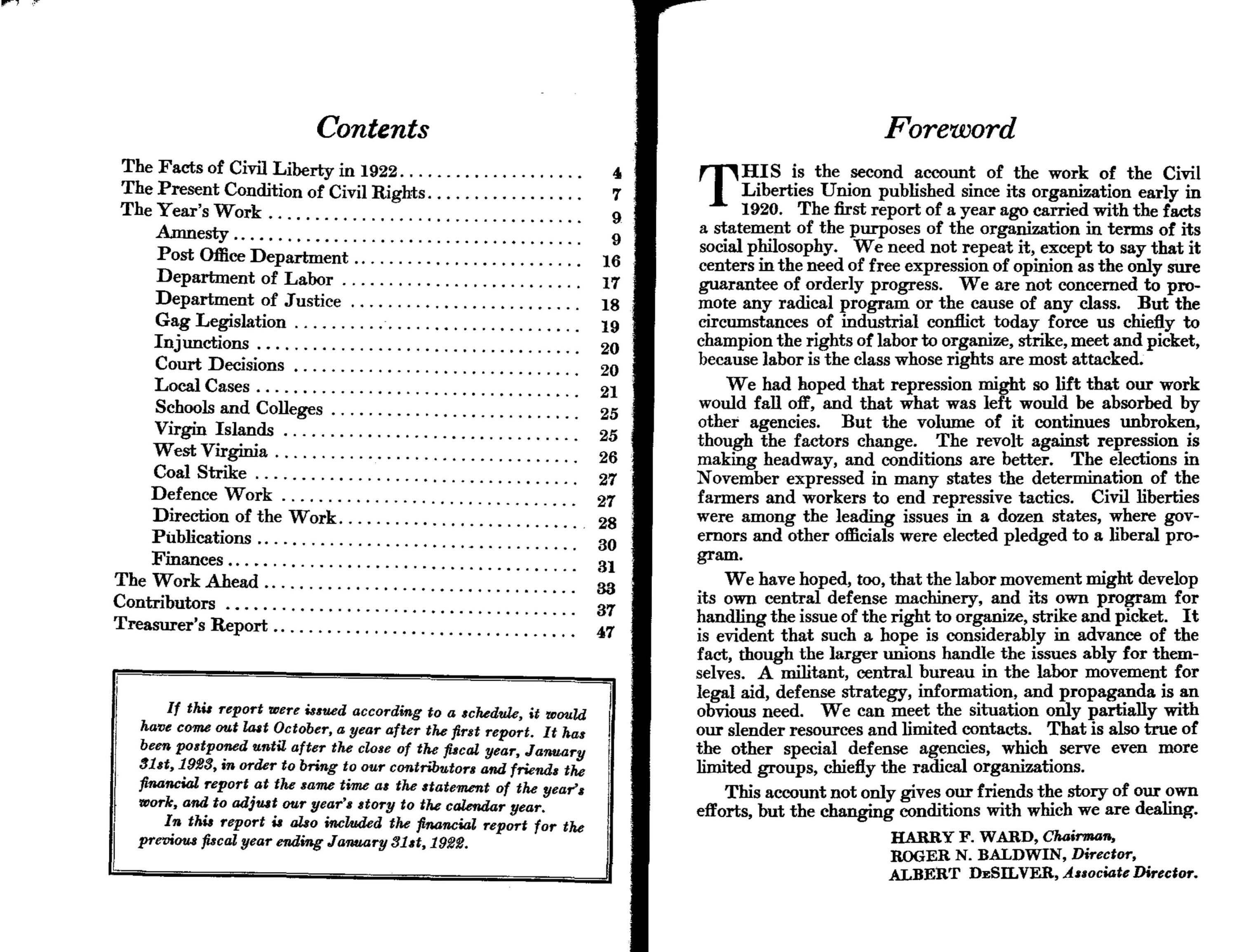
ACLU's Annual Report of 1921-1923: A Year's Fight For Freedom of Speech
This 1922 annual report documents the ACLU’s earliest fight for freedom of speech, a civil liberty under attack during World War I. The ACLU was founded in the wake of the Espionage Act, the 1918 Sedition Act, and the Palmer Raids — and we continue fighting to protect the freedom of speech to this day.
1925
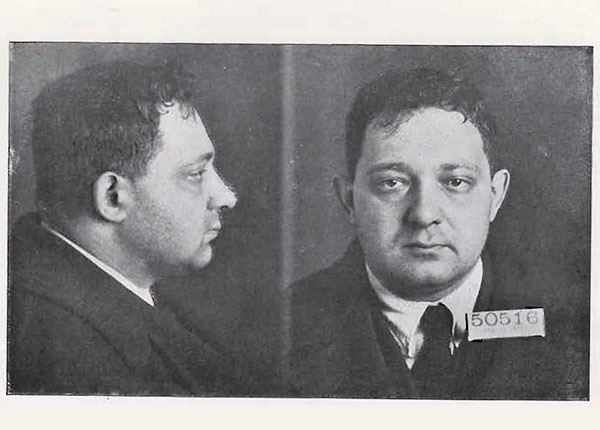
Benjamin Gitlow, One of ACLU's First Clients
Radical activist Benjamin Gitlow is pictured here in 1925. While Gitlow was convicted in Gitlow v. New York under New York's criminal anarchy law, this first landmark Supreme Court case for the ACLU established that the Fourteenth Amendment "incorporates" the First Amendment's free speech clause and was monumental in applying free speech protections to the states.
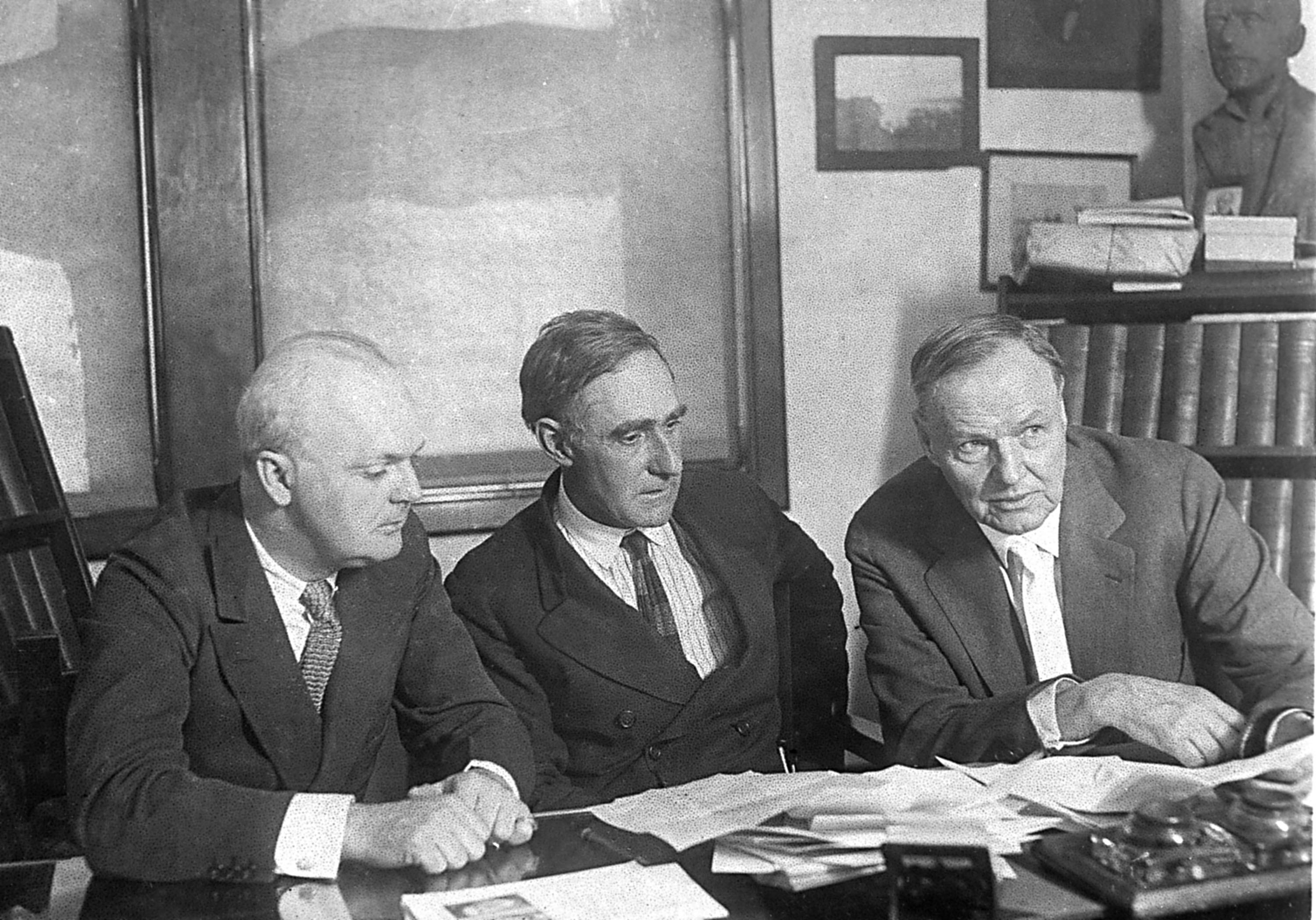
ACLU's Legal Team of Well-Known Scopes Monkey Trial
When biology teacher John T. Scopes was charged with violating a Tennessee ban on teaching evolution, the ACLU was ready to defend him and secured celebrated attorney Clarence Darrow for his defense. The resulting case, The State of Tennessee v. John Thomas Scopes, was arguably one of the ACLU's most famous early cases and is often referred to as the Scopes "Monkey Trial."
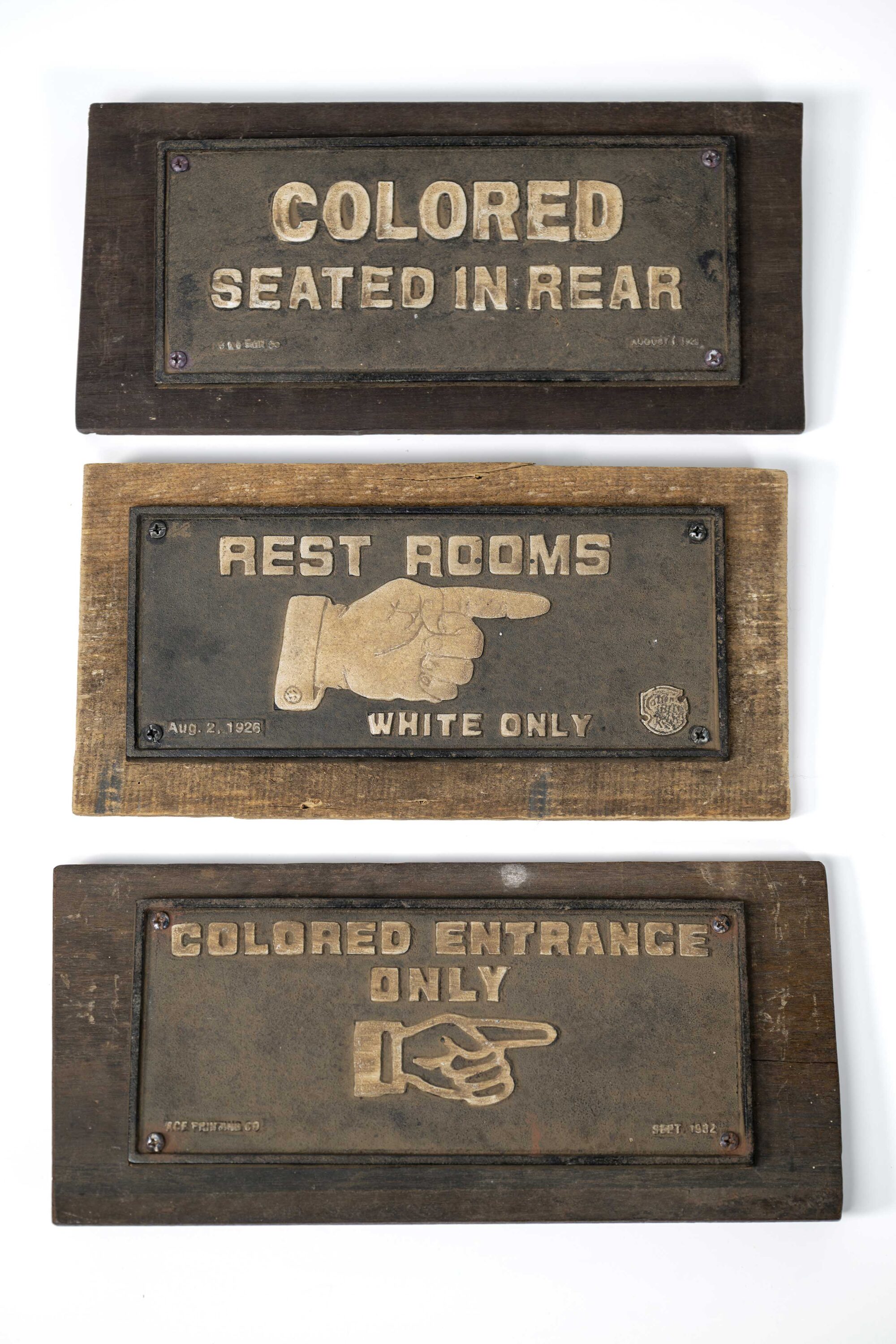
Photographs of Jim Crow-Era Bathroom Segregation Signs, 1920s-1930s
These are three original Jim Crow-era segregation plaques from the American South dating to the 1920s. The signs directed where Black Americans could enter, sit, and use public facilities. They are powerful reminders of a time when racial discrimination was legally enforced and woven into everyday life.
1927
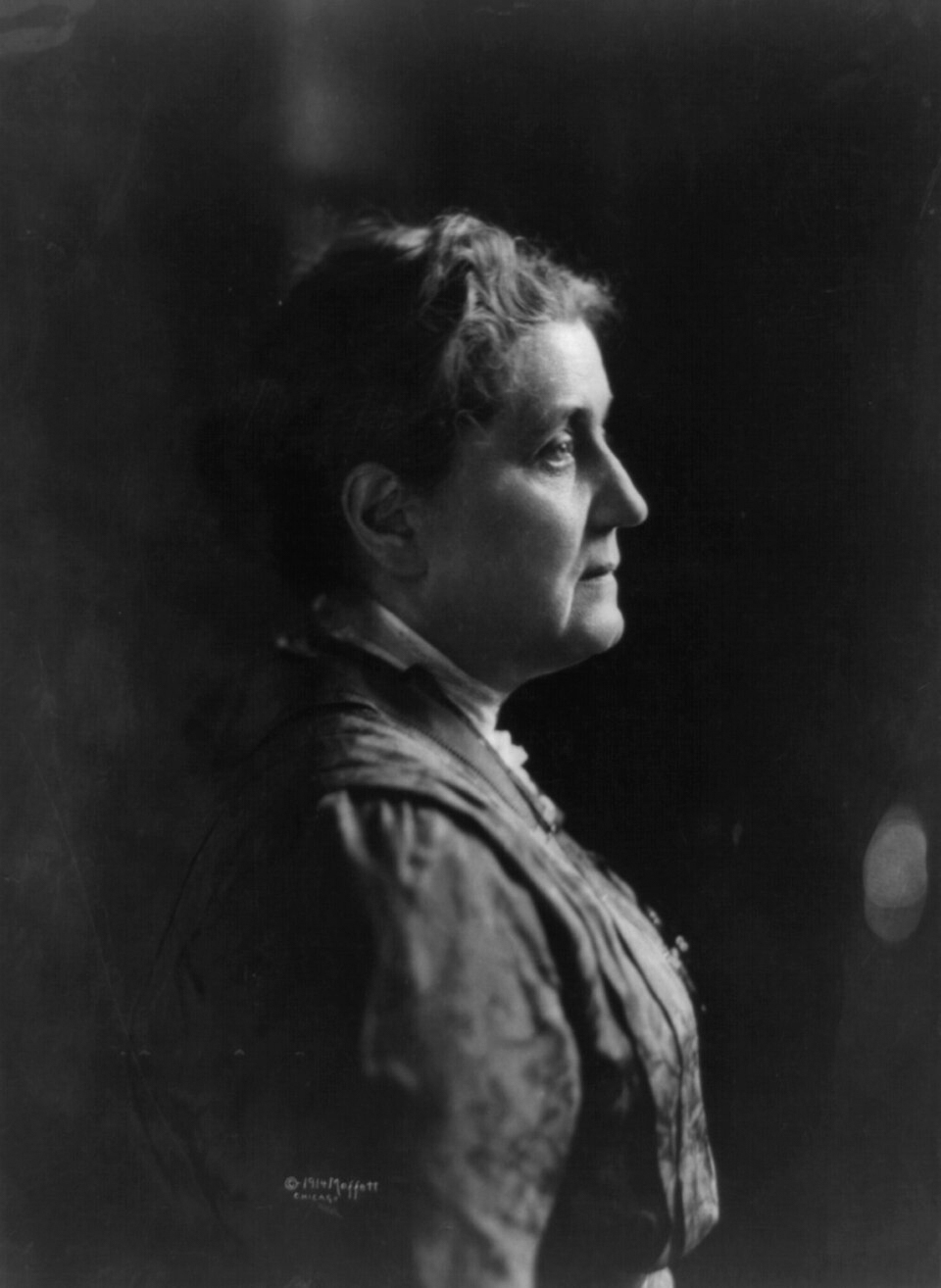
Jane Addams, ACLU Co-Founder, Opposes the Bursum Bill
Alongside Pueblo people, the ACLU advocated against The Bursum Bill, a bill that would have broken up Pueblo land and sold the majority off to non-Natives. Jane Addams, ACLU co-founder, may have been involved with this advocacy. Addams was connected with Elizabeth Shepley Sergeant, who was a member of the General Federation of Women's Clubs, as well as Herbert Welsh, founder of the Indian Rights Association (IRA).
1929
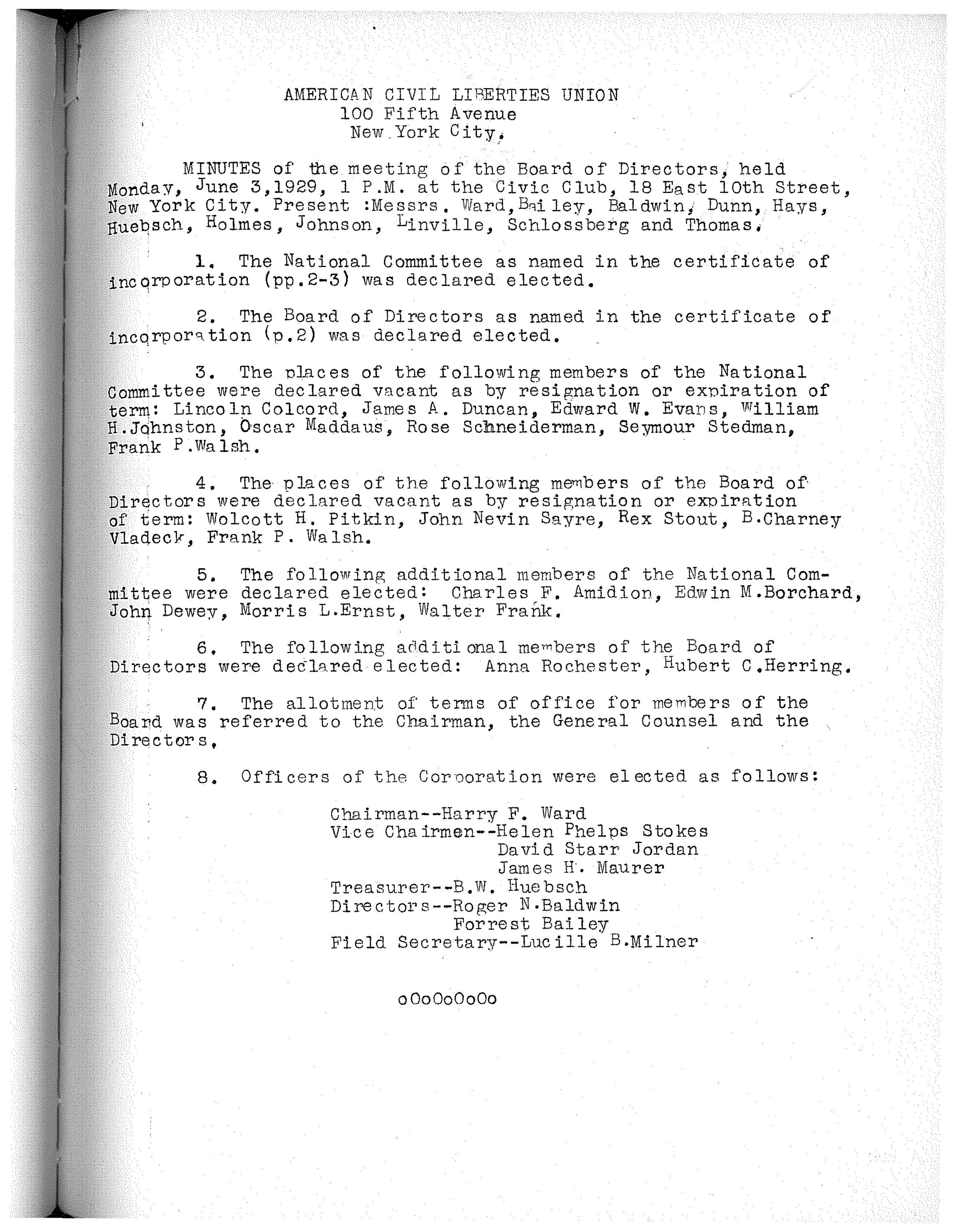
ACLU Minutes of First Annual Board of Directors Meeting
These meeting notes come from one of the earliest board meetings of the American Civil Liberties Union. National committee members met at the national office on Fifth Avenue to discuss by-laws of the organization. Among them included co-founder of the ACLU Roger N. Baldwin and co-Director Forest Bailey.
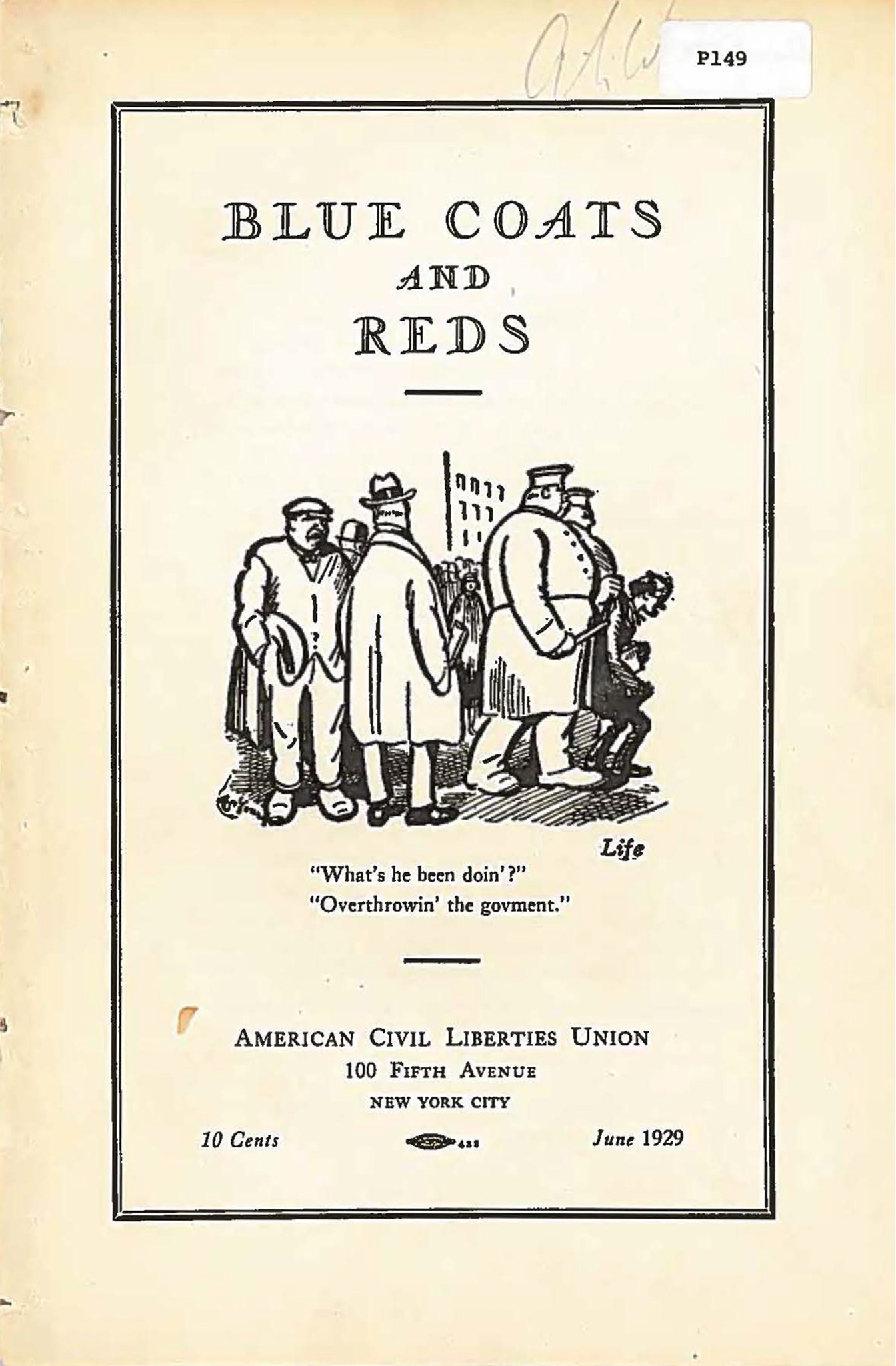
ACLU Pamplet "Blue Coats and Reds"
This pamphlet published by the ACLU criticizes the American police force for exceeding their power and threatening citizens' rights and liberties through censorship. About two hundred questionnaires were mailed to the heads of police departments in cities across the country to inquire about their approaches.
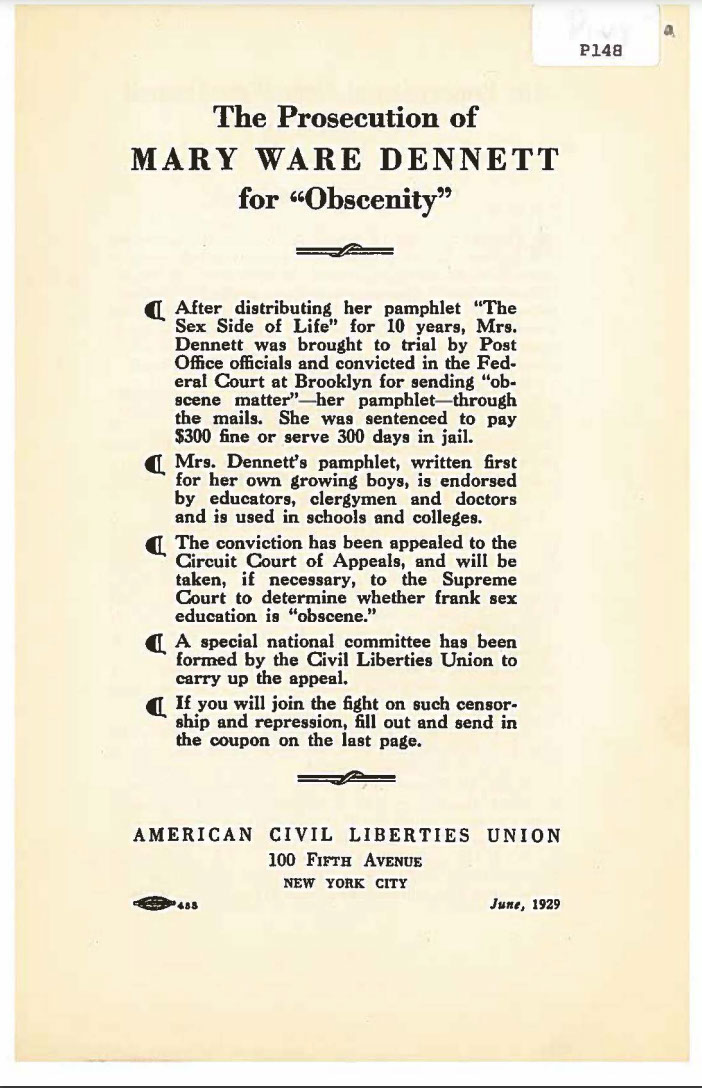
ACLU Pamphlet on How the Government's Claim of Obscenity Regarding Client Mary Ware's Writings Violated Free Speech
Mary Ware Dennett wrote a sex education pamphlet, “The Sex Side of Life,” in 1915 after discovering most existing sex education material contained inaccurate information or relied on shame to dissuade young people from having sex. The pamphlet was radical for its time, covering topics including STDs and masturbation. It also did not preach abstinence. Four years after the pamphlet was published, it was deemed “obscene” and banned from being distributed via mail under the 1873 Comstock Act. We represented Dennett in court, arguing the pamphlet was an important educational tool. The court sided in Dennett’s favor, and she was free to continue distributing “The Sex Side of Life.”
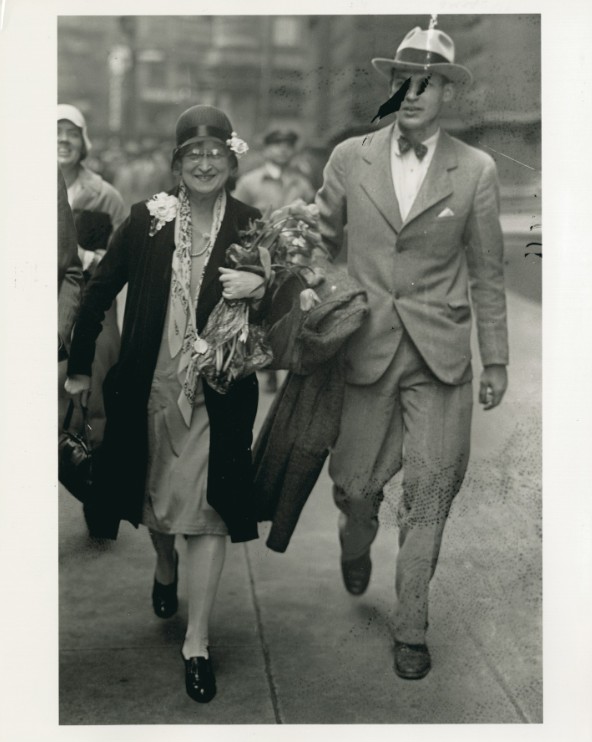
ACLU Client Mary Ware Dennett, Author of "The Sex Side of Life"
Mary Ware Dennett wrote a sex education pamphlet, “The Sex Side of Life,” in 1915 after discovering most existing sex education material contained inaccurate information or relied on shame to dissuade young people from having sex. The pamphlet was radical for its time, covering topics including STDs and masturbation. It also did not preach abstinence. Four years after the pamphlet was published, it was deemed “obscene” and banned from being distributed via mail under the 1873 Comstock Act. We represented Dennett in court, arguing the pamphlet was an important educational tool. The court sided in Dennett’s favor, and she was free to continue distributing “The Sex Side of Life.”