The 2000s
Share
2000
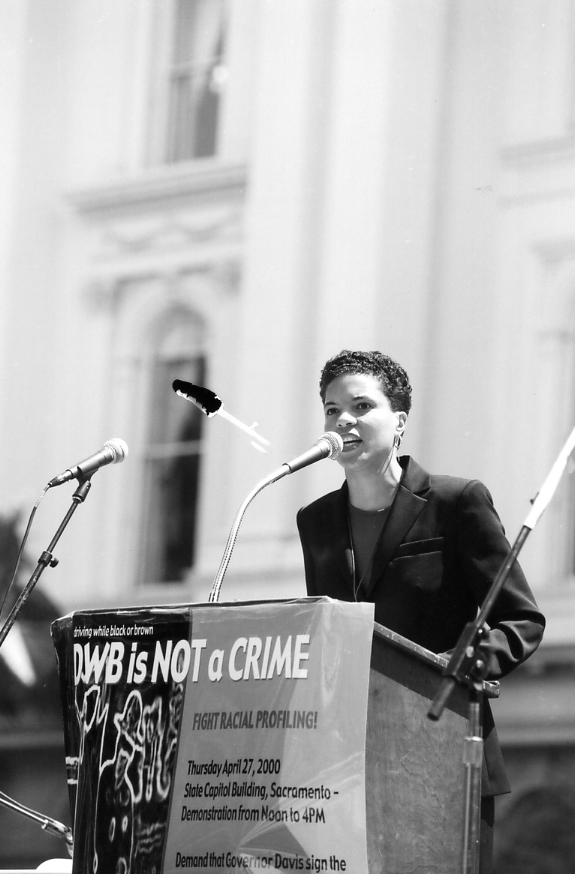
The ACLU of Northern California Rallies and Produces Report on the Dangers of “Driving While Black or Brown”
ACLU of Northern California attorney Michelle Alexander spearheaded a campaign against racial profiling. In this photo, Alexander is speaking at a “Driving While Black or Brown” rally on the steps of the California State Capitol in Sacramento on April 27, 2000. As part of the campaign, ACLU NorCal put up billboards and distributed postcards with a hotline number to report racial profiling throughout Northern California. As a result of these and other efforts, the California Highway Patrol adopted reforms to end the practice of racial profiling.
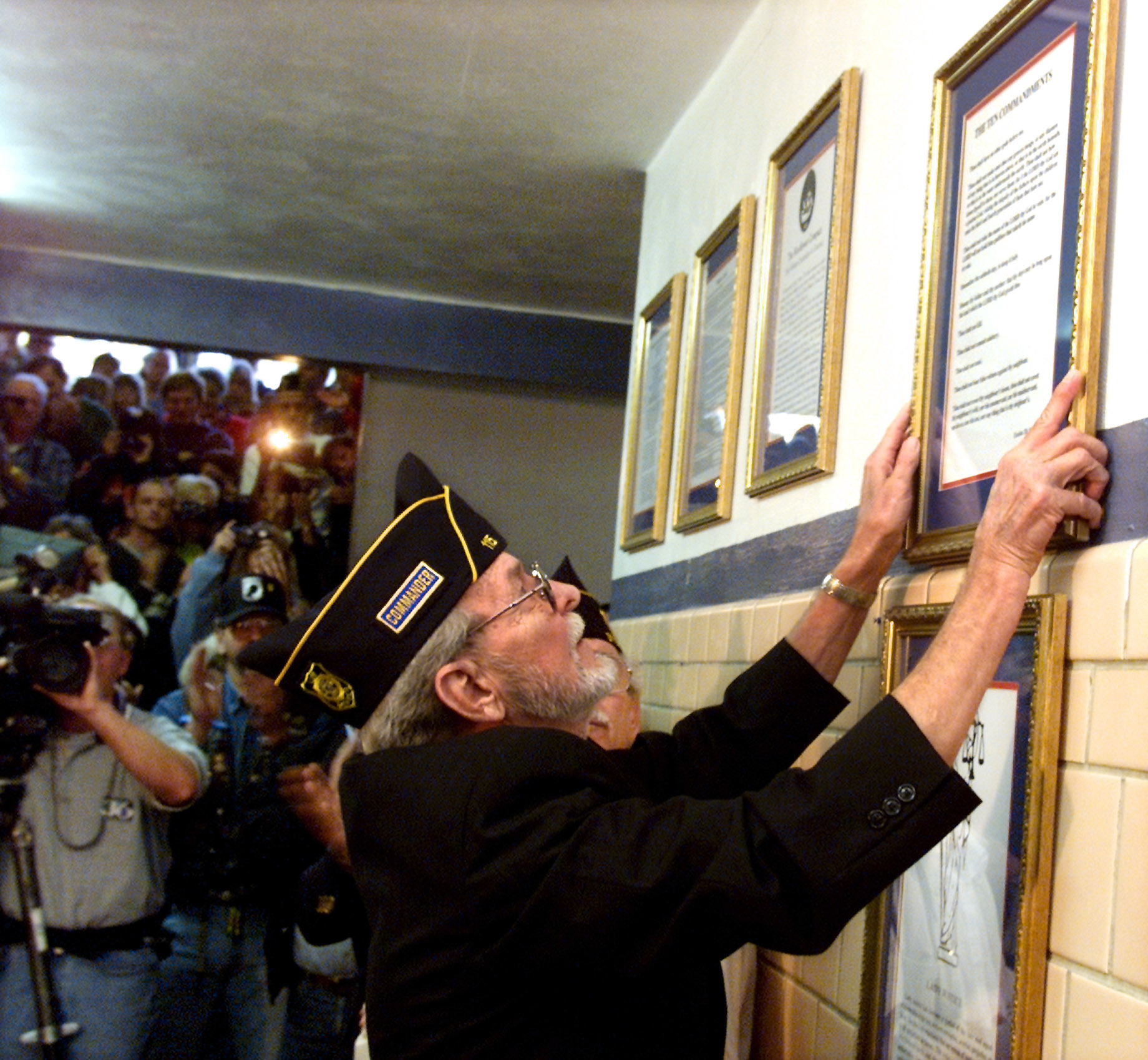
Defending Freedom of Religion
In this photo, supporters watch as Paul Worthington, commander of the local American Legion post, hangs a copy of the Ten Commandments in the McCreary County courthouse in Whitley City, Kentucky. The ACLU went on to sue three Kentucky counties in McCreary County v. ACLU of Kentucky for displaying framed copies of the Ten Commandments in courthouses and public schools, arguing that the displays violated the First Amendment’s Establishment Clause.
2001
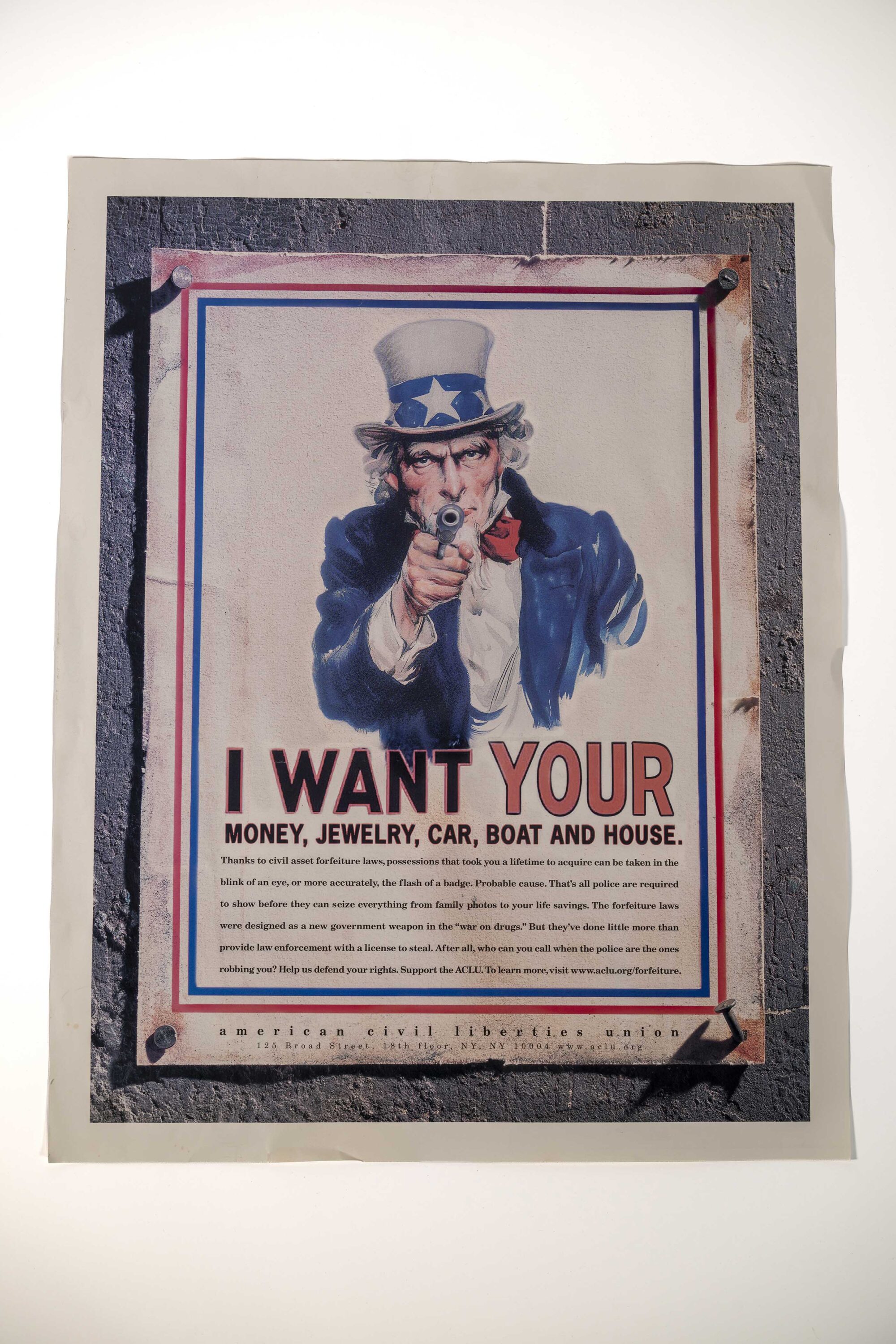
ACLU’s Uncle Sam Poster Reads: “I Want Your Money, Jewelry, Car, Boat and House”
Civil asset forfeiture laws allow police to seize — and then keep or sell — any property they allege is involved in a crime. Meaning, property owners do not need to be arrested or convicted of a crime for their cash, cars, or even real estate to be permanently taken by the government. Forfeiture was originally presented as a way to weaken large-scale criminal enterprises by diverting their resources. But today, aided by deeply flawed federal and state laws, many police departments use forfeiture to benefit their bottom lines, seizing property for profit rather than crime-fighting. Police abuse of civil asset forfeiture laws has shaken our nation’s conscience. The ACLU has been leading the fight to rein in this practice.
2002
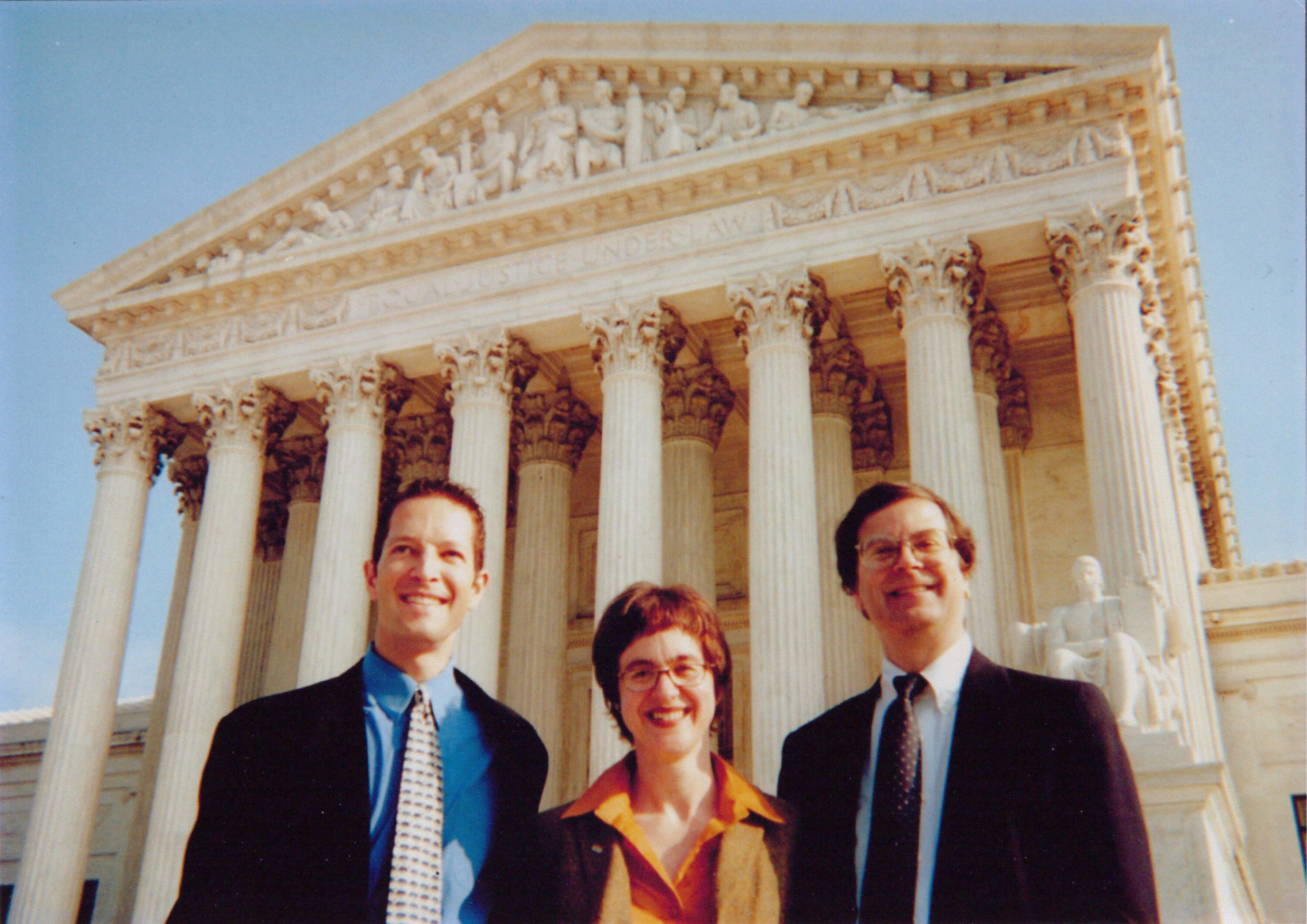
Legal Team for Ashcroft v. ACLU
The legal team from Ashcroft v. ACLU pauses for a photo in front of the Supreme Court after oral arguments in the case. The ACLU argued that the Child Online Protection Act was unconstitutional because it deprived adults of protected speech on the internet. The Supreme Court sent the case back to the Third Circuit Court of Appeals, which eventually ruled the law unconstitutional.
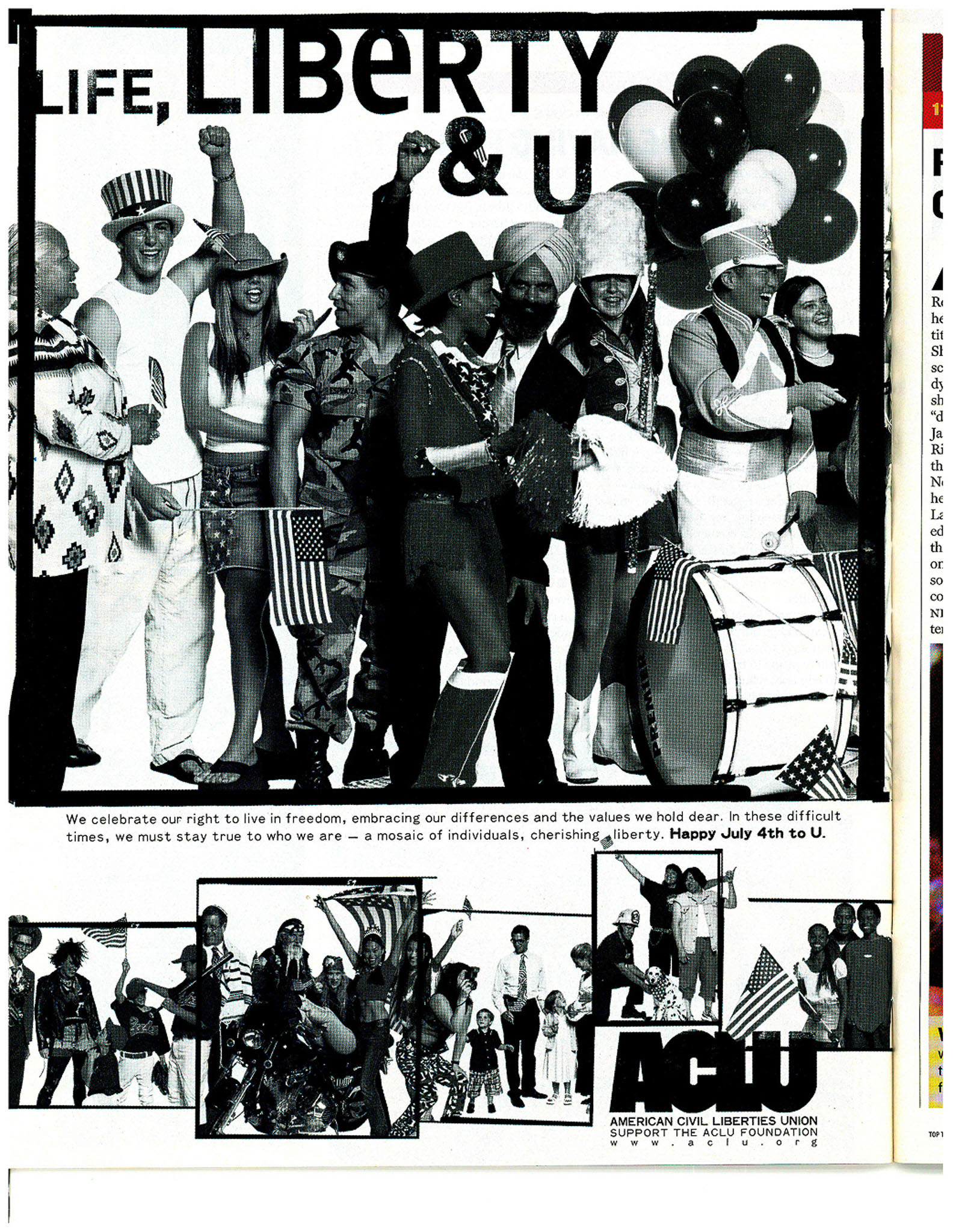
Fourth of July 2002: “Life, Liberty, & U”
The ACLU ran this full-page ad in Newsweek’s July 8, 2002, edition to celebrate the people’s role in protecting and expanding our rights and liberties for the Fourth of July.
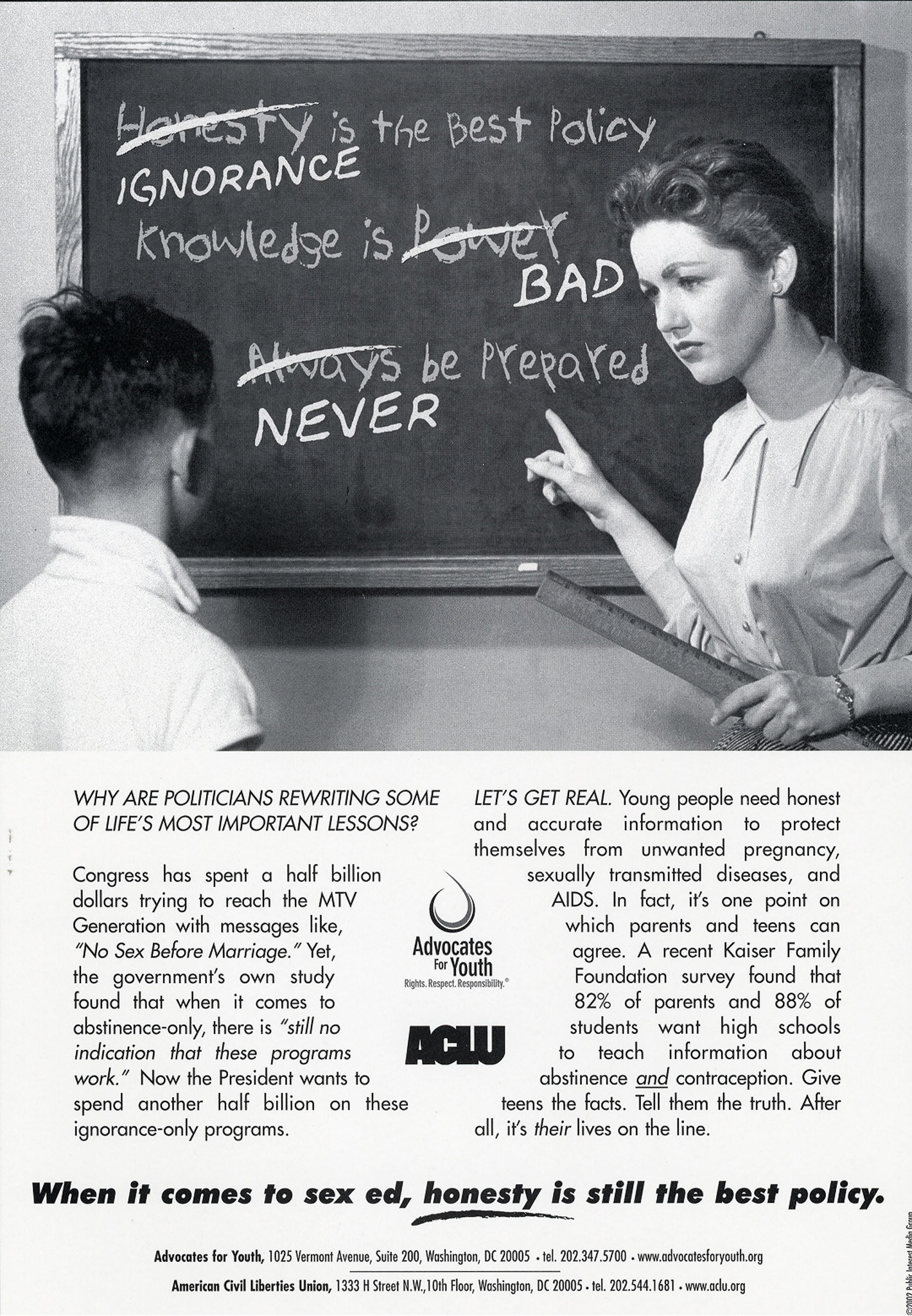
ACLU and Advocates for Youth Tell Sex Educators: Honesty Is Still the Best Policy
The ACLU partnered with Advocates for Youth to raise awareness about increased government spending for inaccurate and harmful abstinence-only sex education programs.
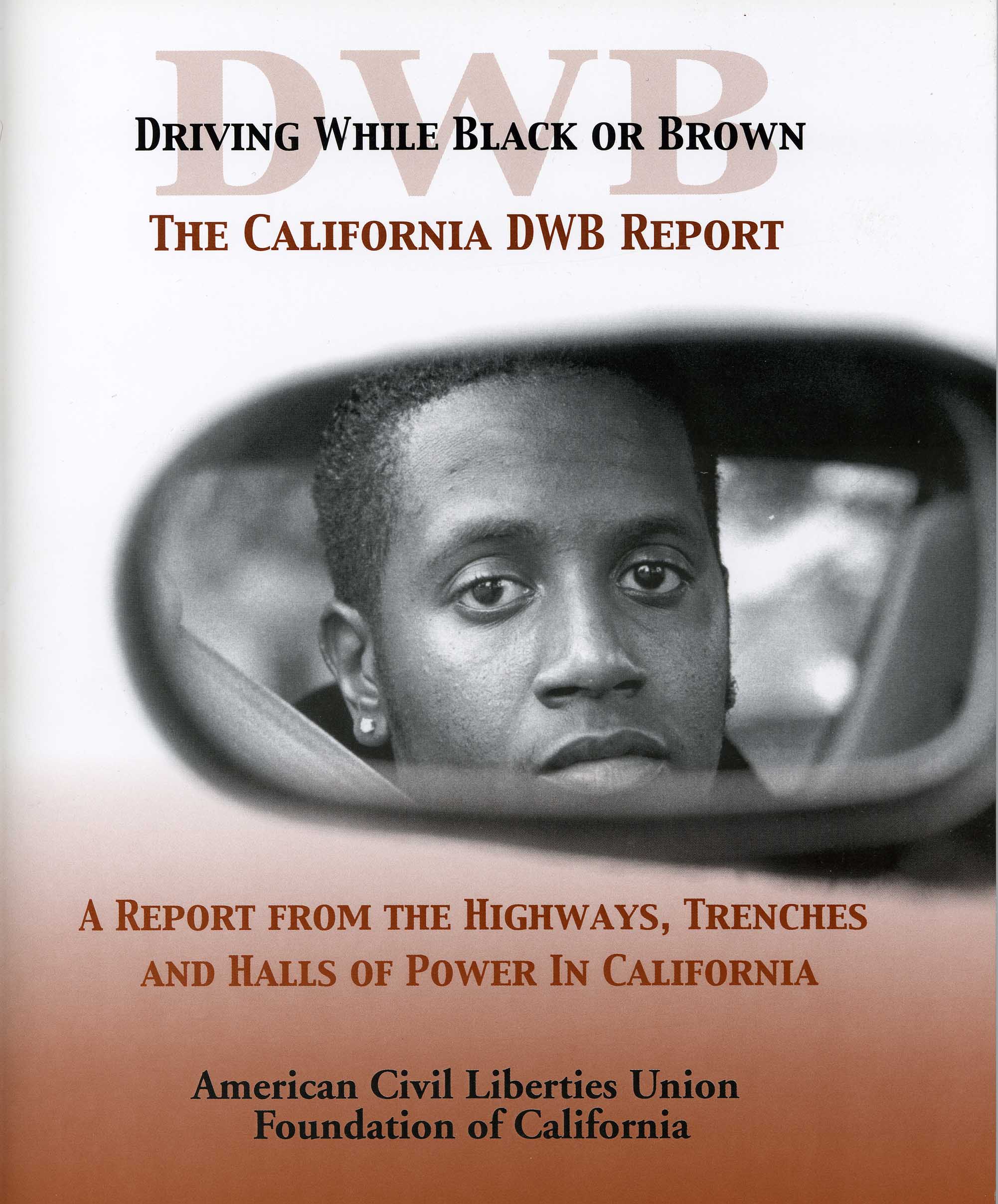
“Driving While Black or Brown: A Report From The Highways, Trenches, and Halls Of Power In California”
This landmark report by the ACLU of Northern California examined racial profiling by law enforcement, asserting: “The time is long overdue for the public, and our politicians, to know the truth about racial profiling. When the truth is known, no excuses for inaction remain.” The report was published as part of a years-long campaign by the affiliate, which included a statewide hotline and successful advocacy for traffic stop data collection legislation.
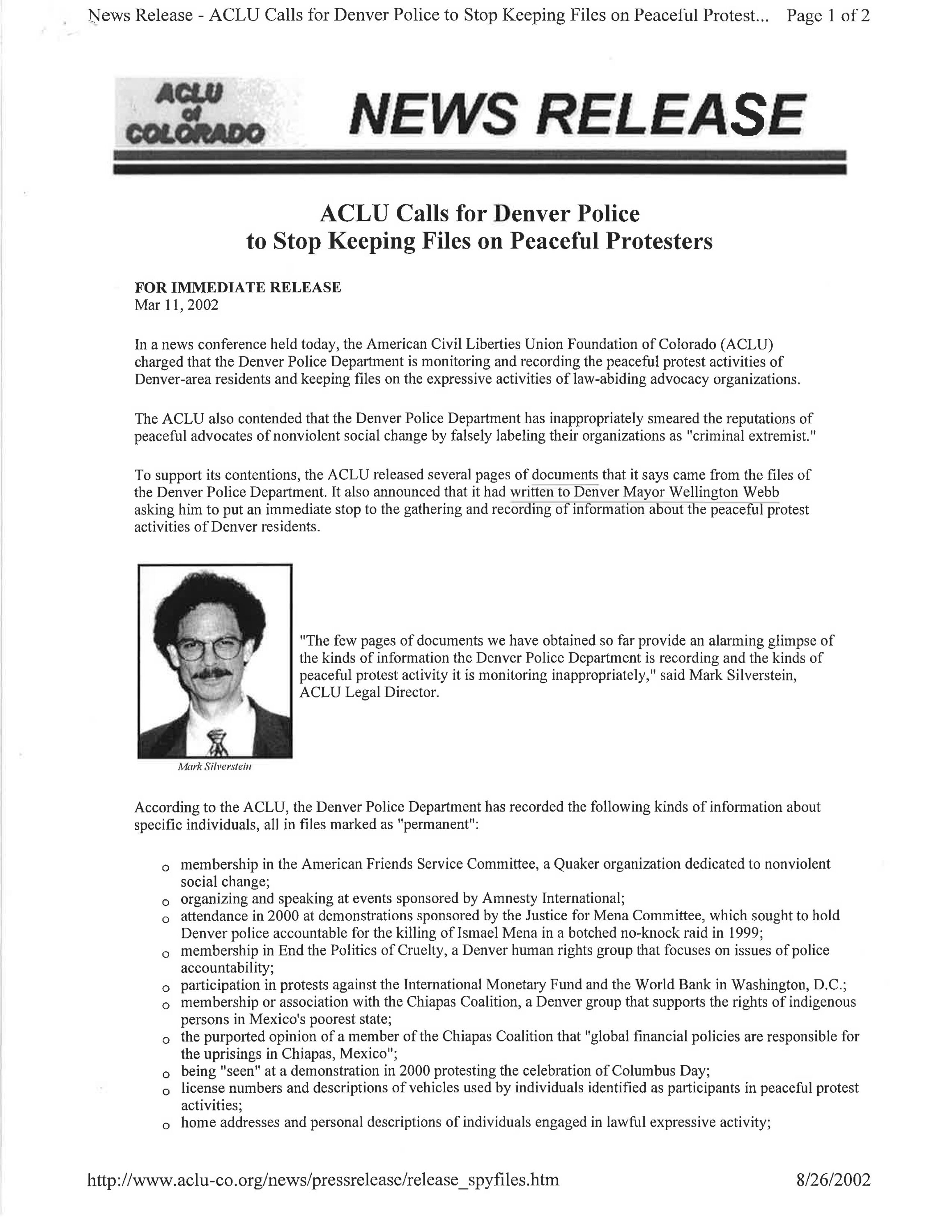
ACLU of Colorado’s “Spy Files” Press Release
Pictured here is the press release announcing a March 2002 press conference where the ACLU of Colorado released documents that revealed the existence of the Denver Police Department’s “Spy Files.” The documents showed that Denver police were monitoring and recording the peaceful protest activities of Denver-area residents and keeping files on the expressive activities of law-abiding advocacy organizations — in many cases, falsely labeling them as “criminal extremists.” Later that month, the ACLU filed a class-action lawsuit on behalf of three organizations and three individuals who were the subjects of the “Spy Files.” The lawsuit revealed that multiple law enforcement agencies in Colorado, including the FBI’s Joint Terrorism Task Force, were also compiling files on peaceful protest activity. After extensive discovery, Denver agreed to a settlement that restricted political spying and provided multiple additional changes in policies and practices.
2003
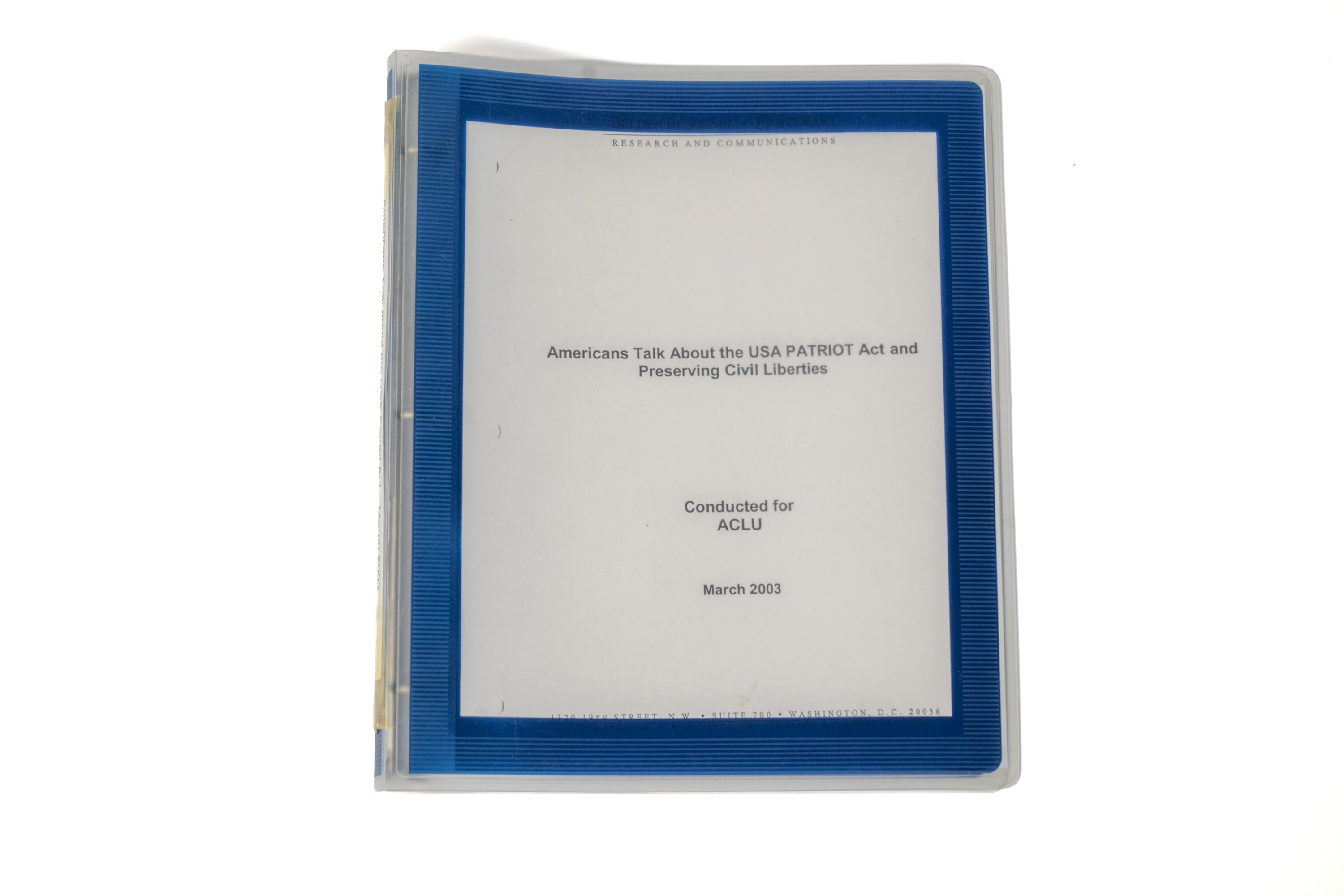
ACLU’s Research and Numbers Behind the Patriot Act
Passed 45 days after 9/11, the Patriot Act made it easier for the government to spy on ordinary Americans by expanding the authority to monitor phone and email communications, collect financial records, and track internet activity, turning regular citizens into suspects. This 2003 report examined how Americans viewed the law’s impact on their civil liberties.
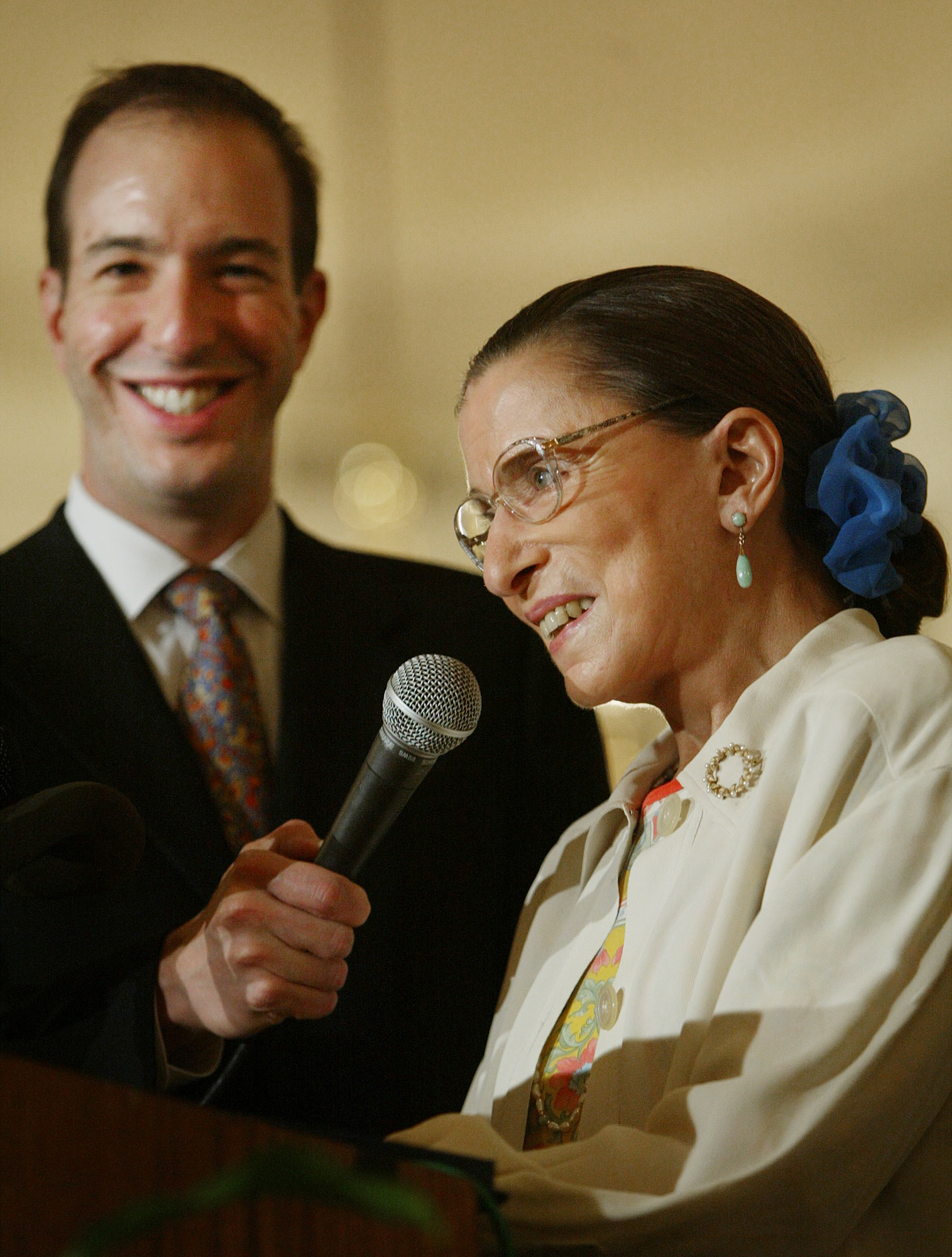
Supreme Court Justice and Founder of the ACLU’s Women’s Rights Project: Ruth Bader Ginsburg
ACLU Executive Director Anthony D. Romero (left), holds the microphone for Supreme Court Justice Ruth Bader Ginsburg at the ACLU Inaugural Membership Conference on June 12, 2003, in Washington. June 2003 marked 10 years since Ginsburg was named to the Supreme Court by President Bill Clinton.
2004
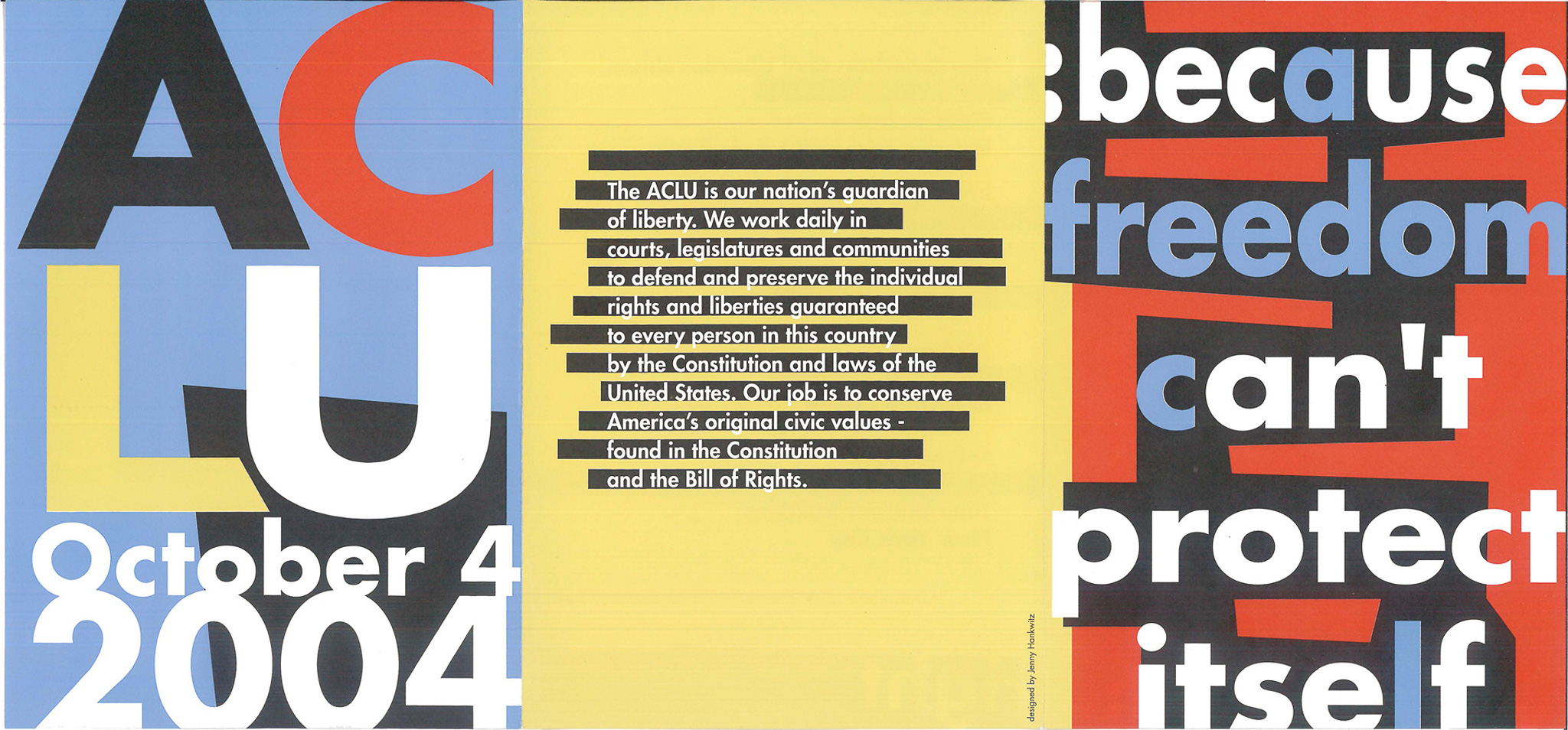
ACLU Joins Forces with Artists for Freedom
In 2004, the ACLU hosted the Freedom Concert at Lincoln Center. Produced by composer Philip Glass, the evening featured an eclectic range of music and spoken word performances by Mos Def, Robin Williams, Paul Simon, Richard Gere, Maggie Gyllenhaal, Jake Gyllenhaal, Richard Belzer, Wyclef Jean, Patti Smith, Lou Reed, Lila Downs, Jessica Lange, Philip Glass, Tony Kushner, Sarah Jones, Nanci Griffith, Edie Brickell, and The Black Keys.
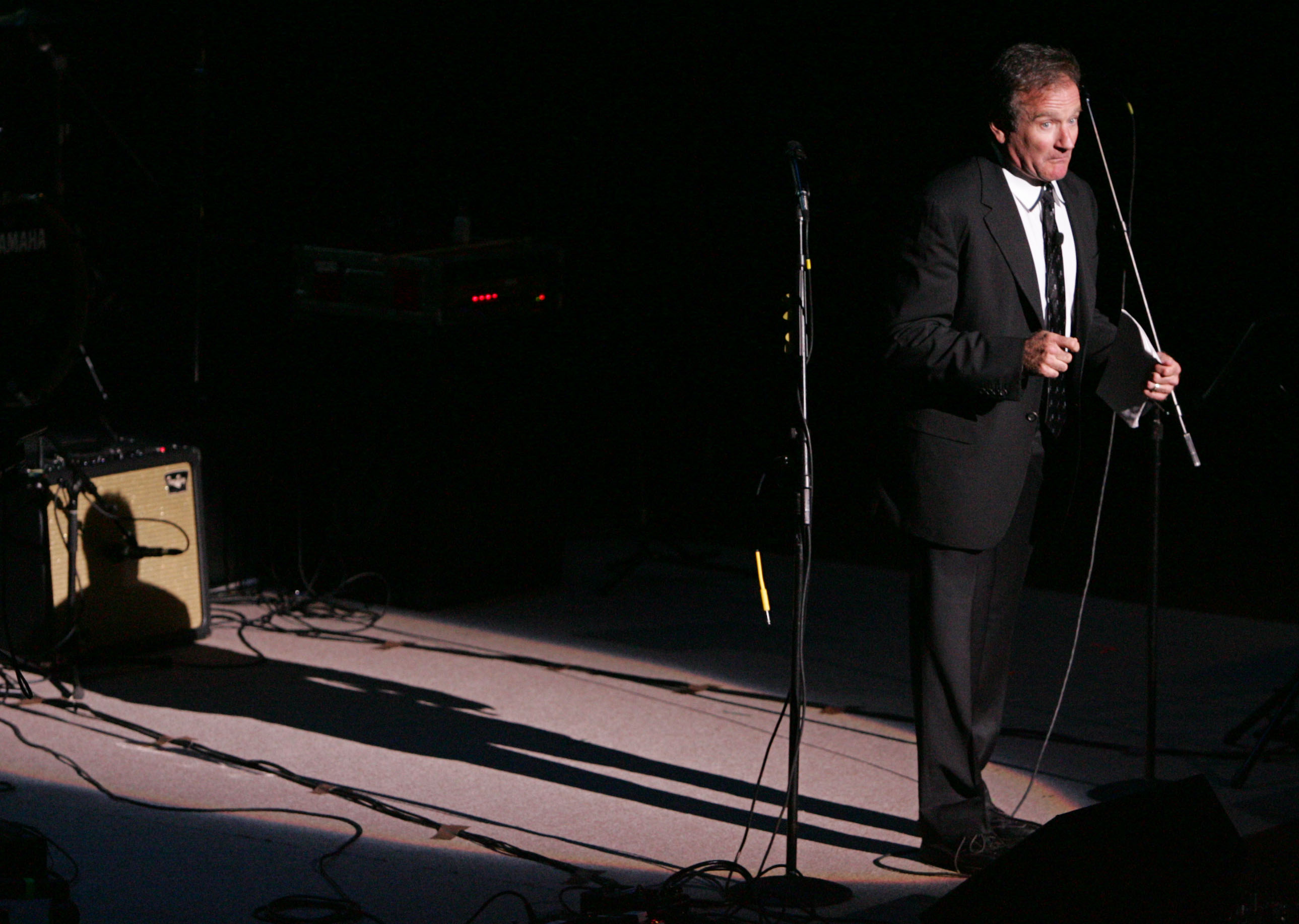
Robin Williams Among Artists at ACLU Freedom Concert Call to End Banned Books
Robin Williams performs during the ACLU Freedom Concert on Monday, October 4, 2004, at Lincoln Center in New York. The concert, featuring various artists from the performing arts, was held to draw attention to book bans in different parts of the United States.
2005
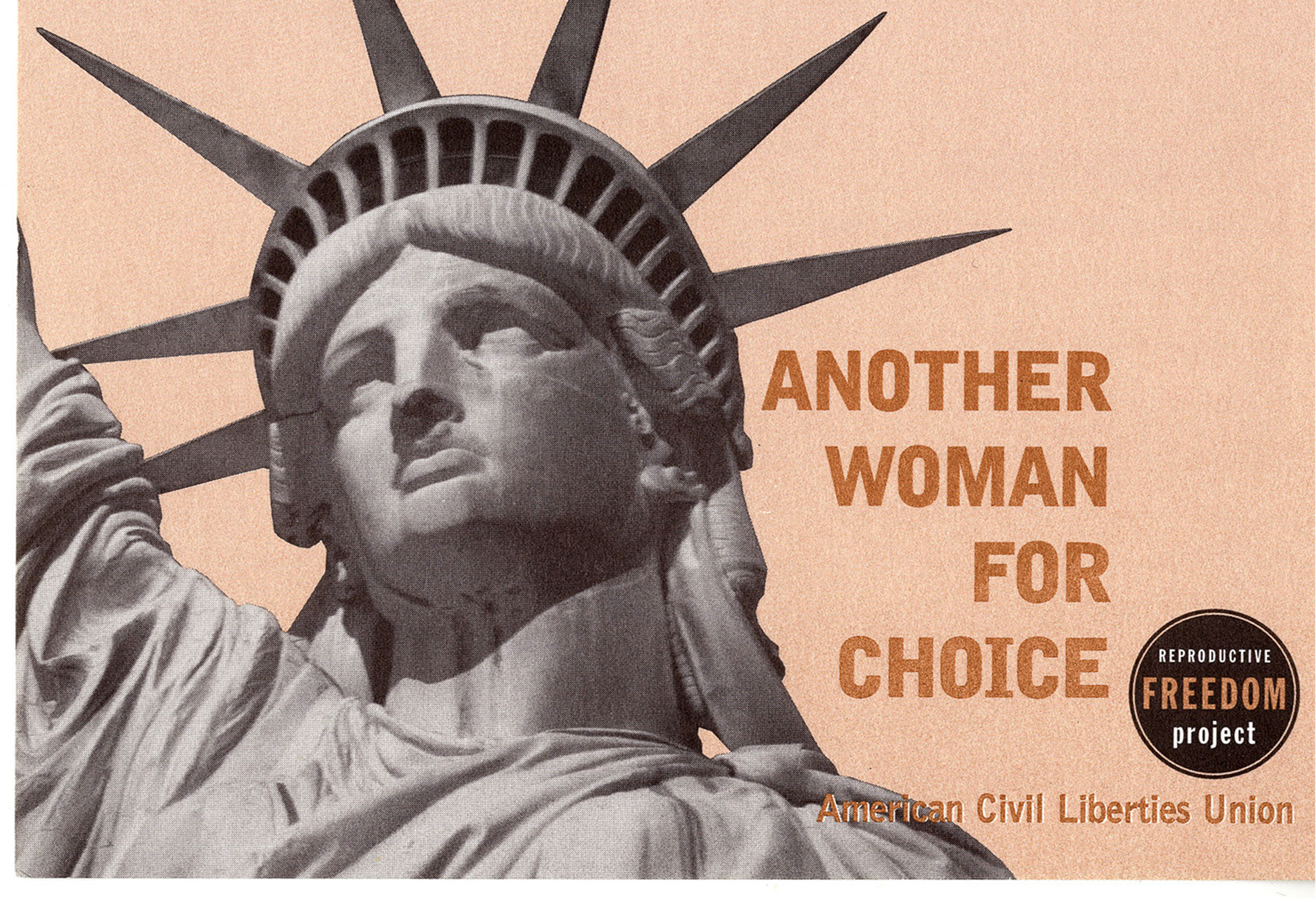
“Another Woman For Choice”
Through litigation, advocacy, and public education, the ACLU’s Reproductive Freedom Project, highlighted in this poster, strives to ensure that every person who needs abortion care is able to access the care they need, free from government interference.
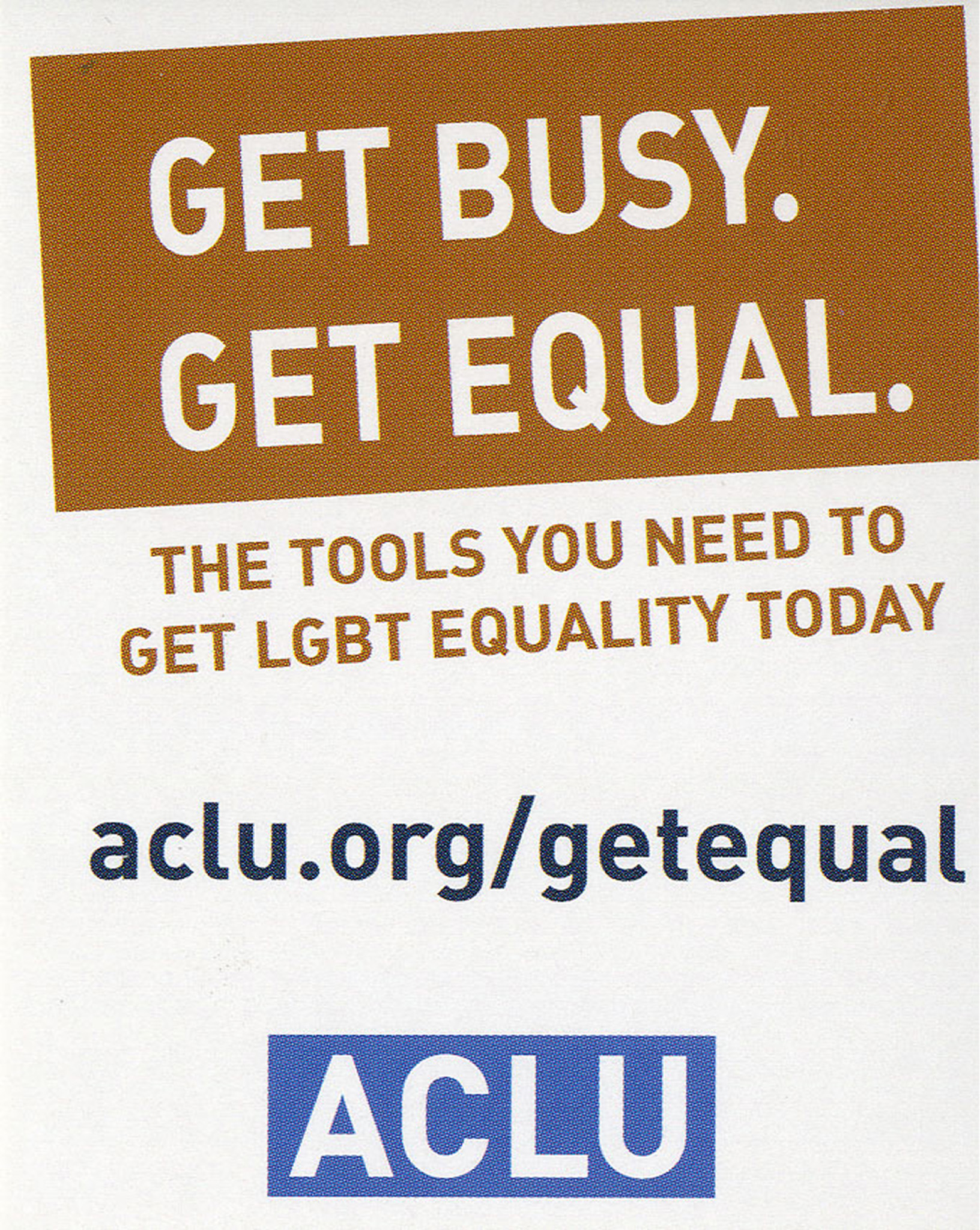
ACLU Sticker Calls on Public to “Get Busy, Get Equal”
This sticker was created by the ACLU to promote the organization’s online toolkit, which was designed to empower activists to organize effectively in an effort to advocate for nondiscrimination laws and policies; and support same-sex marriage, civil unions, and domestic partnerships.

Raw Footage of the ACLU’s “Freedom Files”
These are the original raw footage cassettes of “Freedom Files,” a 10-part television series on Court TV launched in 2005, featuring real ACLU clients and the attorneys who represented them. The series also featured well-known activists, actors, and comedians, including Lewis Black, Margaret Cho, Richard Belzer, Harry Shearer, Judy Gold, and Noah Wyle.
Audio Clip of David Friedman Successfully Arguing First Amendment Case Before Supreme Court
In McCreary County v. ACLU of Kentucky, the ACLU sued three Kentucky counties for displaying framed copies of the Ten Commandments in courthouses and public schools, arguing that the displays violated the First Amendment’s Establishment Clause. In 2005, the Supreme Court ruled in favor of the ACLU’s position. Listen to a clip of ACLU attorney David Friedman successfully arguing this case in front of the Supreme Court.
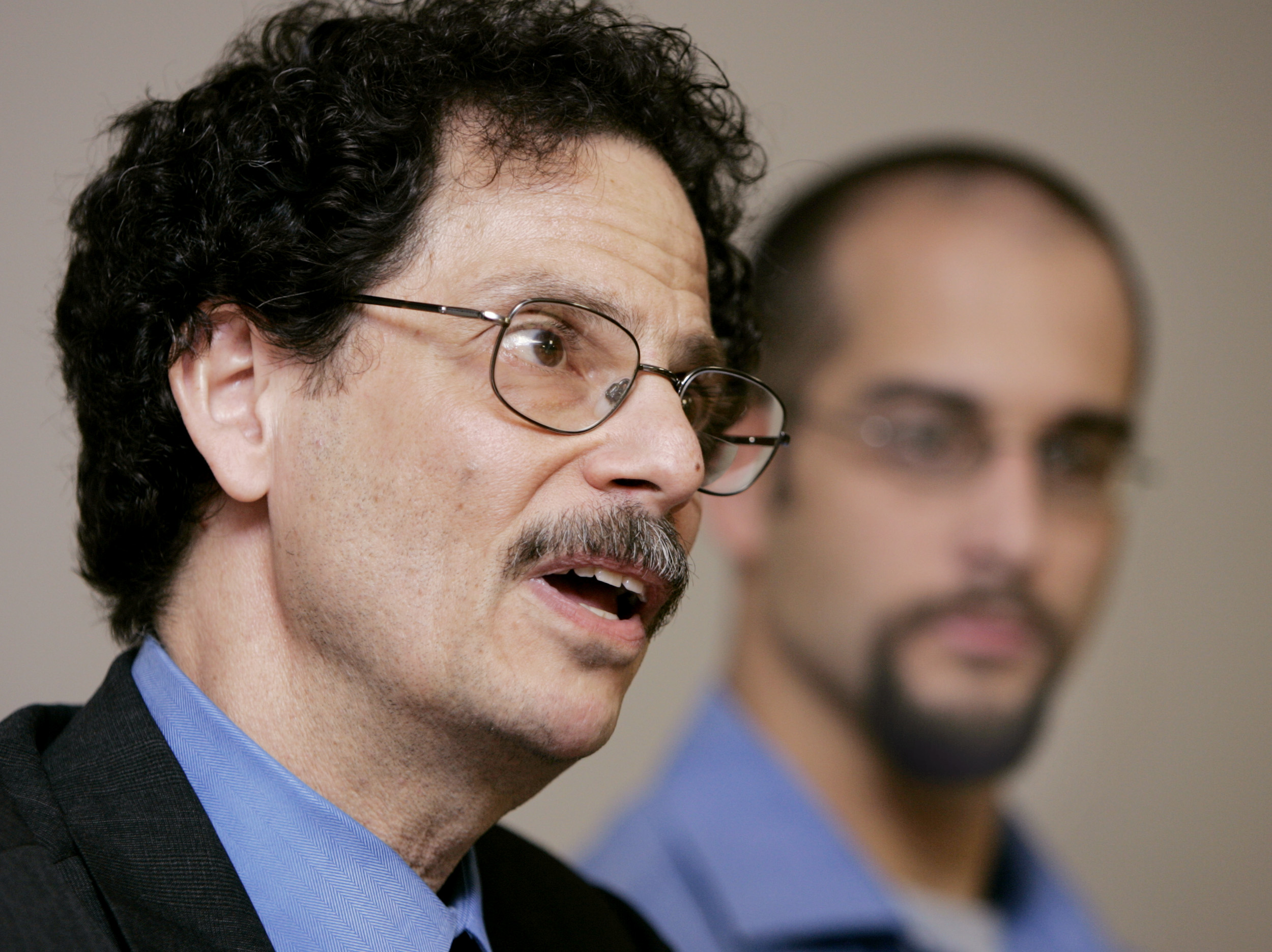
ACLU of Colorado’s Legal Director Speaks Out
In this 2005 photo, Mark Silverstein, legal director of the ACLU of Colorado, speaks at a news conference, questioning the reason for the FBI’s Joint Terrorism Task Force targeting of peaceful political activists. He questioned the Denver Police Department’s involvement and suggested they pull out of the joint task force. Scott Silbert (background), a labor consultant, was named in one of these disclosed FBI files, also known as the “Spy Files.” The ACLU filed a class action lawsuit on behalf of three organizations and three individuals who were the subjects of the “Spy Files,” and, after extensive discovery, Denver agreed to a settlement that restricted political spying and provided additional changes in policies and practice.
2006
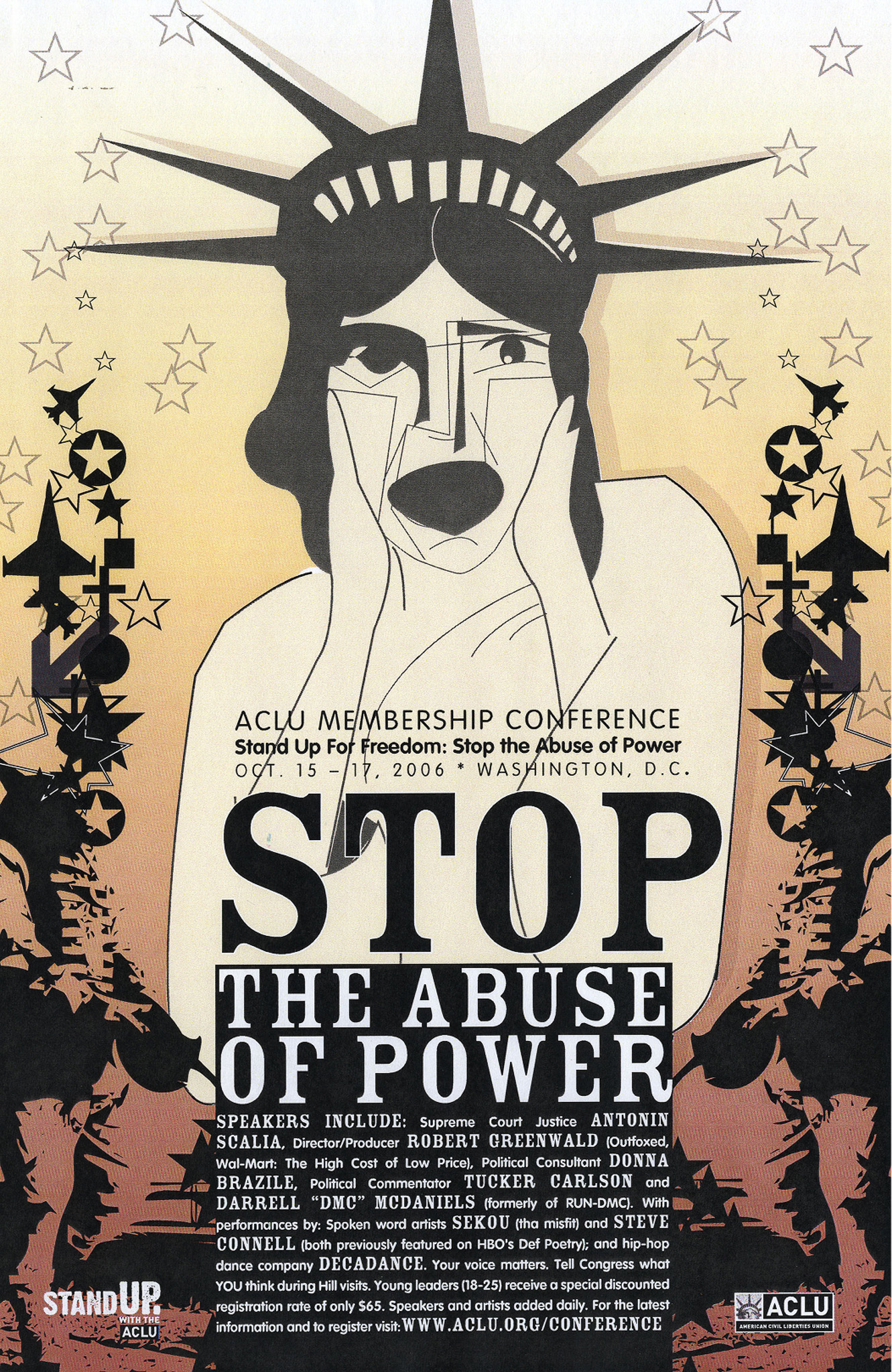
Calls to Stop the Abuse of Power
This advertisement was created for the ACLU’s 2006 Membership Conference.
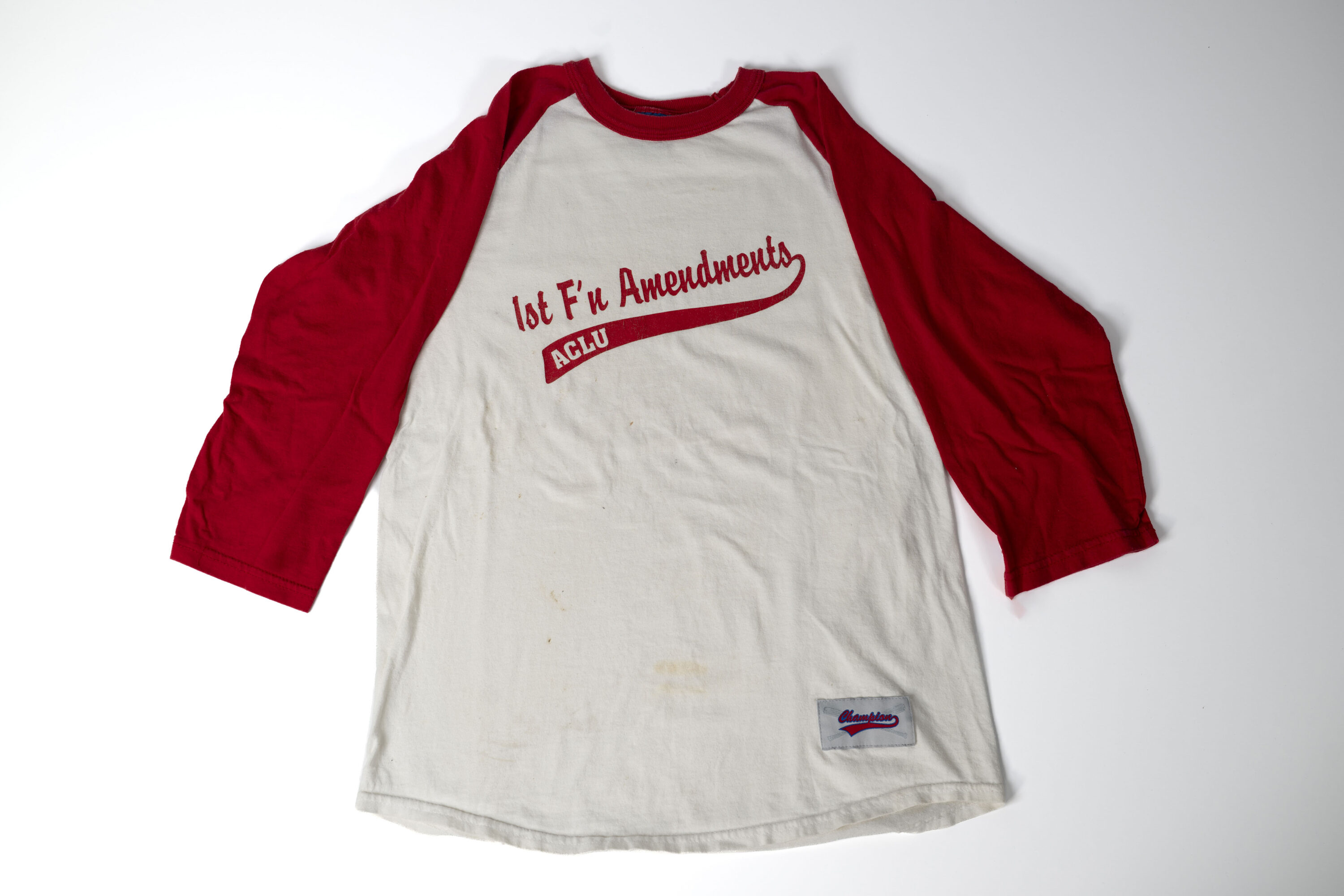
ACLU Staff Work Hard and Play Hard
This is a team jersey from the ACLU’s Washington Legislative Office kickball team, which competed in a Washington, DC summer kickball league.
2007
ACLU Video Short Featuring Real Stories from “The Freedom Files”
This 2007 video was produced using footage from “The Freedom Files,” the ACLU’s 2005 series on Court TV, providing a shocking glimpse into conditions at the Hutto Detention Facility, a Texas immigration detention center run by the Department of Homeland Security. Of the approximately 400 detainees there, many were children from refugee families seeking political asylum in the U.S. after escaping persecution in their countries of origin.
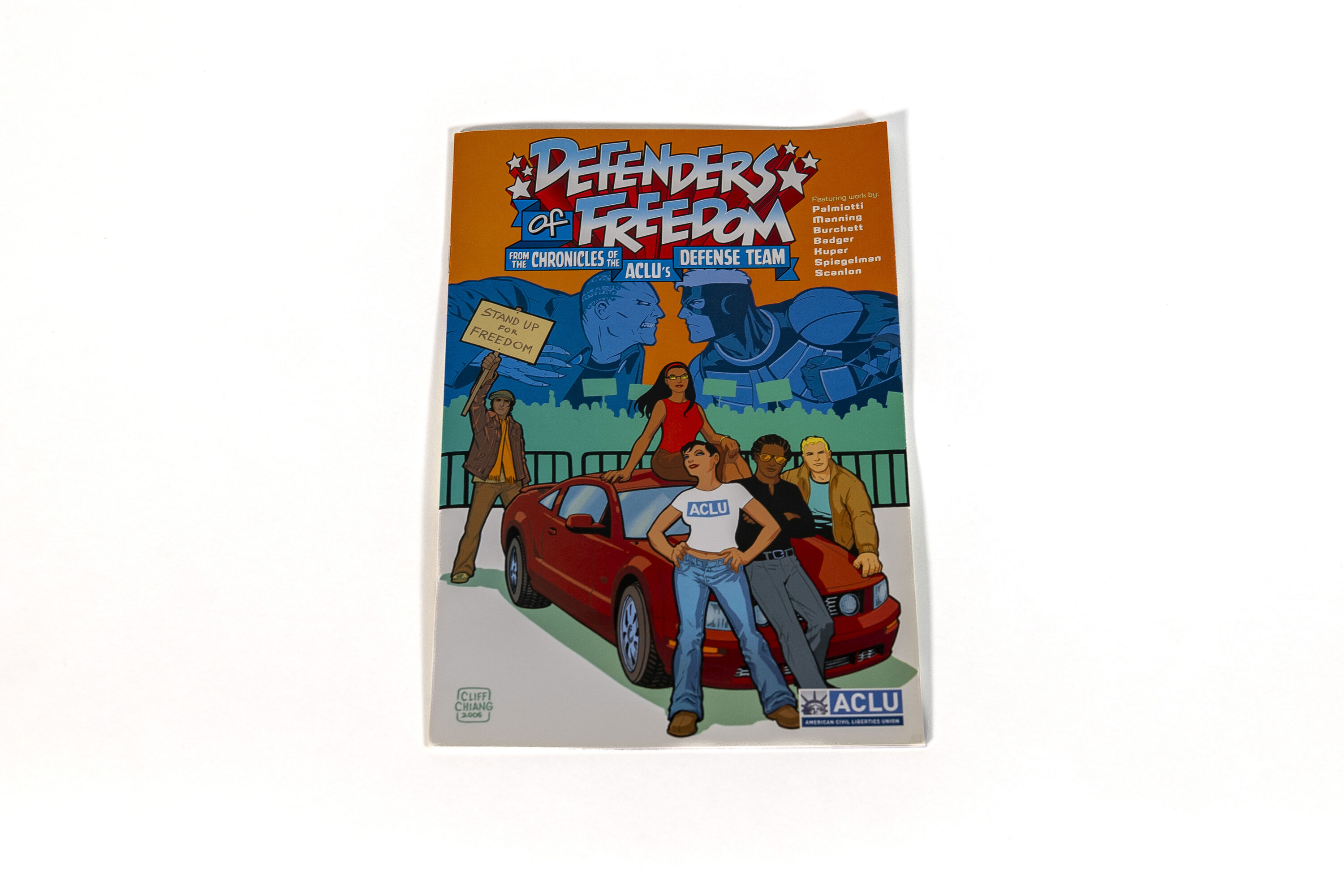
ACLU’s Comic Book, “Defenders of Freedom”
Released as a limited-edition comic book in print and digital formats, “Defenders of Freedom” featured two original stories. “Blue Collar,” written by Jimmy Palmiotti and inked by Rick Burchett, concerns a man targeted by a racist police officer. The second, “A Question of Obligation,” illustrated by Mark Badger and written by Matthew Manning, is about what happens when the government gets in the way of civil liberties. The book also featured a special introduction by ACLU Executive Director Anthony D. Romero, which was written and inked by Patty Scanlon, and a back cover by Pulitzer Prize winner Art Spiegelman.
2008
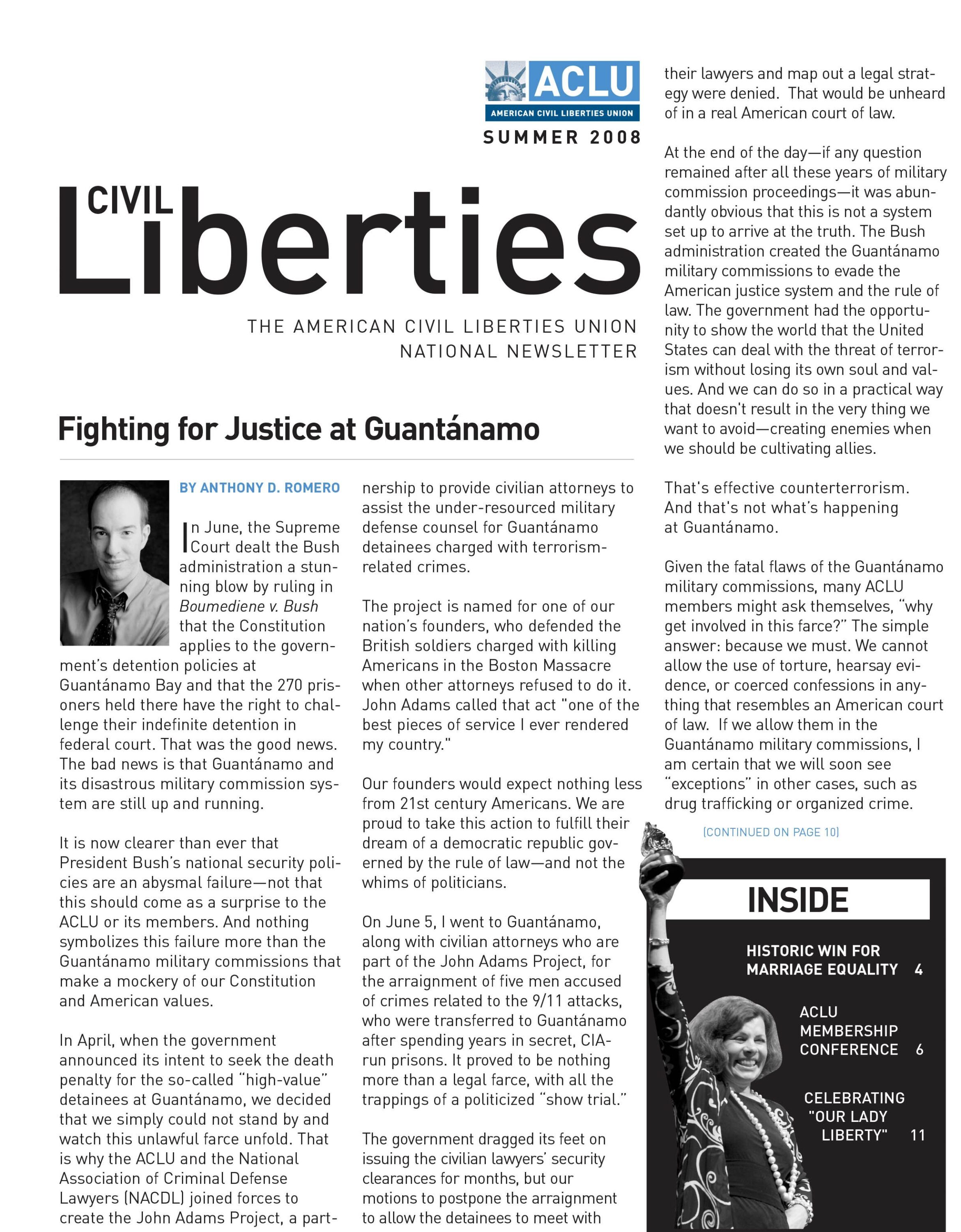
ACLU’s 2008 Newsletter Highlights Fight for Justice at Guantánamo
This newsletter, produced for the ACLU’s 2008 Membership Conference, documents the organization’s work fighting government detention policies at Guantánamo Bay, defending marriage equality in California, and protecting civil rights.
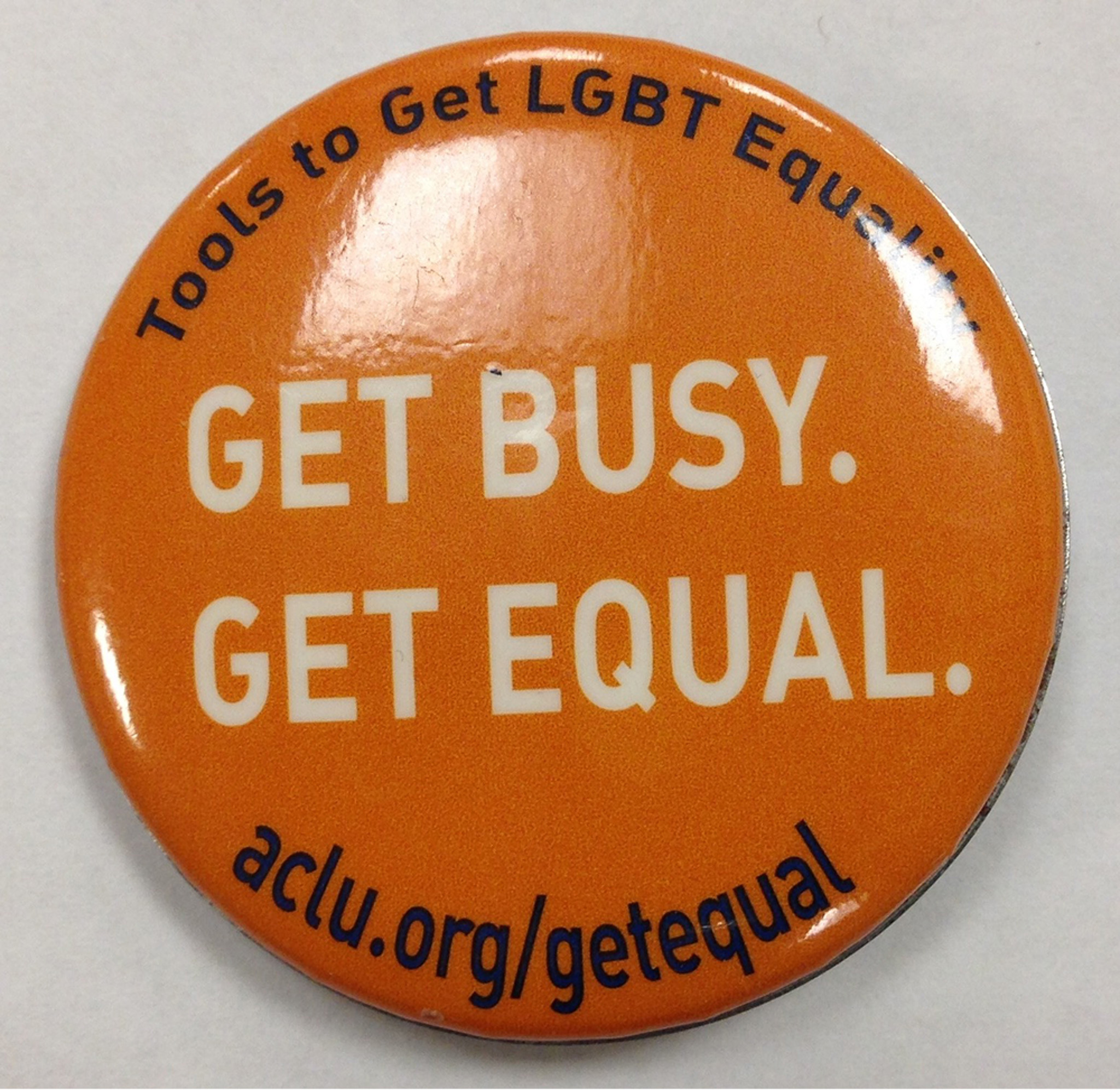
ACLU Button for LGBT Equality Reads “Get Busy, Get Equal”
This button was created by the ACLU to promote the organization’s online toolkit, which was designed to empower activists to organize effectively in an effort to advocate for nondiscrimination laws and policies and support same-sex marriage, civil unions, and domestic partnerships.
2009
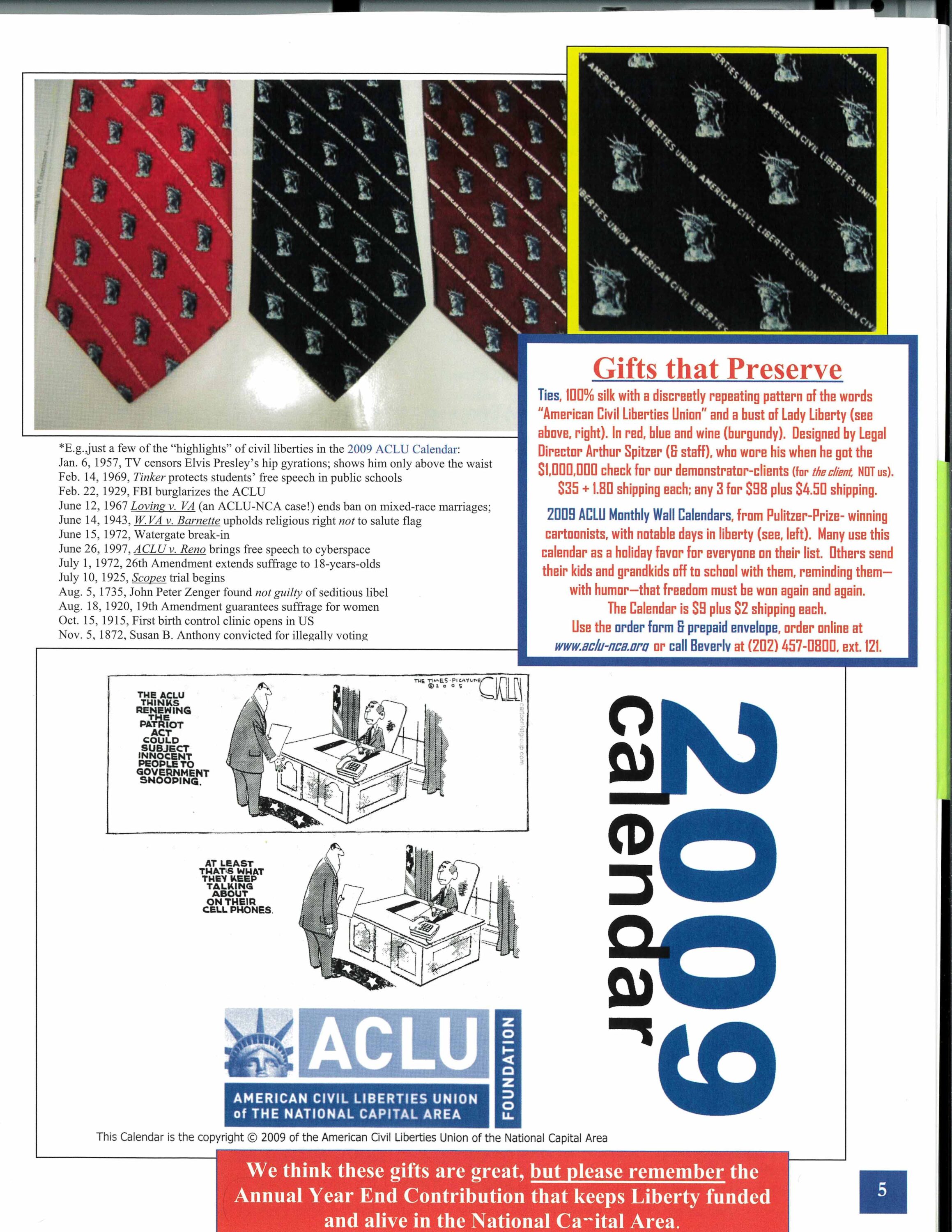
Advertisement from the ACLU of DC Promoting Membership, Ties, and the 2009 Calendar
This 2009 advertisement from the ACLU of DC shows custom ties and calendars offered to members.
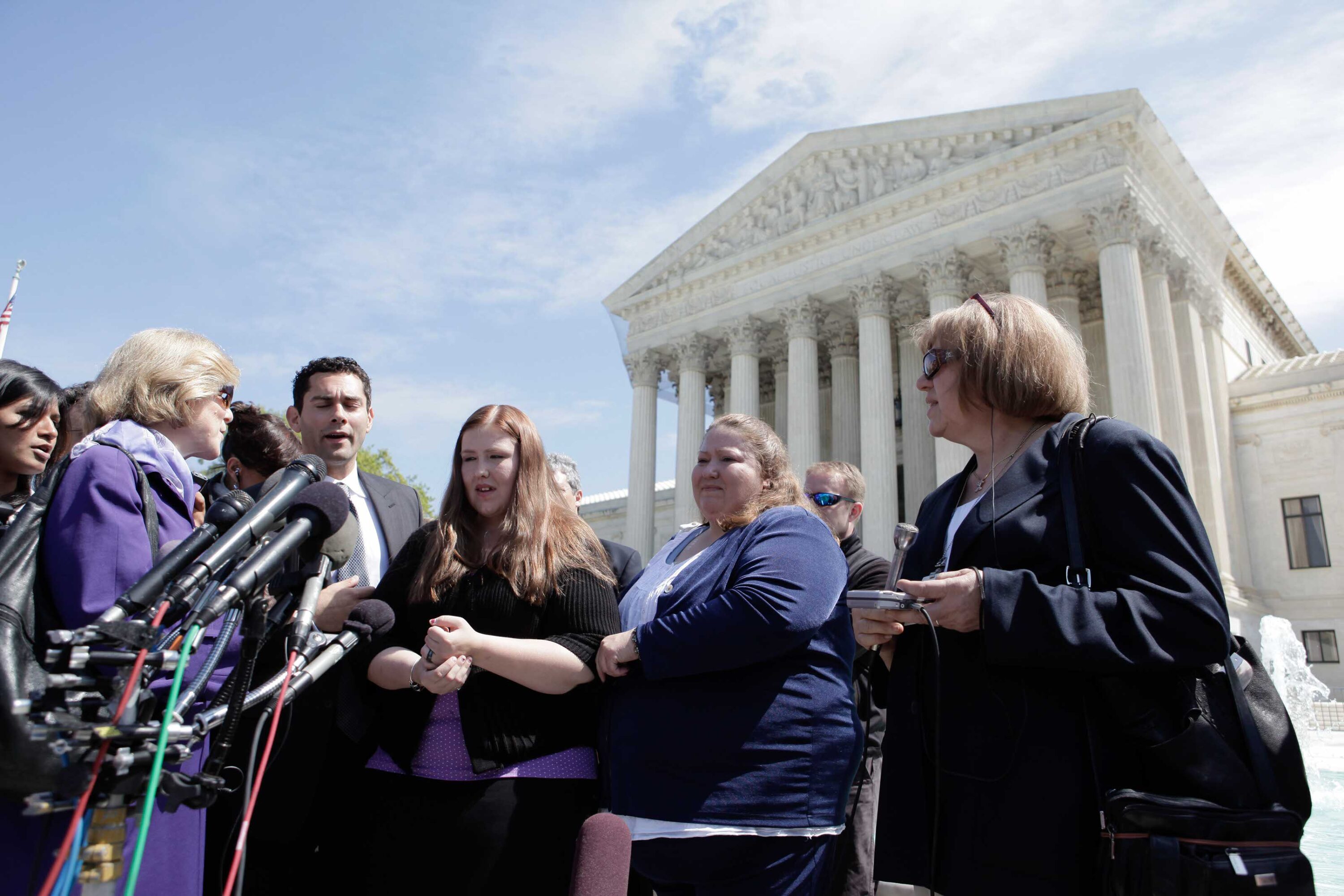
Student Privacy Rights Victory
In the 2009 case Safford Unified School District v. Redding, the Supreme Court ruled that a public school’s strip-search of 13-year-old student Savana Redding for over-the-counter ibuprofen violated her Fourth Amendment rights. The Court found the search excessively intrusive, as there was no reasonable suspicion the pills were hidden in her underwear. Pictured are ACLU attorney Adam Wolf (left), ACLU client Savana Redding (center), and her mother April Redding (second from right), surrounded by the media during a statement outside the Supreme Court on April 21, 2009.