The 1950s
Share
1950
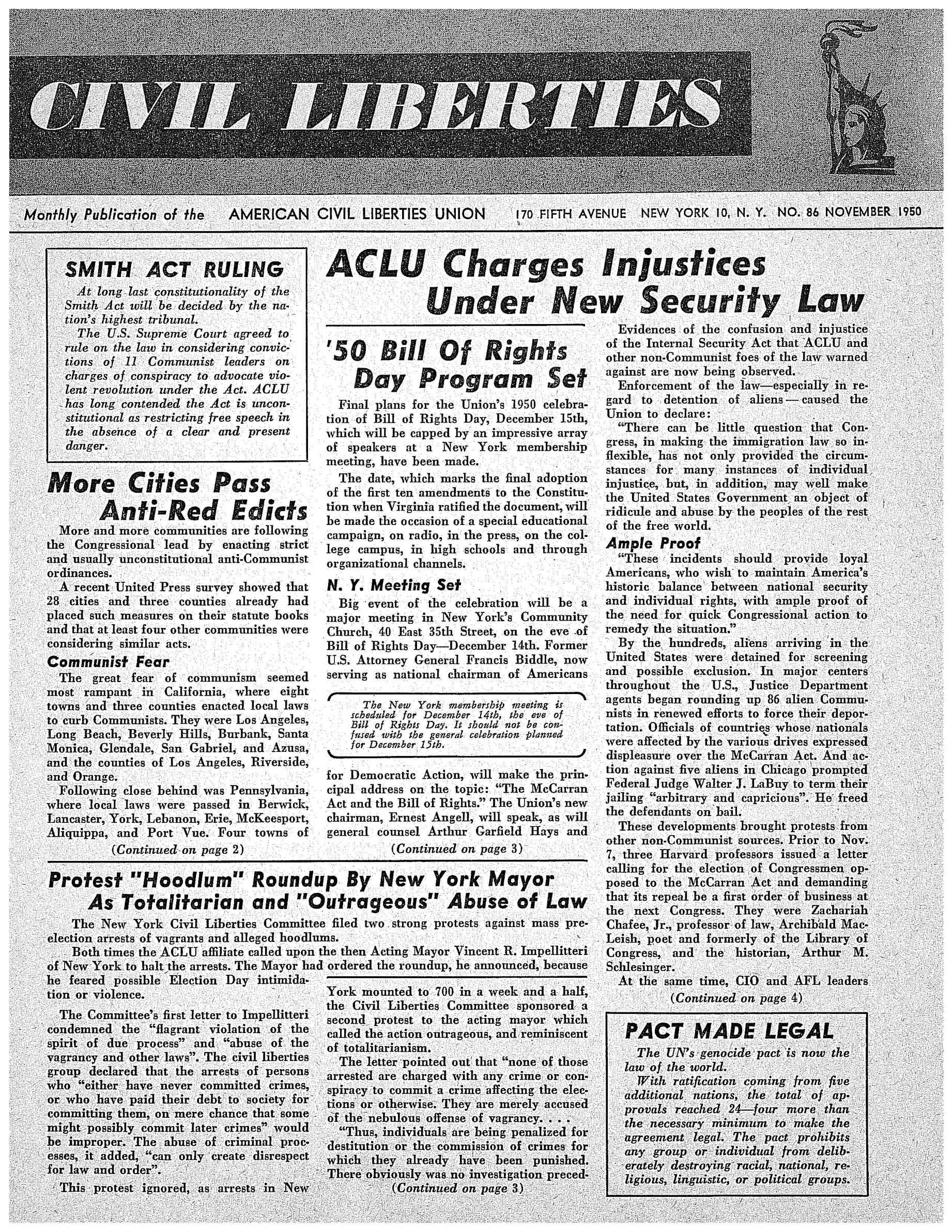
ACLU Newsletter on Free Speech Advocacy During Red Scare
This November 1950 edition of the ACLU’s newsletter documents the organization’s work to protect free speech and other civil liberties as the second Red Scare swept over the United States.
1951
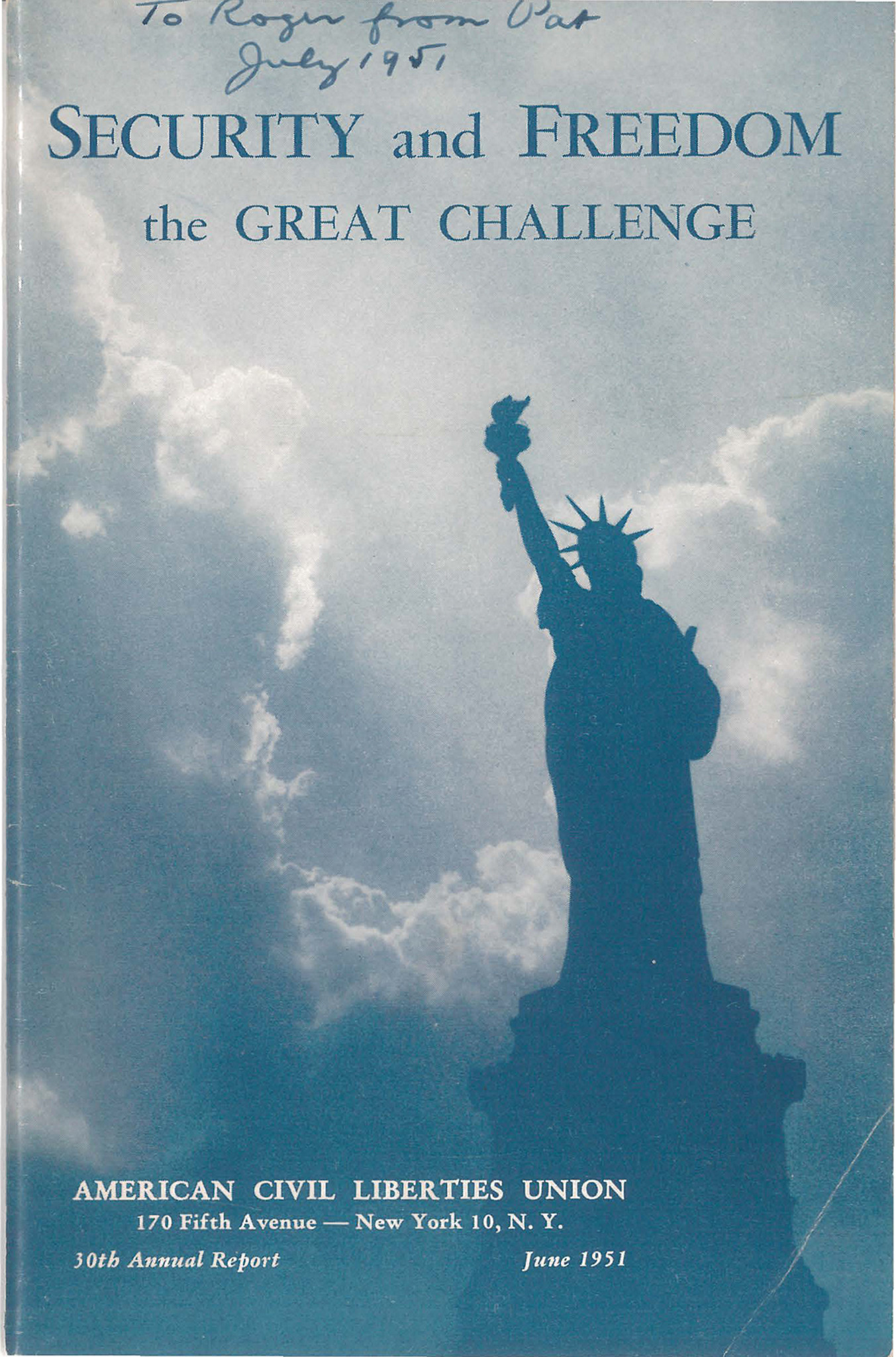
ACLU’s 1951 Report: “Security and Freedom, the Great Challenge”
In this 1951 ACLU report, organization founder Roger Baldwin wrote: “Never in our thirty years were obligations so heavy, nor the stakes for the Union and all democratic forces so high.”
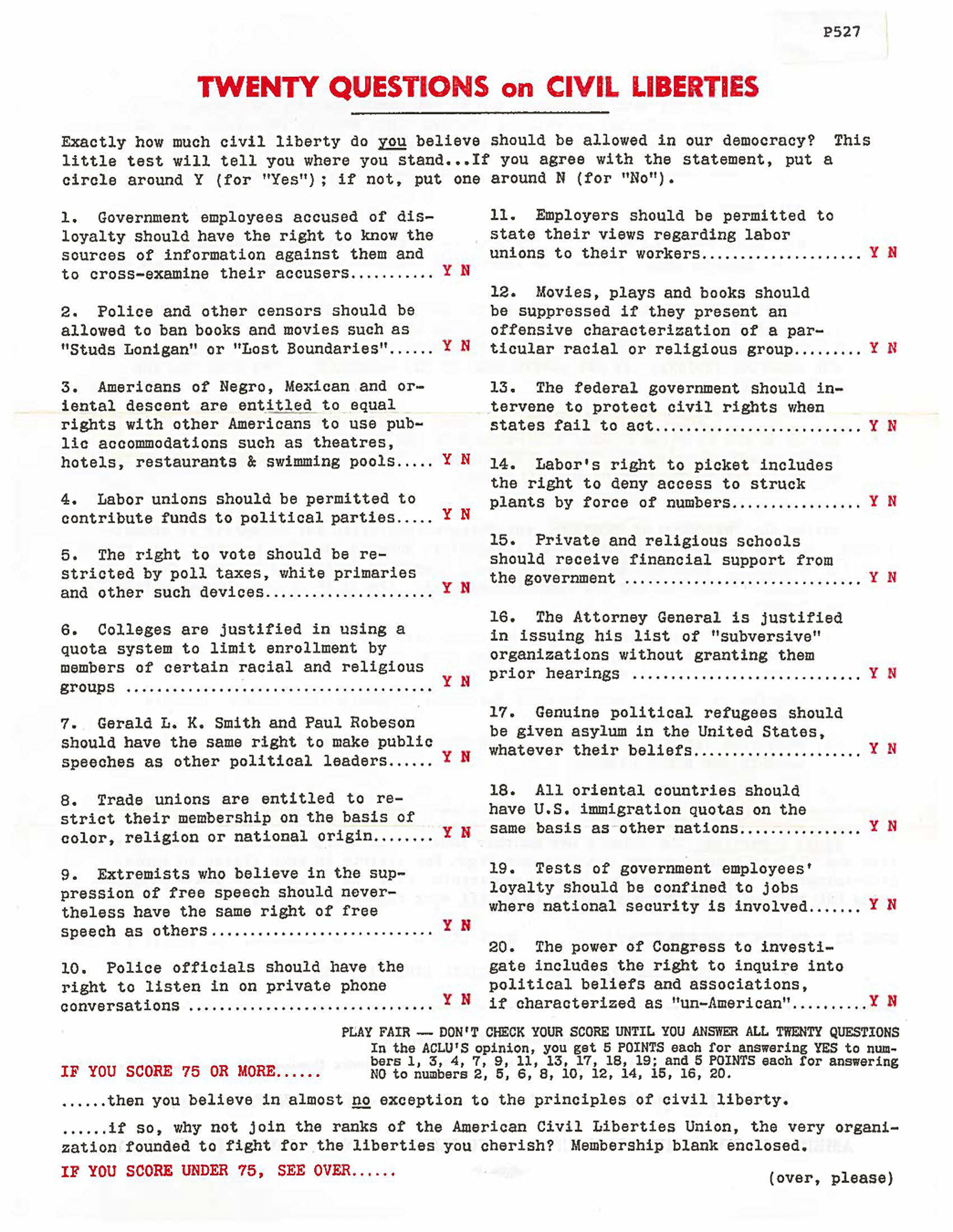
ACLU’s “20 Questions for Civil Liberties”
This brochure features 20 questions on civil liberties to introduce the ACLU’s work and let test takers know how they can become members.
1952
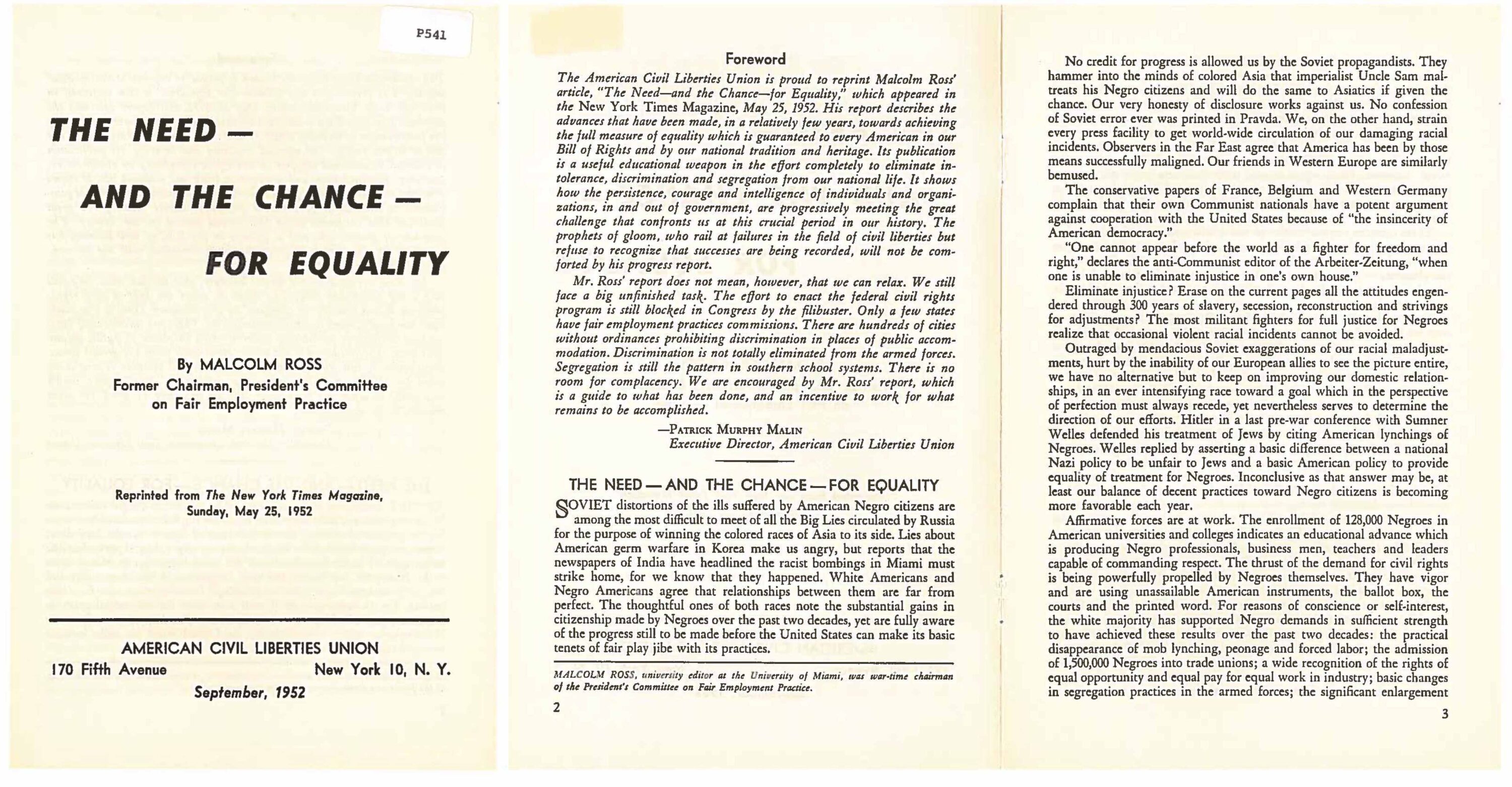
ACLU’s 1952 Pamphlet: “The Need — and the Chance — For Equality”
This 1952 pamphlet from the ACLU includes a report originally printed by journalist Malcom Ross in The New York Times Magazine about the state of racial equality in America, with a foreword about how Ross’s report should guide the organization’s future work.
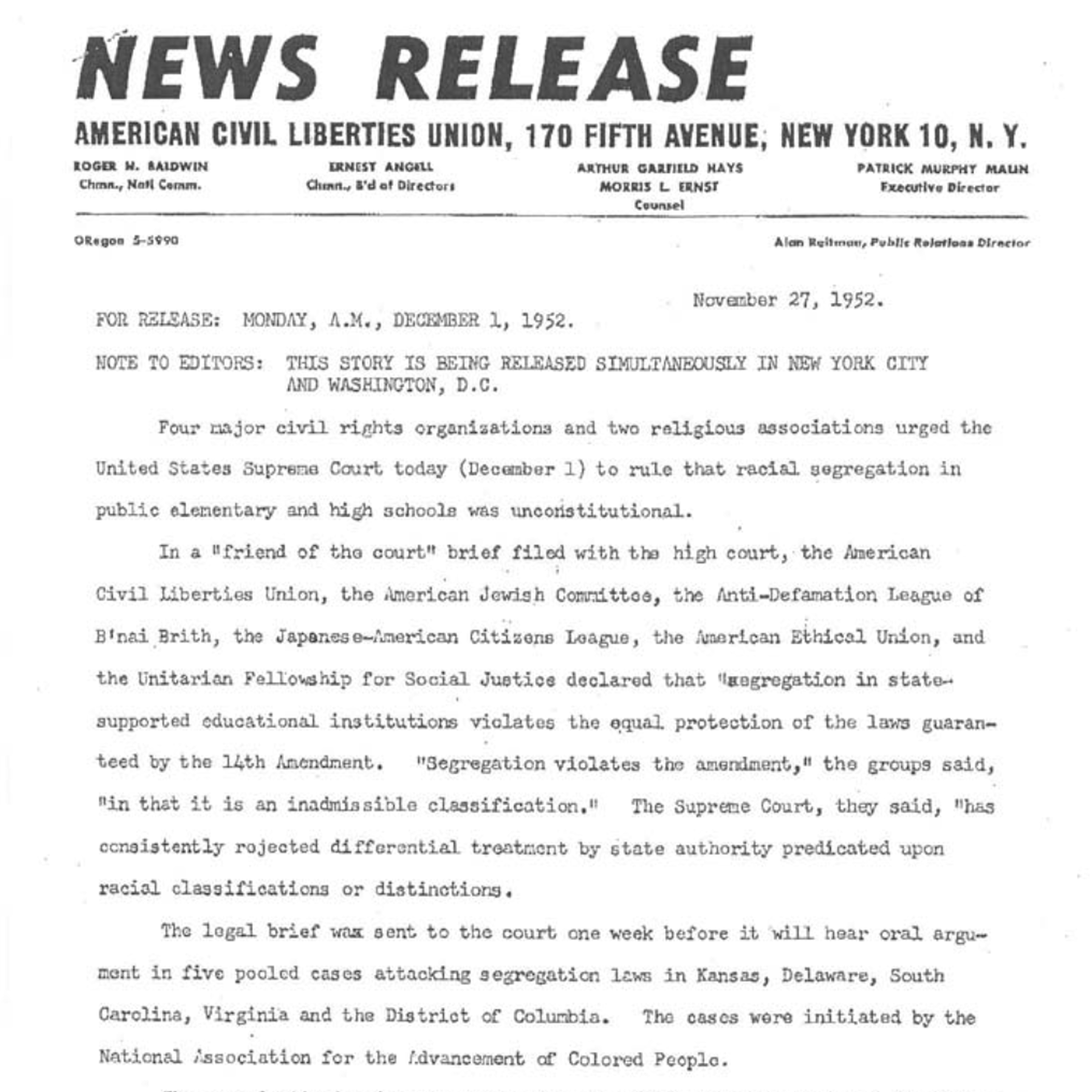
ACLU Press Release Announcing Amicus Brief in Brown v. Board of Education
One of the century’s most significant Supreme Court decisions declared racially segregated schools unconstitutional, wiping out the “separate but equal” doctrine from the infamous 1896 Plessy v. Ferguson decision. The ACLU actively supported this victory by submitting a friend-of-the-court brief backing the NAACP’s arguments, which were argued before the Court by Thurgood Marshall.
1954
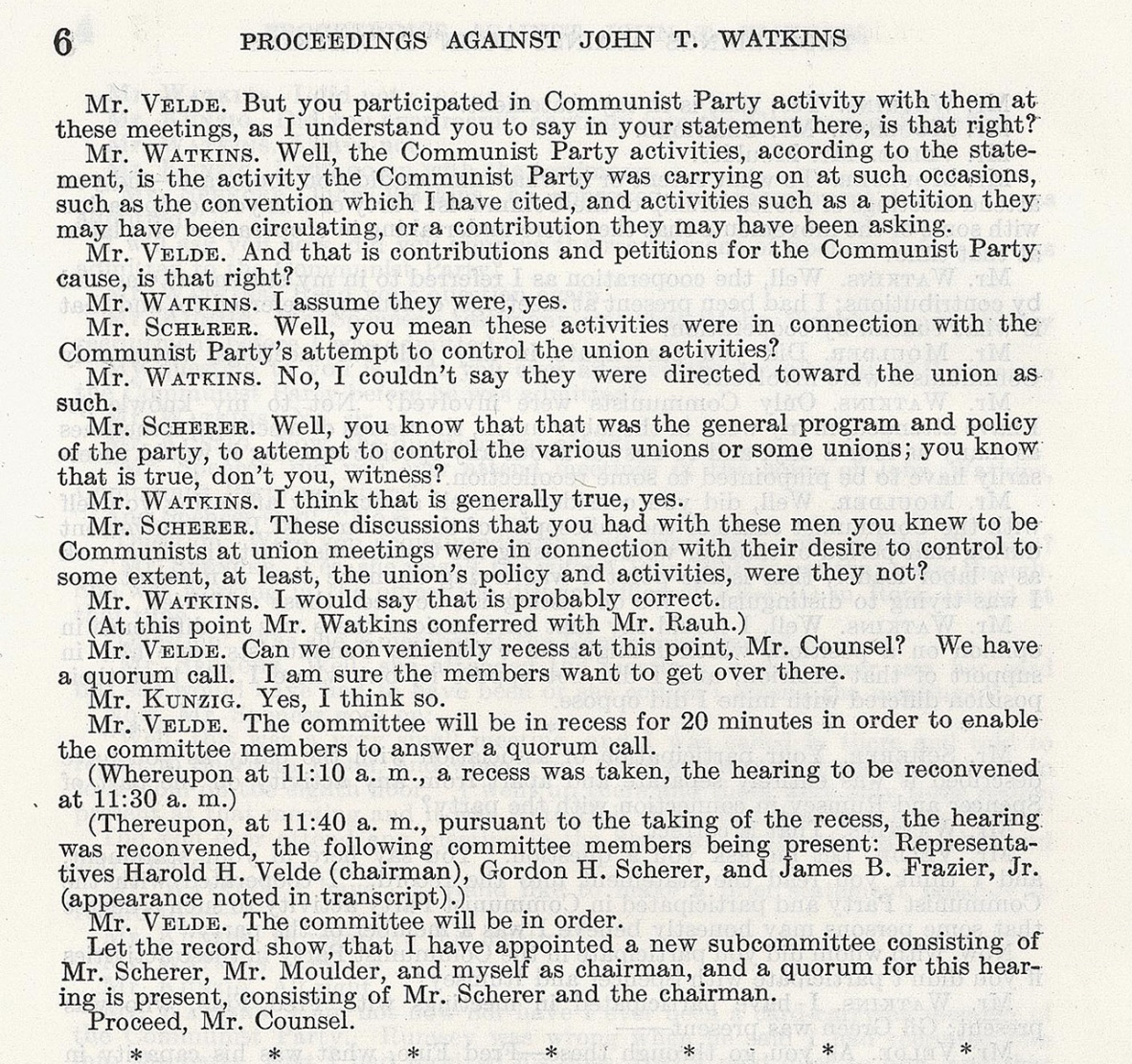
Fighting for Free Speech During McCarthyism
In 1954, labor organizer John Thomas Watkins was convicted of contempt of Congress for refusing to answer questions posed by members of Congress during a hearing held by a subcommittee of the House of Representatives Committee on Un-American Activities. Watkins challenged this conviction in the courts, and the ACLU lent support to Watkins as an amicus curiae.
1957
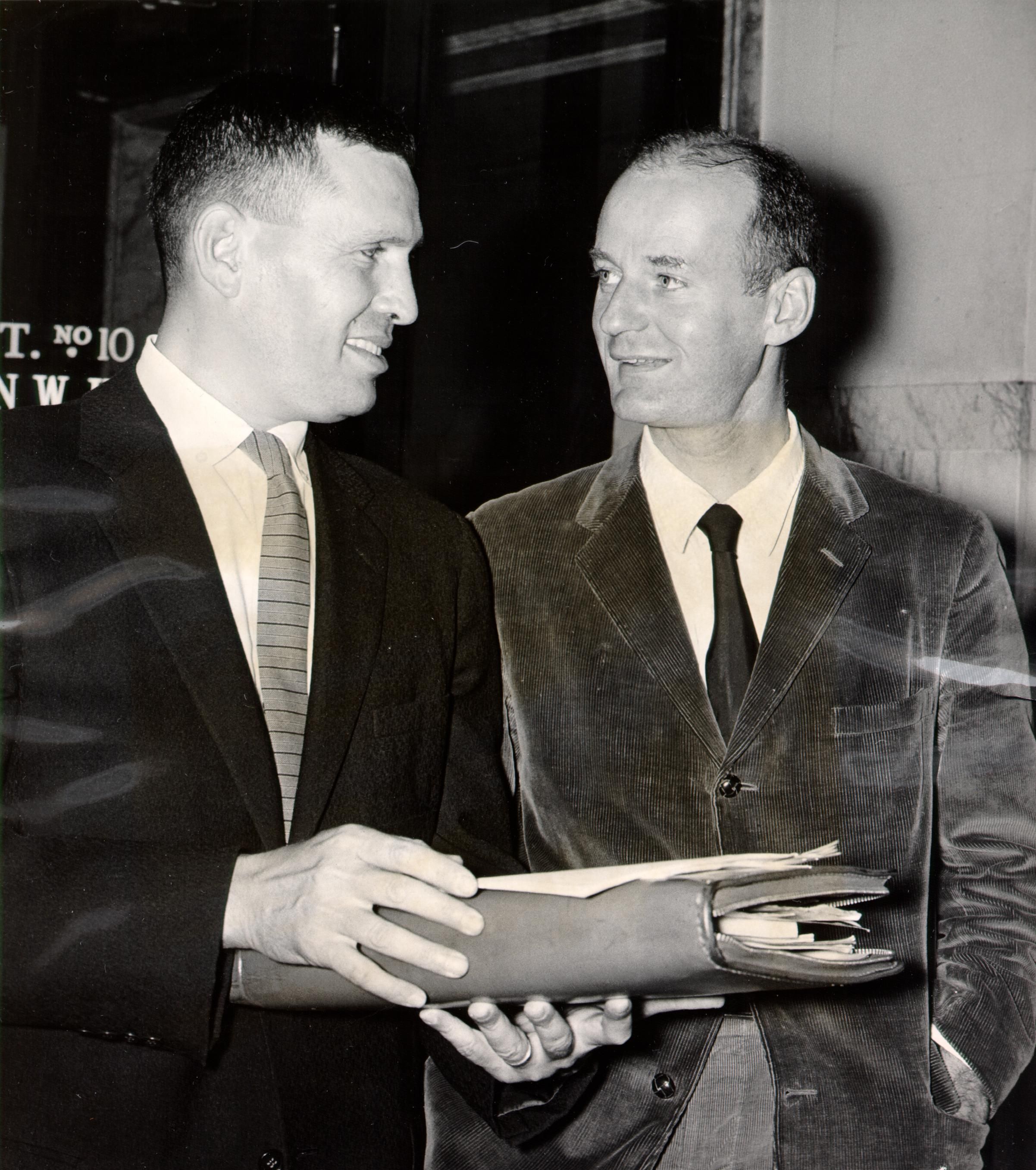
Lawrence Speiser with ACLU Client and Activist Lawrence Ferlinghetti
In 1957, ACLU attorneys Lawrence Speiser (right) and Al Bendich defended poet Lawrence Ferlinghetti (left) and his publishing company, City Lights Books, for publishing Allen Ginsberg’s “Howl,” when U.S. Customs officials seized the book. San Francisco Superior Court Judge Clayton Horn ruled in this landmark case that the book could not be suppressed as obscene by local authorities.
1958
Audio Clip of Lawrence Speiser Successfully Arguing First Amendment Case Before Supreme Court
ACLU attorney Lawrence Speiser, who headed the ACLU’s Washington office from 1959 to 1970, successfully challenged a California law requiring veterans to sign a loyalty oath to qualify for a property tax exemption. Speiser, who represented himself and another veteran, Daniel Prince, argued the case before the Supreme Court and achieved a 7–1 victory.