The 1940s
Share
1940
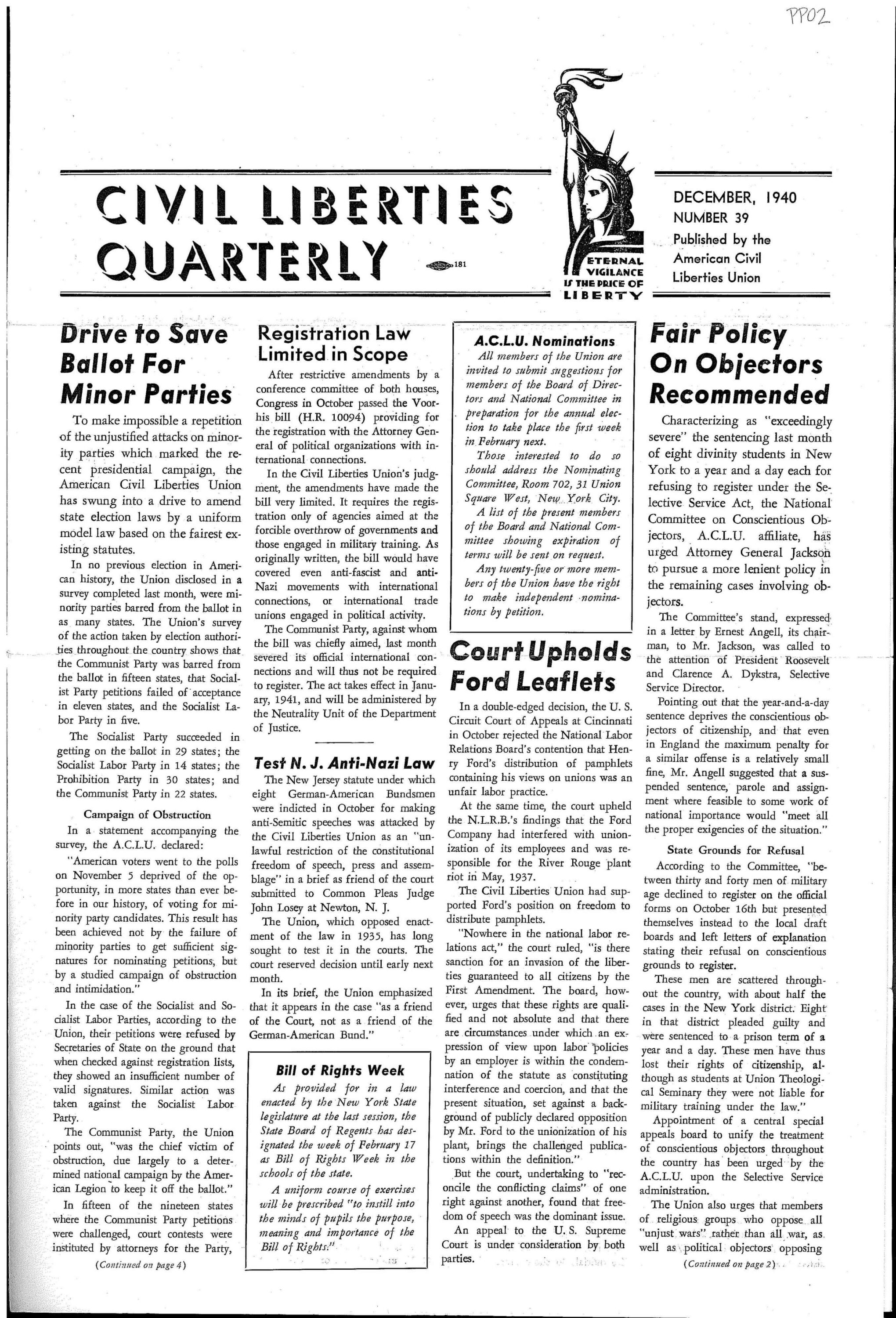
ACLU's 1940 Civil Liberties Quarterly
The front page of this 1940s issue of the Civil Liberties Quarterly features an advertisement for ACLU nominations for the Board of Directors and National Committee and the announcement of “Bill of Rights Week” in New York state schools.
1942
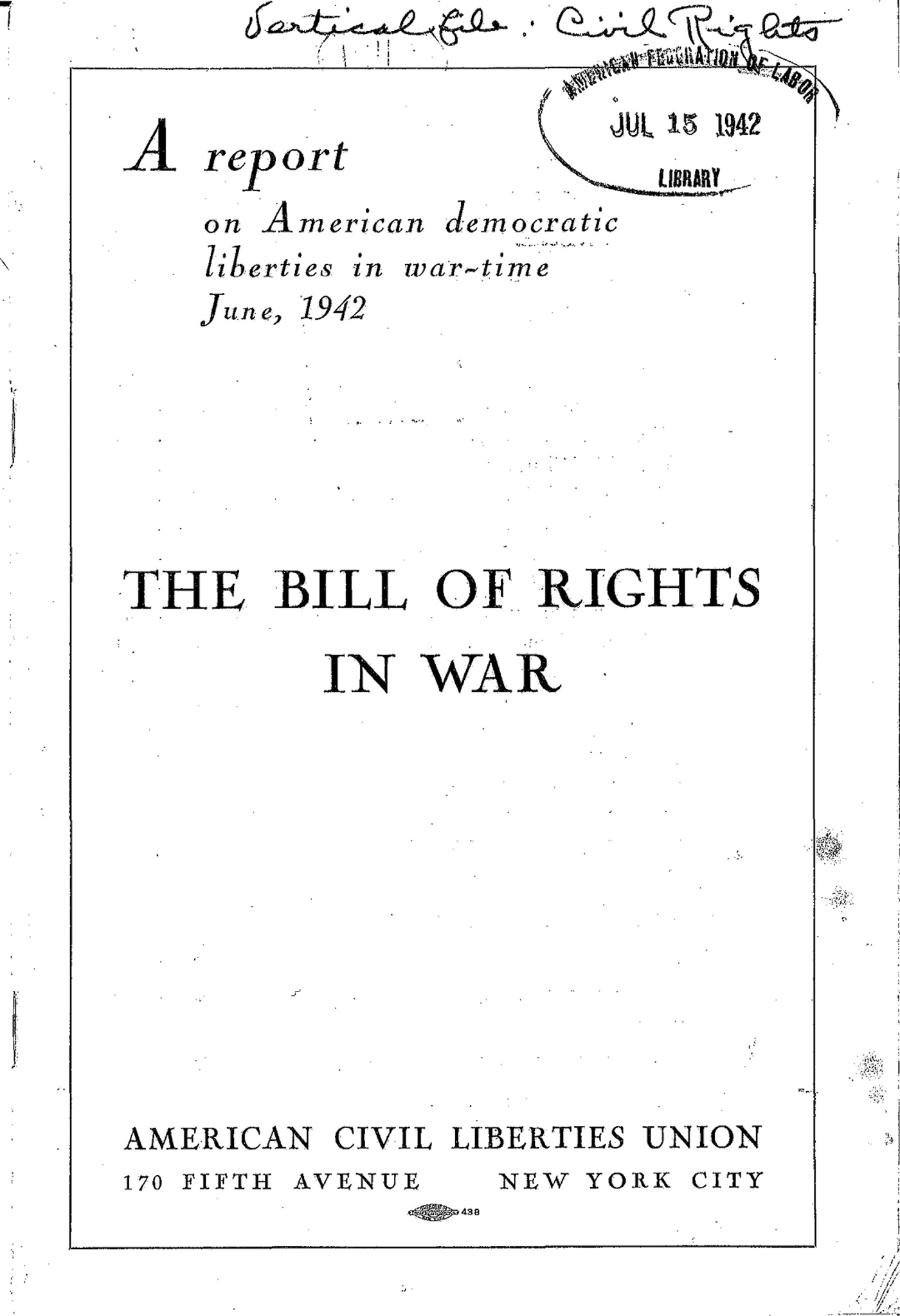
ACLU's 1942 "The Bill of Rights in War: Report on American Democratic Liberties in War-Time"
The 1942 ACLU annual report said of the internment of Japanese Americans: "No such wholesale invasion of the liberties of American citizens on the basis of racial origin has ever before been undertaken, in war or peace; and it is to be explained only by the sectional fears and prejudices arising out of the extraordinary circumstances of war.”
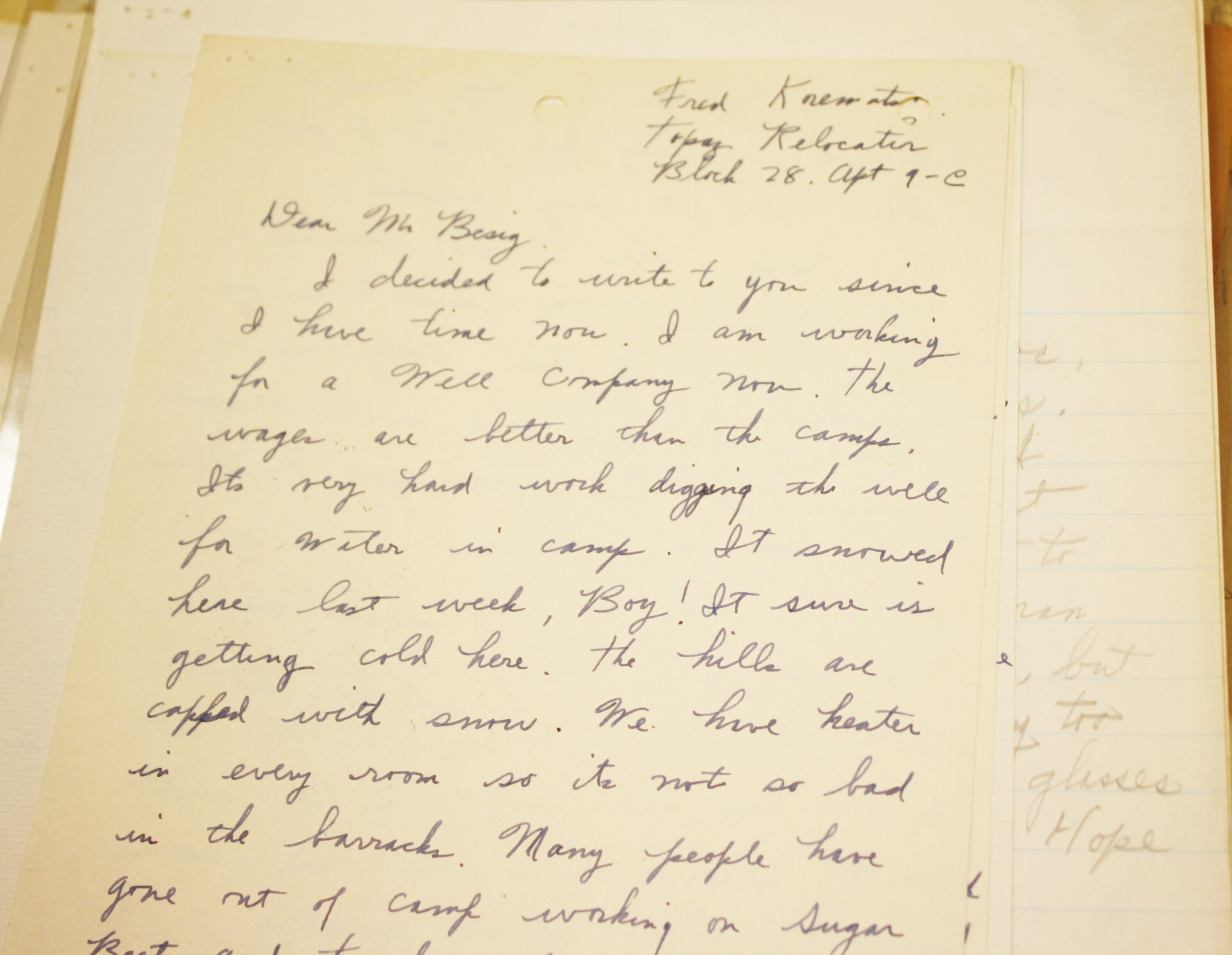
Letter written by client Fred Korematsu, owned by ACLU NorCal
Fred Korematsu, an American citizen of Japanese ancestry, wrote this letter from the Topaz internment camp to ACLU of Northern California Executive Director Ernest Besig in 1942, describing conditions in the camp and the grueling work he and his fellow internees faced. Besig took the case.
1943
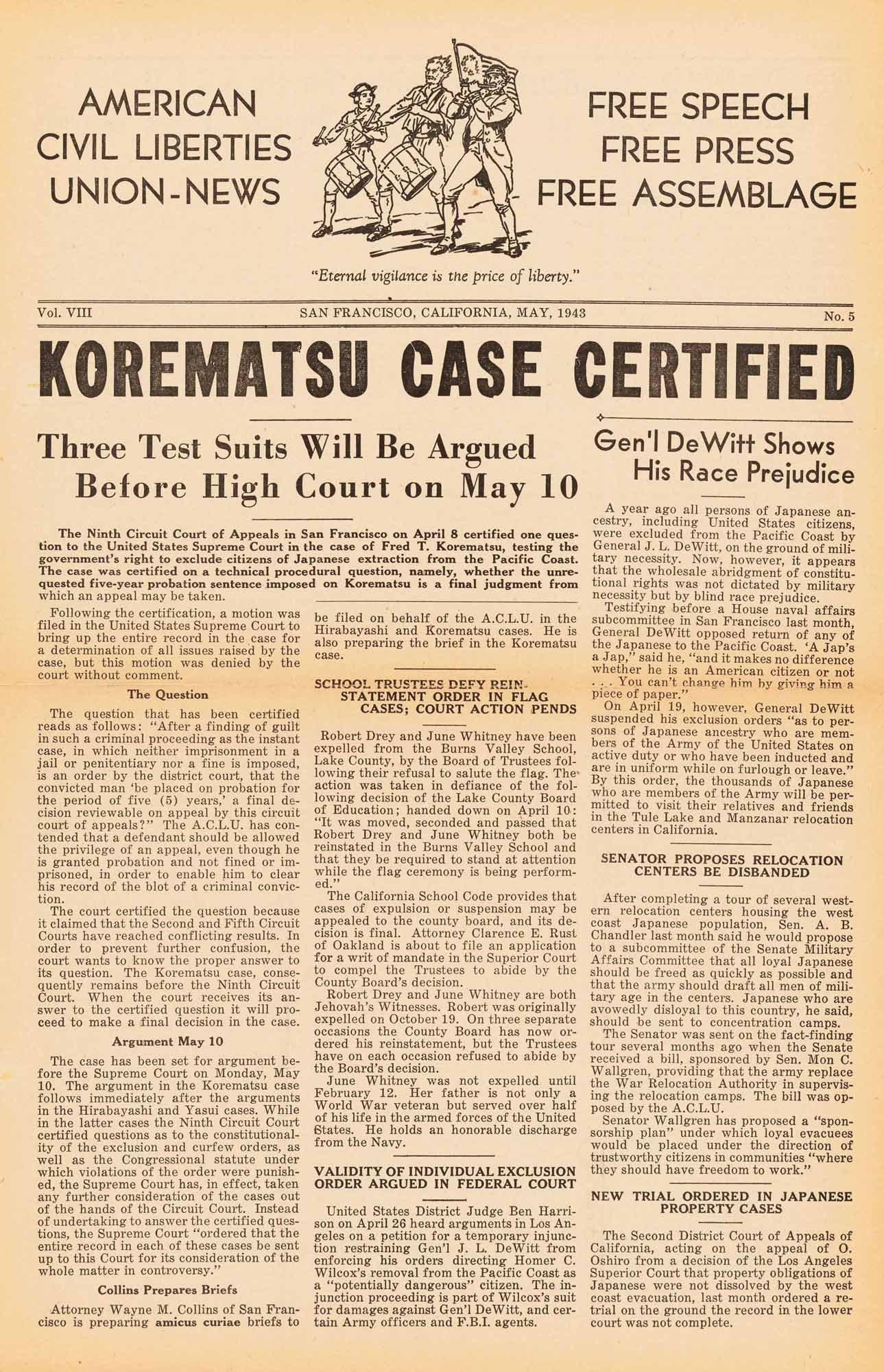
ACLU News Sharing Latest Updates on the Landmark Supreme Court Case: Korematsu v. United States
This May 1943 headline in the ACLU News reports on the ACLU of Northern California taking Fred Korematsu’s case challenging his incarceration at the Topaz internment camp.
1944
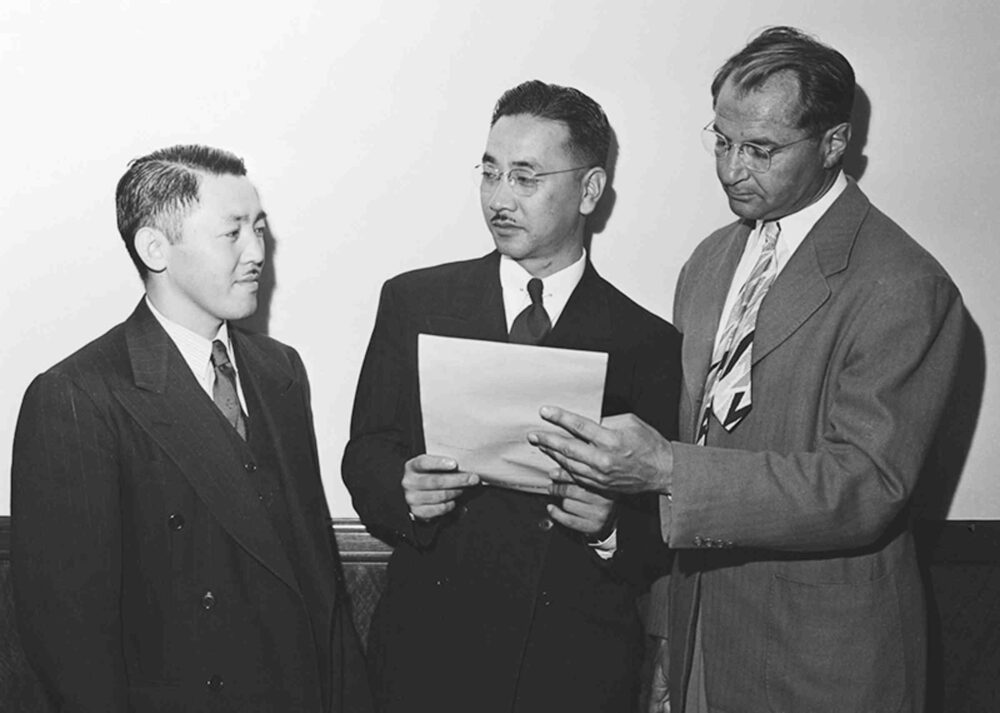
ACLU Attorney and Others Fight for Korematsu
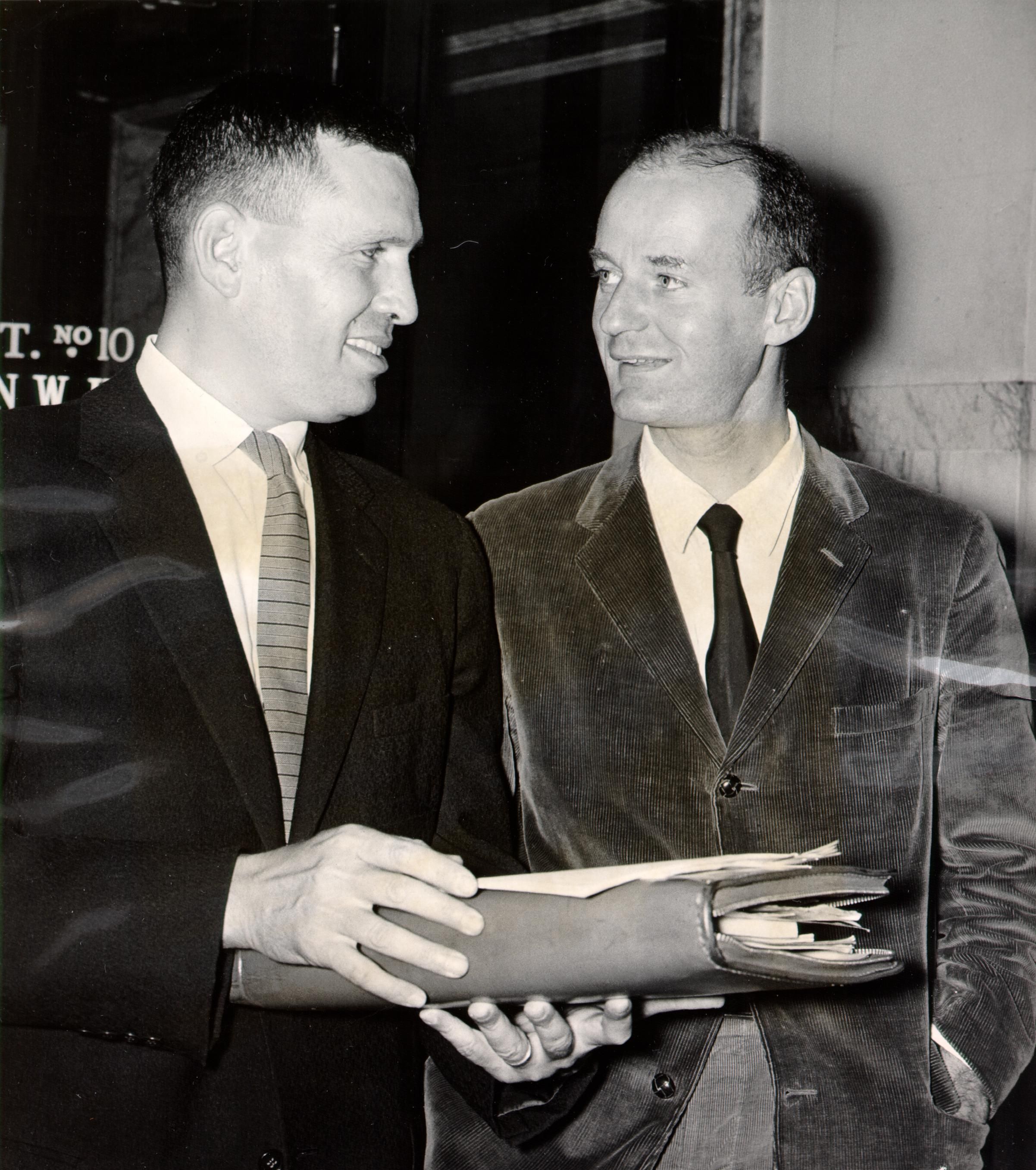
In Korematsu v. United States the ACLU supported Fred Korematsu in his challenge against the forced mass incarceration of Japanese Americans during World War II. Korematsu, a Japanese American citizen, refused to leave his home and report to a detention center under Executive Order 9066, and ACLU argued that the relocation orders violated the Fifth Amendment and discriminated against individuals based solely on race and ancestry without due process. In this photo, ACLU attorney A.L. Wirin (right) is seen with Saburo Kido (left). Wirin and Kido filed a brief together in 1944 representing the Japanese American Citizens League in the case.
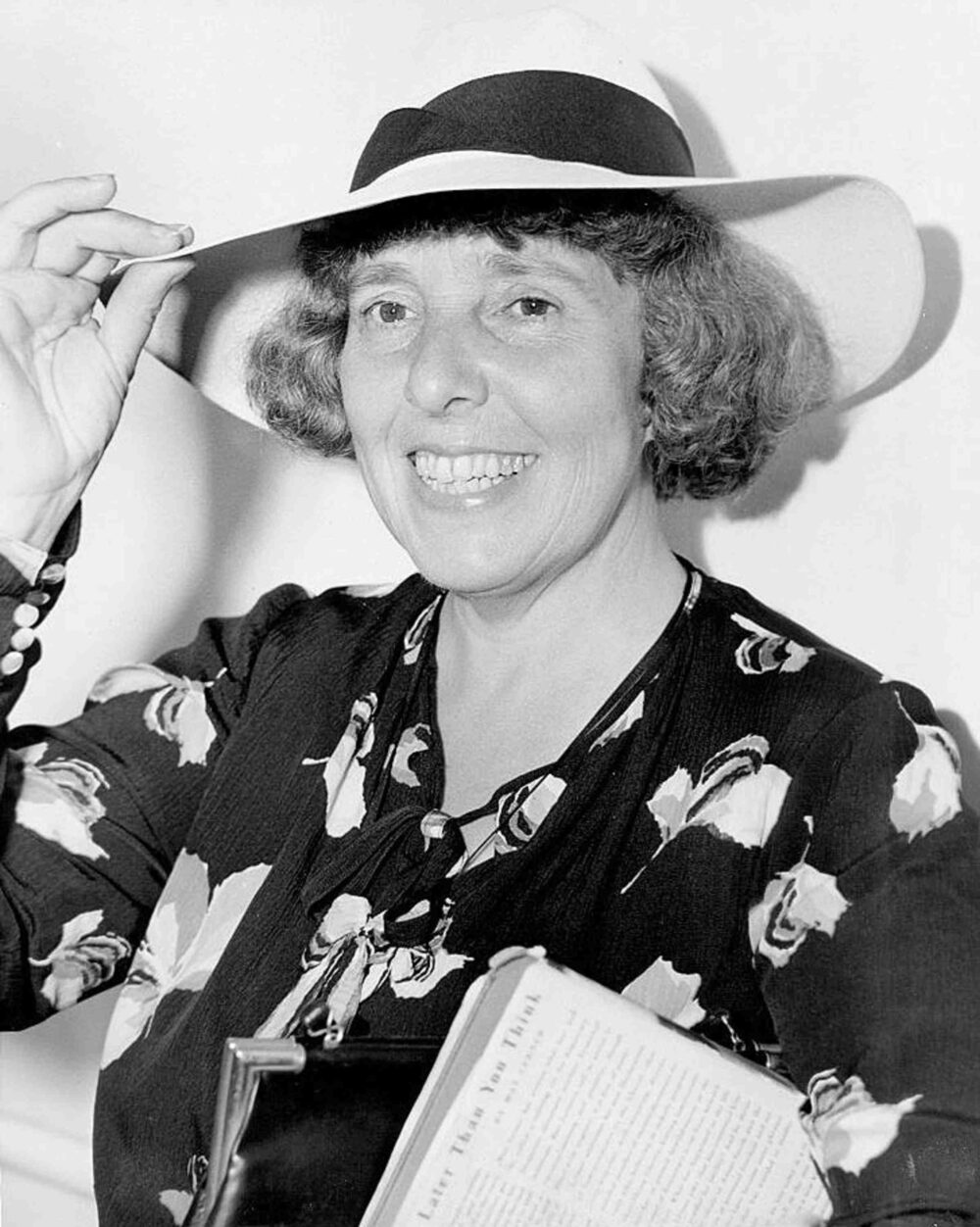
Photo of Dorothy Kenyon, Chair Woman of the Committee on Discrimination Against Women
In 1944, ACLU founder Roger Baldwin asked Dorothy Kenyon, a New York lawyer, to become chair of the ACLU's newly created Committee on Discrimination Against Women. Together with Pauli Murray and others, the committee lobbied for a federal equal pay for equal work bill.
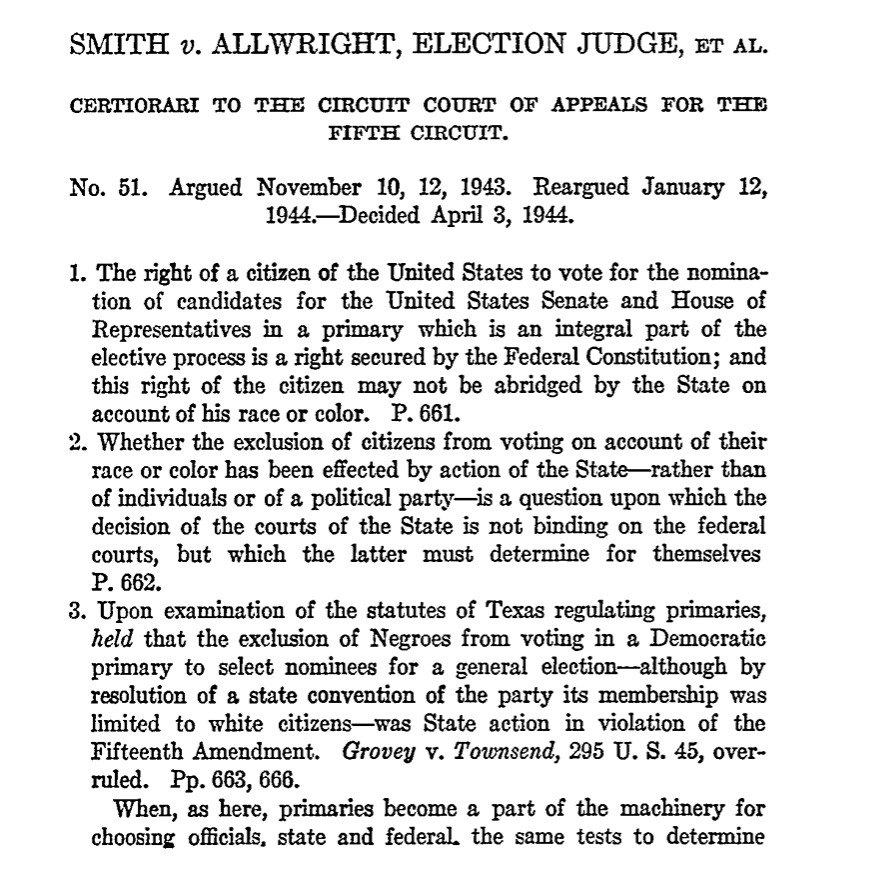
Smith v. Allwright Ruling, Win For Voting Rights
The early civil rights victory of Smith v. Allwright, a landmark case argued by Thurgood Marshall and the NAACP, invalidated Texas' "white primary" system, ruling it was a violation of the right to vote under the 15th Amendment. The ACLU has since used this precedent as a foundation for countless cases.
1947
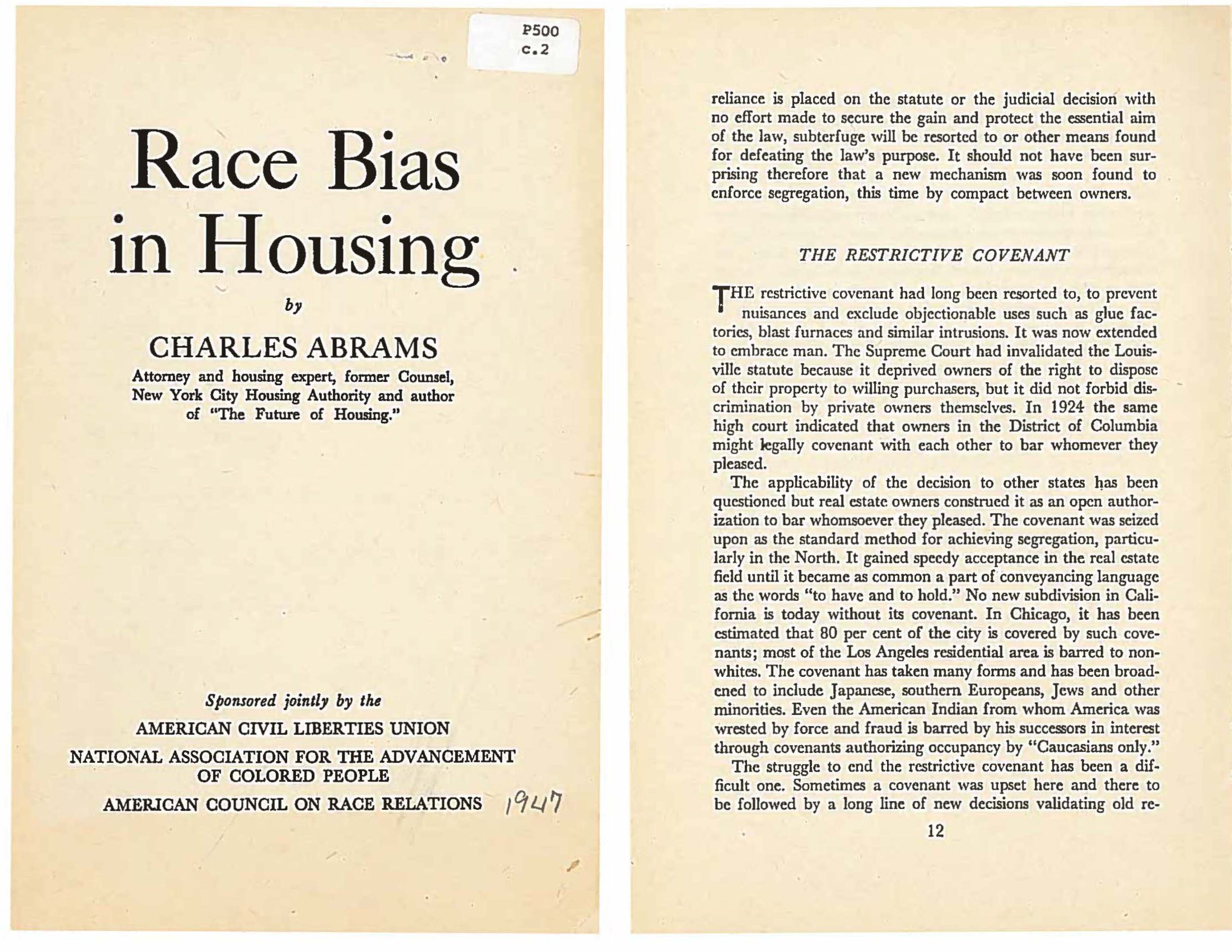
ACLU's Brochure on "Race Bias in Housing"
This 1947 ACLU pamphlet addresses the growing issue of housing discrimination based on race. Housing expert and lawyer Charles Abrams details the barriers to education, money, and community life that segregation and the private housing covenant impose on minority people in America.