The 1990s
Share
1990
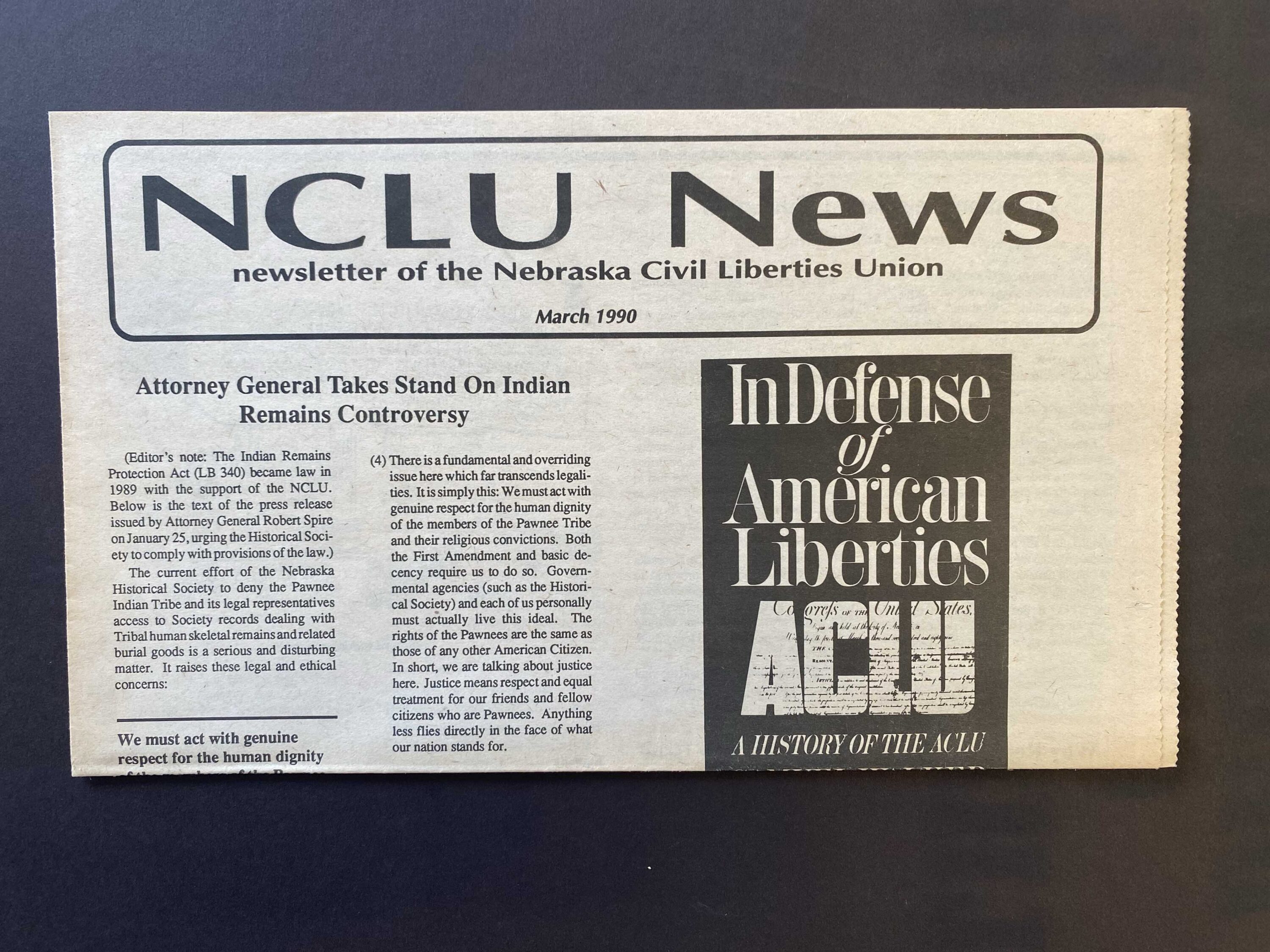
1990s Edition of NCLU News, the Newsletter of the Nebraska Civil Liberties Union
This 1990 issue of the Nebraska Civil Liberties Union newsletter covers a conflict over access to tribal remains following the passage of Nebraska’s Indian Remains Protection Act. On the right is Board member Samuel Walker’s book chronicling the ACLU’s history.
1991
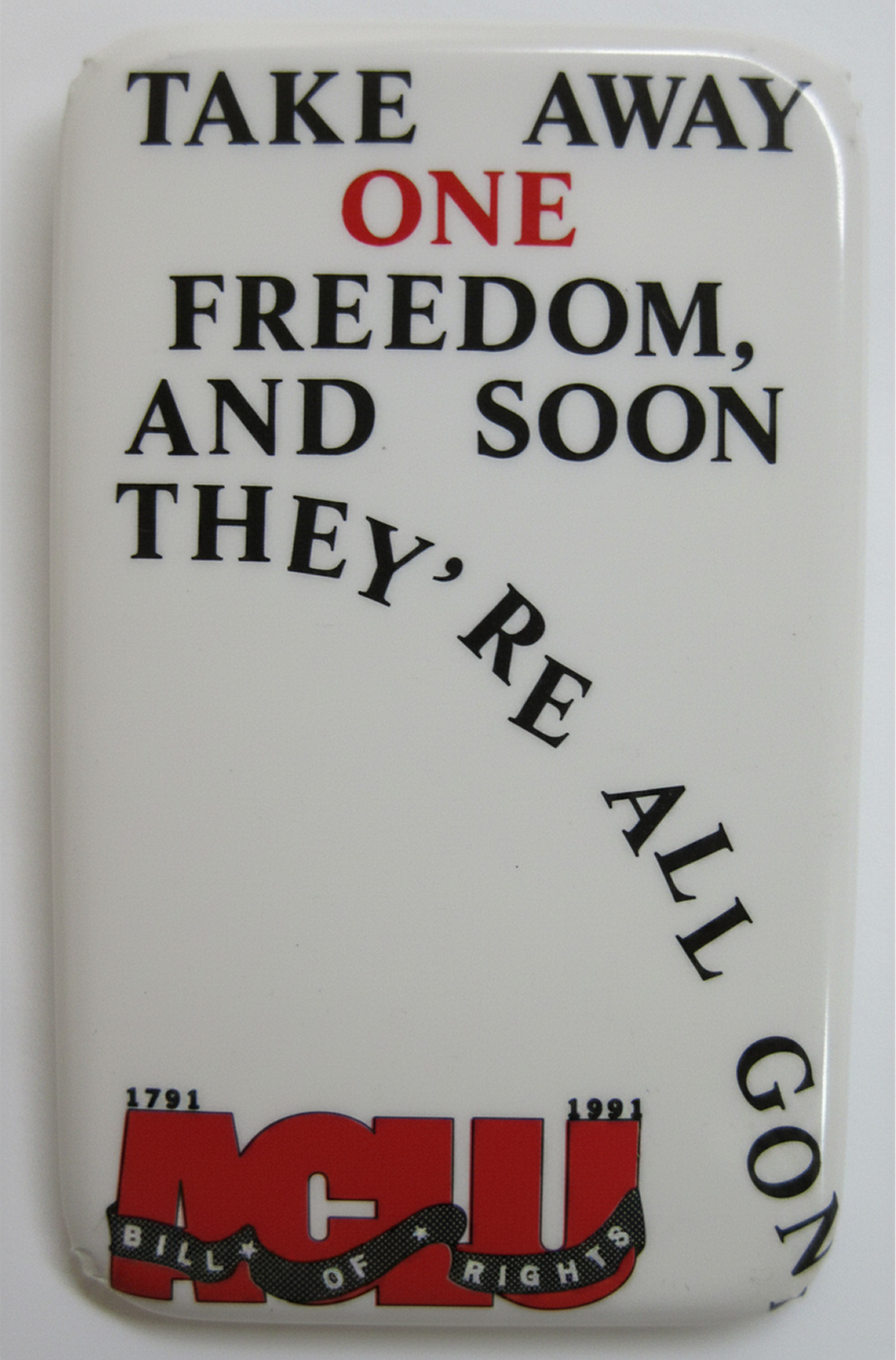
“Take Away One Freedom and Soon They’re All Gone”
The ACLU distributed this button in celebration of the bicentennial of the Bill of Rights in 1991.
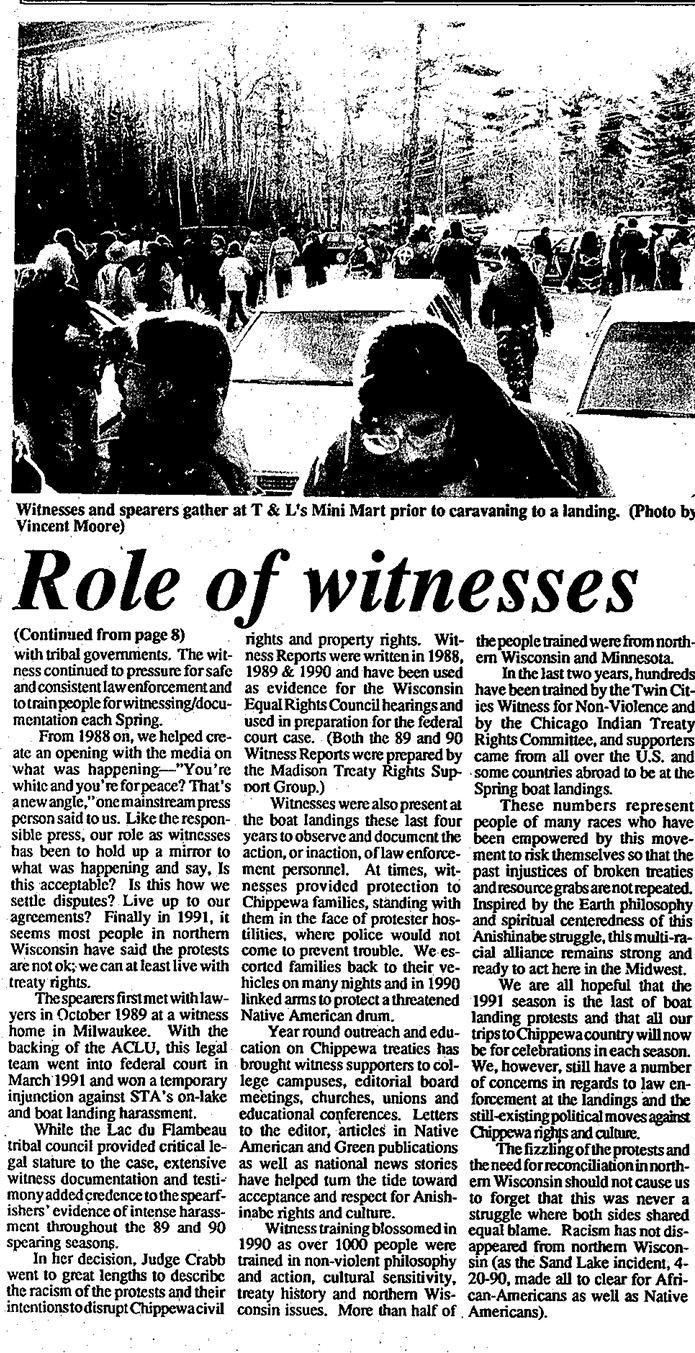
News Clipping Detailing Victory for Native American Fishing Rights
In 1985, treaties guaranteeing Native Americans inland fishing rights in Wisconsin and Michigan prompted intense, dangerous protests by local white fishing groups such as Stop Treaty Abuse (STA) against Native American communities. In response, the ACLU — on behalf of the Lac du Flambeau Band of Chippewa and the Wa Swa Gon Treaty Association — filed a lawsuit against STA and three county sheriffs. This news clipping from the June/July 1991 issue of Masinaigan, a newsletter by the Great Lakes Indian Fish & Wildlife Commission, details the victory in Lac Du Flambeau Indians v. Stop Treaty Abuse-Wis., Inc.
1992
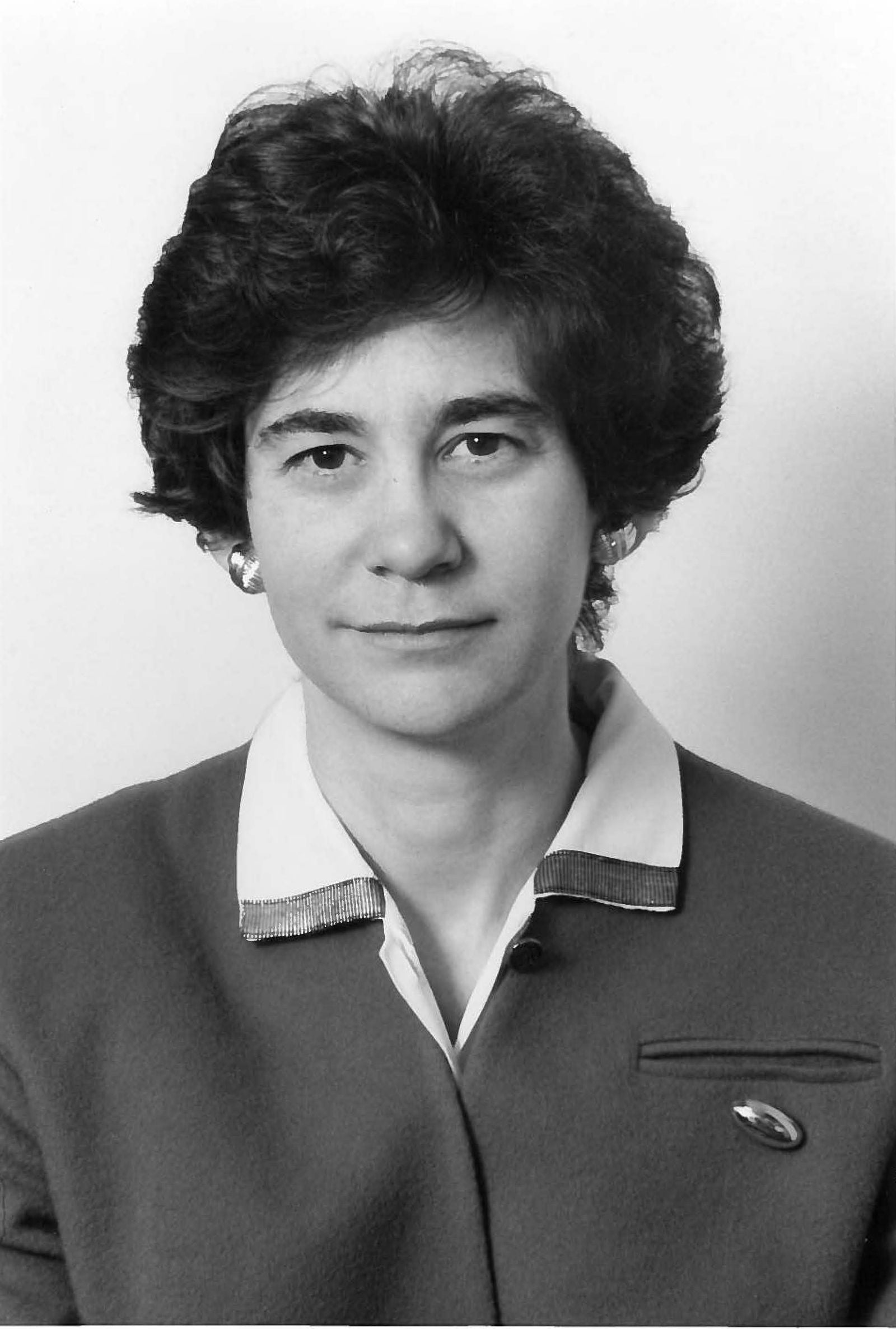
Reproductive Rights Champion: Kathryn Kolbert
In 1992, Planned Parenthood of Southeastern Pennsylvania v. Casey reached the Supreme Court, where ACLU attorney Kathryn Kolbert, pictured here, argued against restrictive Pennsylvania abortion regulations. The landmark ruling reaffirmed the constitutional right to abortion but replaced the strict standards of Roe v. Wade with a weaker “undue burden” test.
Audio Clip of Kathyrn Kolbert Successfully Arguing Reproductive Rights Case Before Supreme Court
In 1992, Planned Parenthood of Southeastern Pennsylvania v. Casey reached the Supreme Court, where ACLU attorney Kathryn Kolbert, heard in this clip, argued against restrictive Pennsylvania abortion regulations. The landmark ruling reaffirmed the constitutional right to abortion but replaced the strict standards of Roe v. Wade with a weaker “undue burden” test.
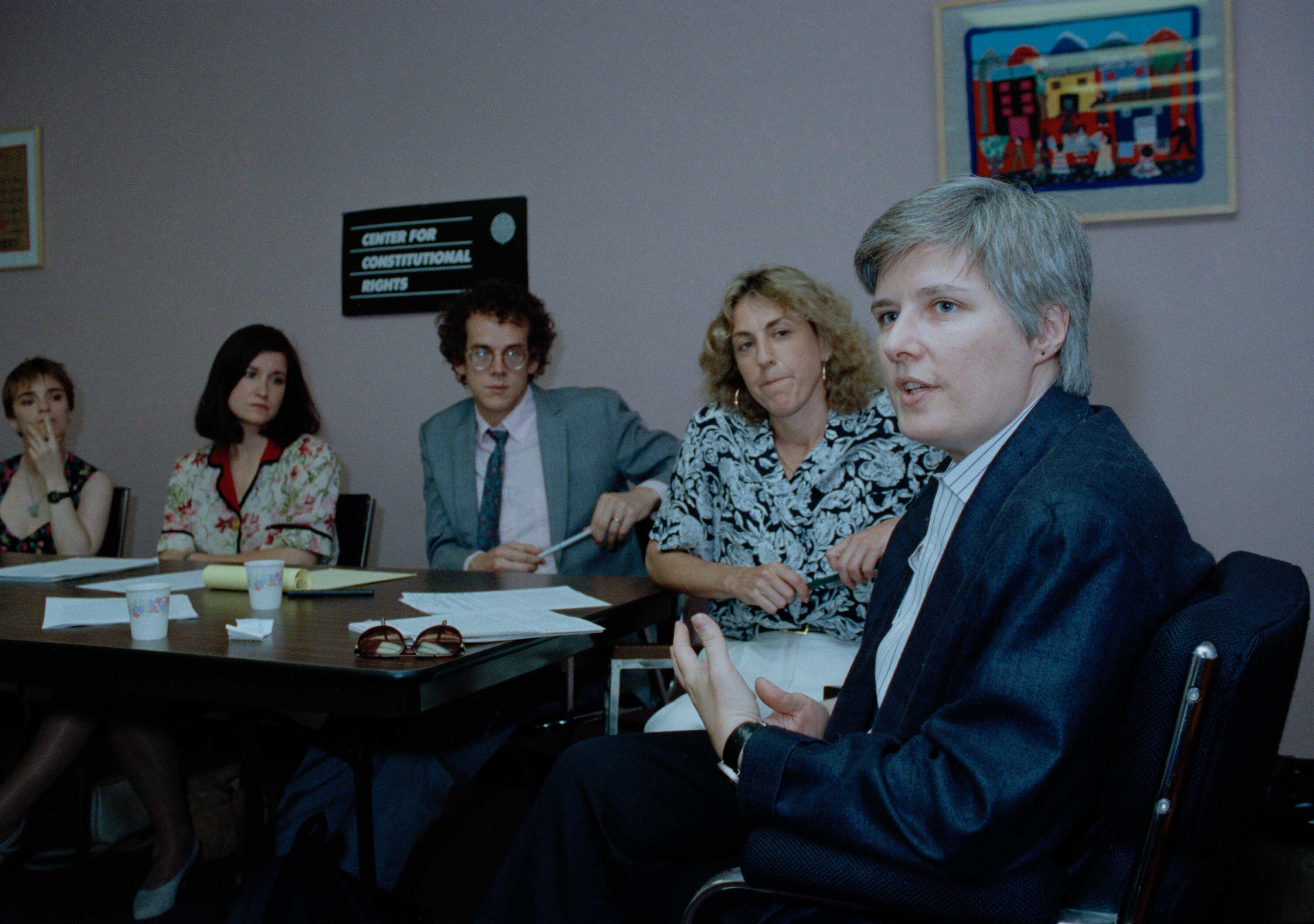
The Battle for Free Speech in the Arts
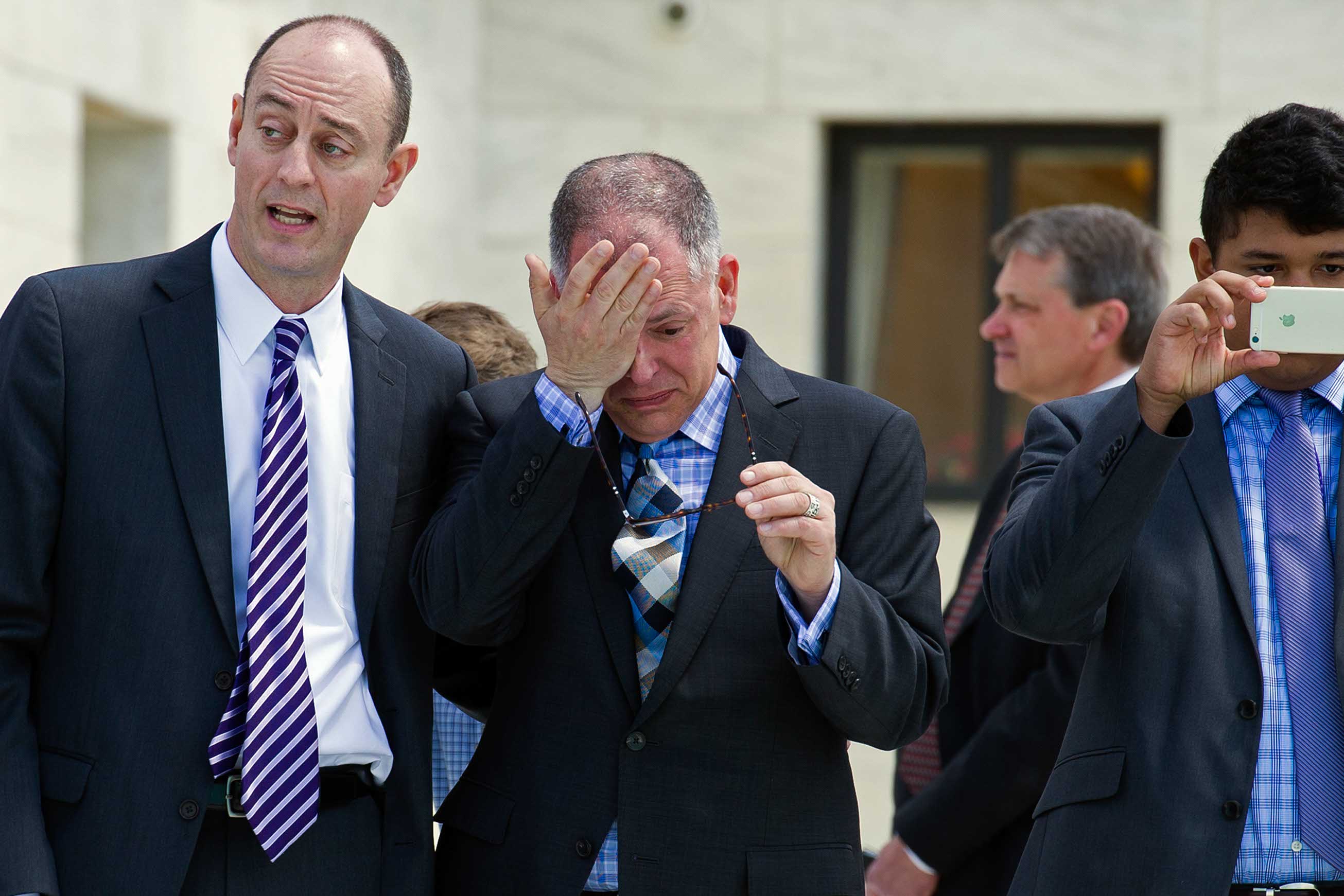
In 1990, four performance artists funded by the National Endowment for the Arts (NEA) had their grant proposals rejected under a new “decency” requirement. They sued with support from the ACLU, arguing the clause violated their free speech rights. Lower courts agreed, but the Supreme Court upheld the clause in 1998, concluding that it did not limit the projects the NEA could fund, but rather imposed a new procedure to ensure that panels considering any project were sufficiently diverse. Pictured here in 1992 are Holly Hughes and Karen Finley, two of the artists in that lawsuit; David Cole, Center for Constitutional Rights and future ACLU legal director; and Marjorie Heines and Nan Hunter, ACLU.
1993
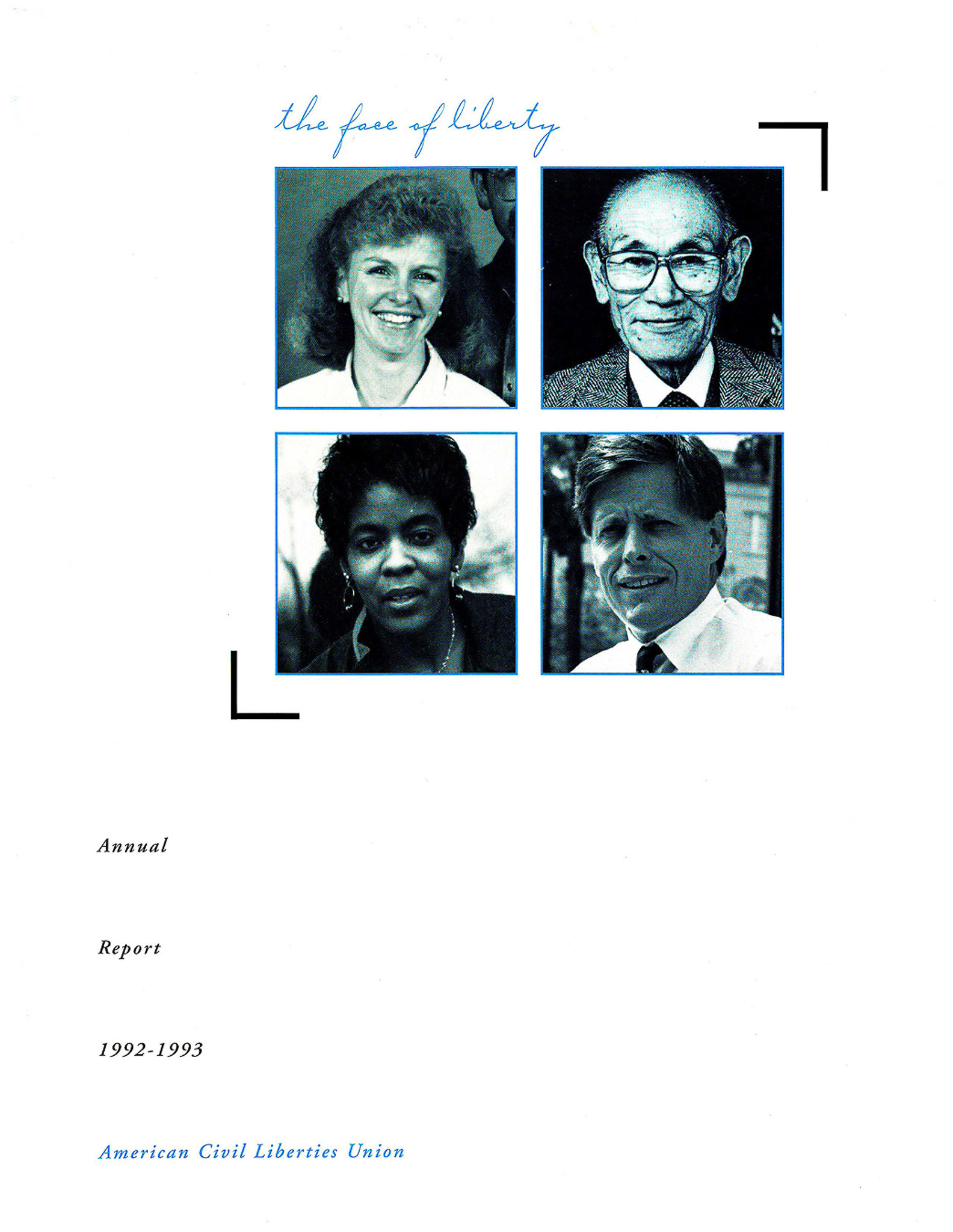
ACLU’s 1992-1993 Annual Report, “The Face of Liberty”
In 1993, ACLU Executive Director Ira Glasser wrote in an annual report: “Thomas Jefferson, in calling for ‘eternal vigilance,’ foresaw the battle over liberation and despotic values raging today, and knew that such battles would preoccupy every generation. The fervent assailants rising up among us to promote their exclusionary views of society may be new, but their targets — liberty, equality, human dignity — haven’t changed.”
1994
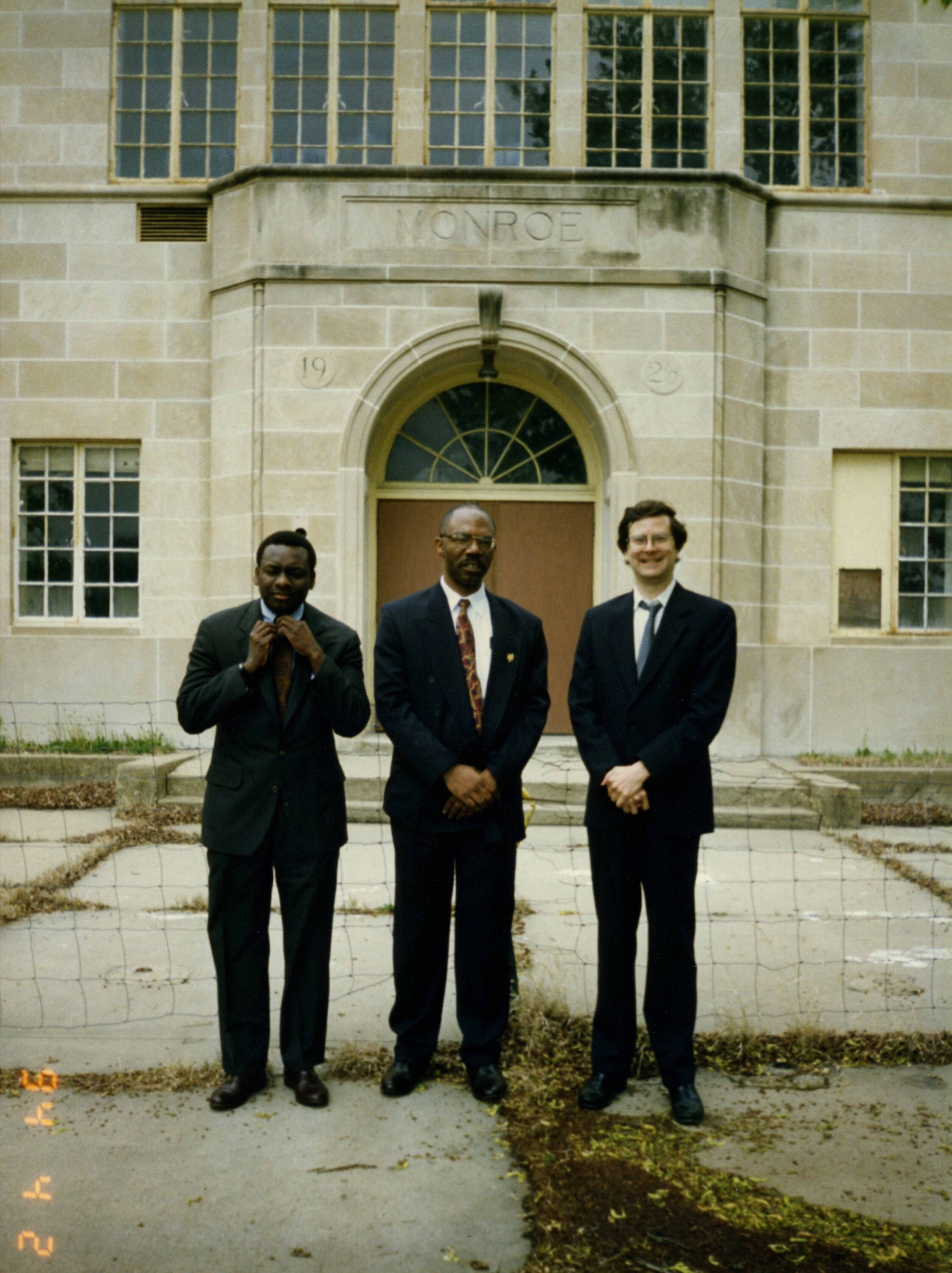
Counsel in Brown v. Board of Education
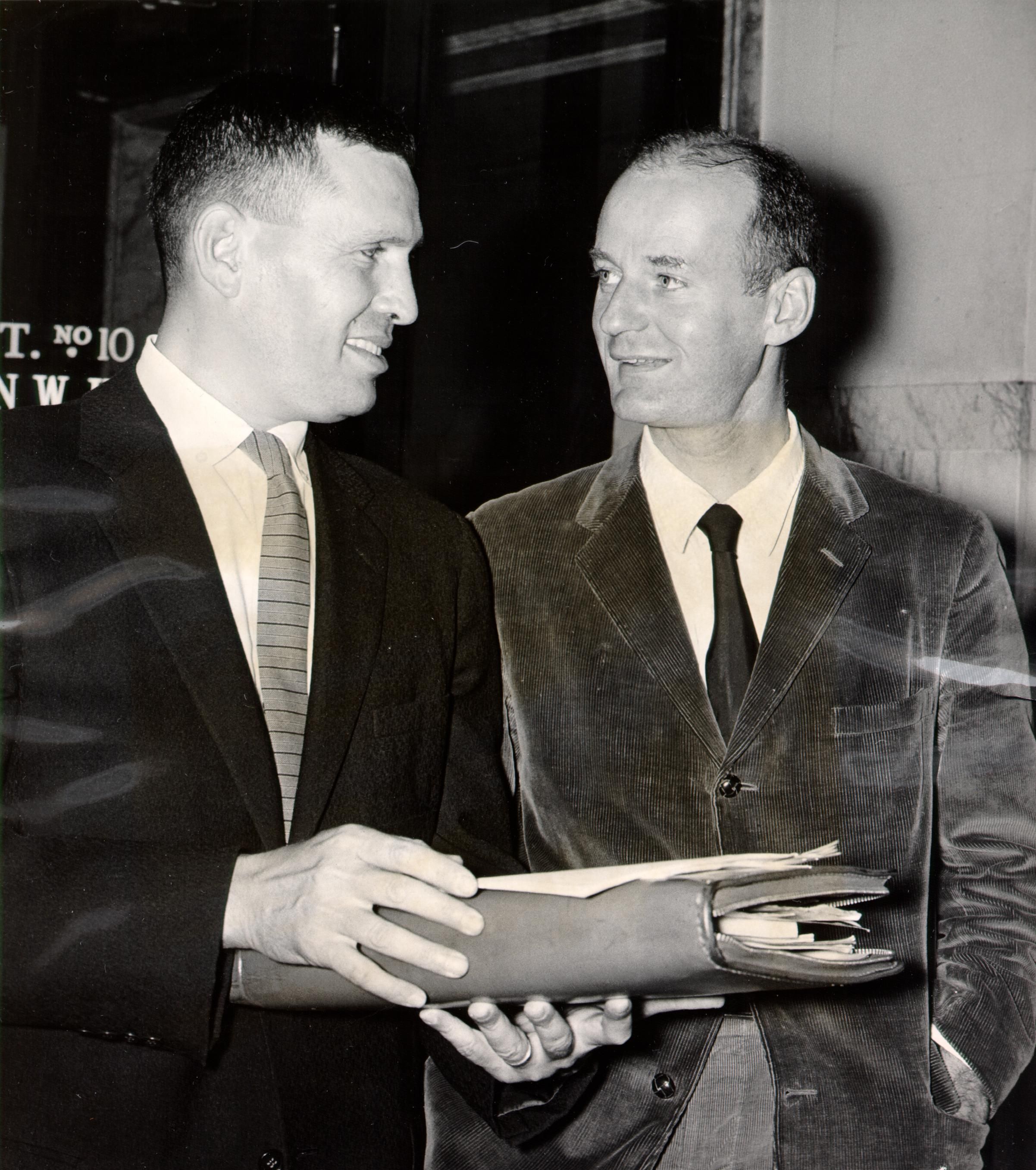
Although the Supreme Court declared that state laws enforcing racial segregation in public schools were unconstitutional in its 1954 Brown v. Board of Education decision, many municipalities did very little to desegregate their schools for years. In the 1980s and 1990s, ACLU attorneys Chris Hansen and Victor Bolden joined Kansas attorney Richard Jones to reopen the case, which forced the state to fulfill the Supreme Court mandate to desegregate public schools. The legal team is pictured here in front of Monroe Elementary School, one of the formerly all-Black elementary schools in Topeka, Kansas, which is now the Brown v. Board of Education National Historical Park.
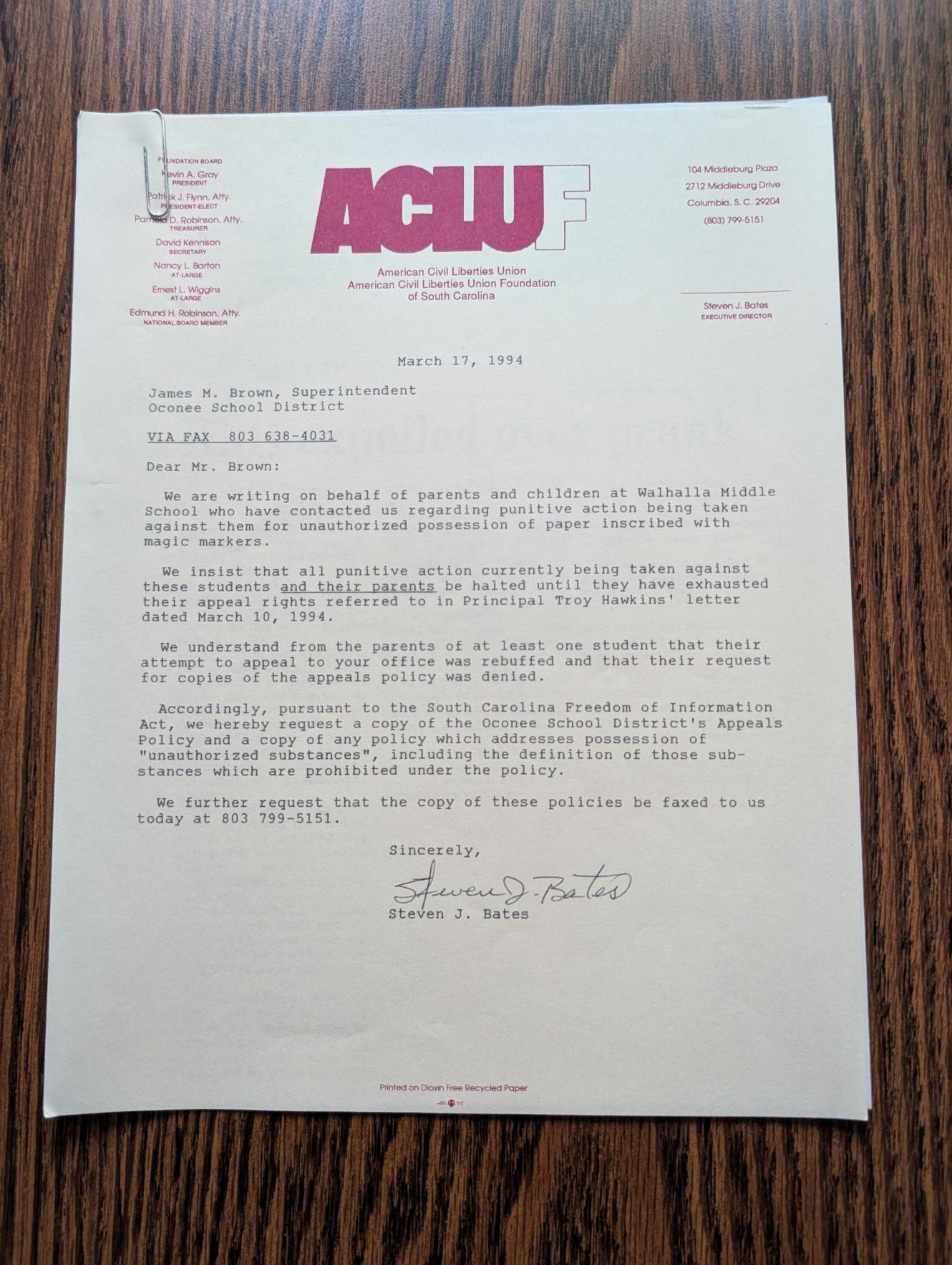
The ACLU of South Carolina Fights for Students’ Rights
In this 1994 letter, Executive Director of the ACLU of South Carolina Steven J. Bates demanded that the Oconee County School District stop taking punitive action against middle school students “for unauthorized possession of paper inscribed with magic markers.” Six students had recently been expelled for drawing dots on construction paper and telling fellow students it was the drug LSD. After determining the drugs were not real, the district required the students and their parents to attend weekly drug counseling sessions.
1996
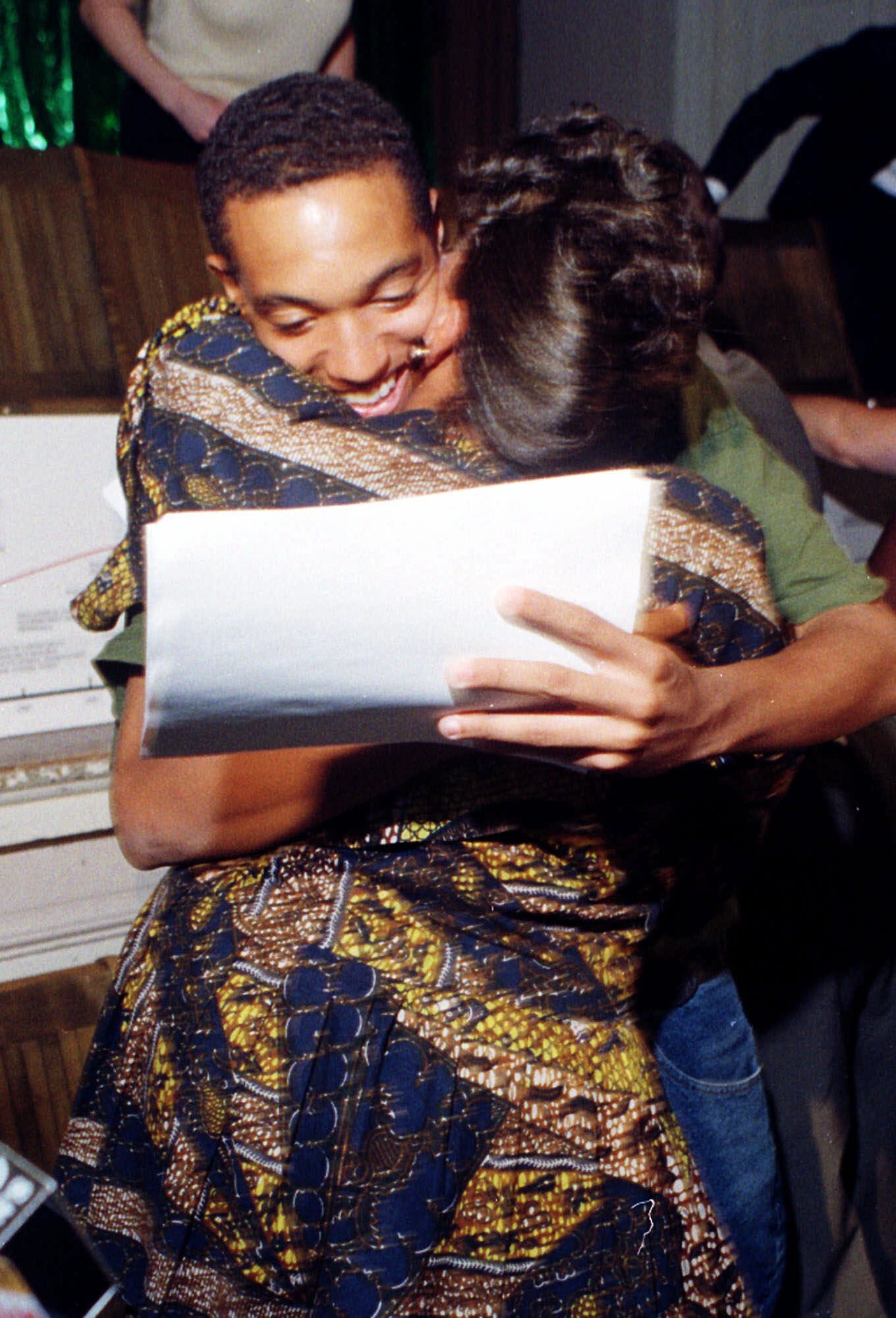
ACLU Victory Fighting Segregation in Connecticut Schools
Sheff v. O’Neill is a landmark civil rights lawsuit filed by the ACLU and the NAACP Legal Defense Fund challenging the racial and socioeconomic segregation of public schools in the Hartford area. It led to a transformative 1996 Connecticut Supreme Court ruling establishing the right to an equal education. In this photo, lead plaintiff Milo Sheff hugs his mother Elizabeth Horton Sheff during a news conference on July 9, 1996.
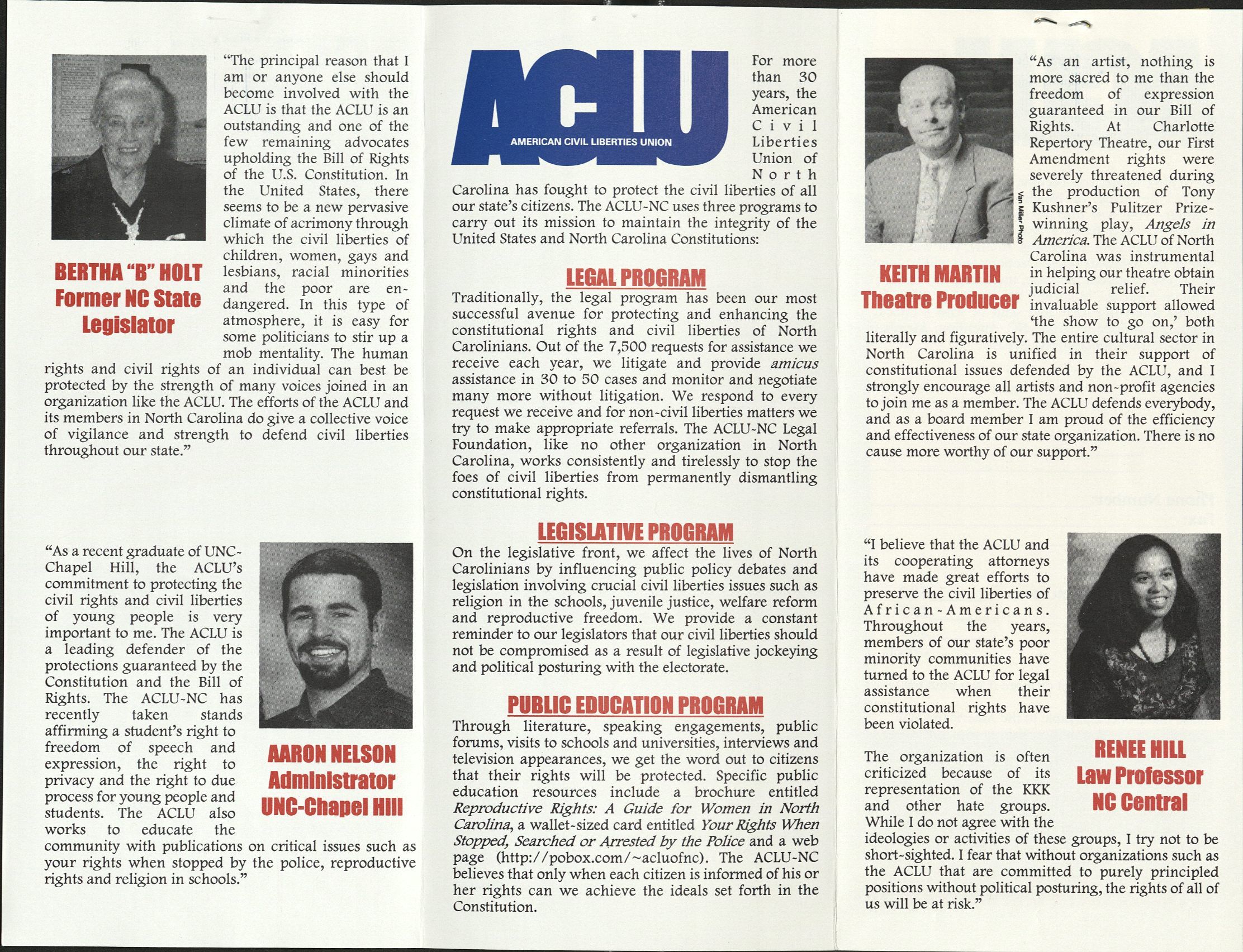
ACLU of North Carolina Pamphlet Breaking Down How the ACLU Can Help You
This pamphlet from the ACLU of North Carolina introduced the legal, legislative, and educational programs of the ACLU, featuring statements from North Carolina arts and education patrons on the impactful work of the ACLU and calling on readers to “Invest in Your Rights.”
1997
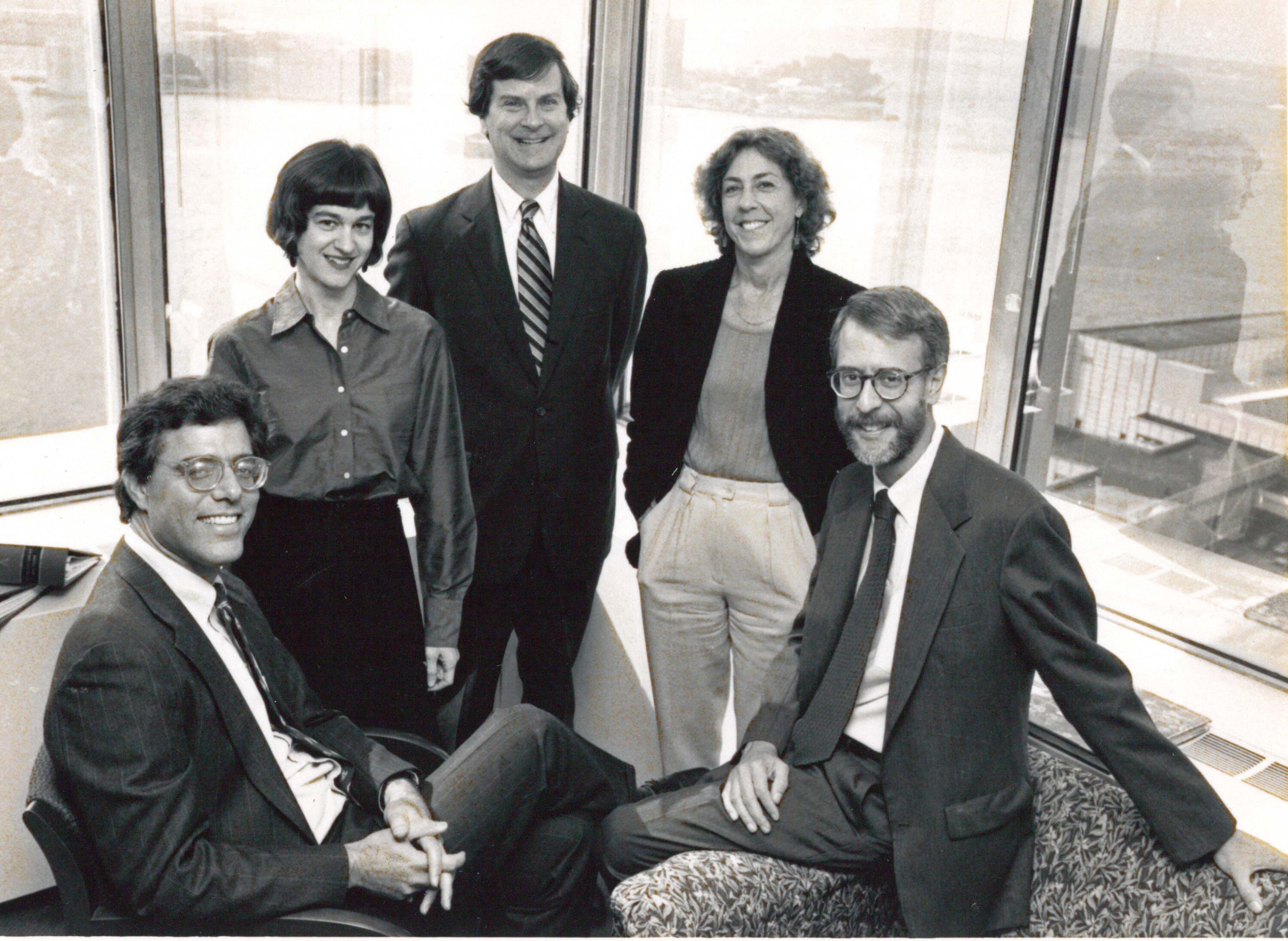
The Legal Team That Would Help Successfully Overturn the Communications Decency Act
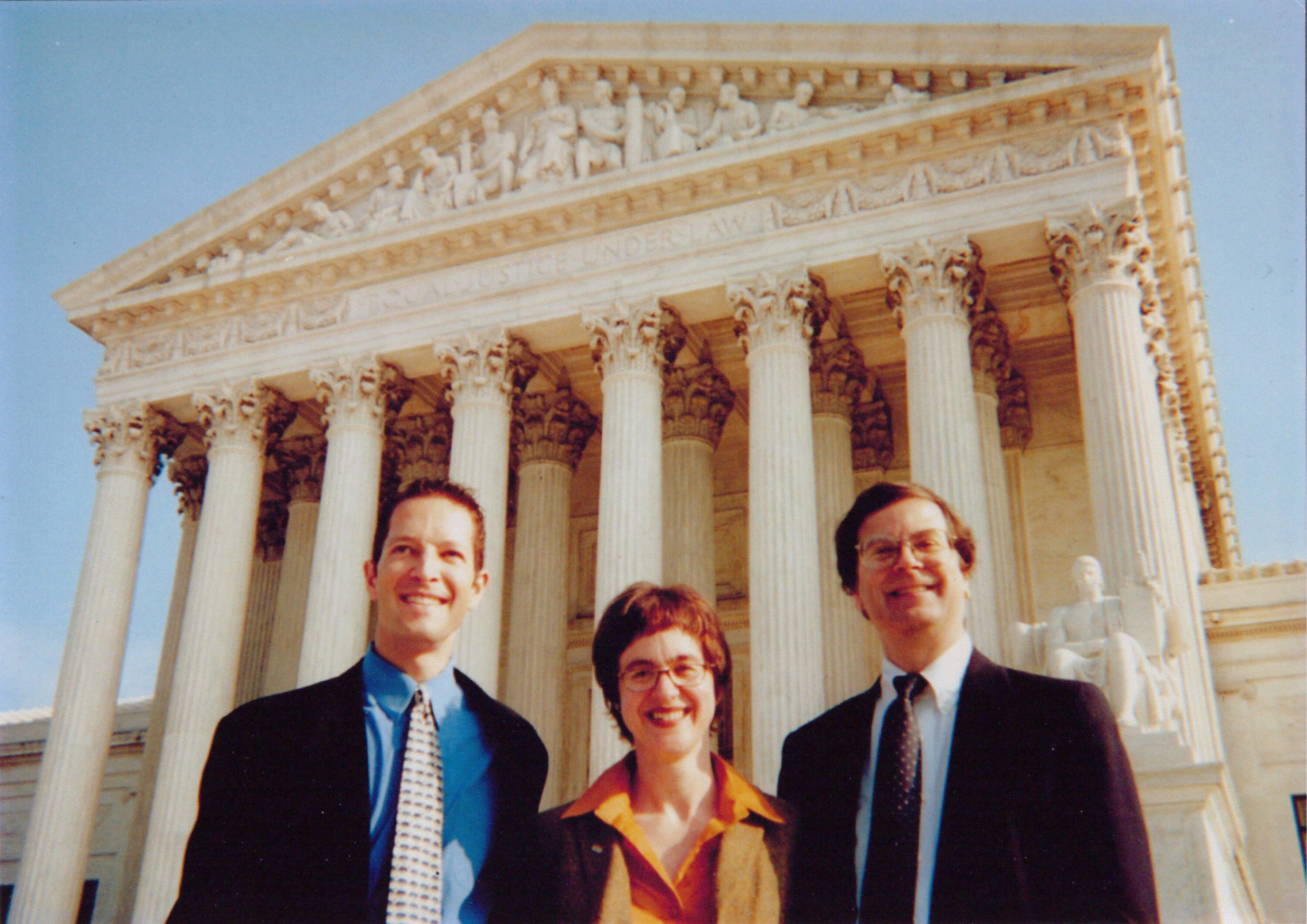
In 1997, the Supreme Court ruled in Reno v. ACLU that the federal Communications Decency Act was an unconstitutional restriction on free speech. The law made it a crime, punishable by up to two years in jail and/or a $250,000 fine, for anyone to engage in online speech that is “indecent” or “patently offensive” if the speech could be viewed by a minor. The ACLU argued that the censorship provisions were unconstitutional because they would criminalize expression protected by the First Amendment and because the terms “indecency” and “patently offensive” are overbroad and vague. Pictured here is the Reno v. ACLU legal team, from left: Steve Shapiro, Ann Beeson, Chris Hansen, Marjorie Heins, and Stefan Presser.
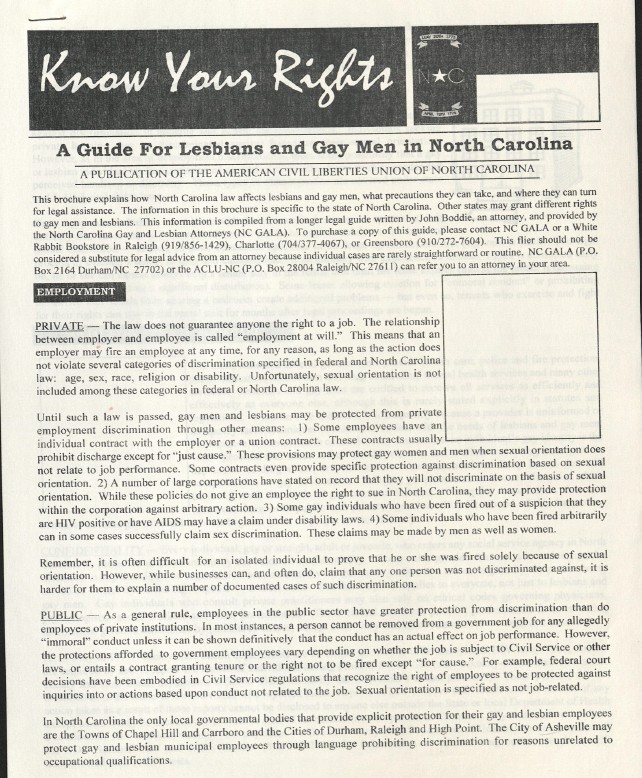
ACLU of North Carolina Know Your Rights Pamphlet for Lesbians and Gay Men
This Know Your Rights pamphlet was produced by the ACLU of North Carolina in 1997 as a guide for lesbians and gay men. The pamphlet outlined the few rights guaranteed to lesbians and gay men during this time as well as the tools they could use to fight for their rights and challenge existing policies.
1998
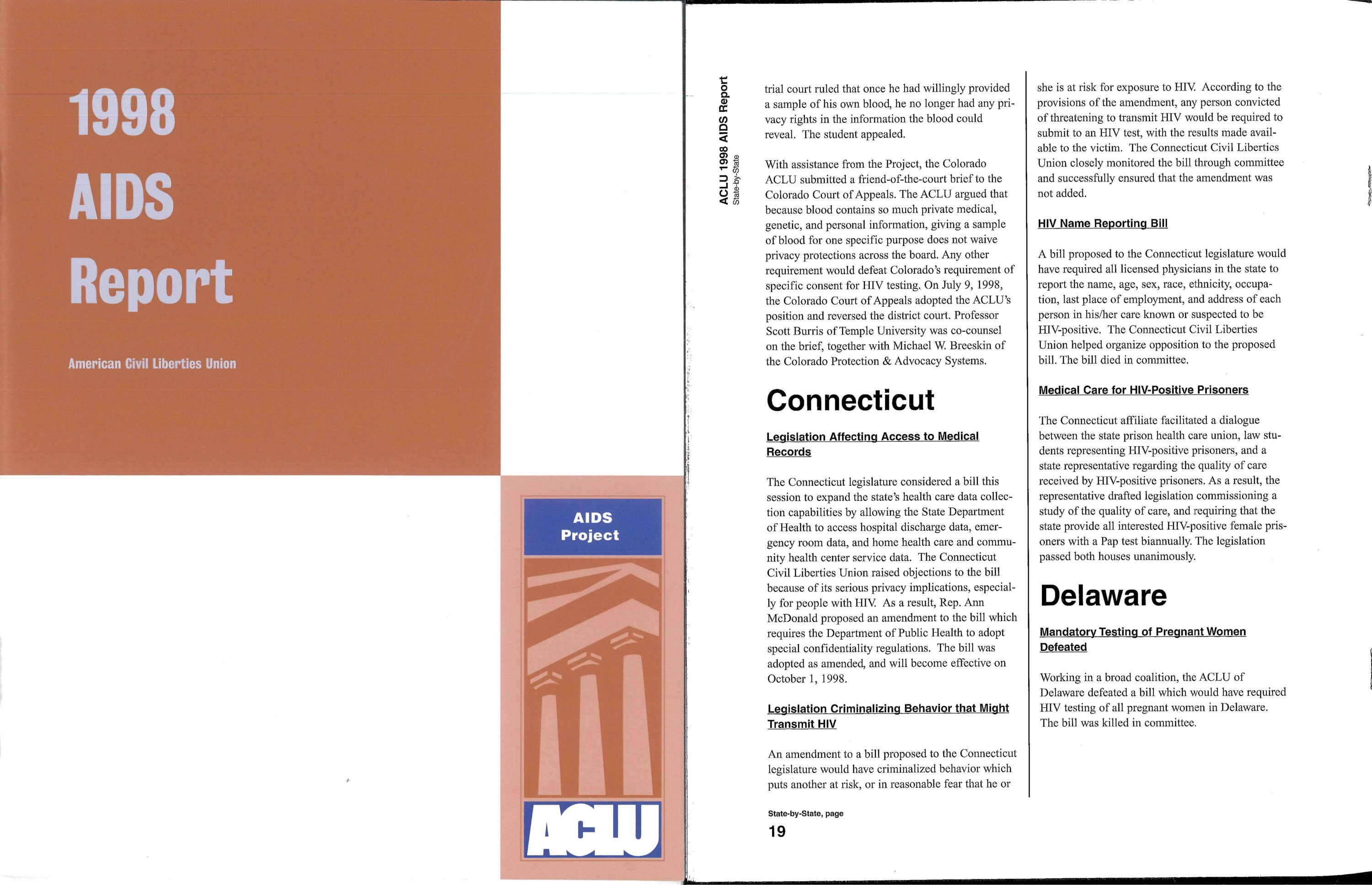
Cover of the ACLU’s 1998 AIDS Report
This 1998 AIDS report detailed the ACLU’s fight in Congress and state by state for people living with HIV and AIDS; uplifted project staff and supporters; and denounced coercive practices like HIV name reporting and forced partner notification.
1999
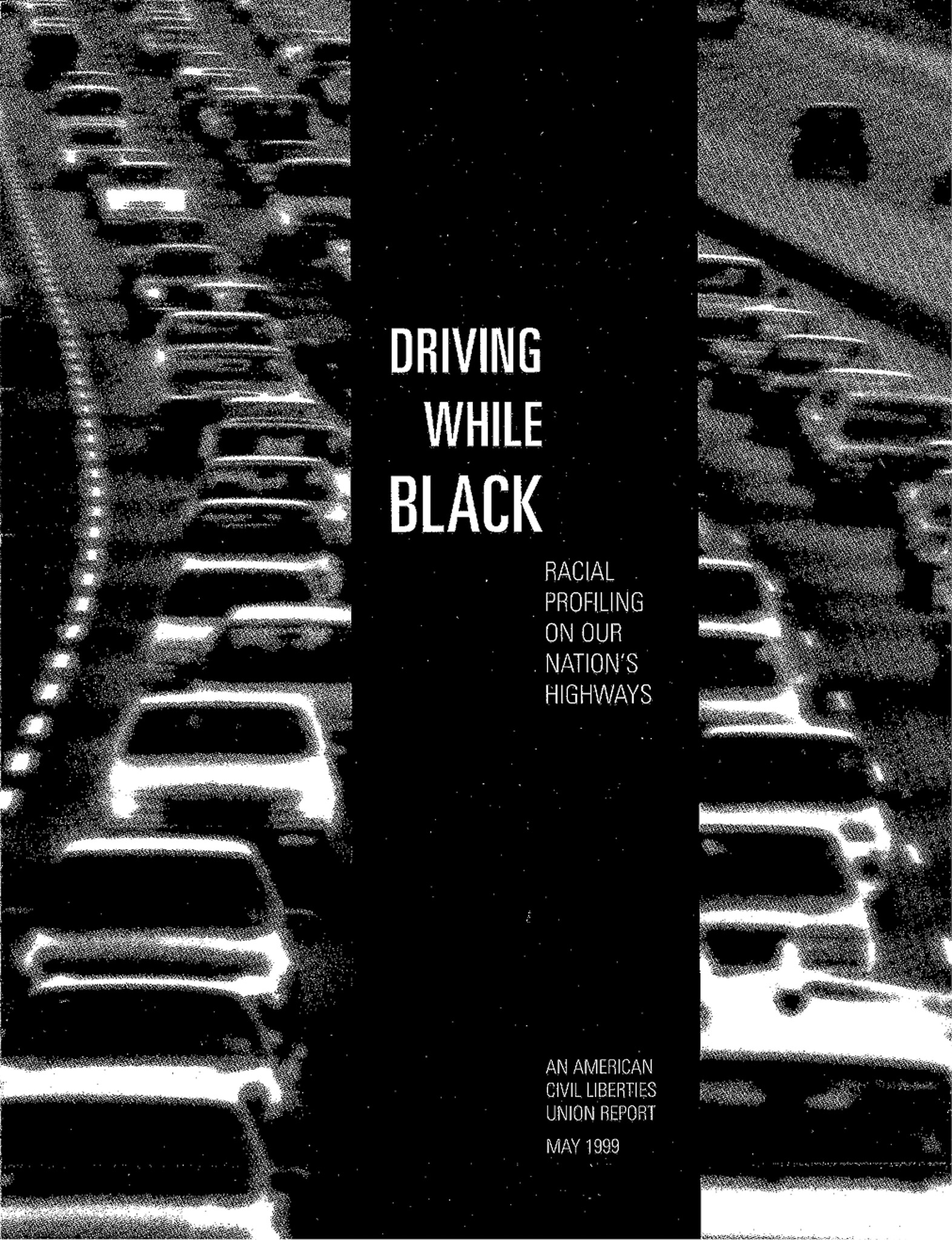
“Driving While Black”: The ACLU’s First Comprehensive Report on Racial Profiling
“Driving While Black: Racial Profiling On Our Nation’s Highways” was the ACLU’s first comprehensive report about the racial profiling of Black drivers. This report spearheaded a multi-pronged effort, including a nationwide, toll-free hotline to report incidents as well as an online complaint form.

Fighting for a “Right to Live”
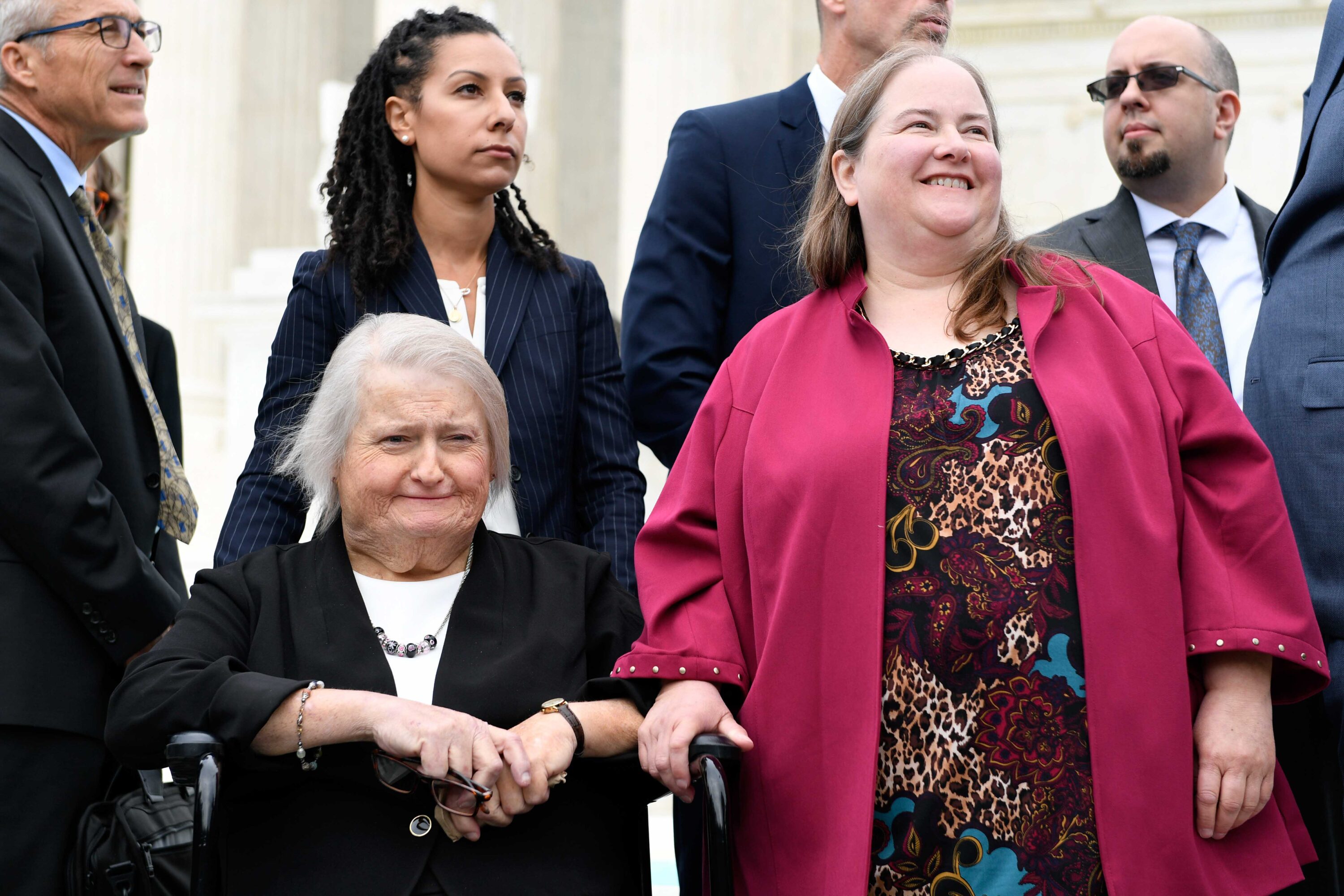
In 1999, the Supreme Court’s ruling in Olmstead v. L.C. affirmed a “right to live in the world” for people with disabilities, paving the way for generations to live and receive support in their homes and communities instead of being warehoused in institutions. The ACLU’s amicus brief in this case argued that the unjustified segregation of disabled people is a violation of the Americans with Disabilities Act (ADA) and fundamental civil rights. This April 10, 1999 photo shows Elaine Wilson, left, and Lois Curtis, the two plaintiffs in the case.