The 1960s
Share
1960
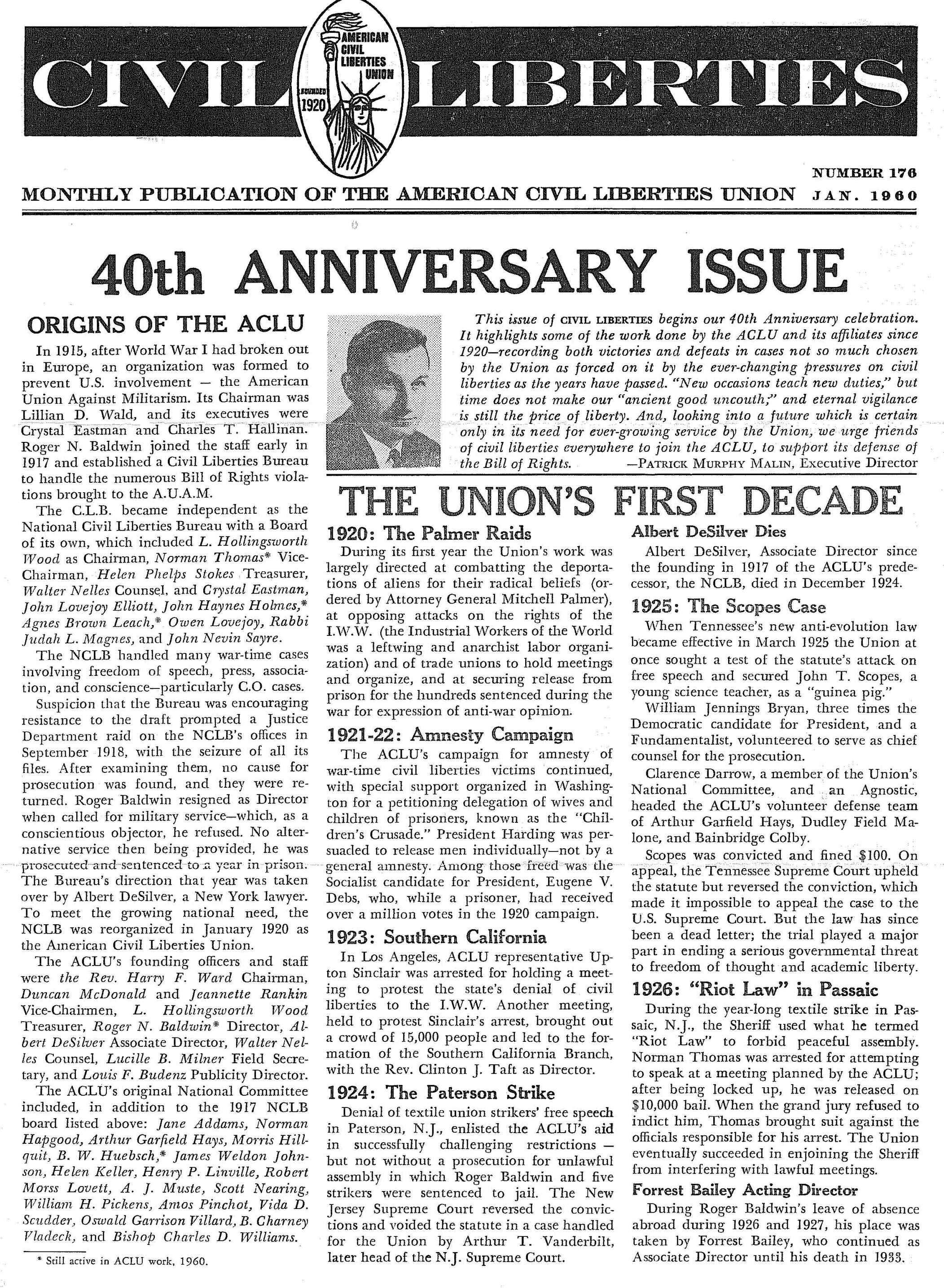
ACLU’s 40th Anniversary Issue of Newsletter Civil Liberties
In a special 40th anniversary edition of the ACLU’s monthly newsletter, the organization documented its first four decades of work and achievements secured in the fight to defend our civil rights and civil liberties.
1962
ACLU's Annual Report 1961-1962: Freedom Through Dissent
In 1962, journalist Mitchell Levitas wrote in the ACLU annual report that year: “Our struggle for human freedom may never be finally won, but the human spirit will ever be represented in the fire of our determination to maintain the struggle, always reaching toward that elusive goal.”
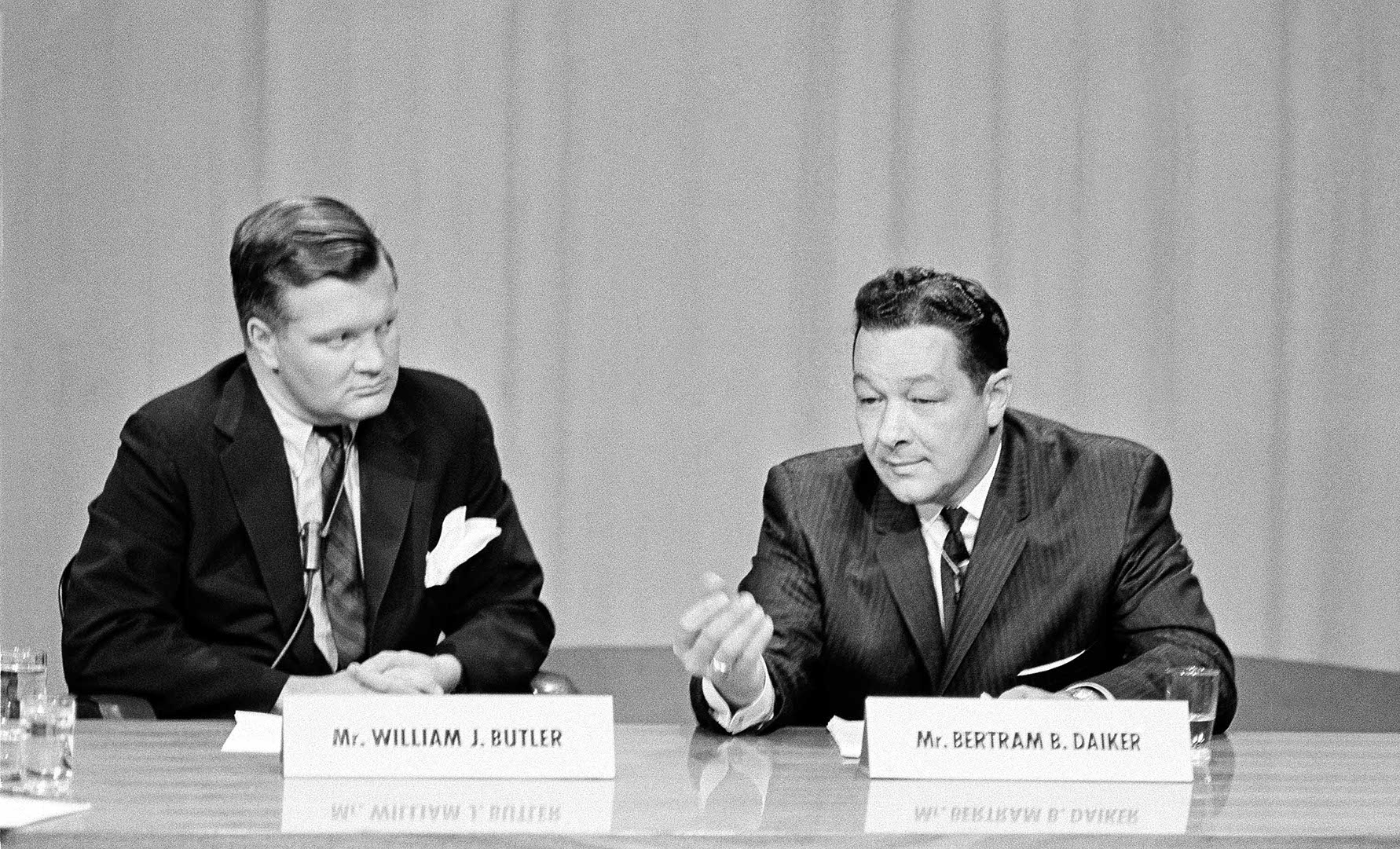
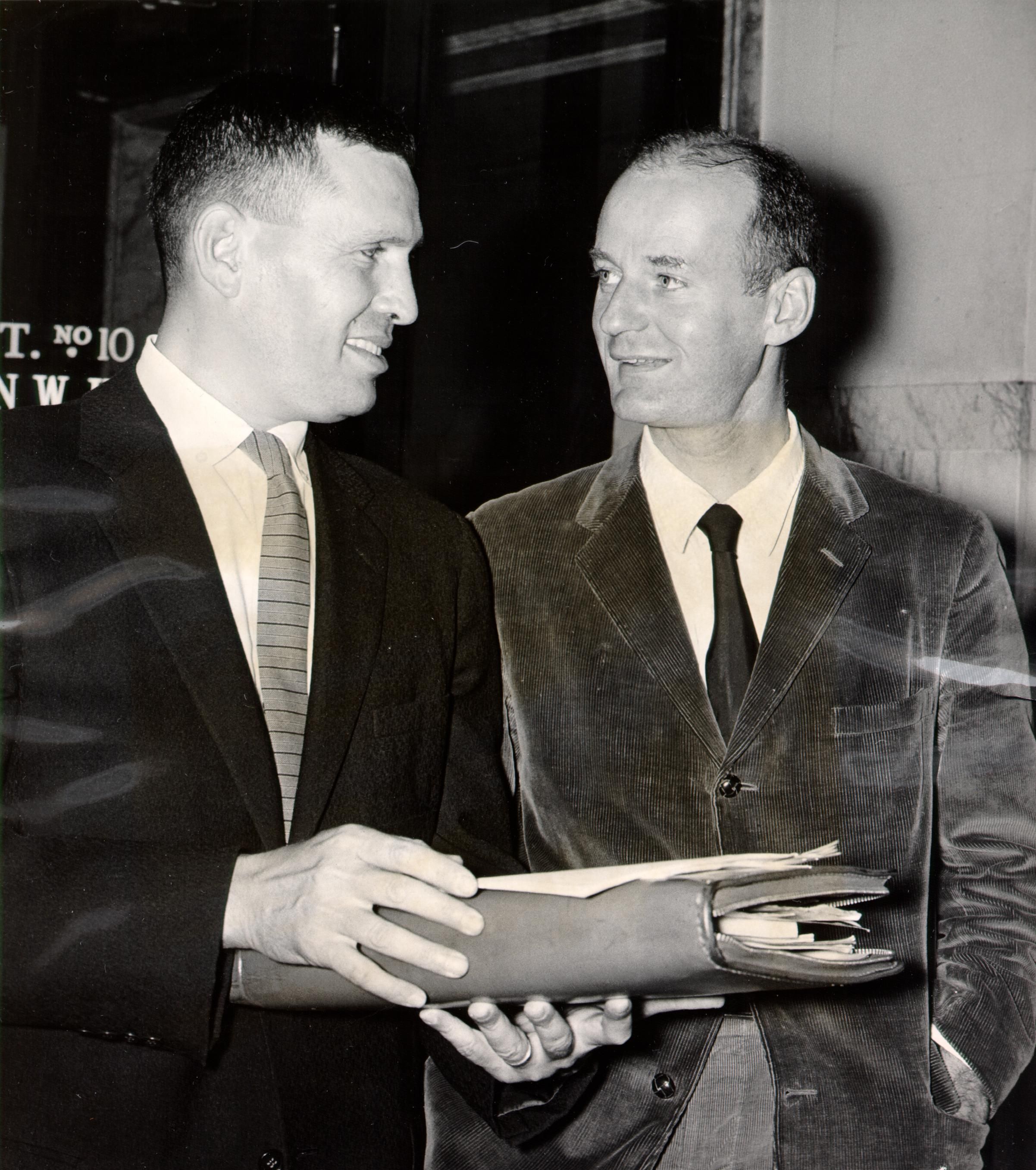
ACLU Attorney William Butler and Attorney Bertram Daiker, Who Argued the School Prayer Supreme Court Case, at NBC Studios
In 1962, the New York Civil Liberties Union (NYCLU) represented Long Island students and parents in challenging the New York State Regents’ “nondenominational” school prayer. In the landmark Engel v. Vitale decision, the Supreme Court argued that “...it is no part of the business of government to compose official prayers.” ACLU attorney William Butler, who represented the five New York parents opposing the prayer, and Bertram Daiker, counsel for the New Hyde Park School Board which authorized use of the prayer, are pictured debating the court’s decision on a television program at NBC Studios on July 8, 1962.
An Audio Clip of ACLU Attorney William J Butler Successfully Arguing Religious Liberty Case at the Supreme Court
In a 1962 landmark decision, the Supreme Court declared in Engel v. Vitale that “...it is no part of the business of government to compose official prayers." The case remains one of the most prominent "separation of church and state" cases.
1964
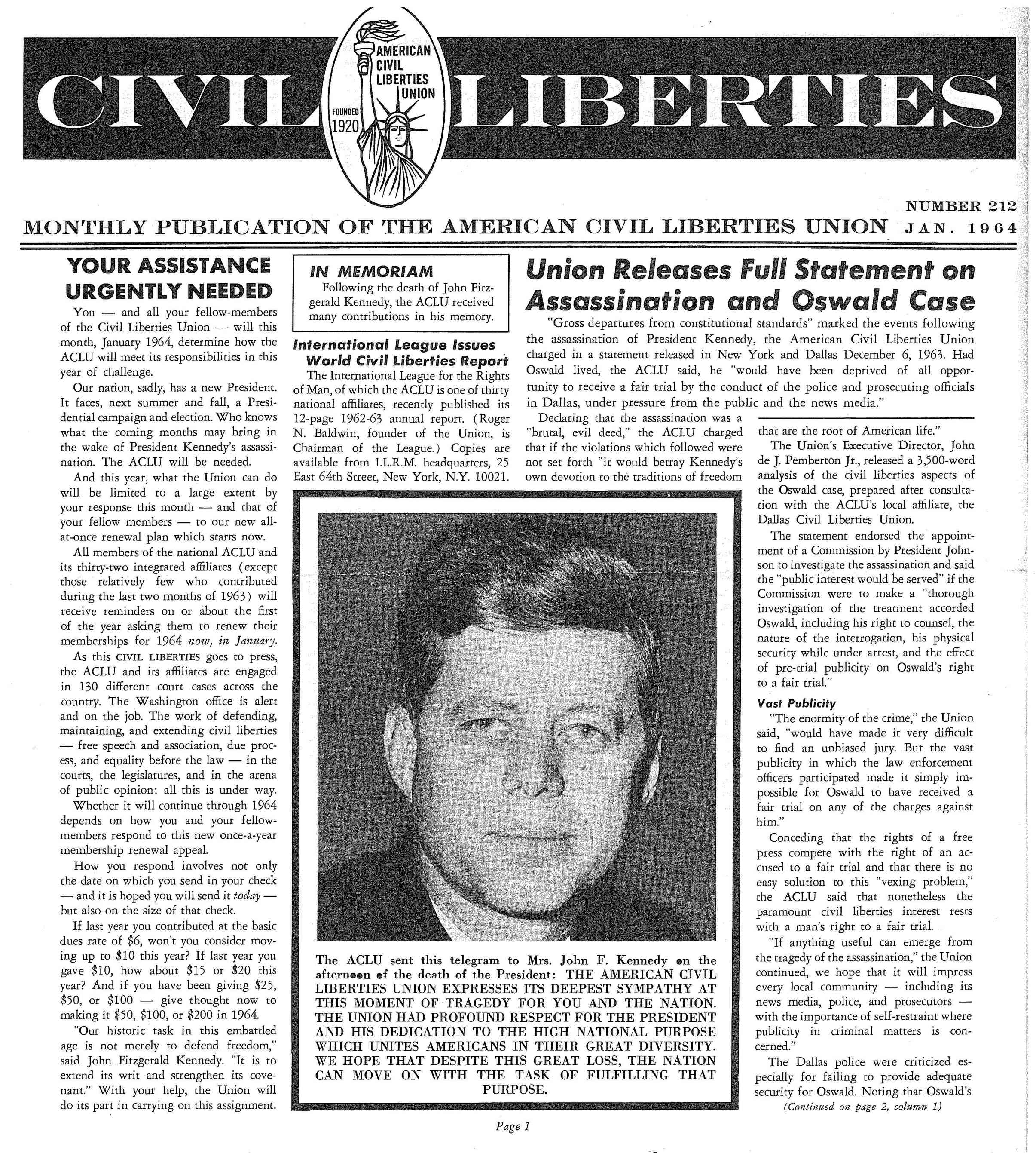
ACLU’s 1964 Newsletter Civil Liberties Honoring Life of President J.F.K.
This issue of the ACLU’s monthly newsletter memorialized President John F. Kennedy and contextualized the organization’s perspective on the investigation into the president’s assassination.
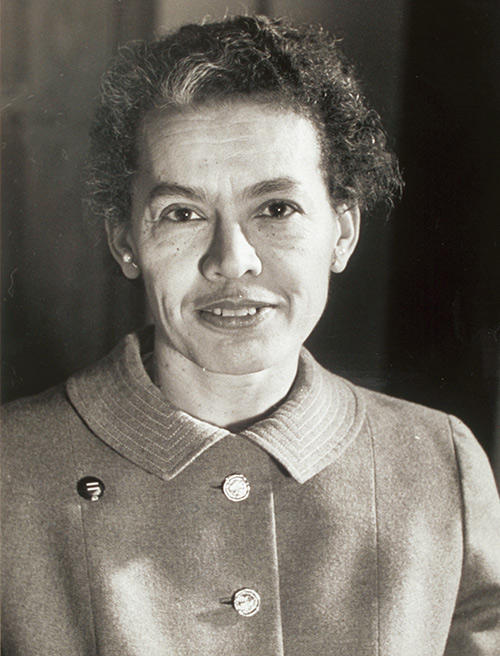
Intersectional Activist Pauli Murray Joins the ACLU
In 1965, Dorothy Kenyon successfully nominated Pauli Murray (pictured here) for the ACLU board. Murray was immediately asked to work with Kenyon on the case of White v. Crook, in which the ACLU challenged Alabama’s exclusion of African-Americans and women from juries. Together, Kenyon and Murray pushed for the ACLU to support the Equal Rights Amendment and their work led to the creation of the Women’s Rights Project in 1971. Throughout her lifetime, Murray drew from her personal experience to advocate against gender-based and racial discrimination, both in the ACLU and elsewhere.
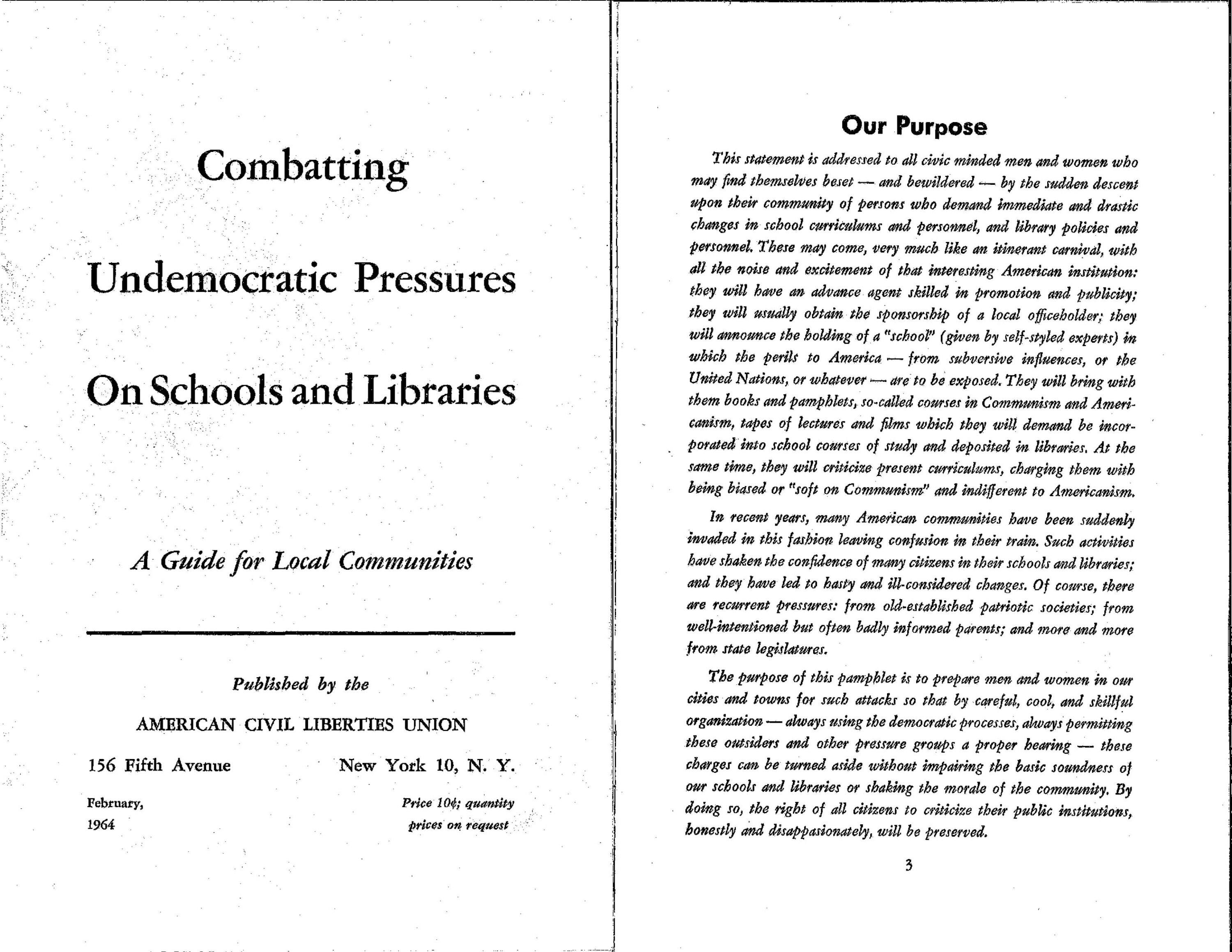
ACLU 1960s Guide for Local Communities To Protect Academic Freedom
This 1964 pamphlet provides a guide for local communities to fight back against pressure to limit the free speech and academic freedom of schools and libraries.
1965
The ACLU of Kansas Affiliate's Documentary "Towards Freedom," Marking the 1965 Founding of the Affiliate
The ACLU of Kansas, founded 1965, produced a documentary on the organization’s history titled "Towards Freedom" for its 60th anniversary in 2025 which featured important leaders who played a pivotal part in advancing civil liberties in Kansas during the founding.
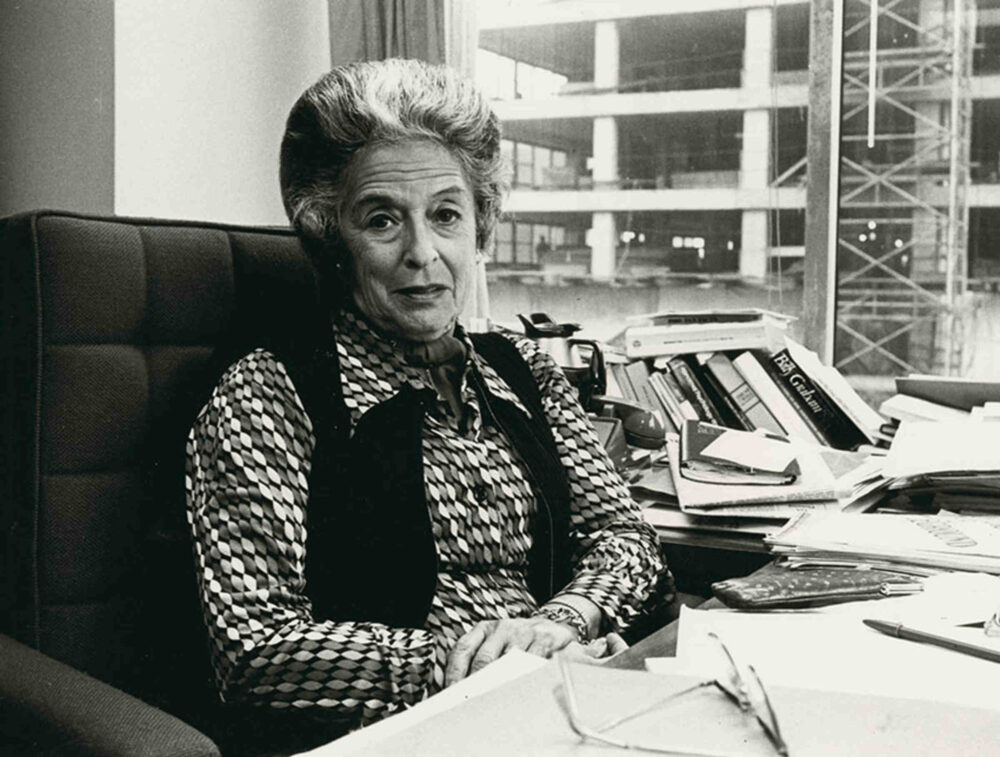
ACLU Board Member Harriet Pilpel at Her Desk
In the 1965 case Griswold v. Connecticut, Harriet Pilpel, an ACLU board member and Planned Parenthood general counsel, filed a challenge to Connecticut's birth control ban in the lower court and filed a friend-of-the-court brief before the Supreme Court. By a 7–2 margin, the Supreme Court's ruling invalidated a Connecticut law forbidding the use of contraceptives on the grounds that a right of "marital privacy," though not specifically guaranteed in the Bill of Rights, is protected by "several fundamental constitutional guarantees."
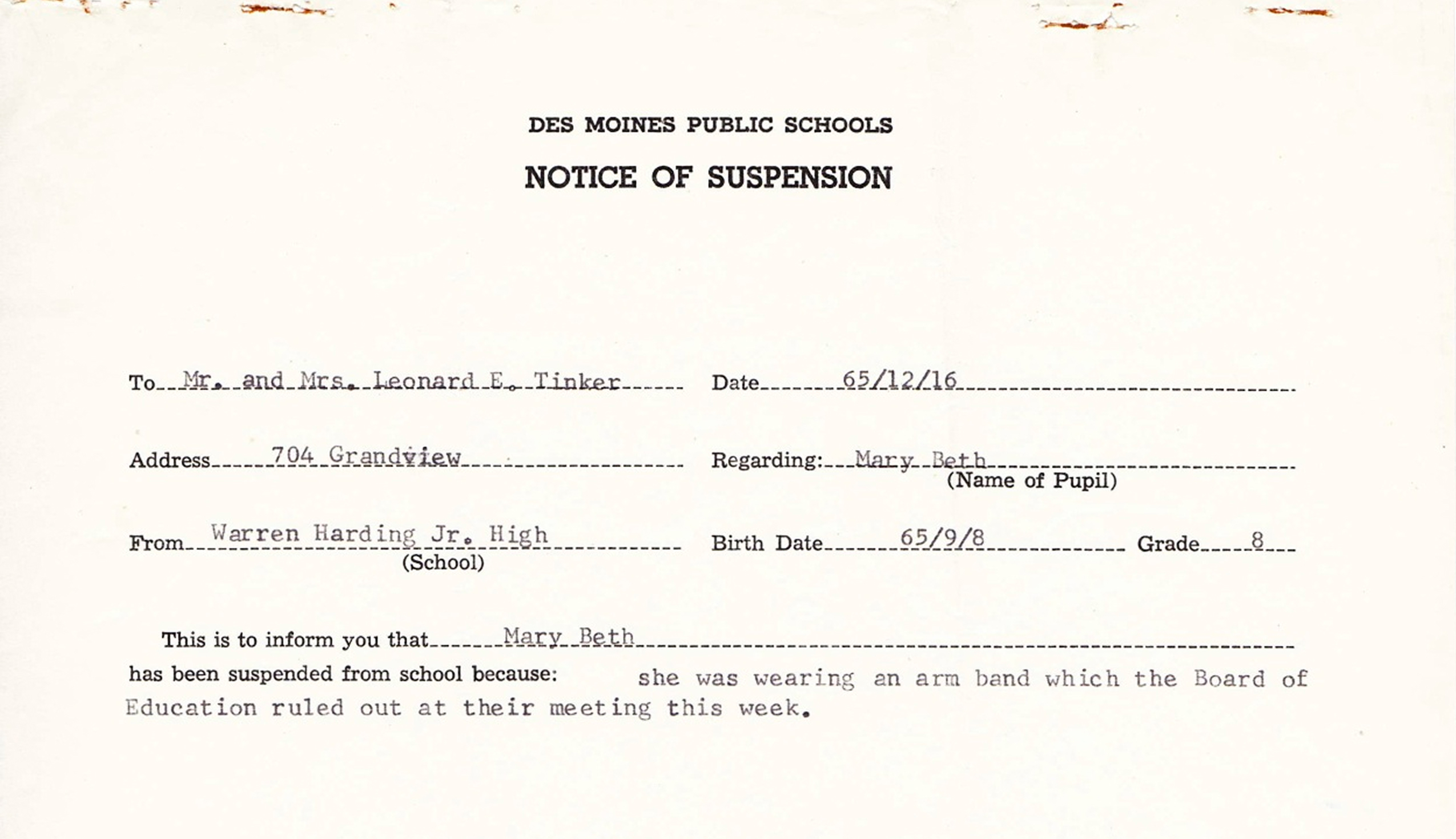
The Suspension Notice Given to Mary Beth Tinker After She Took Off Her Armband
In Tinker v. Des Moines, the Supreme Court found that suspending public school students Mary Beth Tinker and her brother John for wearing black armbands to protest the Vietnam War was unconstitutional since students do not "shed their constitutional rights to freedom of speech or expression at the school-house gate.” Pictured here is the suspension notice Mary Beth received for wearing the armband. The ACLU successfully argued the case before the Court.
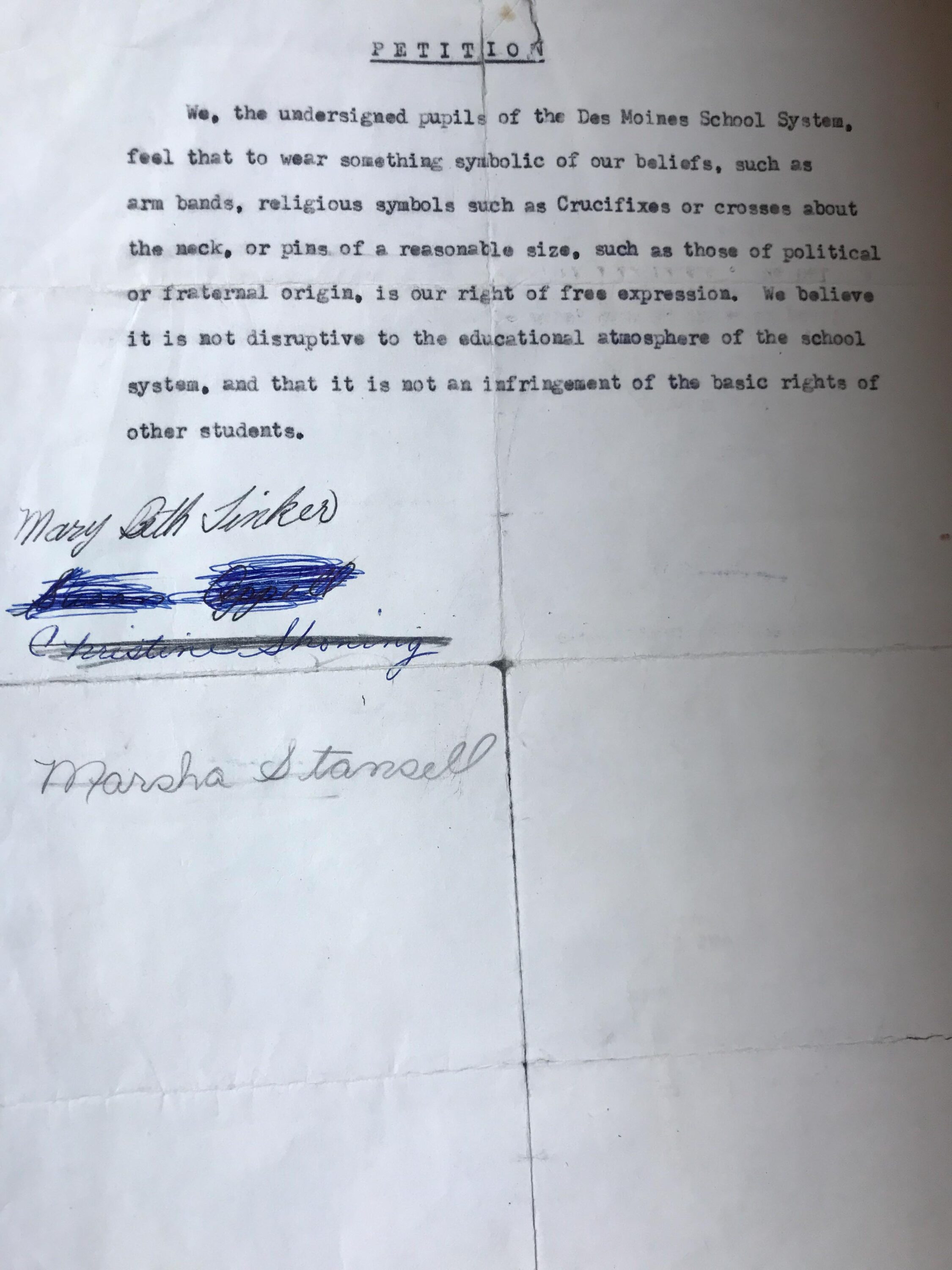
Photo of Mary Beth Tinker's Petition Circulated the Day She Was Suspended
In Tinker v. Des Moines, the Supreme Court found that suspending public school students, who were ACLU clients, for wearing black armbands to protest the Vietnam War was unconstitutional since students do not "shed their constitutional rights to freedom of speech or expression at the school-house gate." Photo of the petition that Mary Beth Tinker circulated before and after classes on December 16, 1965, the day she was suspended.
1966
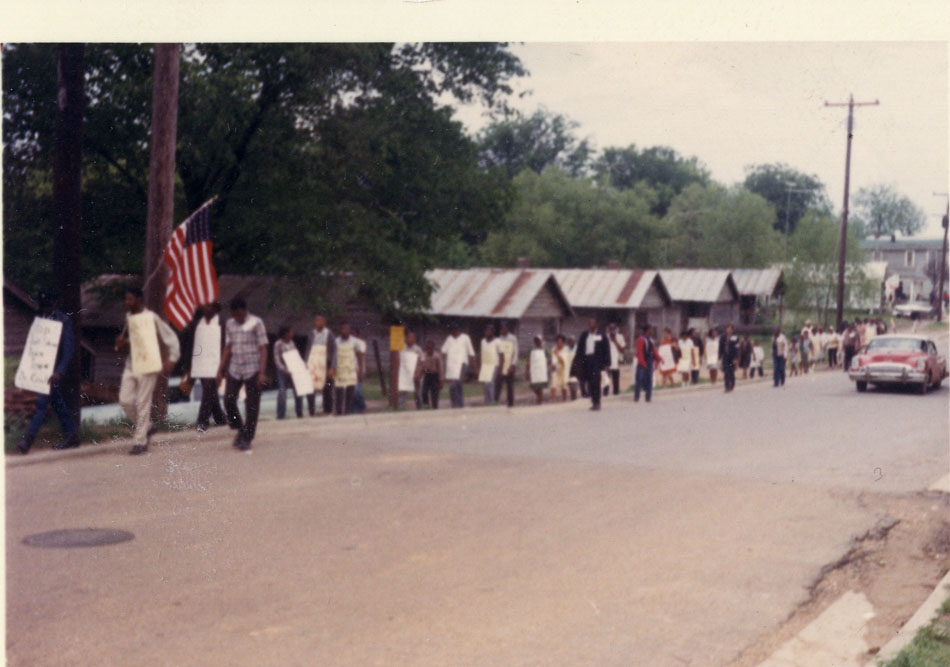
Photo of Civil Rights Demonstration in Mississippi
In the 1960s, the ACLU became the principal organizer of a coalition providing lawyers to support civil rights work in the Deep South, the Lawyers Constitutional Defense Committee. This photograph collected by the group in 1966 shows a civil rights demonstration in Mississippi.
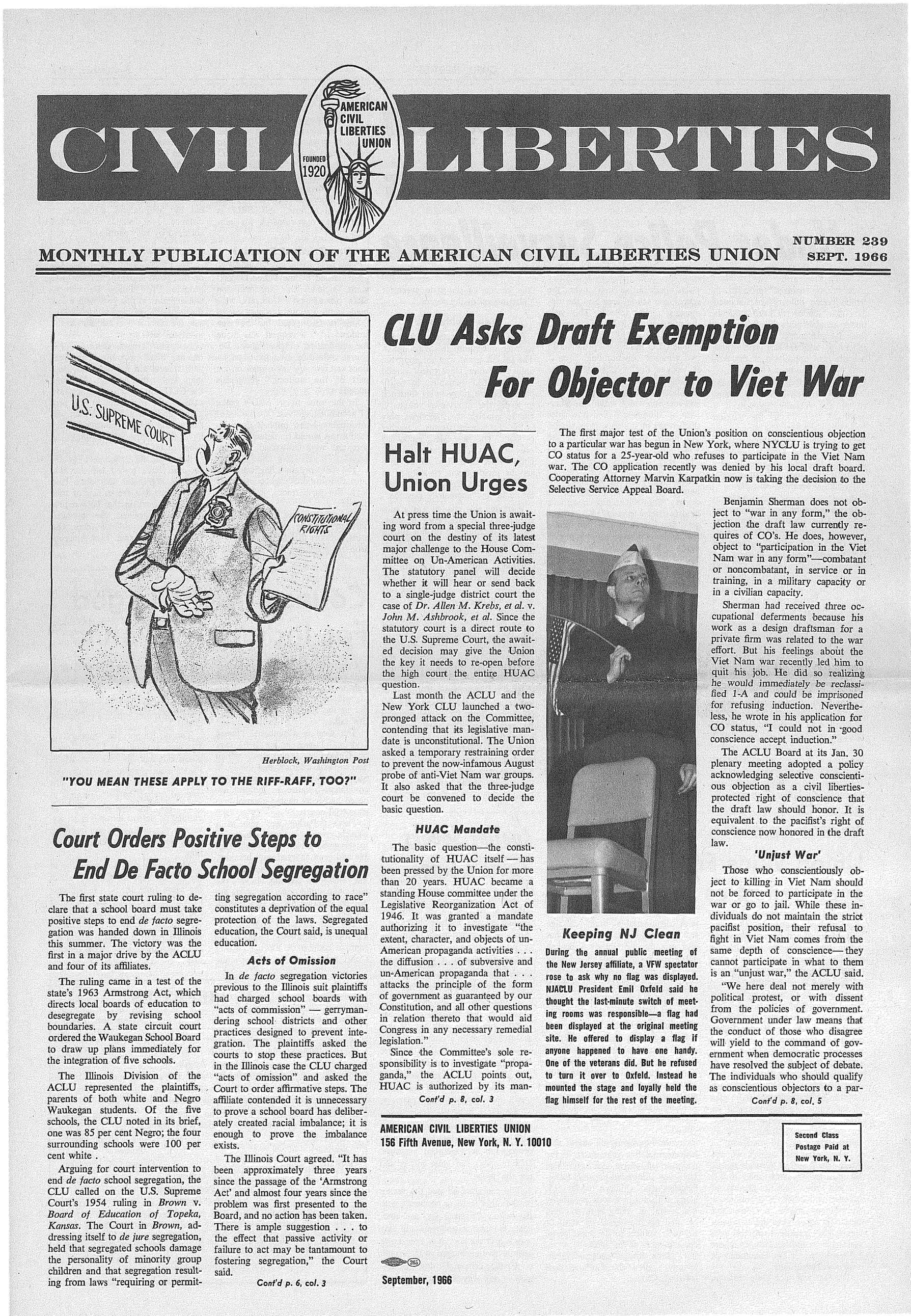
ACLU’s 1966 Newsletter Civil Liberties Documenting its Various Civil Rights Work
The September 1966 issue of the ACLU’s newsletter uplifted our work to defend the rights of conscientious objectors, demand accountability for the actions of the House Un-American Activities Committee, fight for school desegregation, and provide an early update on the historic Supreme Court case, Loving v. Virginia.
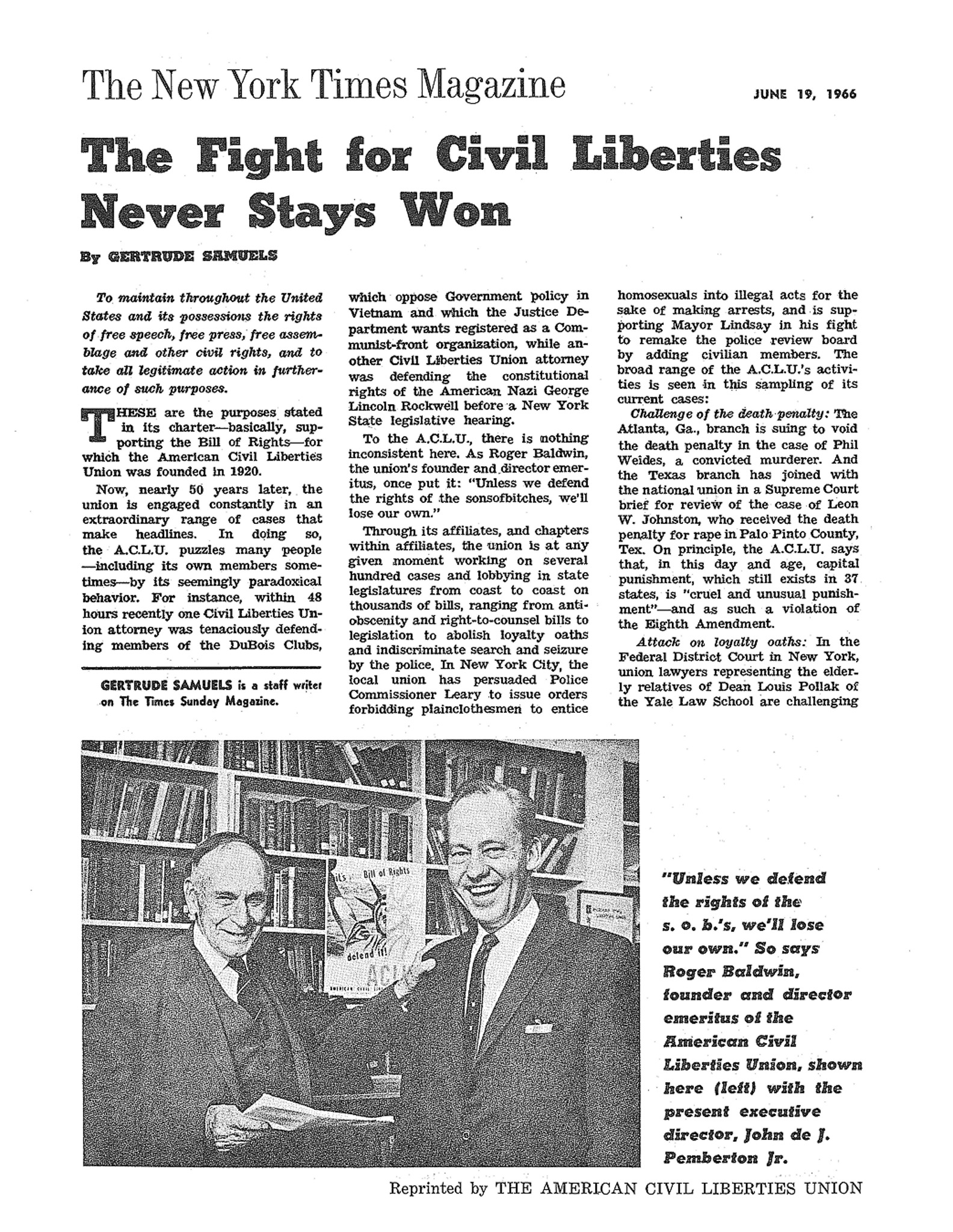
New York Times Magazine Headline Reads: "The Fight for Civil Liberties Never Stays Won"
This reprinted article from the New York Times Magazine documents the first 50 years of the ACLU’s work, highlighting key battles and victories.
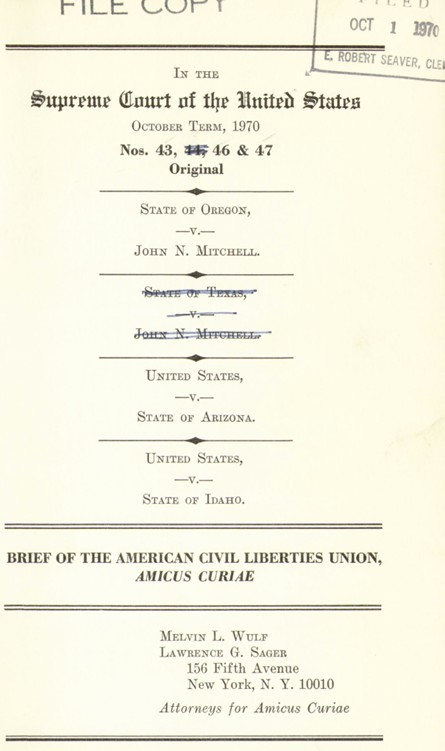
Photo of the ACLU's Amicus Brief In Support of the Supreme Case that Won the Voting Rights Act of 1965
In the landmark 1966 Supreme Court case South Carolina v. Katzenbach, the Court upheld the constitutionality of the landmark Voting Rights Act of 1965, including its controversial "preclearance" provisions. The ACLU filed a friend-of-the-court brief supporting the act and defending federal efforts to combat racial discrimination at the polls.
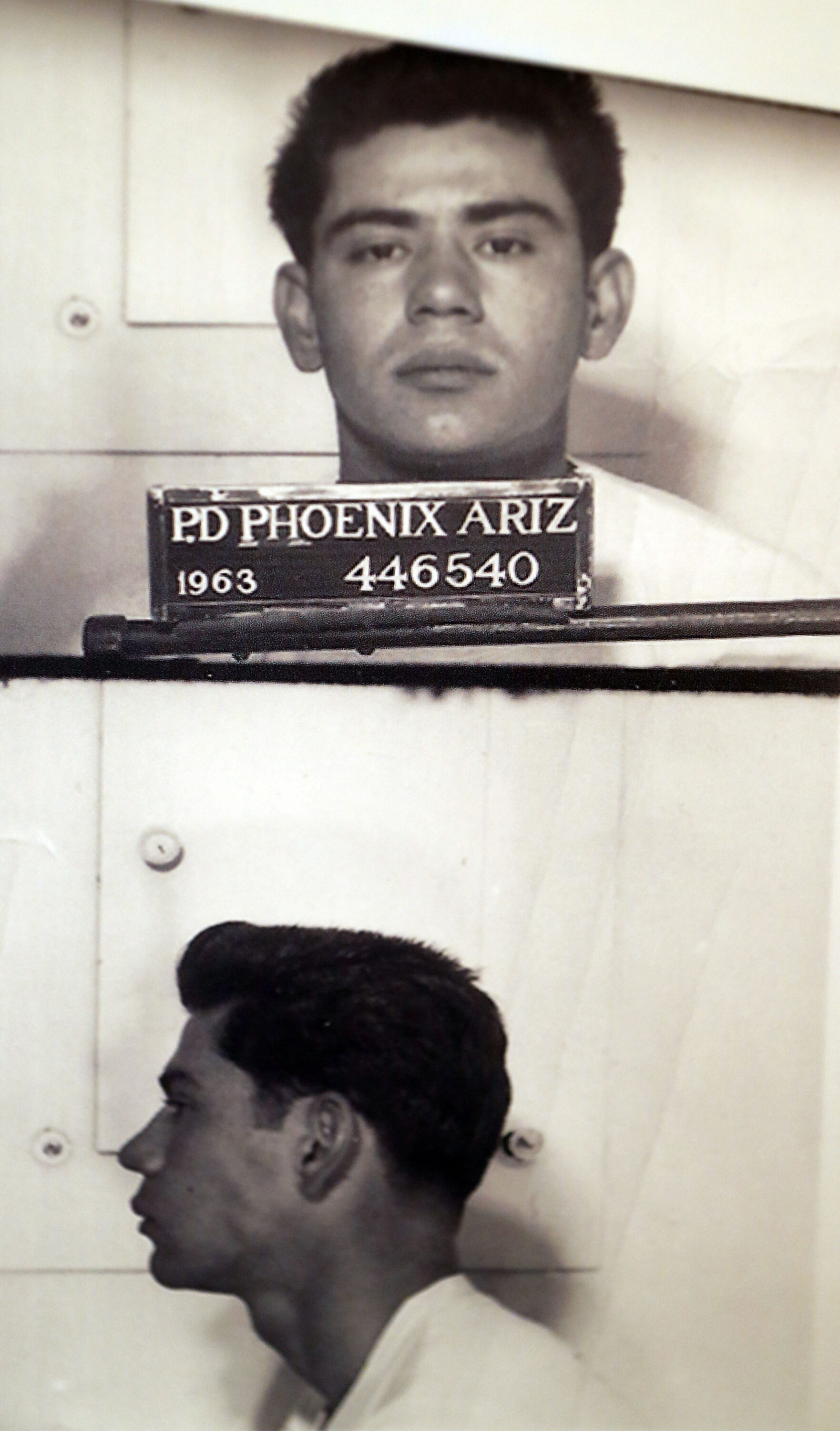
Booking Photos of Ernesto Miranda, the Client of the Miranda Rights Case
ACLU of Arizona attorneys defended Ernesto Miranda, seen being booked here, after his arrest on March 13, 1963. The Supreme Court ruling in the landmark Miranda v. Arizona case resulted in the establishment of "Miranda warnings," which law enforcement must use to inform suspects of their rights before interrogation. The Court held that a suspect in police custody has a Sixth Amendment right to counsel and a Fifth Amendment right against self-incrimination.

Justice Brennan's Comments on the Decision That Led to Miranda Warnings
This document shows Supreme Court Justice William J. Brennan's comments on the landmark Miranda v. Arizona case. The Court’s ruling resulted in the establishment of "Miranda warnings," which law enforcement must use to inform suspects of their rights before interrogation. The Court held that a suspect in police custody has a Sixth Amendment right to counsel and a Fifth Amendment right against self-incrimination.
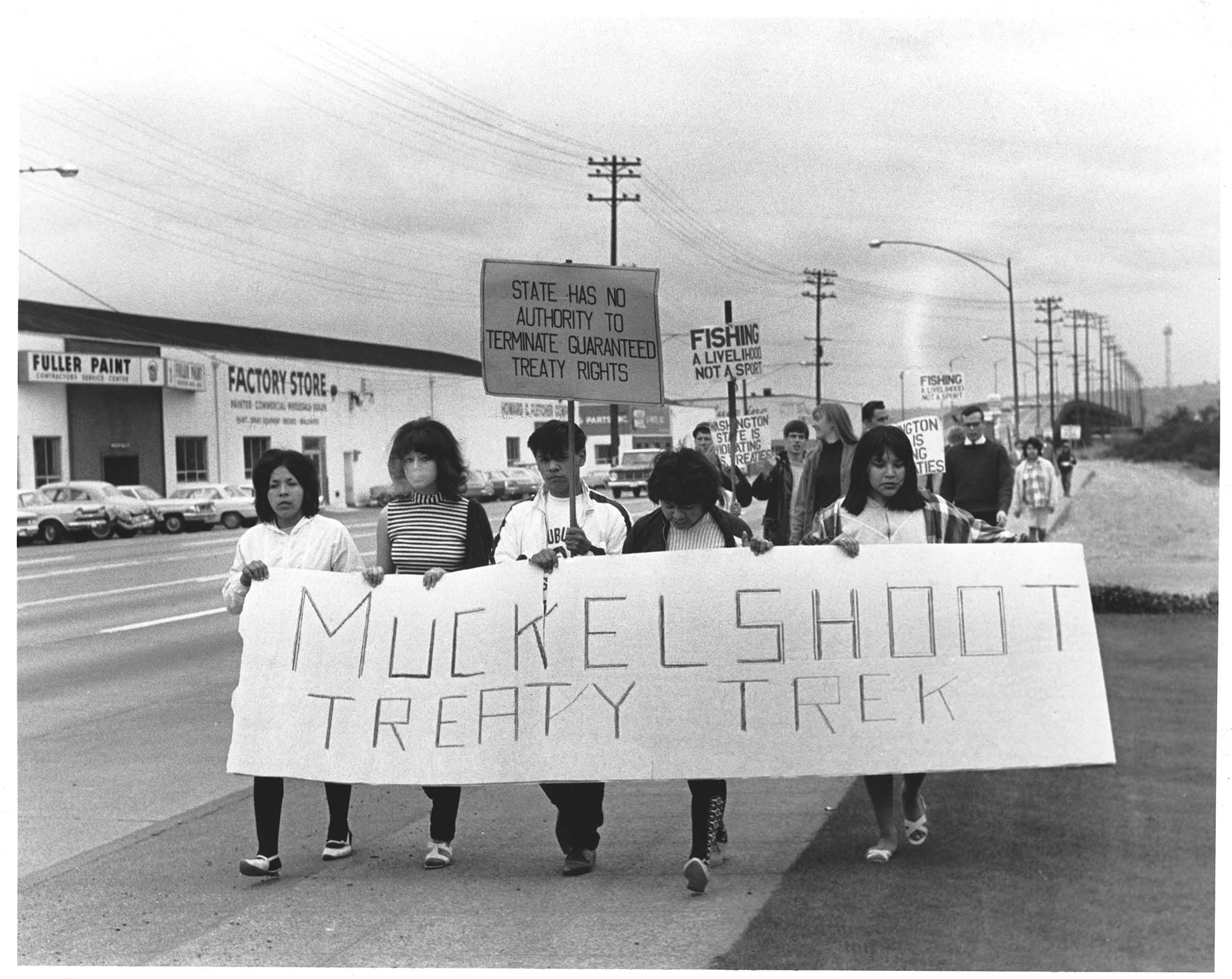
Photo of Muckleshoot Tribal Members Participating in the "Treaty Trek"
In 1963, Native Americans in Washington were arrested for fishing – a right guaranteed by longstanding treaties. In response, tribal activists organized peaceful demonstrations and were met with aggressive crackdowns by the state during a brutal period known as the Fish Wars. One such gathering was the 1966 "Treaty Trek" in which activists marched for five days from the Muckleshoot reservation to the King County Courthouse in support of four tribal members who were arrested for net fishing and who took part in the trek before appearing in court. The ACLU of Washington defended these four Muckleshoot activists in State of Washington v. Moses, marking the organization's first legal intervention specifically to protect Indigenous treaty fishing rights in Washington State.
1967
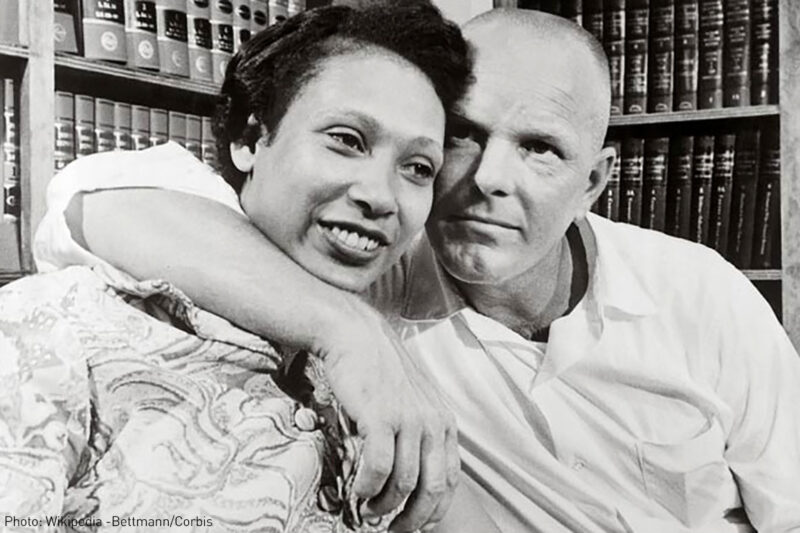
Photo of Mildred and Richard Loving, the Couple that Fought for Equal Right to Marriage Regardless of Race
In the landmark ACLU case, Loving v. Virginia, the Supreme Court recognized an equal right to marriage for all people, regardless of race. Plaintiffs Mildred and Richard Loving, whose marriage was at the center of the case, are pictured here.
Audio Clip of ACLU Attorney Philip J. Hirschkop Successfully Arguing Racial Justice Case at the Supreme Court
In the landmark ACLU case, Loving v. Virginia, the Supreme Court recognized an equal right to marriage for all people, regardless of race. In this clip, ACLU attorney Philip J. Hirschkop successfully argues this racial justice case in front of the Supreme Court.
Executive Director Anthony D. Romero on What the Loving Story Means to Us Now
In the landmark ACLU case, Loving v. Virginia, the Supreme Court recognized an equal right to marriage for all people, regardless of race. In this 2017 piece produced on the 50th anniversary of the case, ACLU Executive Director Anthony Romero looks back at the milestone win and the years since.
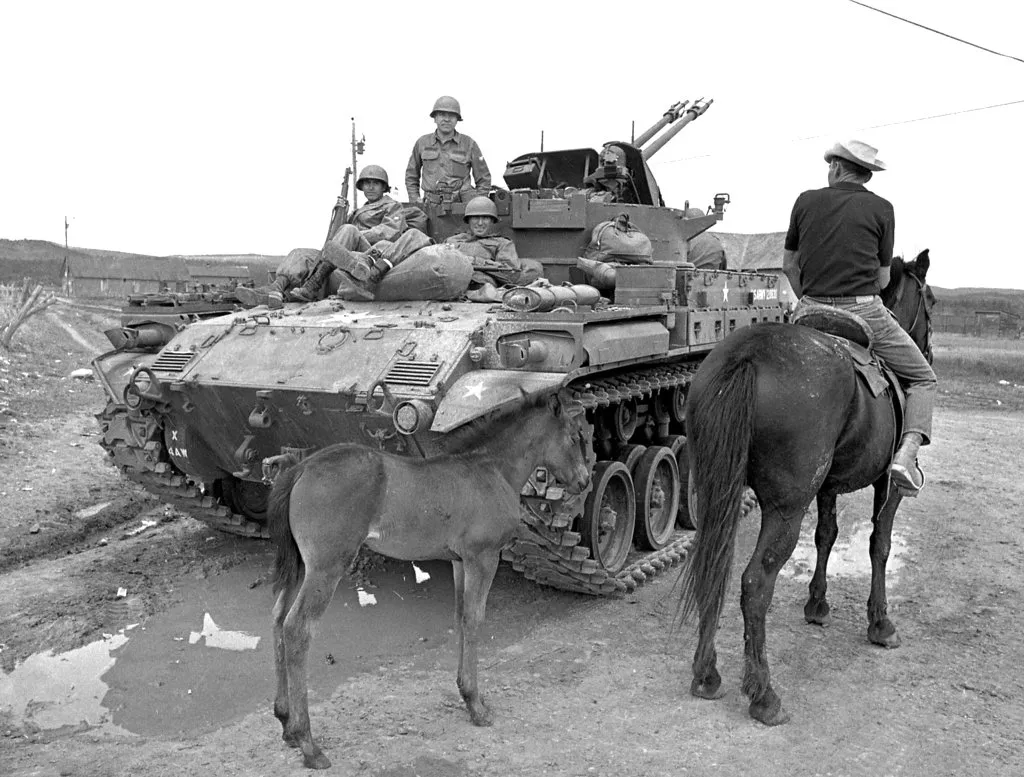
Photo of New Mexico National Guard Troops Searching Residential Area
In 1967, land grant activists briefly seized the Tierra Amarilla courthouse in New Mexico. In retaliation, the New Mexico National Guard stormed a nearby community picnic and placed 50 unaffiliated people—mostly women and children of Mexican descent—under detention. Although these people had nothing to do with the raid, the guardsmen held the them at gunpoint in a barb-wire sheep pen for 48 hours without access to potable water or restrooms. The ACLU of NM represented some of these women and children in claims of unlawful arrest against the National Guard. The suit resulted in monetary damages for some of the families, and a measure of justice for the indignities they had suffered.
1969
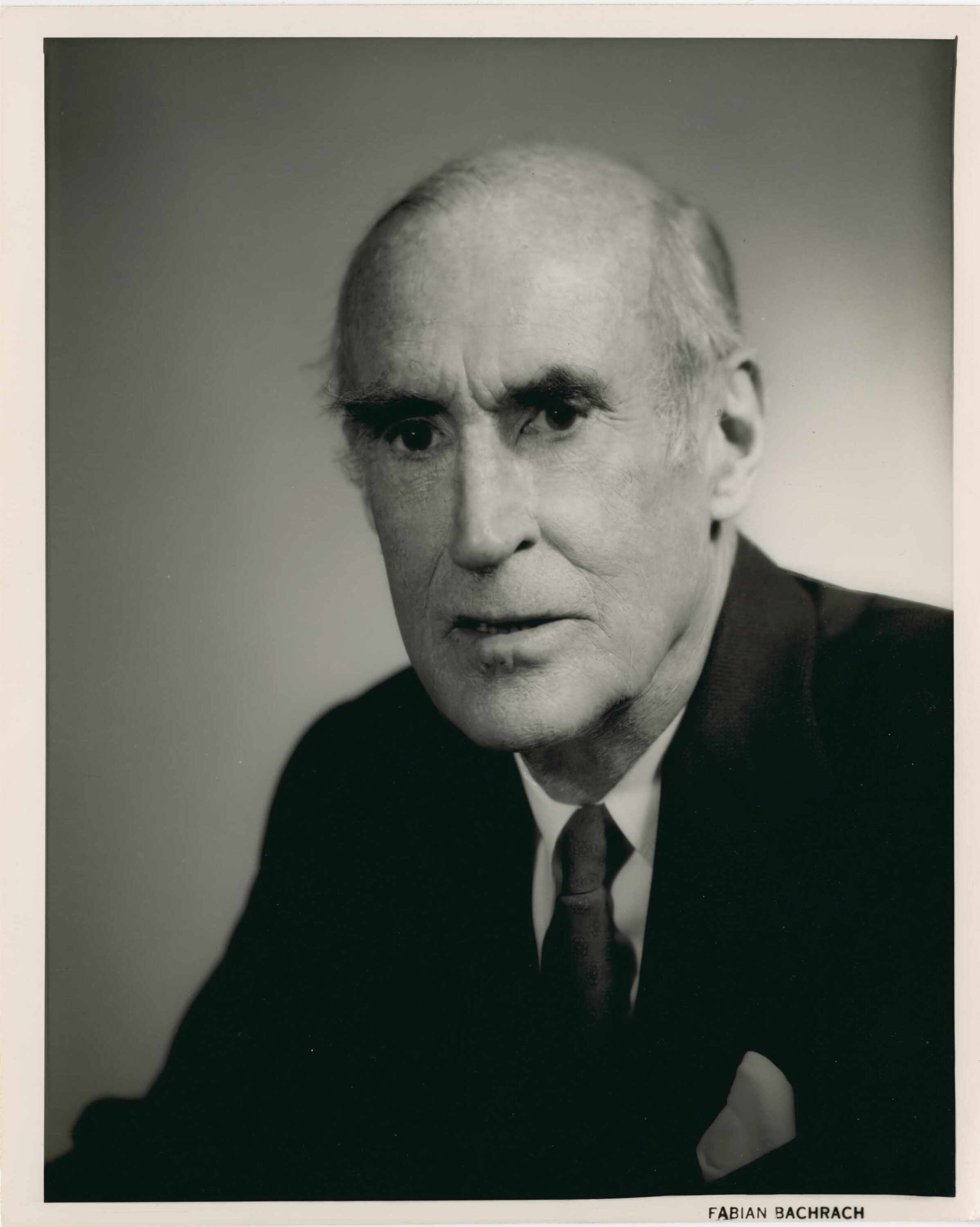
Photograph of Ernest Angell, Former Chairman of the ACLU’s National Board of Directors
This 1969 photograph portrays Ernest Angell, who served as the chairman of the ACLU’s National Board of Directors for nearly two decades.
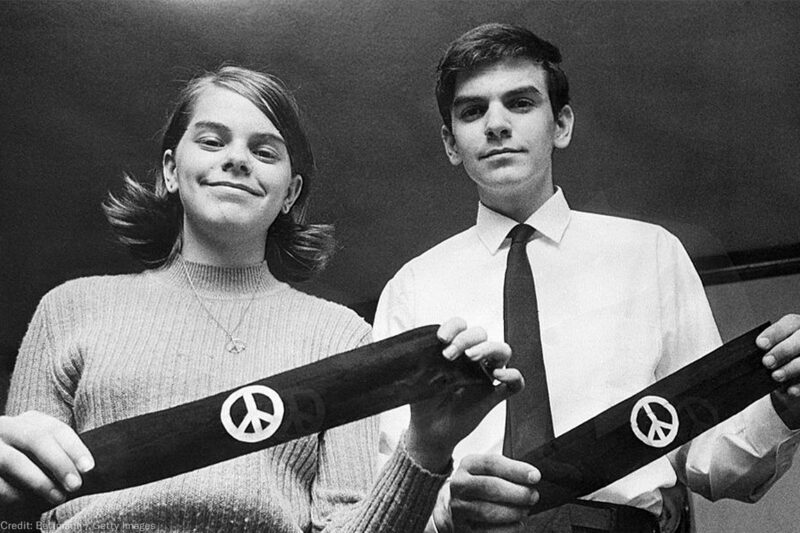
Mary Beth and John Tinker Alongside Students Displaying the Objects of the Tinker v. Des Moines Challenge
In the 1969 case, Tinker v. Des Moines, the Supreme Court found that suspending public school students Mary Beth Tinker and her brother John (pictured here) for wearing black armbands to protest the Vietnam War was unconstitutional since students do not "shed their constitutional rights to freedom of speech or expression at the school-house gate.” The ACLU successfully argued the case before the Court.
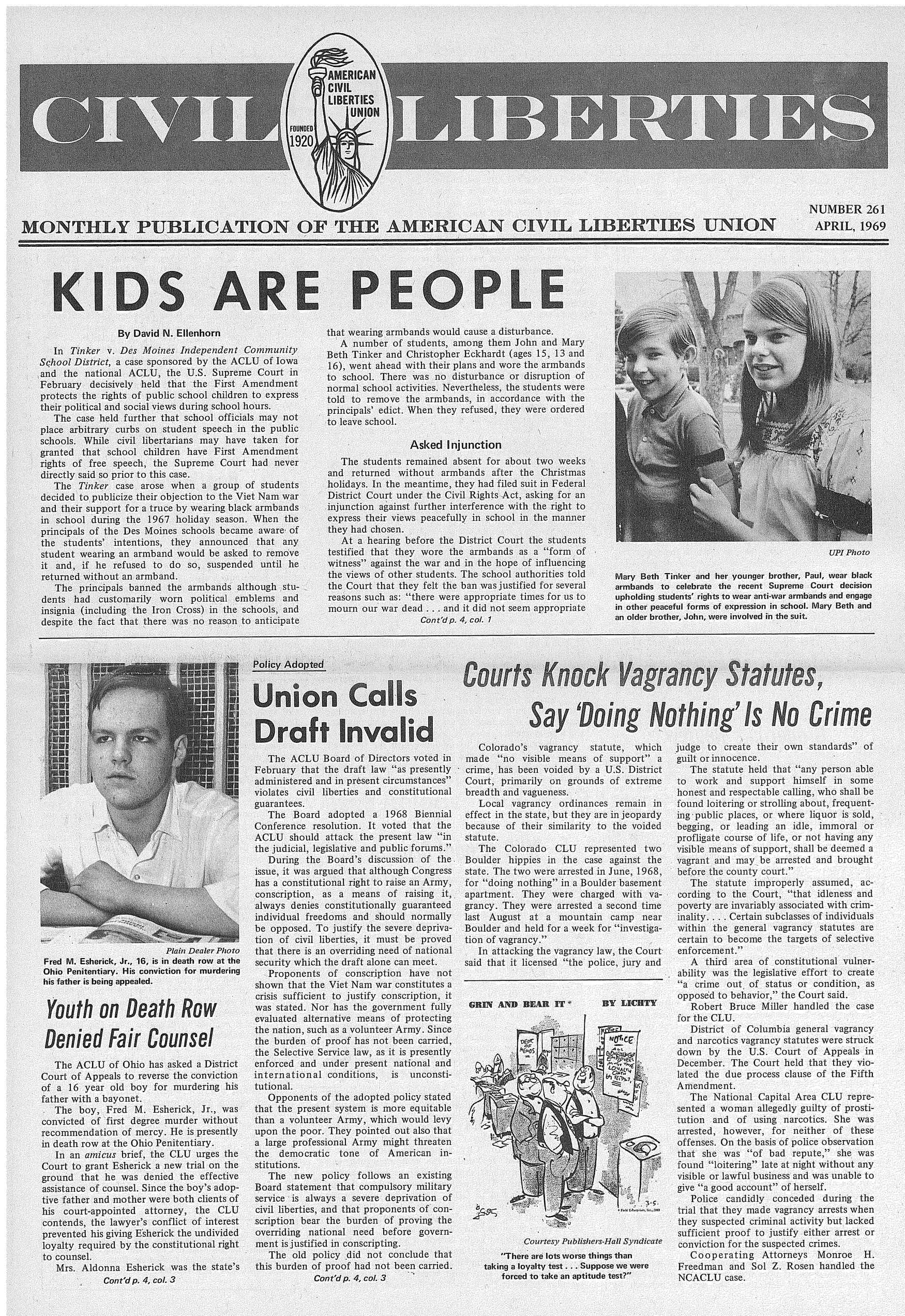
ACLU’s Newsletter Announcing Historic Win in Tinker v. Des Moines
This 1969 edition of the ACLU’s newsletter analyzes the impact of the Supreme Court’s ruling in our favor in the landmark case Tinker v. Des Moines, which cemented students’ rights to free speech in public schools.
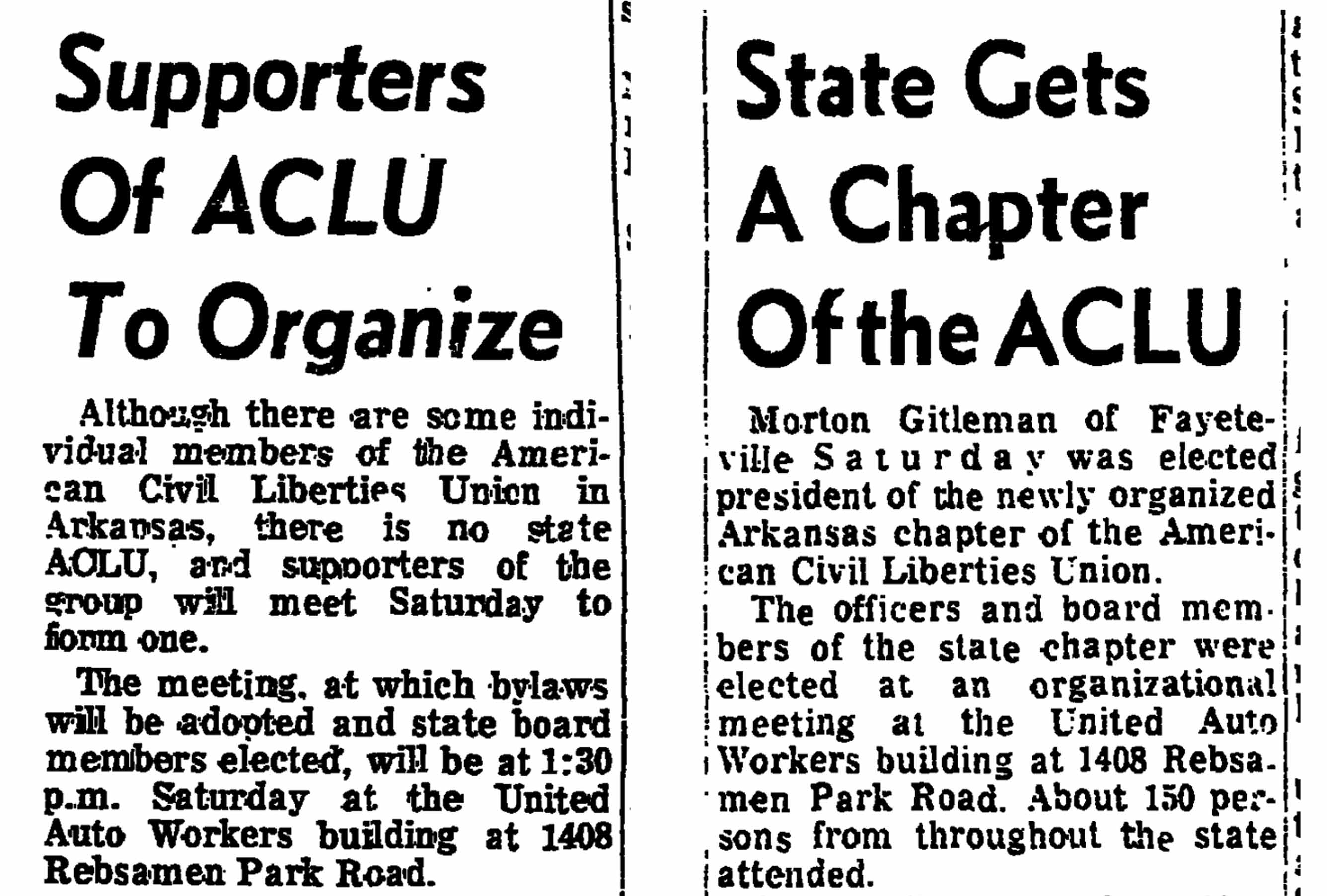
Collage of Newspaper Clippings Detailing the Founding of the ACLU of Arkansas
These news clippings from the Arkansa Gazette detail the founding of the American Civil Liberties Union of Arkansas in January, 1969.
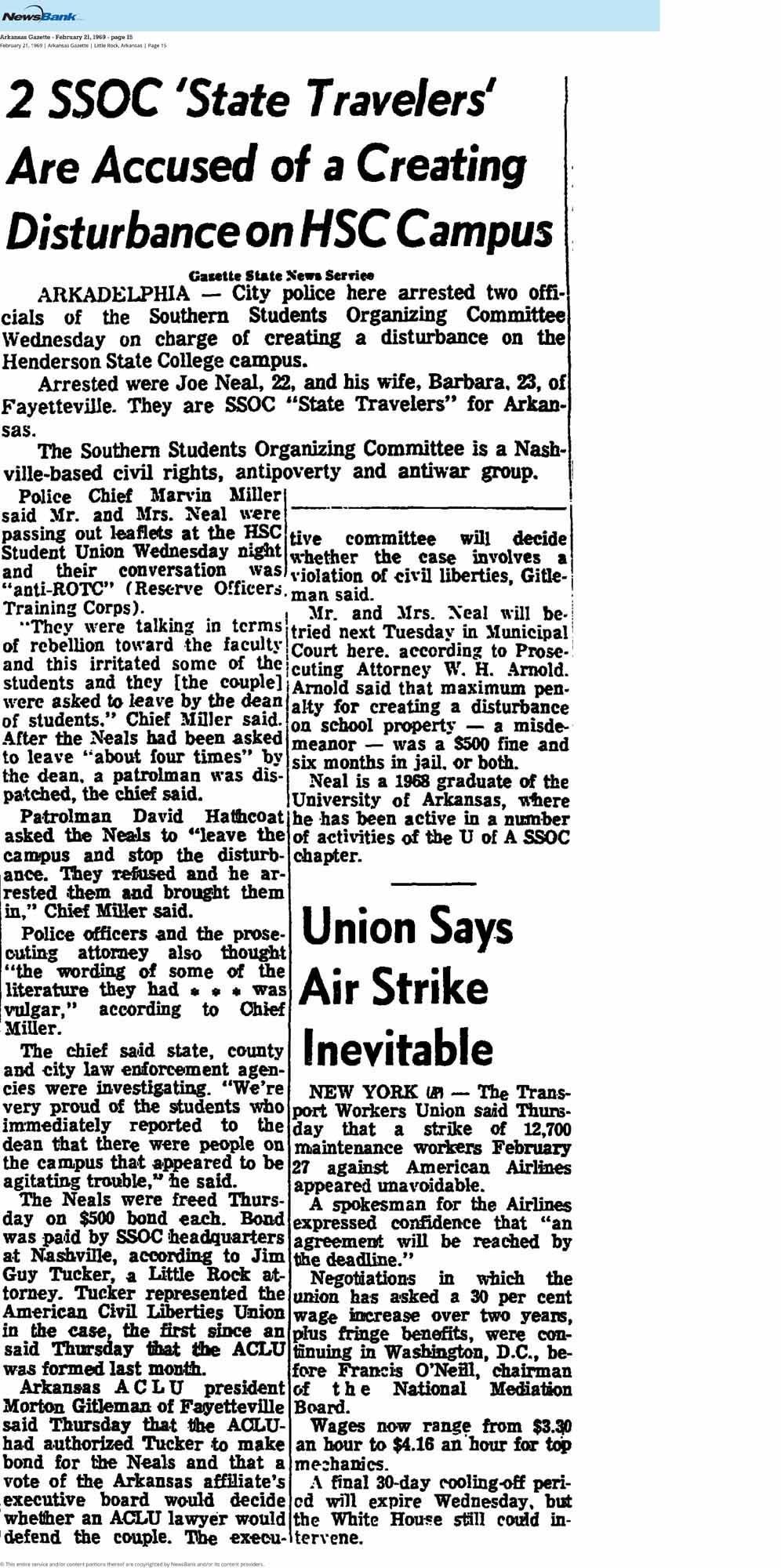
Newspaper Clipping Covering the ACLU Arkansas' First Case
This February, 1959 Arkansas Gazette news clipping details Neal v. Still, a battle ACLU of Arkansas entered just one month after its founding. When Joe and Barbara Neal were arrested at Henderson State College for peacefully speaking with students and distributing literature about the Southern Student Organizing Committee, civil rights, and opposition to the Vietnam War, the ACLU stepped in. In 1970, the Arkansas Supreme Court struck down the law used to prosecute the Neals as unconstitutionally vague, declaring it violated the First Amendment. Neal v. Still became the first case in which the ACLU of Arkansas secured a decision from the state’s highest court — a landmark victory that affirmed the right to free expression and established the affiliate's enduring commitment to defending constitutional rights, even when doing so was unpopular.