The 1980s
Share
1980
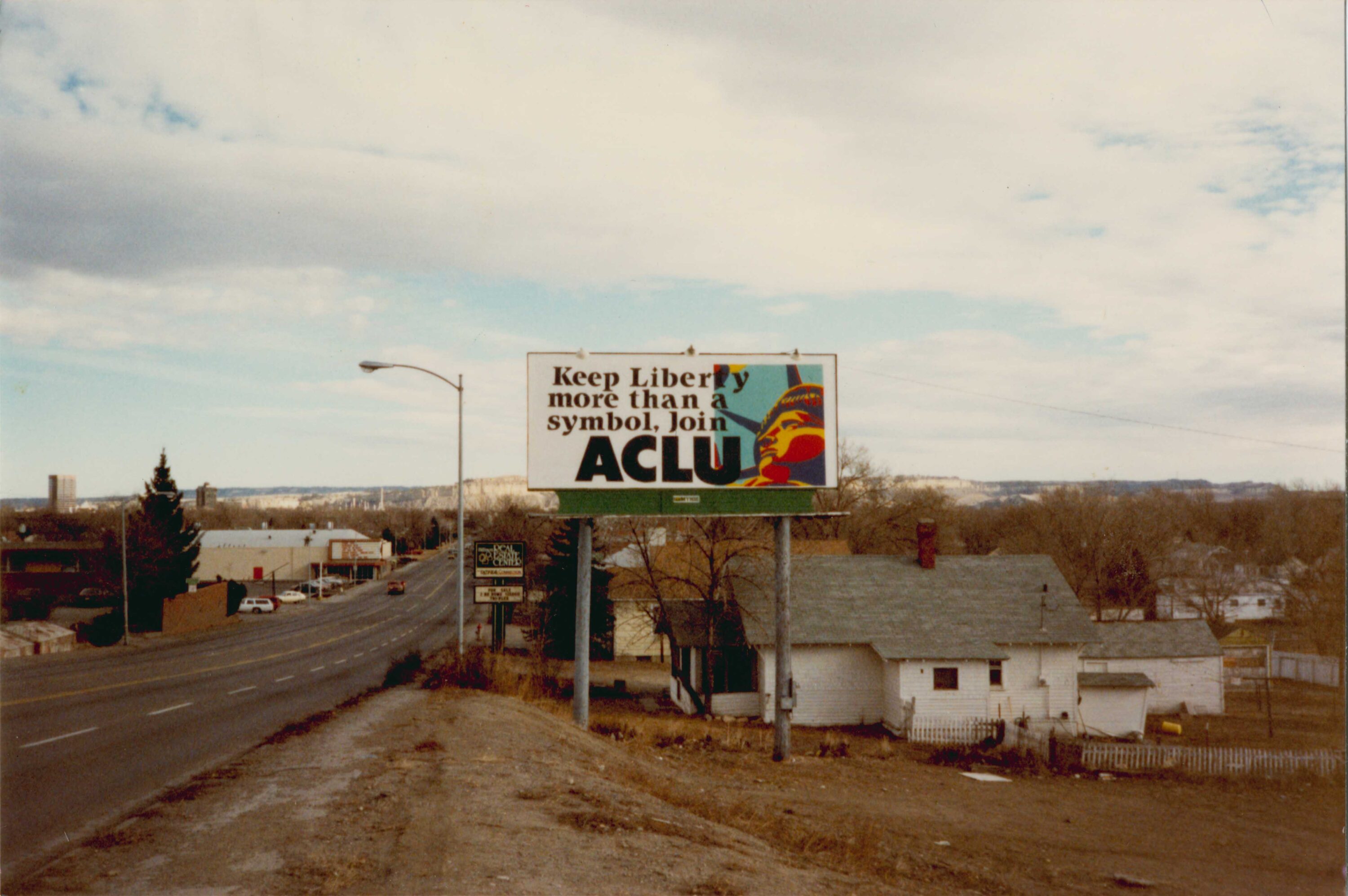
"Keep Liberty More Than a Symbol. Join ACLU."
The ACLU reached out to communities in Billings, Montana in 1980 with this billboard proclaiming: "Keep Liberty more than a symbol. Join ACLU."
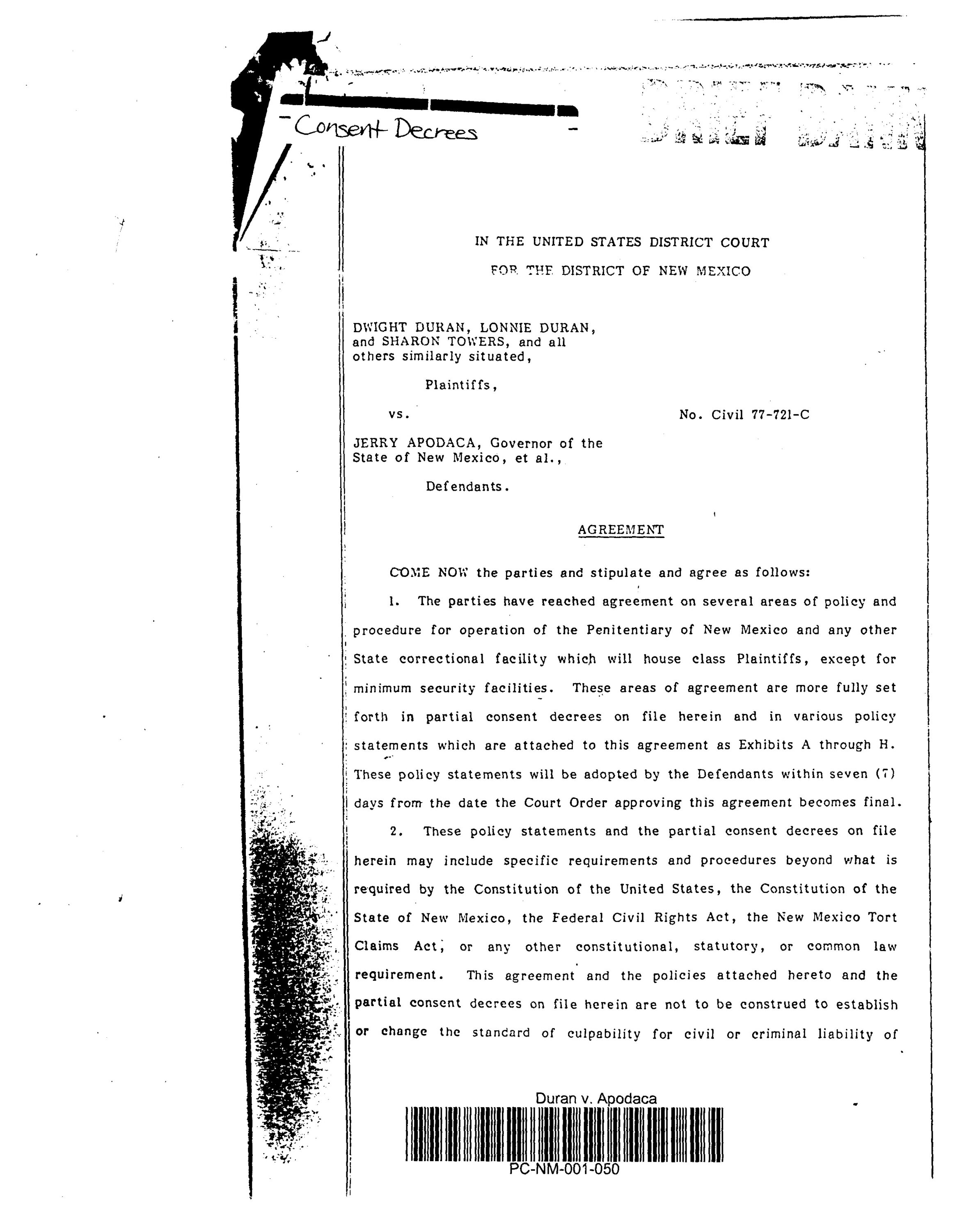
Victory for Incarcerated Individuals: The Consent Decrees
In 1977, Dwight Duran, a man incarcerated in the Penitentiary of New Mexico (PNM), wrote a 99-page brief detailing cruel and unusual punishment in the prison. Duran used the brief to file Duran v. King, a class-action lawsuit against the state, and in 1978, the ACLU of New Mexico joined the suit. In 1980, before reforms were implemented, the PNM erupted in one of the most violent prison riots in American history. Pushed over the edge by the abuse, overcrowding, and lack of programming and medical care detailed in Duran’s brief, incarcerated persons took over the prison for 36 hours, leaving 33 dead and hundreds injured. Shortly thereafter, the ACLU-NM and Duran won sweeping reforms to the New Mexico corrections system and two decades of federal oversight as the state signed the Duran Consent Decree. Pictured here is the first page of the Consent Decree.
1981
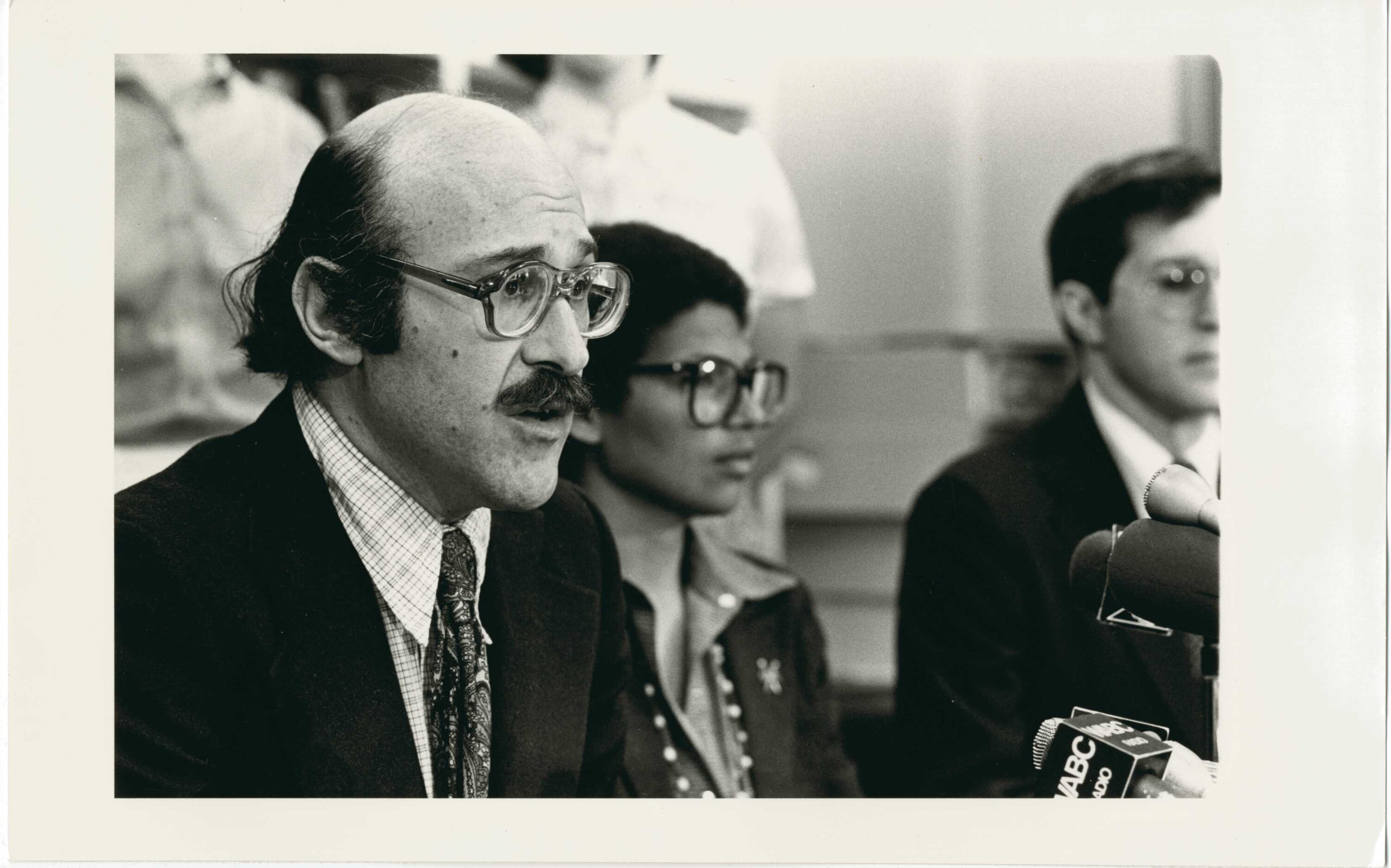
Executive Director of the ACLU Ira Glasser with Olympic Rower Anita DeFrantz On U.S. Boycott of Moscow Olympics.
Following President Jimmy Carter’s announcement that the United States would boycott the 1980 Olympic Games in Russia, the ACLU joined Olympic rower Anita DeFrantz to sue on behalf of athletes who were denied the opportunity to compete. The ACLU president and DeFrantz are seen here speaking at a press conference regarding the lawsuit.
Audio Clip of Former NYCLU Attorney Alan Levine Successfully Arguing Free Speech Case at Supreme Court
This audio clip is from the Board of Education, Island Trees School District v. Pico case, in which the ACLU successfully represented students who sued their school board on First Amendment grounds for removing certain "objectionable books" from the school library. While acknowledging a school's right to remove material that was "pervasively vulgar" or "educationally unsuitable," the Supreme Court held that, in this case, the students' First Amendment "right to know" had been violated.
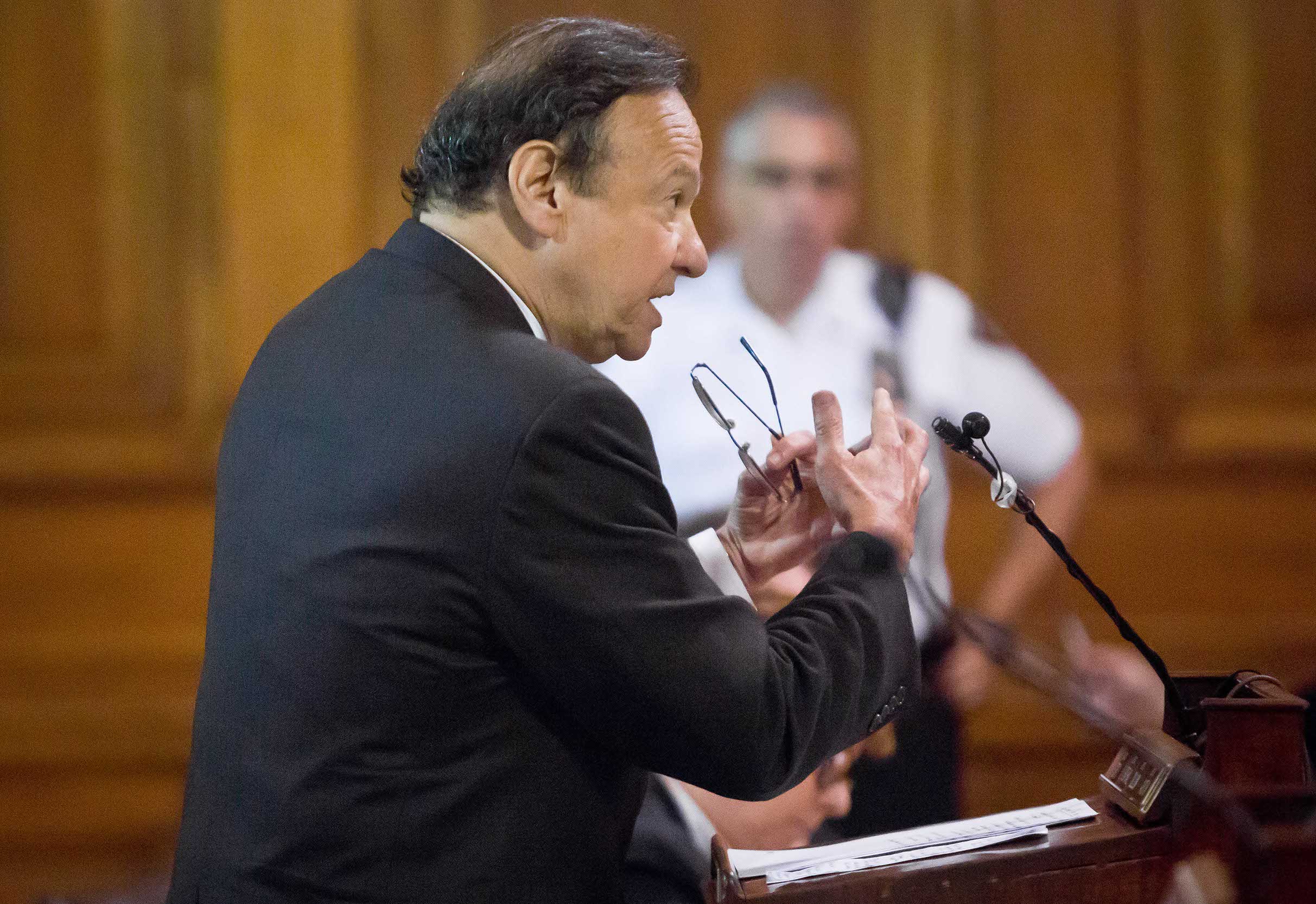
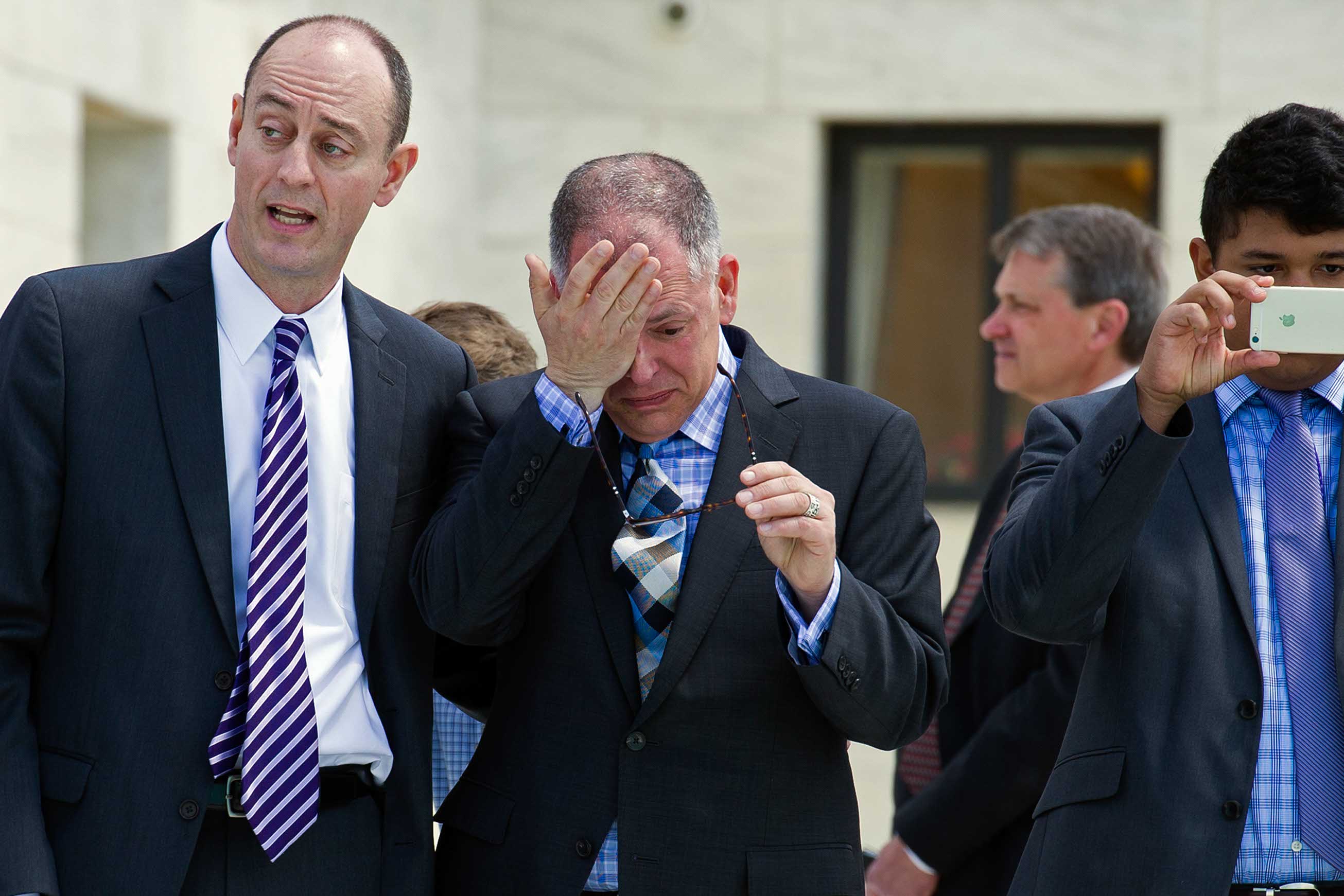
One of the Legal Minds Behind Major Banned Books Case
In Board of Education, Island Trees School District v. Pico, the ACLU successfully represented students who sued their school board on First Amendment grounds for removing certain "objectionable books" from the school library. While acknowledging a school's right to remove material that was "pervasively vulgar" or "educationally unsuitable," the Supreme Court held that, in this case, the students' First Amendment "right to know" had been violated. While he did not argue the case, NYCLU attorney Arthur Eisenberg, pictured here in 2015, was instrumental in shaping legal arguments for Pico.
1982
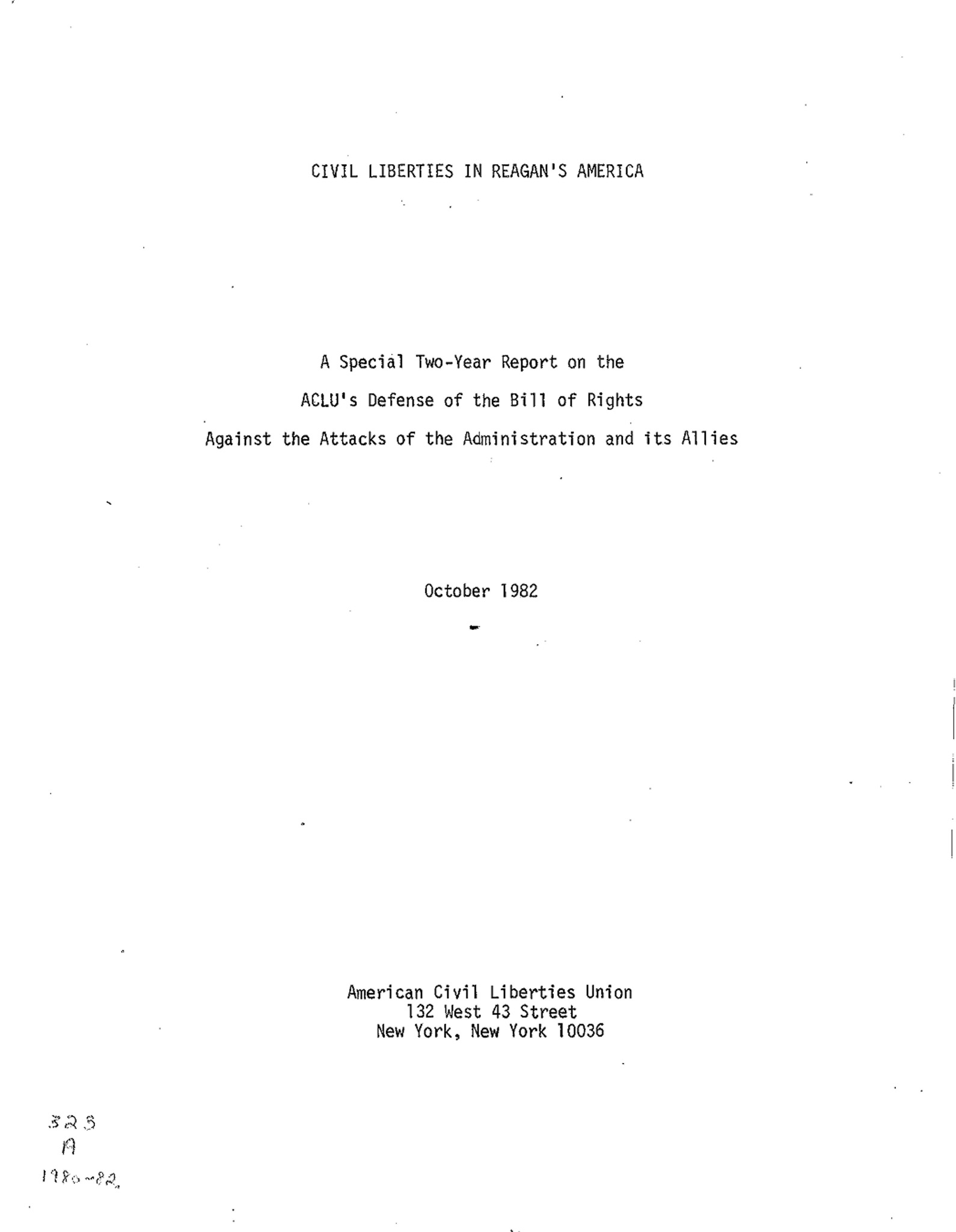
ACLU's Special Annual Report, "Civil Liberties In Reagan's America" Covering 1980-1982
ACLU President Norman Dorsen wrote in an annual report from the 1980s: "The forces aligned against the Bill of Rights are strong and well-financed. I believe that the American people overwhelmingly desire to maintain their traditional freedoms under the Constitution. The ACLU remains committed to unrelenting effort on their behalf.”
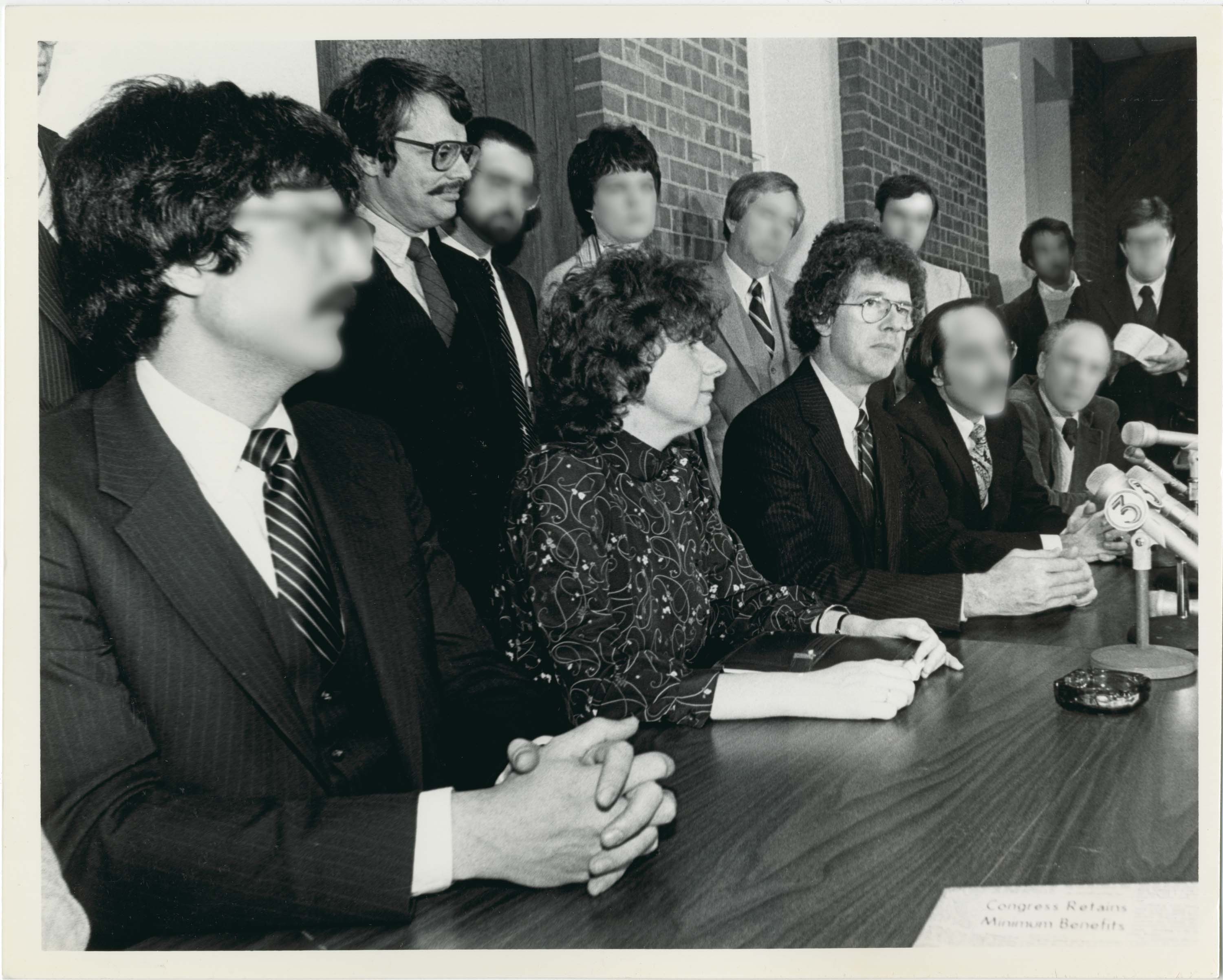
Legal Team Outlines Fight For Academic Freedom In Arkansas During Press Conference
Following a successful challenge to the teaching of creationism in Arkansas schools, ACLU of Arkansas director Sandra Kurjiaka, cooperating attorney Philip Kaplan, and ACLU Legal Director Bruce J. Ennis hold a press conference to explain the ruling’s impact.
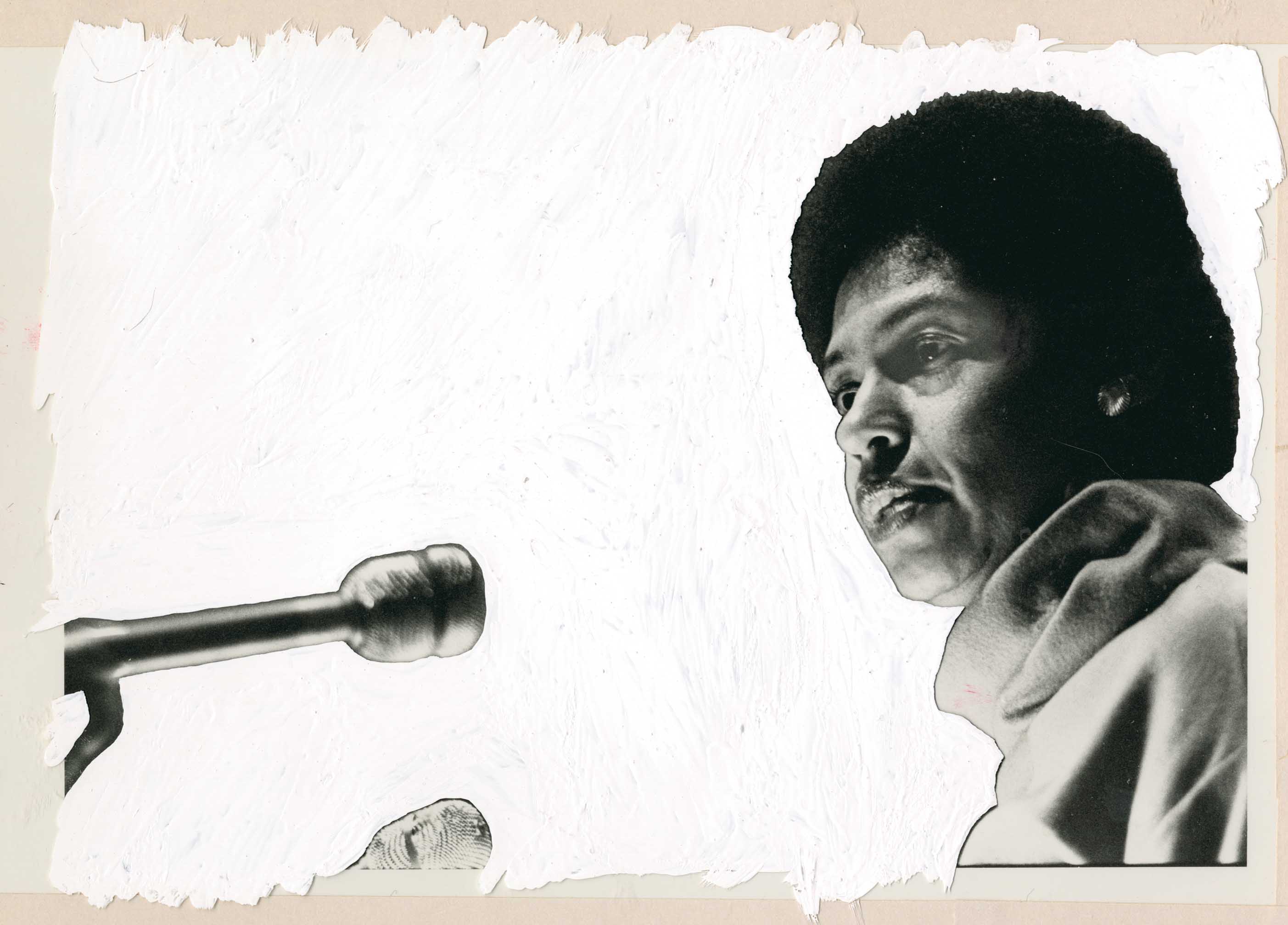
Former ACLU Assistant Legal Director Eleanor Holmes Norton
This collage features a photograph of former ACLU Assistant Legal Director Eleanor Holmes Norton speaking at an event.
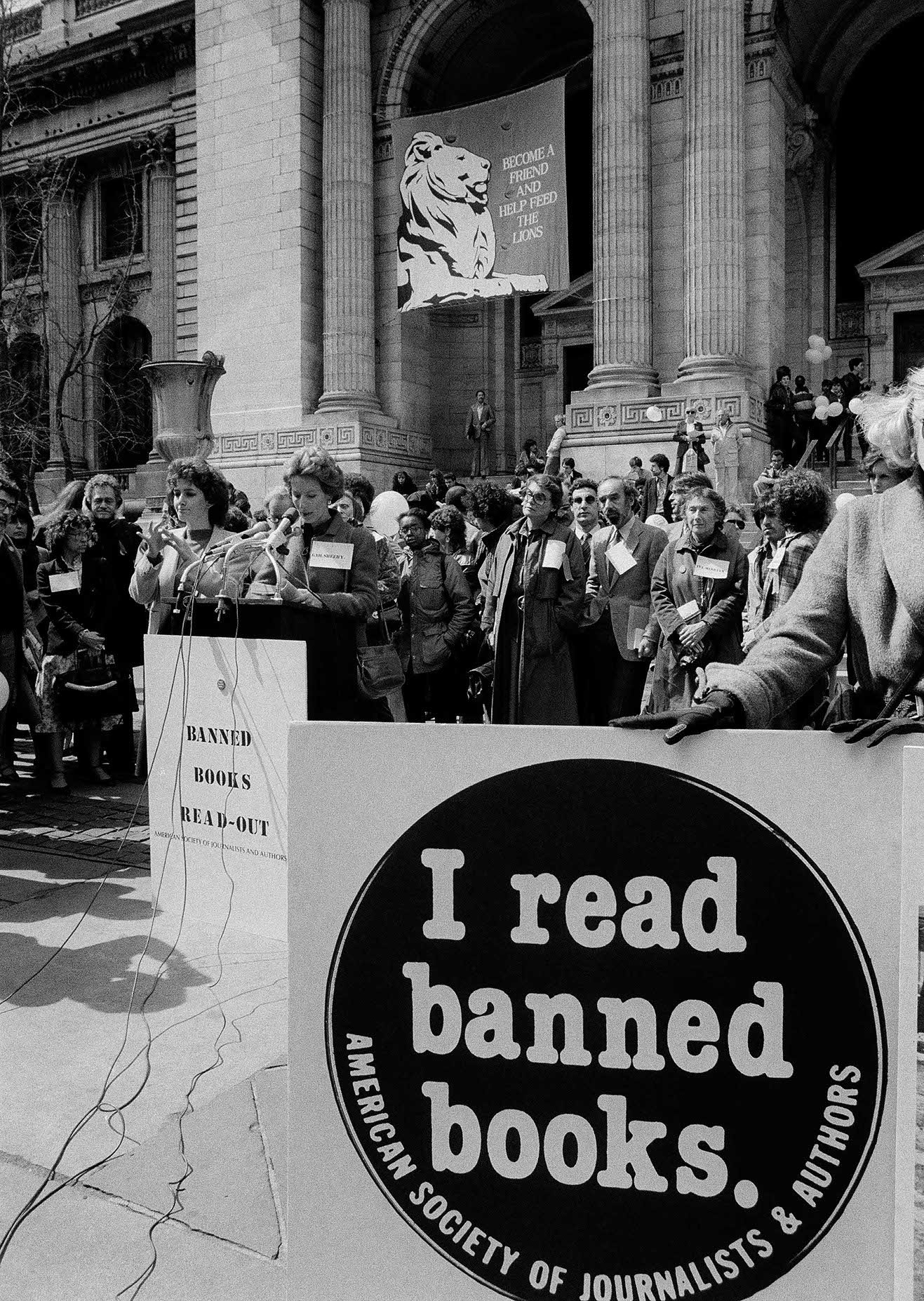
Photo of "First Banned Books Read Out"
In Board of Education, Island Trees School District v. Pico, the ACLU successfully represented students who sued their school board on First Amendment grounds for removing certain "objectionable books" from the school library. While acknowledging a school's right to remove material that was "pervasively vulgar" or "educationally unsuitable," the Supreme Court held that, in this case, the students' First Amendment "right to know" had been violated. This April 1, 1982 photo depicts the historic "First Banned Books Read Out" demonstration, held in New York in the same year as the case.
1983
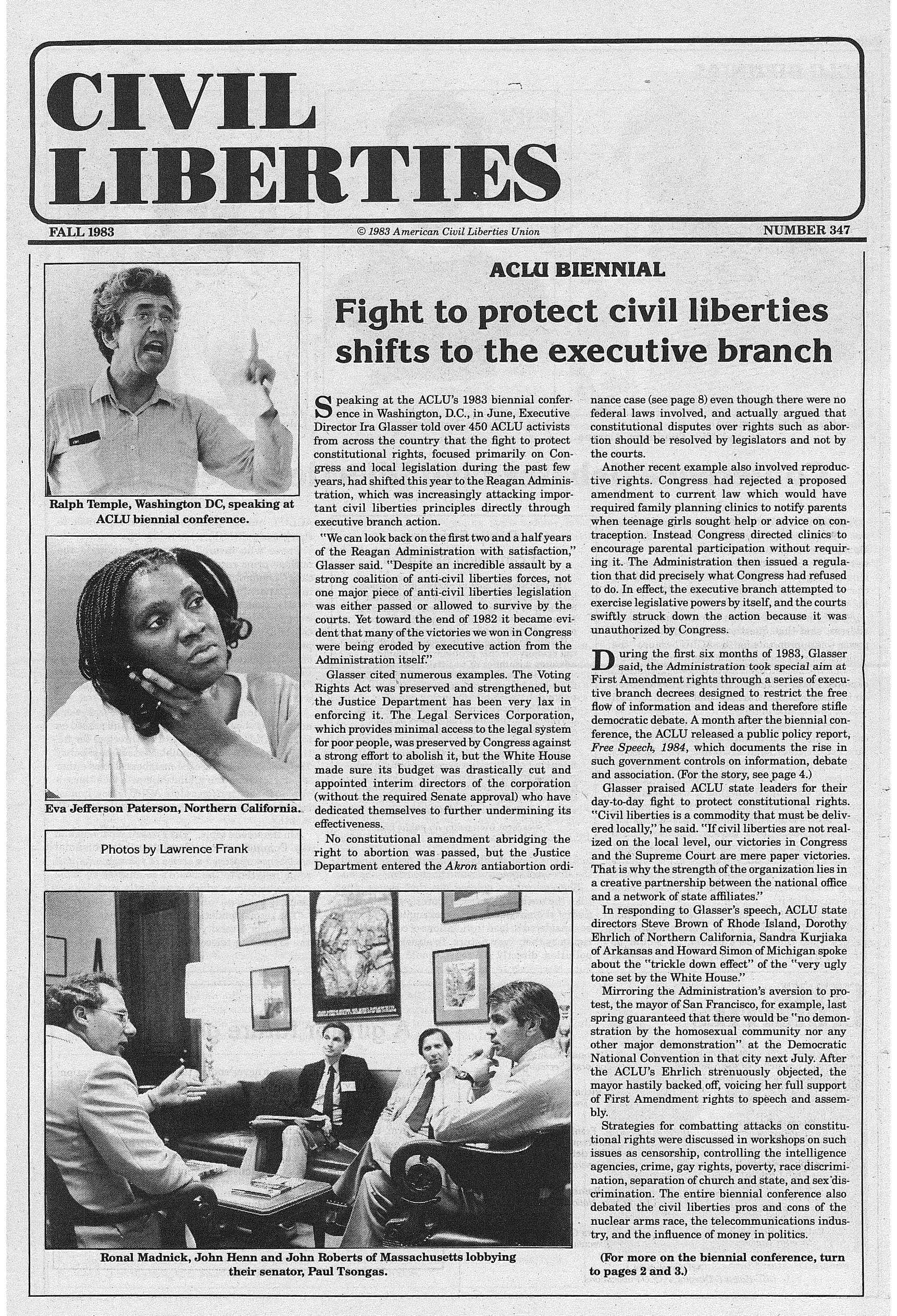
ACLU's Civil Liberties Newsletter, "Fight to Protect Civil Liberties Shifts to the Executive Branch"
This newsletter from the fall of 1983 documents the ACLU’s work during the Reagan administration to protect civil rights and civil liberties.
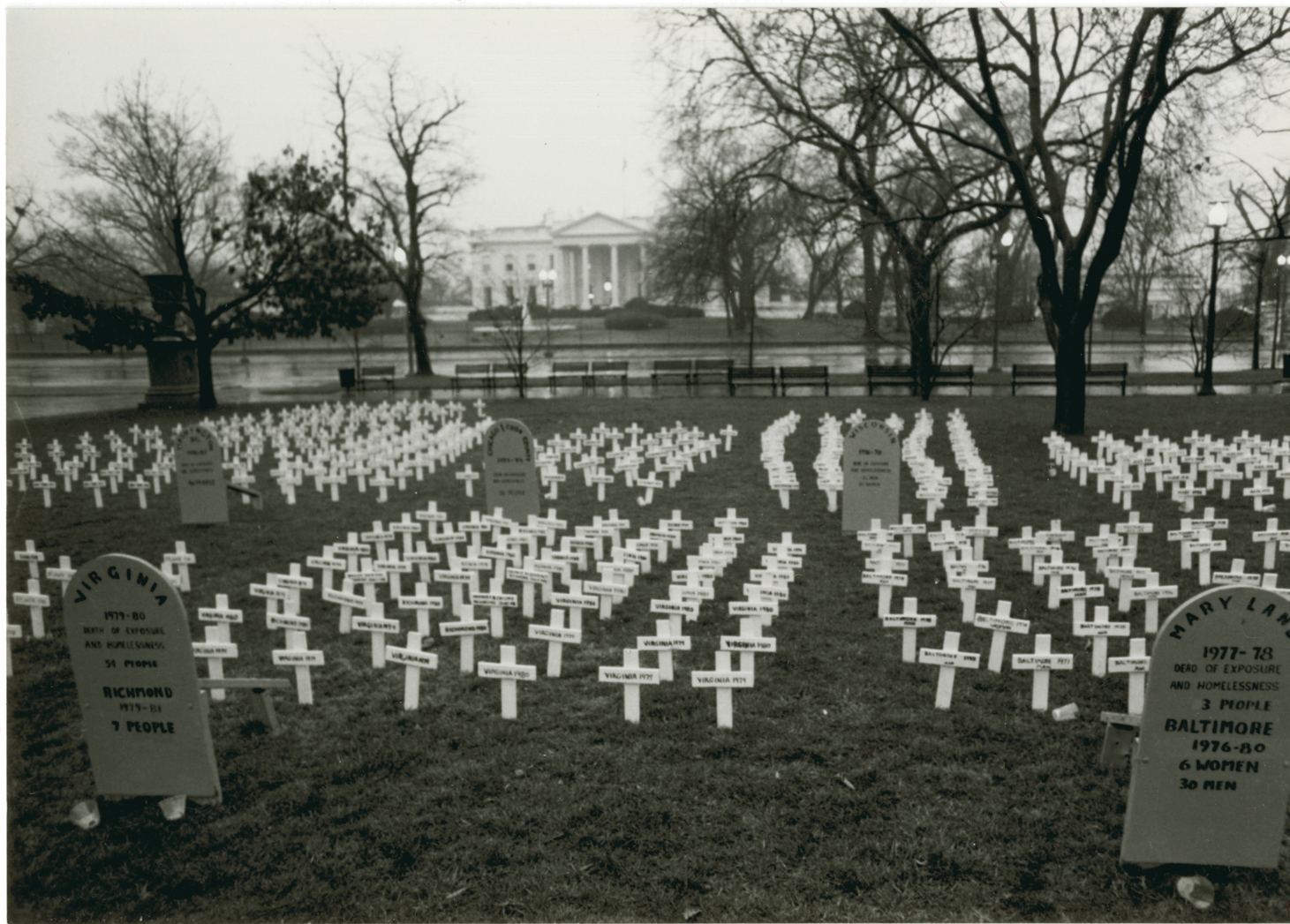
Community for Creative Nonviolence and ACLU Protest for Rights for Unhoused People
In 1983, the Community for Creative Nonviolence (CCNV) erected a tent city in Lafayette Park, just outside the White House, and planted crosses commemorating unhoused individuals who had died of exposure. The ACLU helped CCNV seek a temporary injunction to protect the tent city protest as protected speech under the First Amendment.
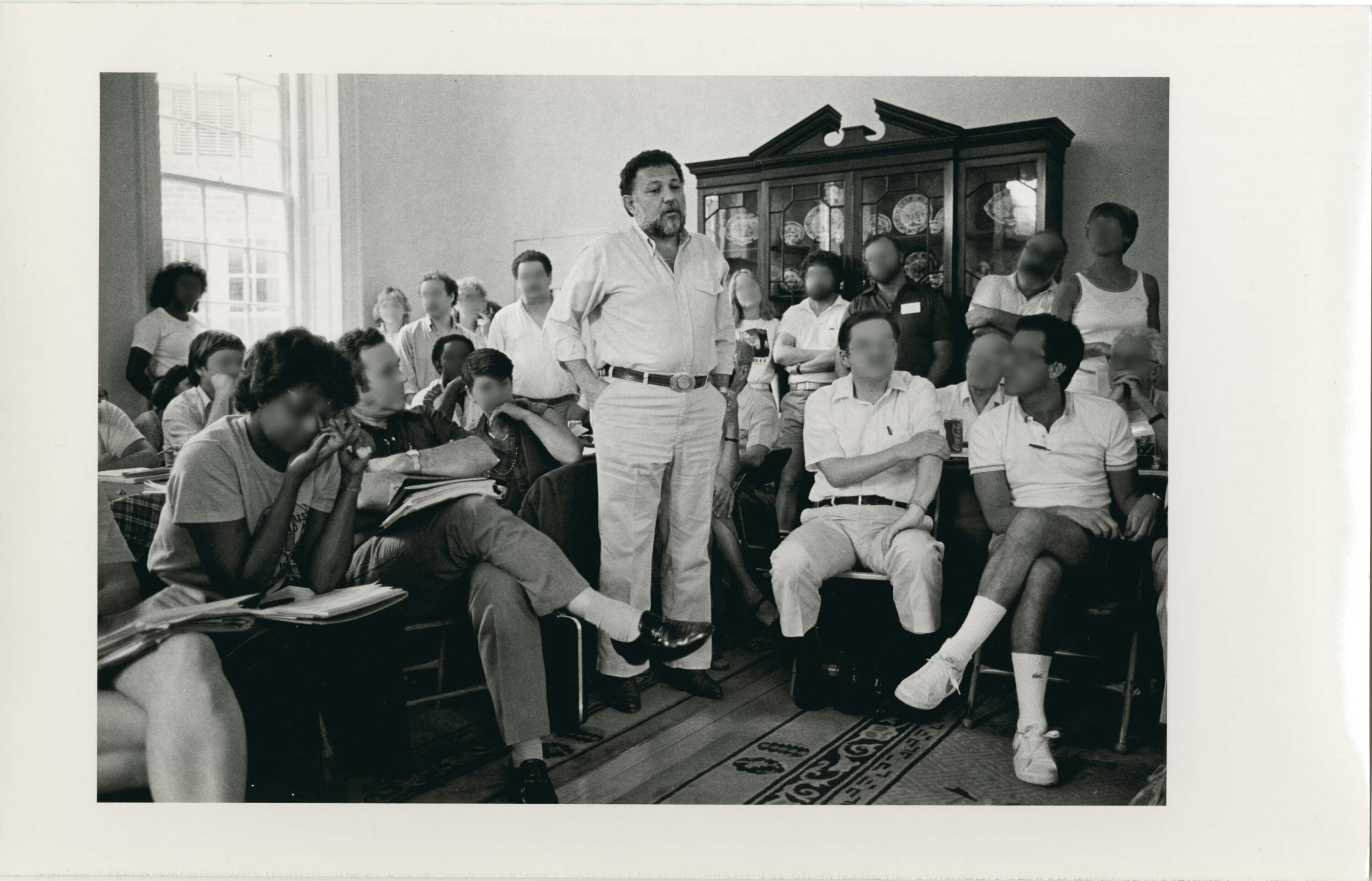
Philip Hirschkop, Part of the Legal Team in Loving v Virginia
Philip Hirschkop, one of the lawyers in the landmark Loving v. Virginia Supreme Court case, addresses the Board of Directors at the 1983 ACLU Biennial.
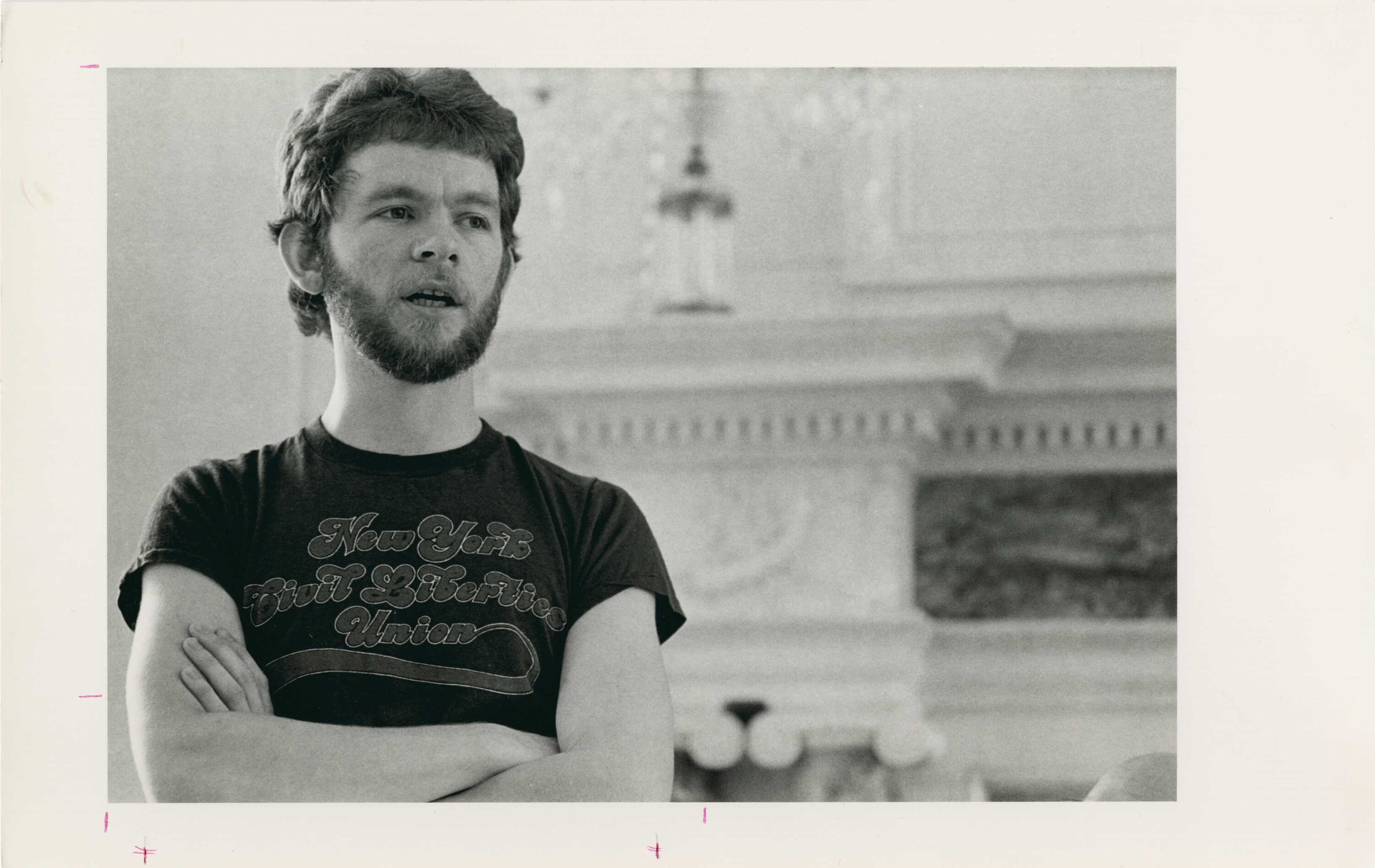
NYCLU Leadership in 1983
Gara La Marche, the former associate director of the New York Civil Liberties Union, sports a NYCLU T-shirt at the ACLU’s 1983 Biennial Conference.
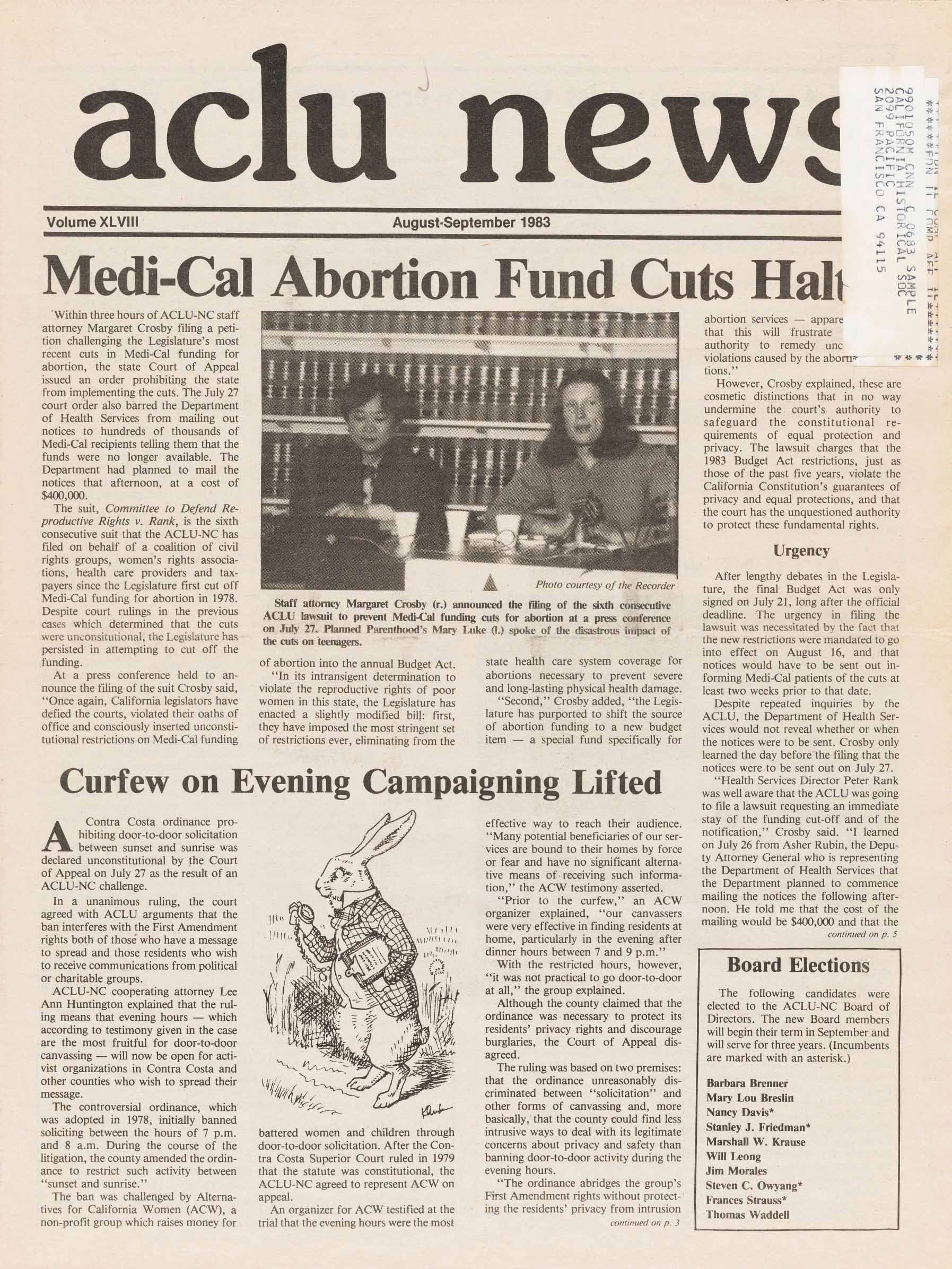
Cover of the 1983 Issue of the ACLU News
In this photo from the cover of the August-September 1983 issue of the ACLU of Northern California's newsletter, ACLU attorney Margaret “Maggie” Crosby announces the filing of a lawsuit to fight against the Legislature stripping abortion funding from Medi-Cal.
1984
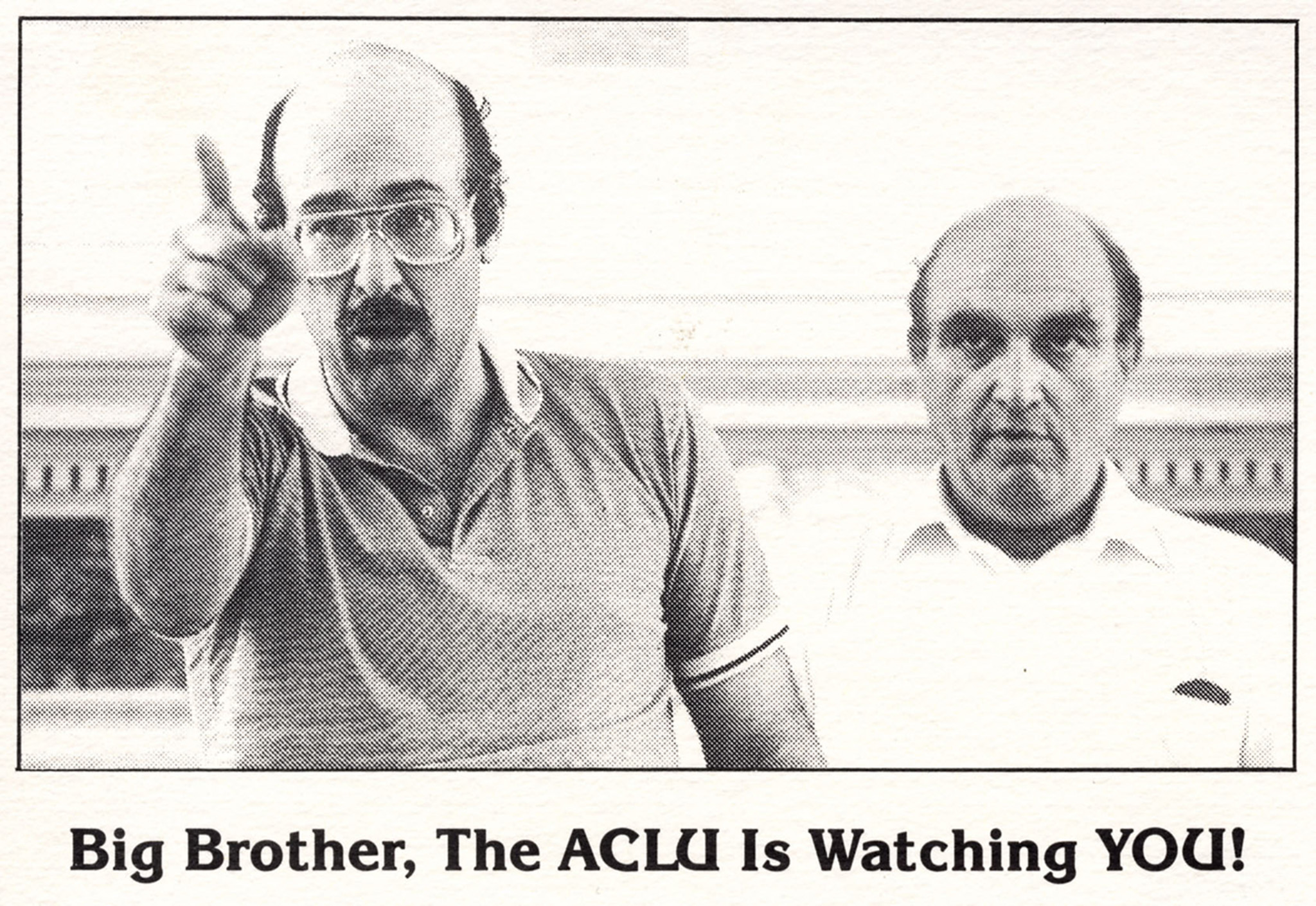
ACLU Postcard Featuring Executive Director of the ACLU Ira Glasser Reminding the Government "The ACLU is Watching You"
This postcard from the 1980s turns the classic line from George Orwell’s “1984” on its head. Big Brother may be watching us — but we’ve got our eye on Big Brother, too.
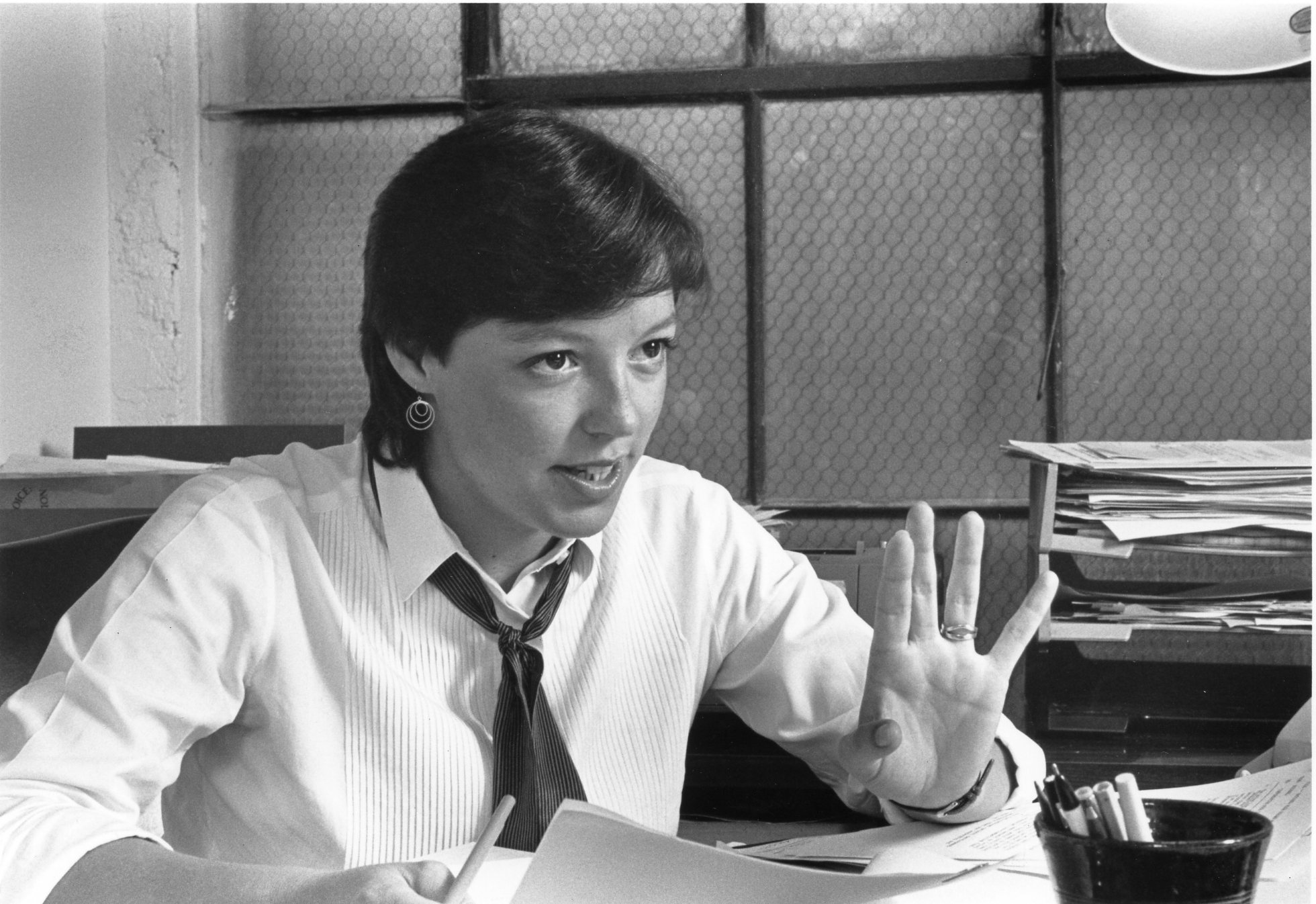
Dorothy Ehrlich Led for Decades at the ACLU and ACLU of Northern California
Dorothy Ehrlich, seen here in 1984, served as executive director of the ACLU of Northern California for more than 25 years before becoming deputy executive director of the ACLU.
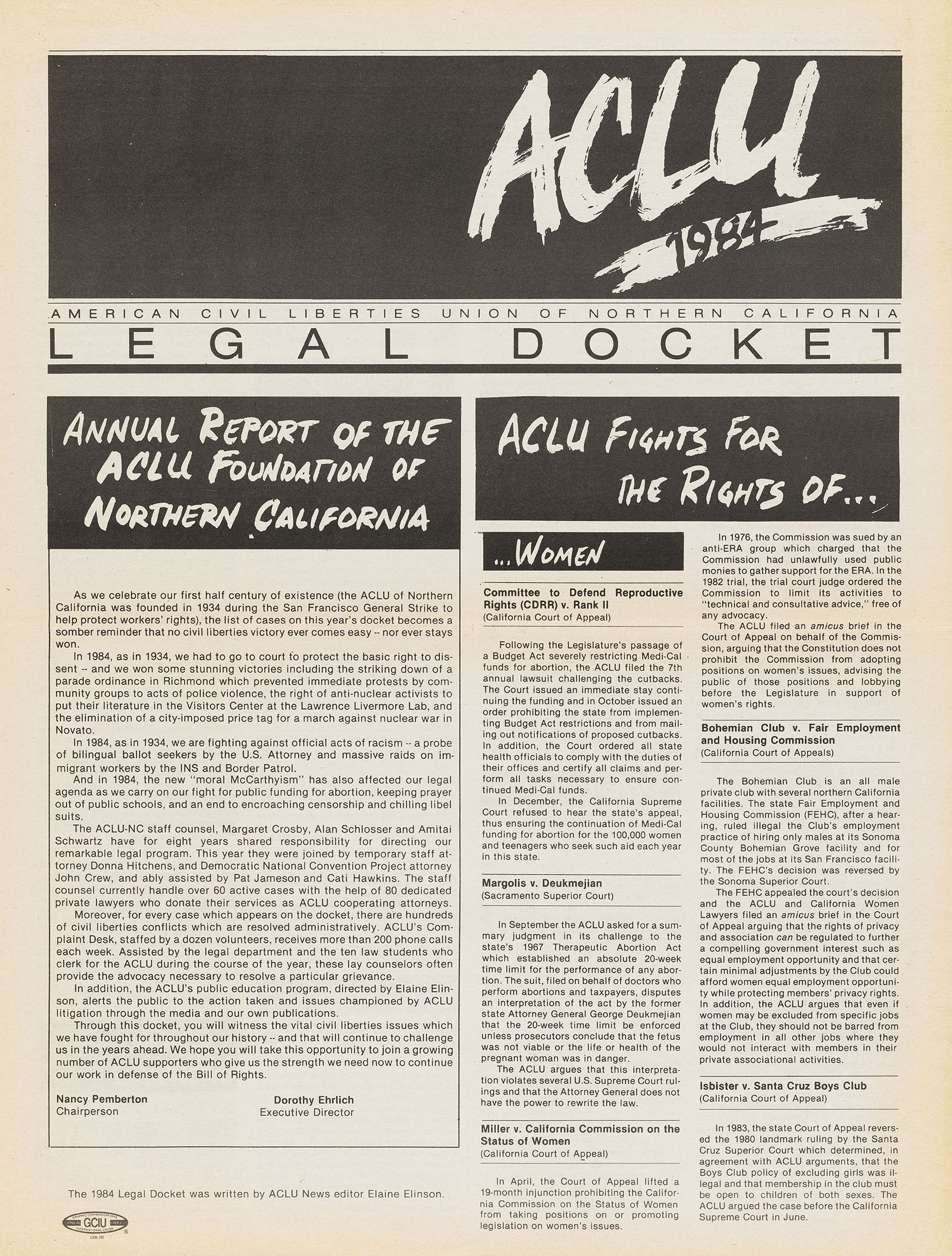
The ACLU of Northern California's Role in the Fight for Civil Liberties
In the ACLU of Northern California’s 1984 legal docket annual report Chair Nancy Pemberton and Executive Director Dorothy Ehrlich wrote: “The list of cases on this year’s docket becomes a sober reminder that no civil liberties victory ever comes easy — nor ever stays won.”
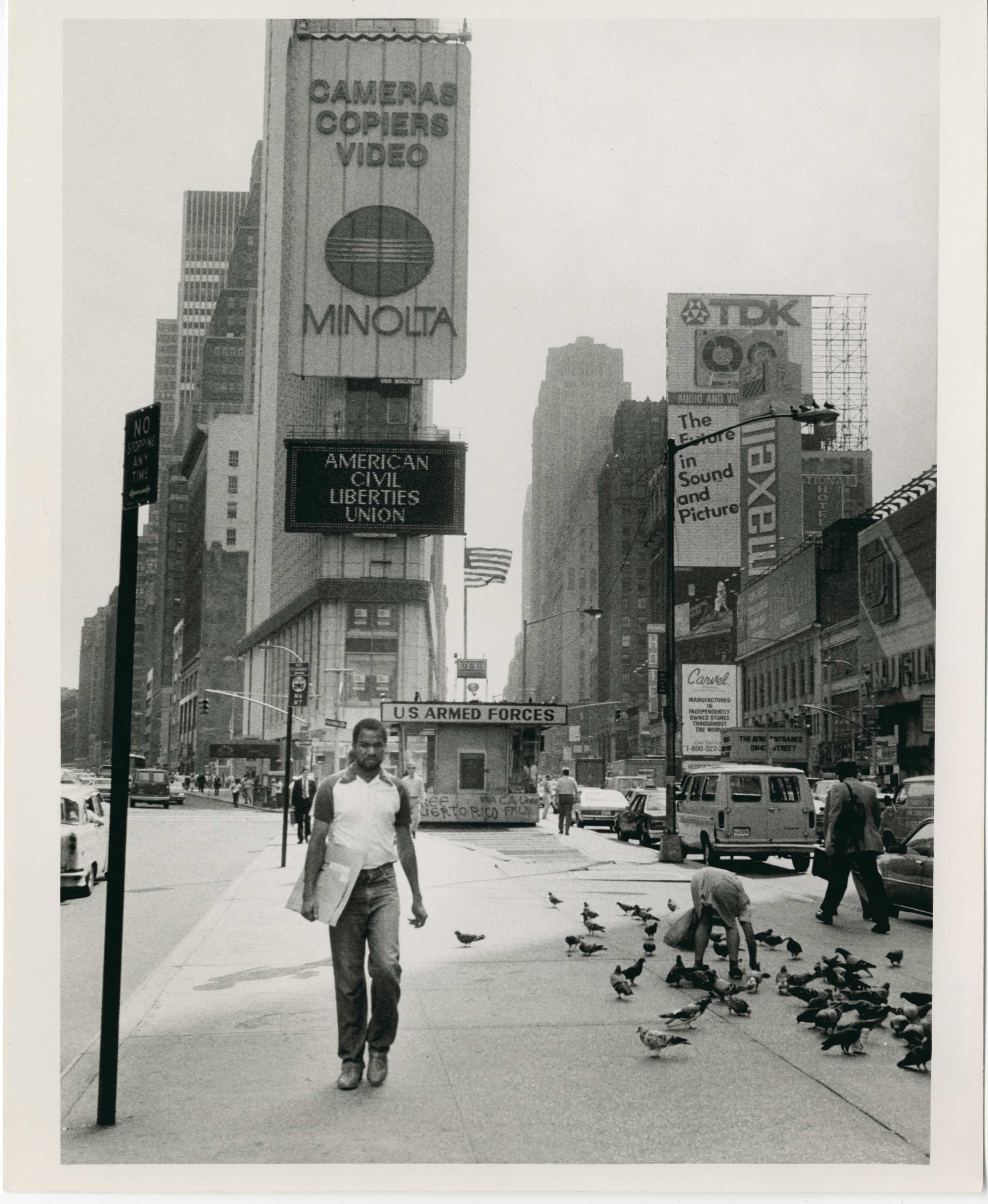
ACLU Advertisement on Women's Equality in Times Square
The ACLU sponsored Women’s Equality Week in August 1984, which included this advertisement campaign in Times Square.
1985
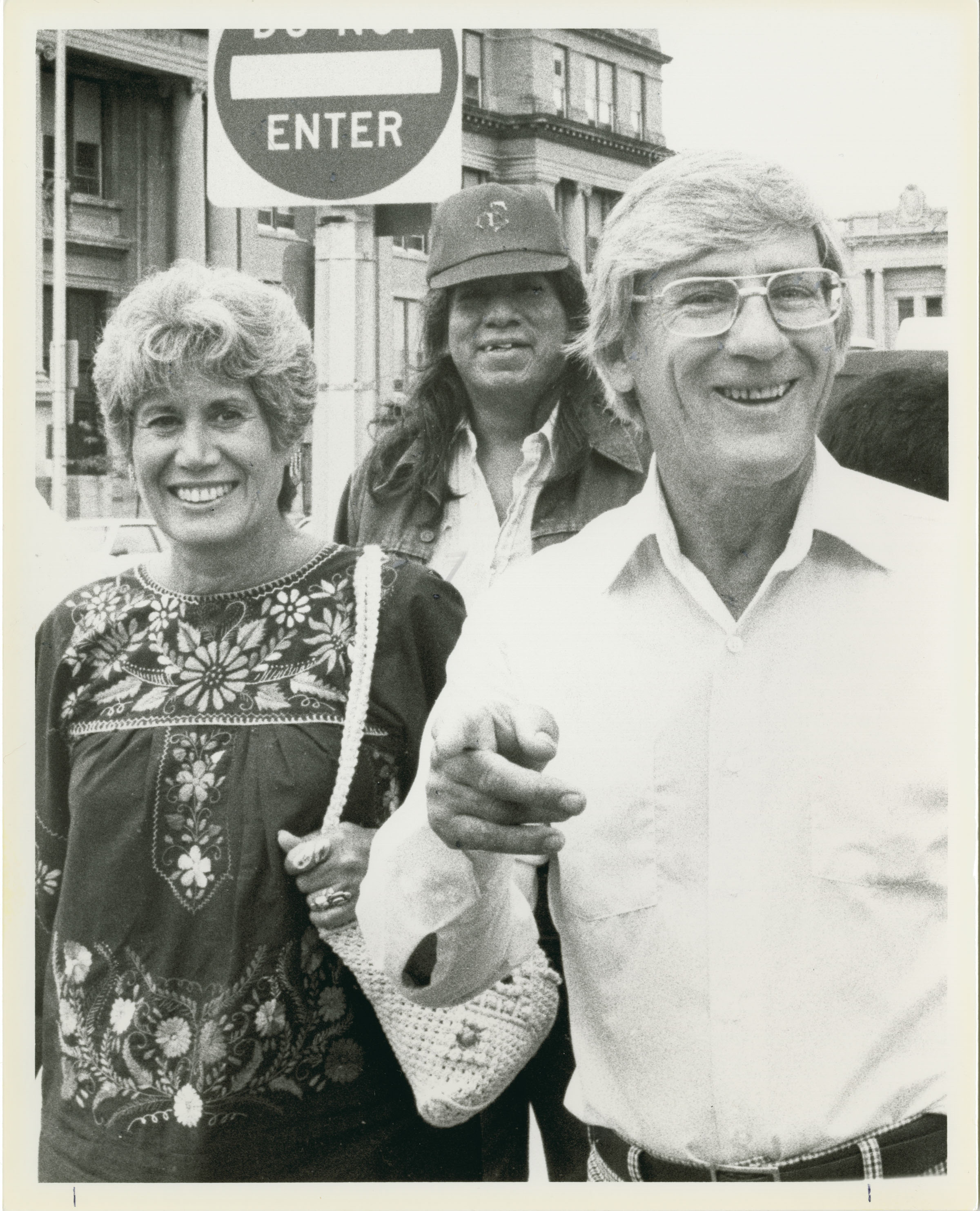
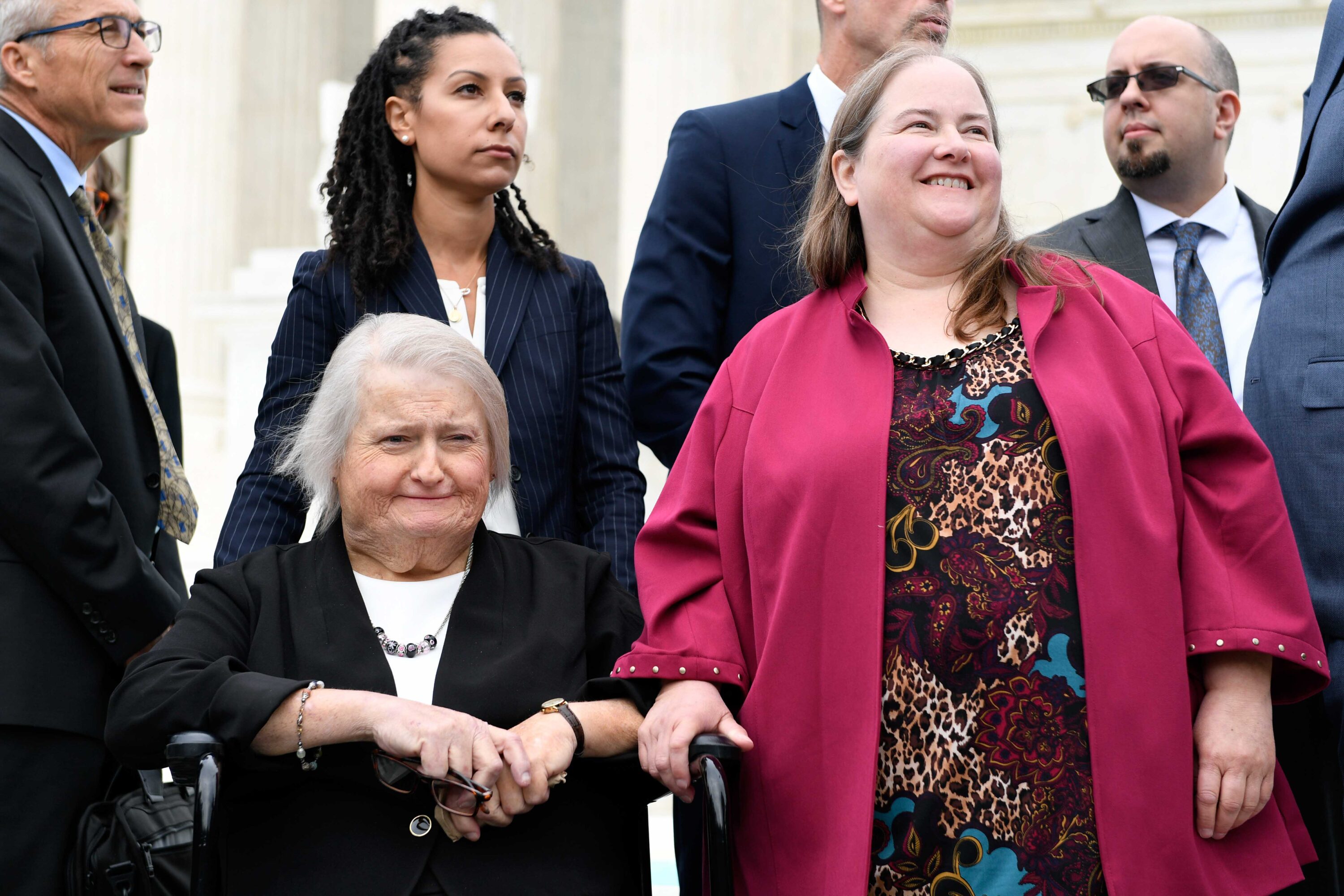
Native American Church members Frances Warner, Martin Blueshield (rear), and John Warner
Native American Church (NAC) members Frances and John Warner are photographed alongside NAC leader Martin Blueshield. Frances and John were charged with drug possession after they were found with peyote, a central feature of Native American Church rituals. The ACLU defended the Warners in U.S. District Court, and proceeded to support related claims in Employment Division v. Smith, which the Supreme Court decided several years later. Today, as courts continue to devalue Native religions, the ACLU works on multiple fronts to protect Indigenous communities from religious discrimination. Cases like this one, which is both a fundamental federal Indian law case and a freedom of religion case, illustrate that language specific to Native religion and culture must be built into religious freedom policies and uplift the importance of intersectionality as a strategy in and out of the courtroom.
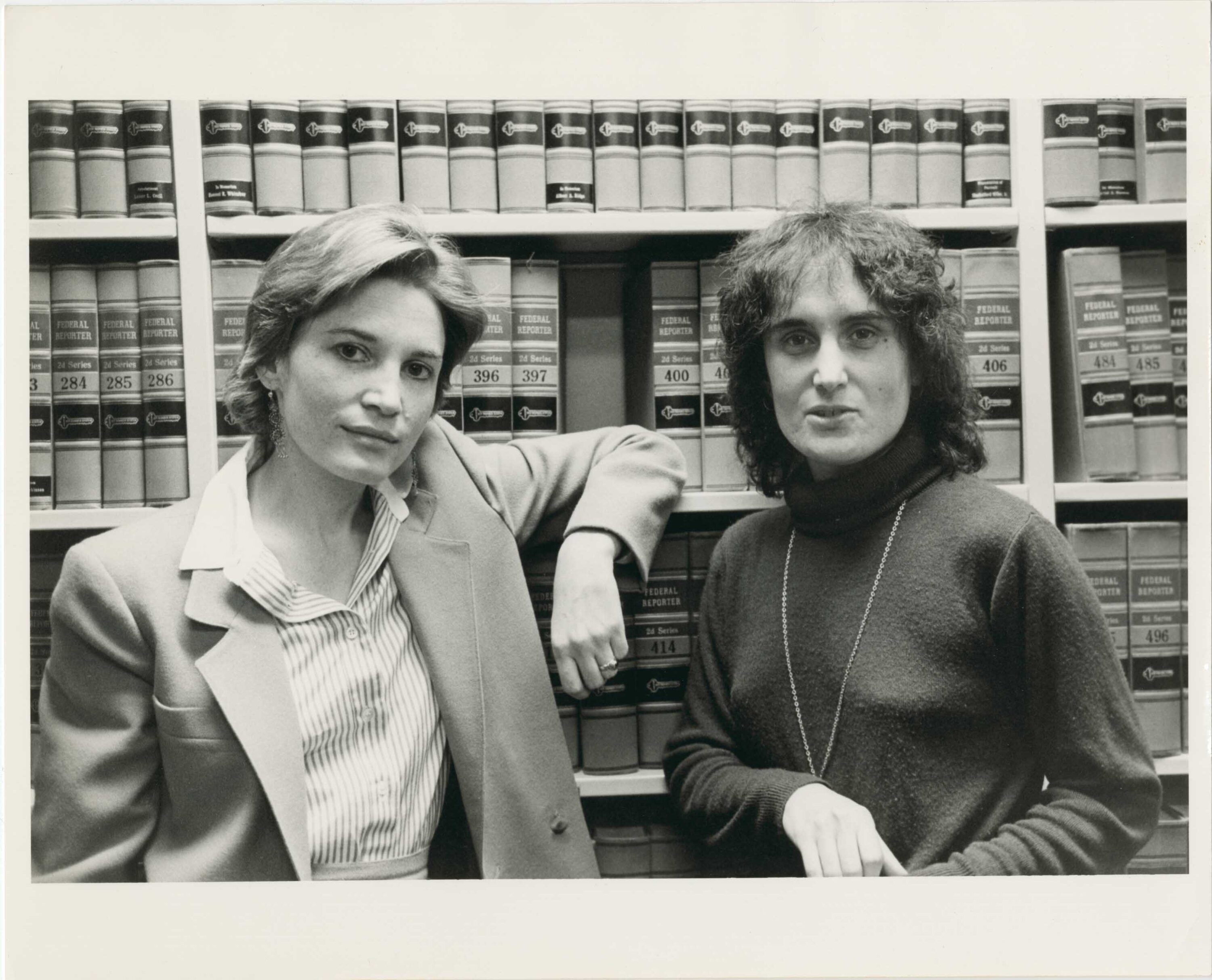
ACLU Leaders Janet Benshoff and Isabelle Katz Pinzler
ACLU Reproductive Freedom Project Director Janet Benshoff poses for a picture with Women's Rights Project Director Isabelle Katz Pinzler.
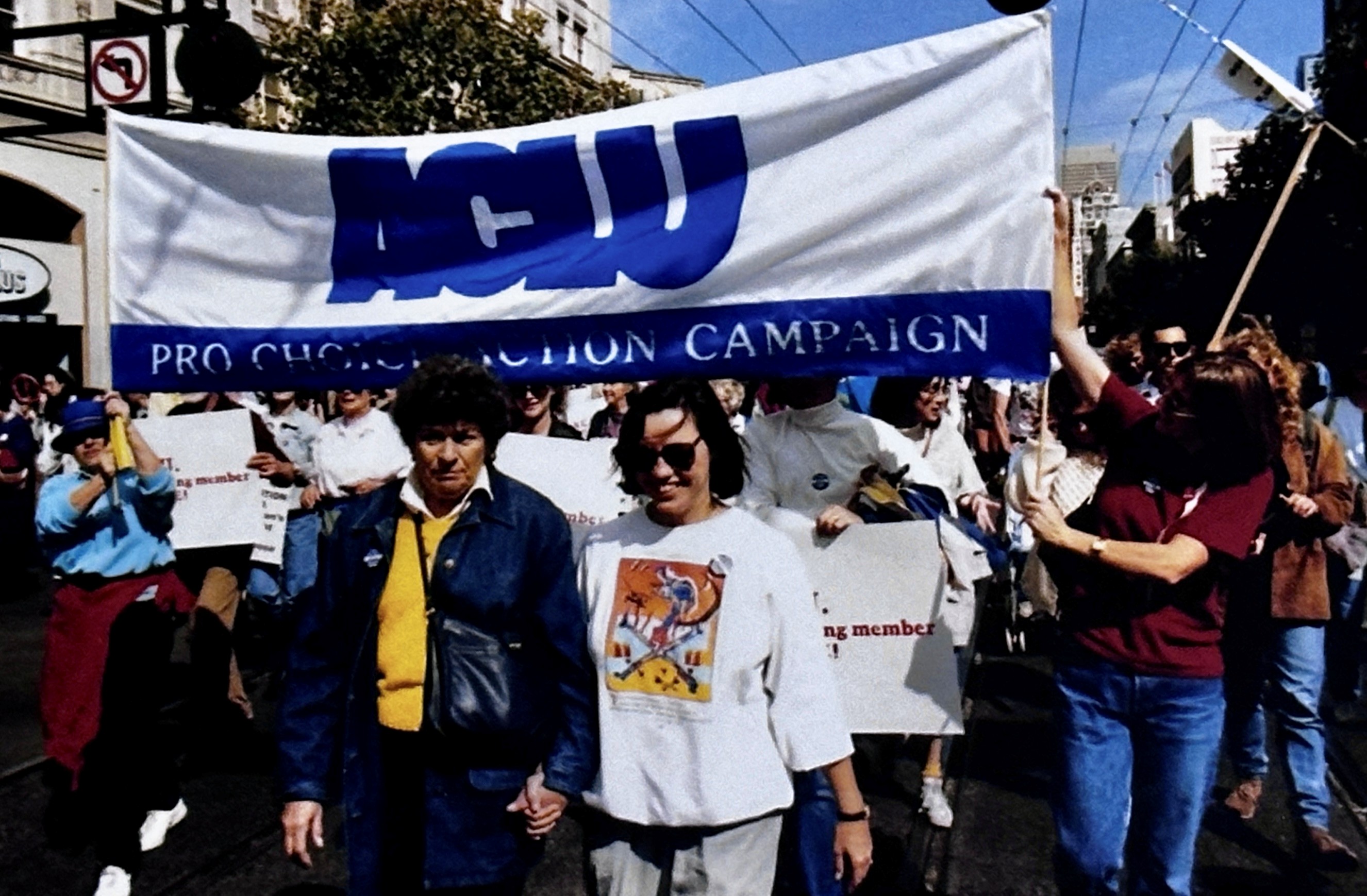
ACLU of Northern California Staff at a Pro-Choice March
Over the decades, the ACLU of Northern California’s reproductive freedom work has helped California become a state with legally secure access to abortion and reproductive health care. In this image, long-time ACLU NorCal board member and volunteer extraordinaire Fran Strauss is seen here with ACLU NorCal Executive Director Dorothy Ehrlich at a pro-reproductive rights march. “Fran was really the heart and soul of the affiliate,” Ehrlich said of Strauss when she passed away in 2012 at age 94.
1986
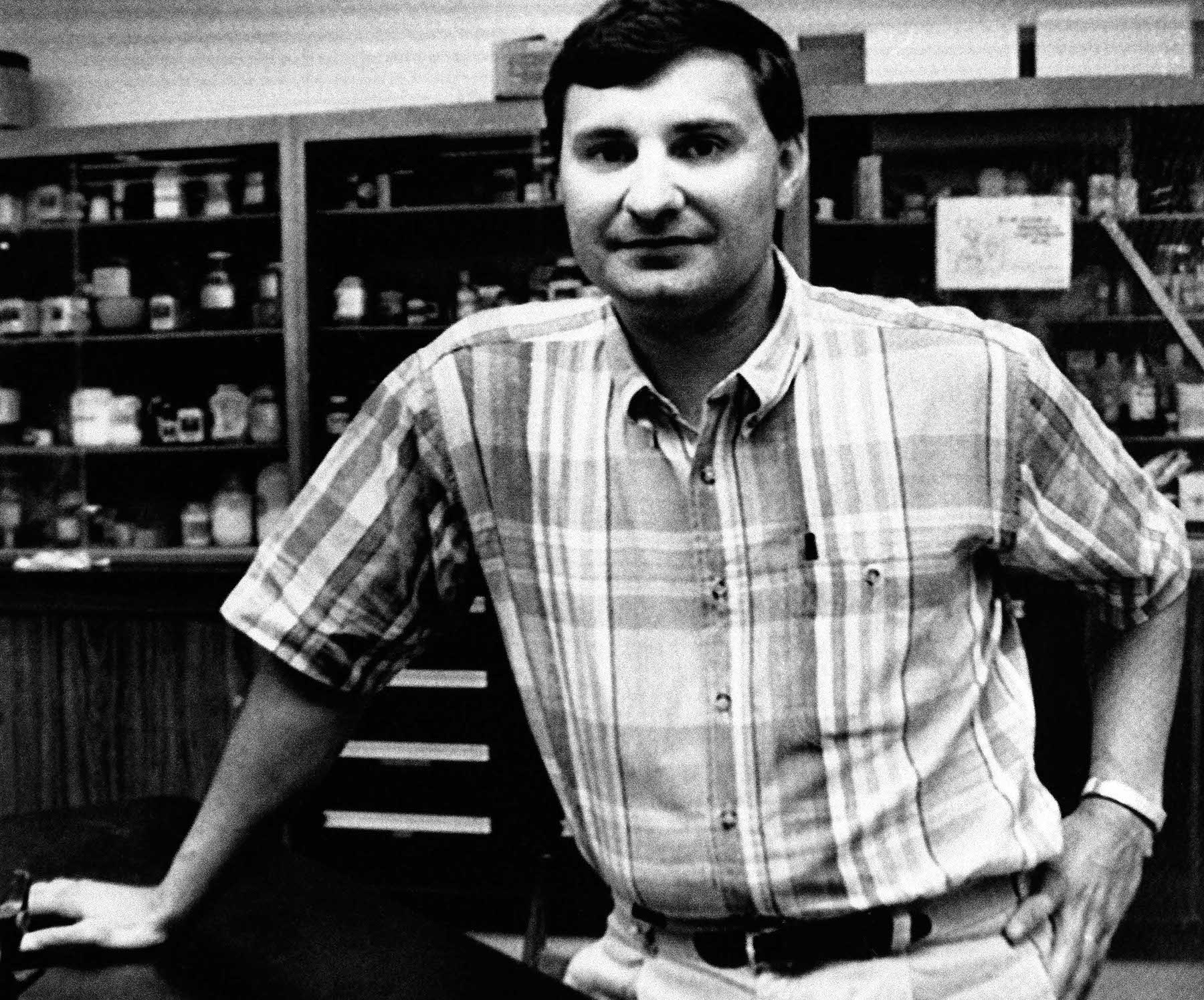
Client Donald Aguillard as He Prepared to Defend Free Speech in Louisiana Schools
Donald Aguillard, shown on June 19, 1987, was assistant principal of Acadiana High School in Scott, Louisiana, and worked with the ACLU to sue the state in Edwards v. Aguillard. In a case reminiscent of the 1925 Scopes "Monkey Trial,” the Supreme Court ruled that a law requiring creation science to be taught with evolution was unconstitutional, because the law was specifically intended to advance a particular religion.
1987
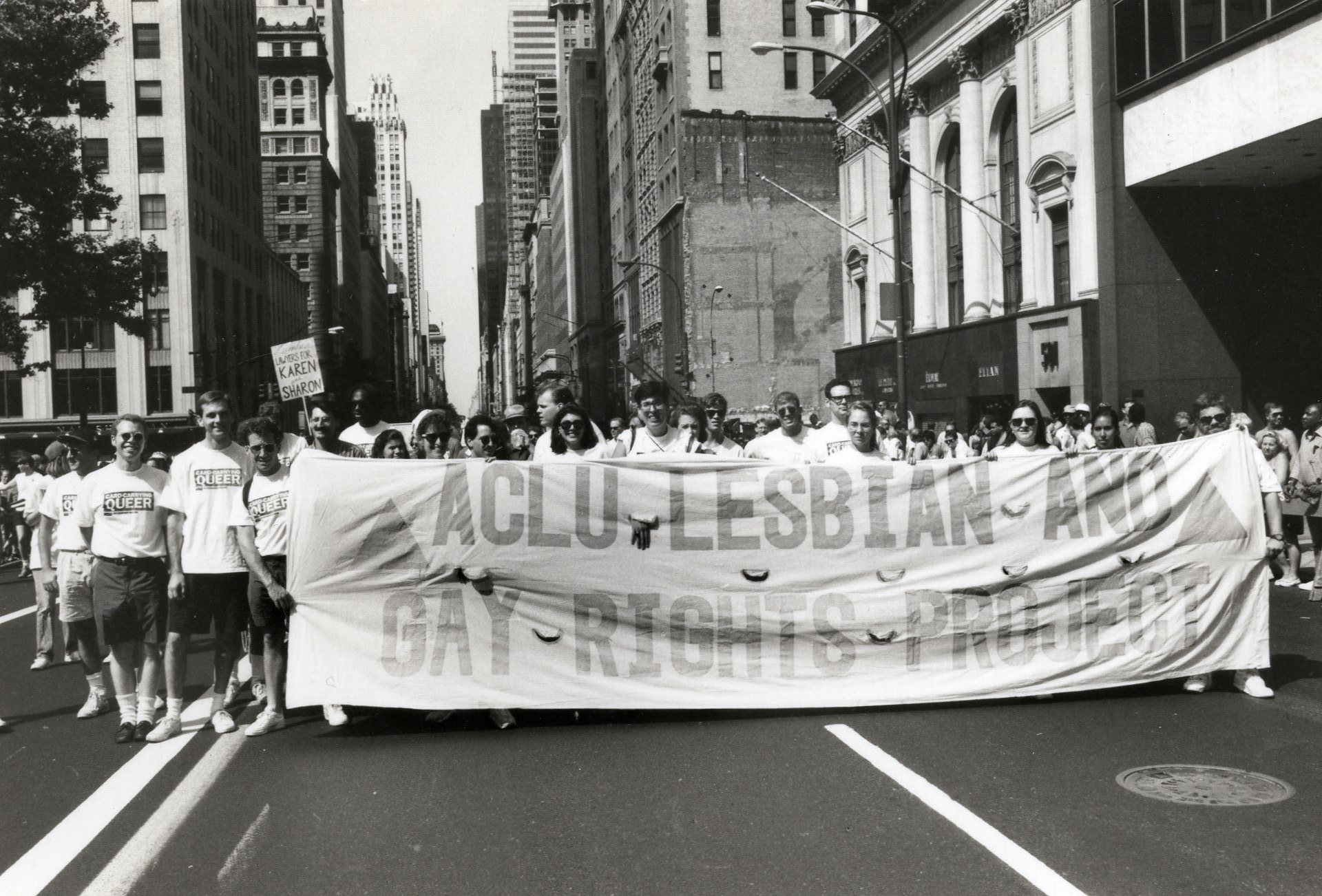
ACLU Lesbian and Gay Rights Project March with Pride
Staff of the ACLU’s Lesbian and Gay Rights Project are pictured here at a 1987 march.
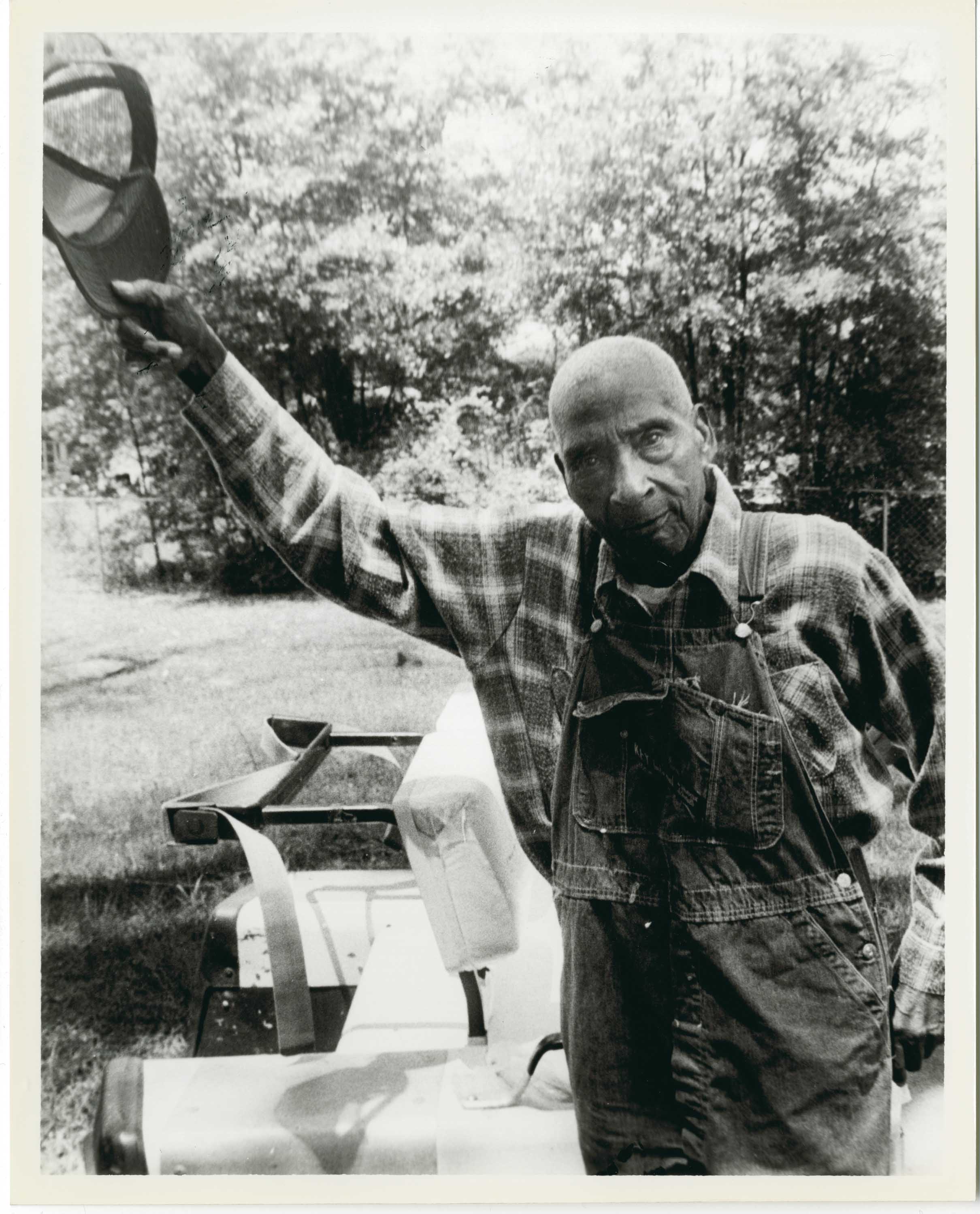
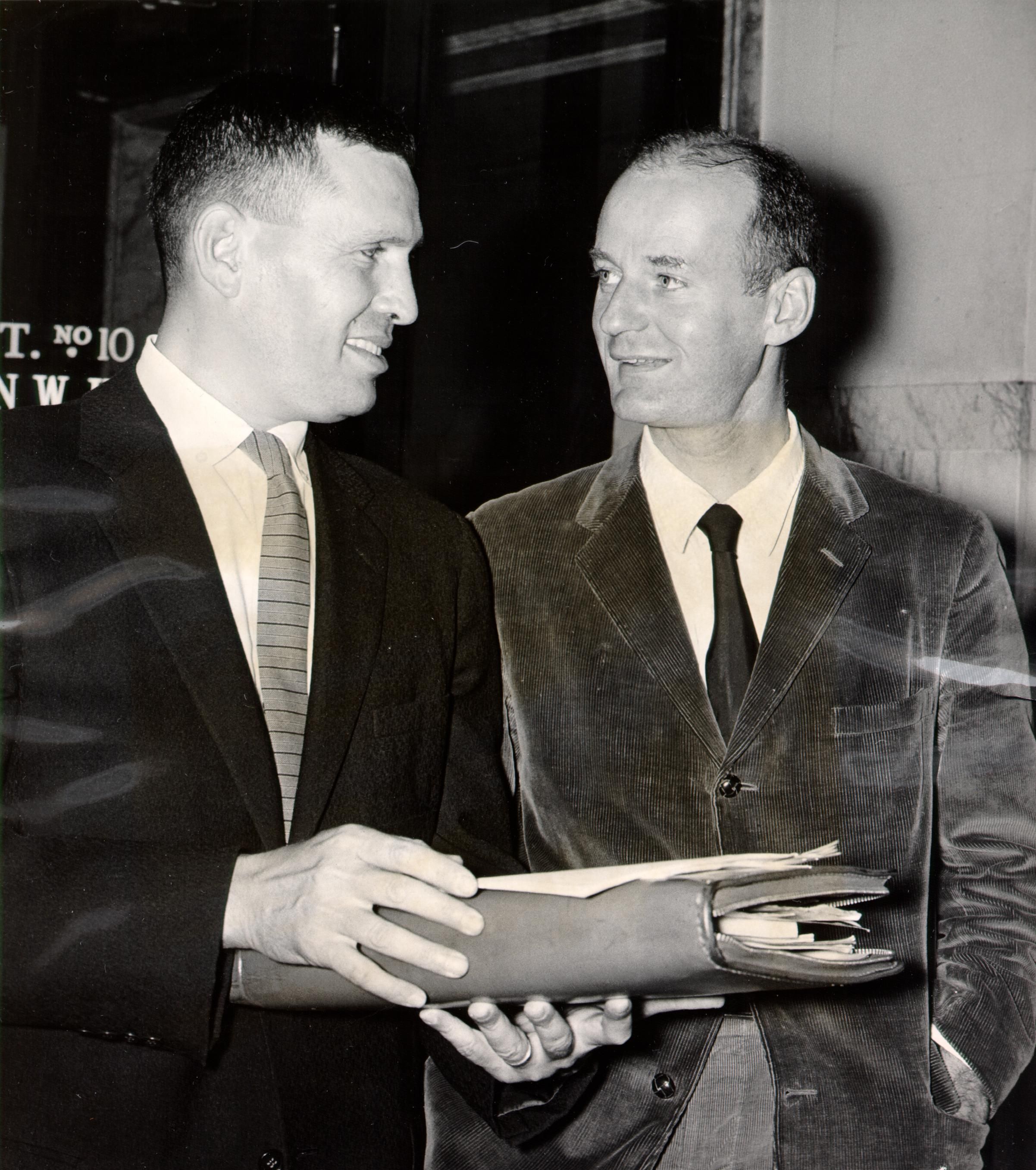
Henry Key, Key Witness in Major Georgia Voting Rights Case
Henry Key, pictured here in August of 1987, was one of the oldest residents in the city of Keysville, Georgia and a descendant of the town's namesake. Black residents of the town worked to reincorporate the city after it had been disbanded during the Great Depression. In 1988 the ACLU successfully helped restore the town's Black-majority local government and charter after it had been abolished for over 50 years.
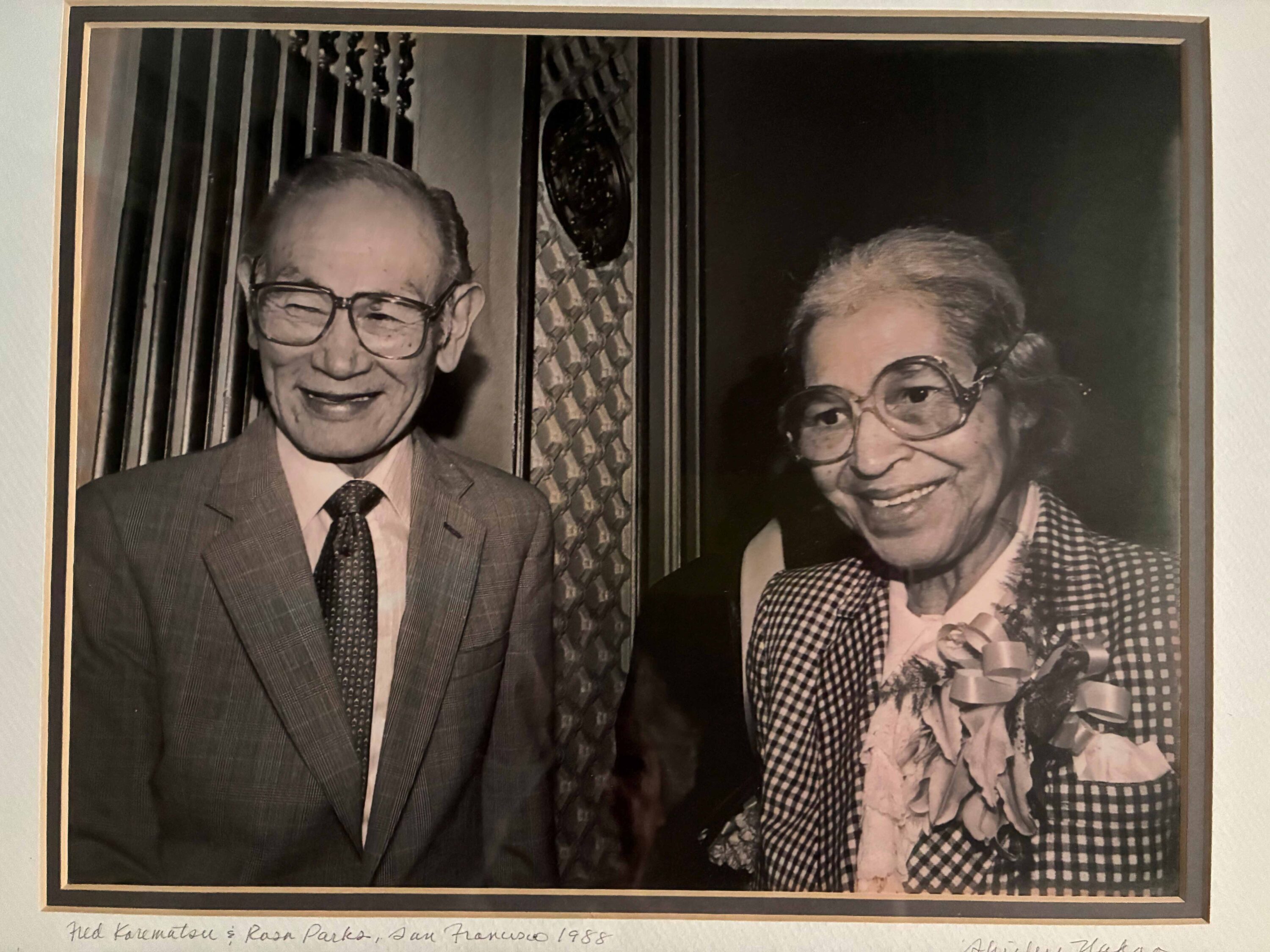
Fred Korematsu Celebrates with Rosa Parks
This 1987 photo shows civil rights icons Fred Korematsu and Rosa Parks gathered to celebrate Parks when she was honored with the ACLU of Northern California’s Chief Justice Earl Warren Award in 1987.
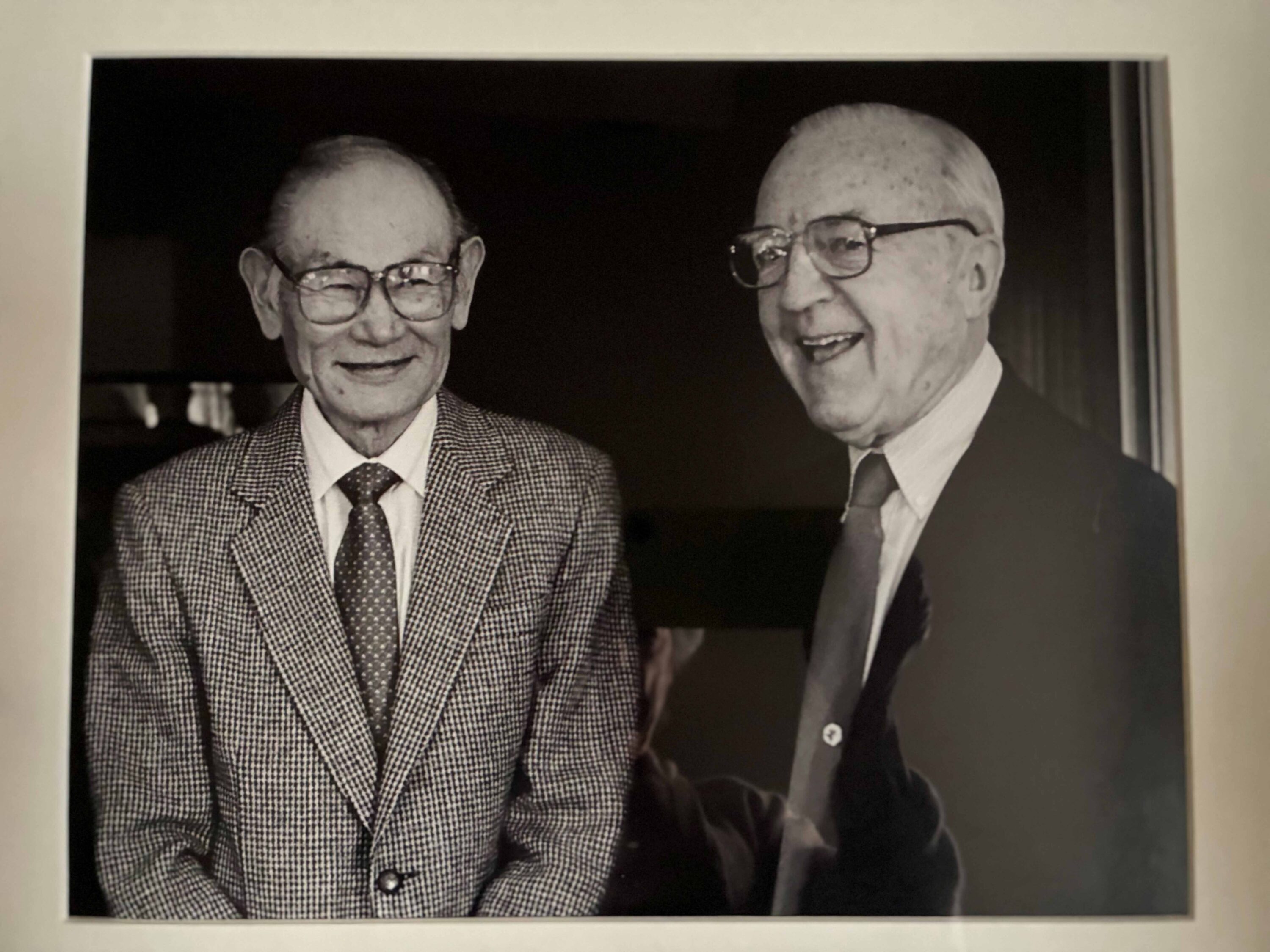
ACLU Client Fred Korematsu with former ACLU-Northern California Executive Director Ernest Besig
In 1944, the Supreme Court ruled against ACLU client Fred Korematsu, a young man who defied World War II orders forcing Japanese Americans into camps. In 1983, legal historian Peter Irons and researcher Aiko Herzig-Yoshinaga discovered documents revealing that during World War II, government attorneys had withheld, altered, and destroyed evidence favorable to Japanese Americans and made false claims to the Supreme Court that they represented a security threat. This prompted a nationwide movement for redress and reparations, and President Ronald Reagan signed the Civil Liberties Act, issuing a formal U.S. government apology and granting monetary payments to surviving Japanese Americans incarcerated during World War II. This 1987 photo shows Korematsu with Ernest Besig, the former Executive Director of the ACLU of Northern California who had championed Korematsu decades prior.
1988
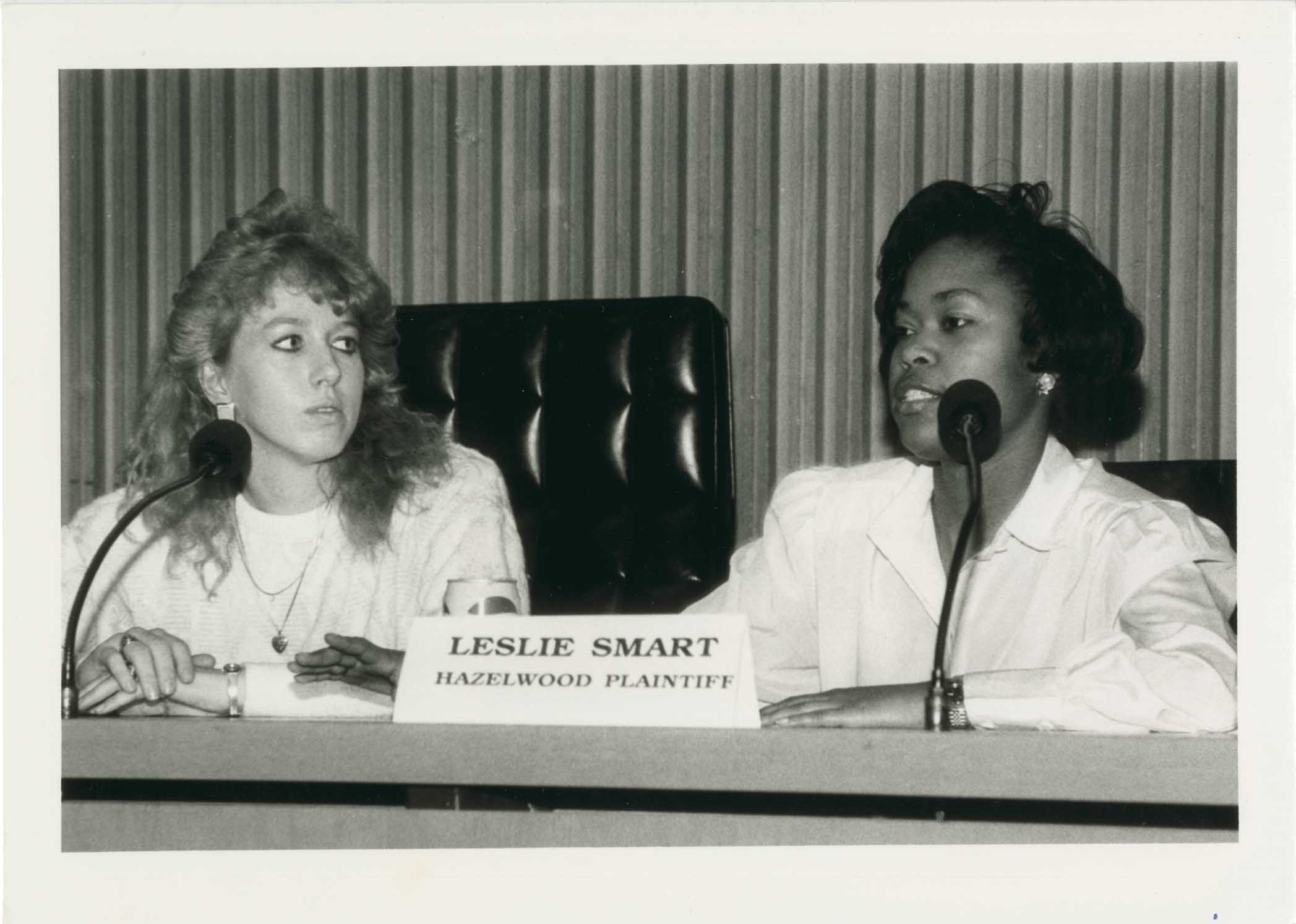
Clients Cathy Kuhlmeier and Leslie Smart, Student Newspaper Editors Who Fought for Freedom of the Press
Cathy Kuhlmeier and Leslie Smart, editors of the Hazelwood East High School newspaper, sued the Hazelwood School District in St. Louis when their school censored their newspaper. The ACLU represented them in the Supreme Court case Hazelwood School District v. Kuhlmeier.
Why We Stand With the ACLU
During the 1988 U.S. presidential election, Republican candidate George H.W. Bush criticized Democratic nominee Michael Dukakis for being a "card-carrying member of the ACLU" to portray him as out of touch with mainstream American values. As a response, the ACLU released this series of public service announcements in which Burt Lancaster, Jill Eikenberry, and Michael Tucker explain why they are card-carrying members of the organization.
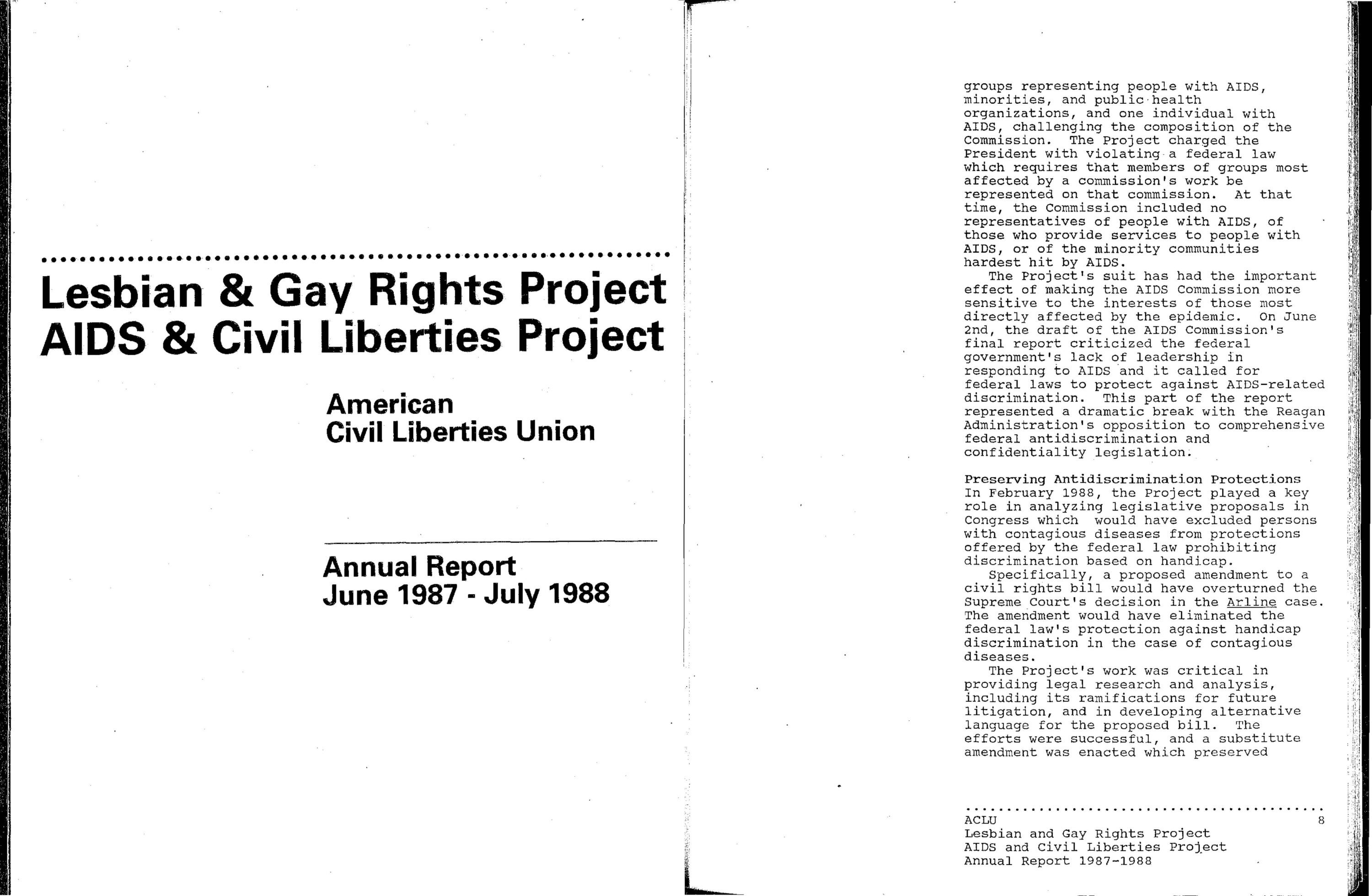
Cover of the ACLU's Lesbian, Gay, Bisexual, Transgender, Queer and HIV Project 1988 Report
The ACLU's Lesbian, Gay, Bisexual, Transgender, Queer and HIV Project was founded in 1986 to respond to the "immediate, pressing, and wide-ranging" civil rights attacks during the AIDS crisis. This 1988 report details the project's earliest work, including fights against discrimination, and fights for confidentiality, the right to treatment, and public education.
1989
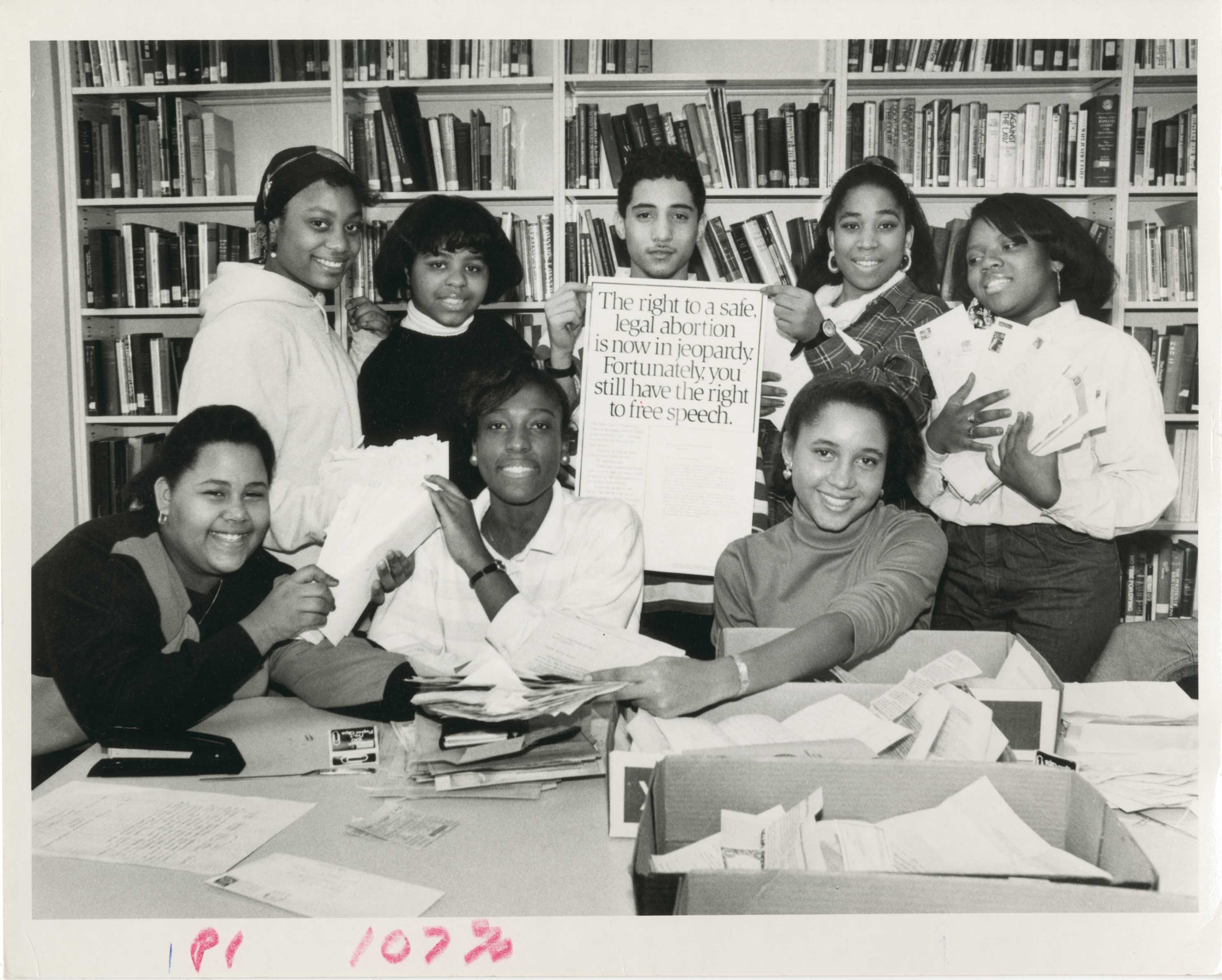
Student Volunteers at ACLU Office Opening 25,000 Letters After Call to Protect Abortion Rights
Student volunteers open letters received in response to a full-page advertisement in support of abortion rights that we placed in The New York Times on January 19, 1989. By the time this photo was taken, these students had opened more than 25,000 letters.
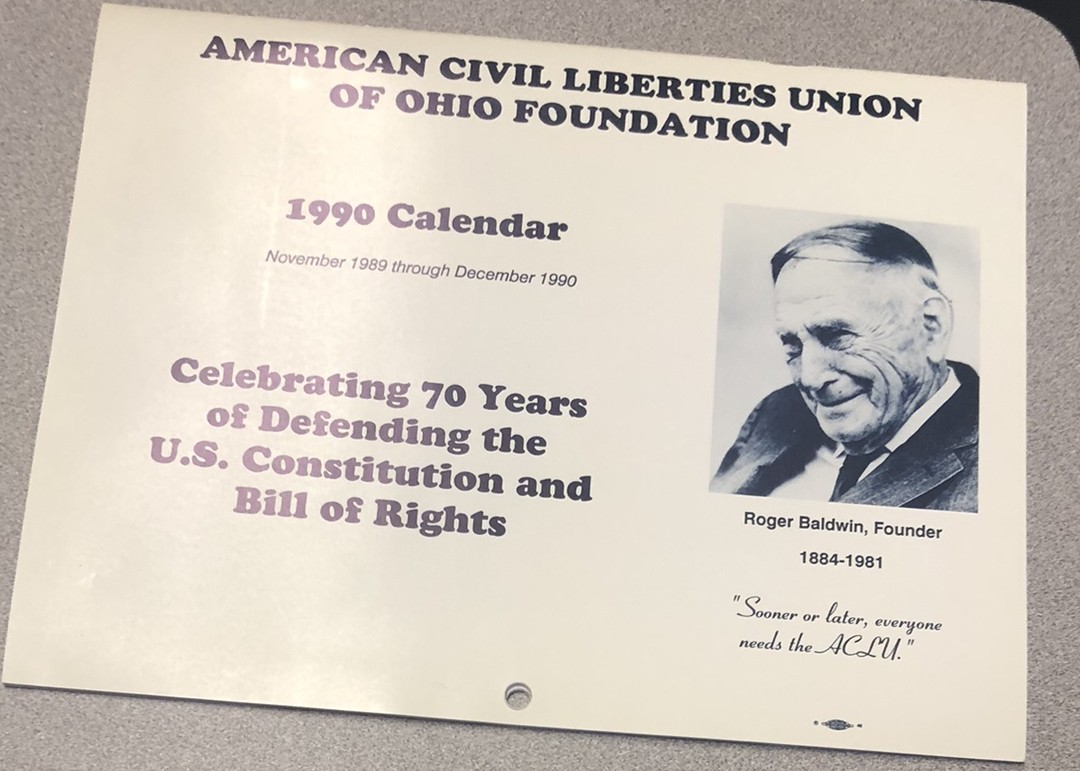
"Sooner or later, everyone needs the ACLU"
Pictured here is the ACLU of Ohio's annual calendar for 1989 to 1990, which quotes founder Roger Baldwin: "Sooner or later, everyone needs the ACLU."