Voting Rights
United States v. Alaska
Representing two Alaska voters, the League of Women Voters of Alaska, and Common Cause, the American Civil Liberties Union and ACLU of Alaska moved to intervene in United States v. Alaska, a frivolous lawsuit seeking to prevent from the State of Alaska from certifying its election results if the incumbent U.S. Senator does not win the election. The lawless suit asserts a single claim based on the purpose language of the National Voter Registration Act (NVRA), that has no basis in any case, legal principle, or arguably tenable reading of the NVRA.
We are seeking dismissal of this suit that aims to deprive Alaskans of their right to vote and right to representation.
Status: Ongoing
View Case
Learn About Voting Rights
Featured
California
Oct 2026
Voting Rights
OCA-Asian Pacific American Advocates v. Department of Homeland Security
The Department of Homeland Security and United States Citizenship and Immigration Services are subjecting thousands of naturalized American citizens to improper investigations questioning their voting eligibility, and they’re using outdated, faulty data and methods to do so. As a result, these citizens face increasing, unwarranted scrutiny from the federal government and, potentially, disenfranchisement. We’re challenging these unlawful actions and the unreliable data behind them to ensure no eligible voter is targeted or silenced because of them.
Washington, D.C.
Oct 2026

Voting Rights
Common Cause v. U.S. Department of Justice
The U.S. Department of Justice has launched an unprecedented and unlawful effort to invade the privacy of millions of American voters and threaten their right to vote. It has demanded that every state and the District of Columbia turn over their entire voter database, including Social Security Numbers, political party affiliation, and voter participation history. And at least a dozen states have complied, submitting their voters’ information for federal review. But the Department of Justice has no authority to dictate when a voter registration should be cancelled, and we are suing to stop the federal government’s overreach and ensure that voters’ information remains secure and free from unlawful interference.
Massachusetts
Sep 2026
Voting Rights
League of Women Voters of Massachusetts v. Trump
On March 31, 2026, President Trump issued a sweeping Executive Order titled “Ensuring Citizen Verification and Integrity in Federal Elections,” seeking once again to seize control of election administration from Congress and the states. The Order directs federal agencies to compile lists of U.S. citizens and transmit them to states before every election, directs the U.S. Postal Service — an independent agency established by Congress — to create a list of “approved” mail voters, and instructs USPS to refuse to deliver ballots from voters not on that federally created list. If implemented, the Order would threaten the ability of millions of eligible citizens to cast their ballots, particularly military members, overseas citizens, the elderly, recently naturalized citizens, and voters with disabilities who rely on mail voting.
U.S. Supreme Court
May 2026
Voting Rights
Racial Justice
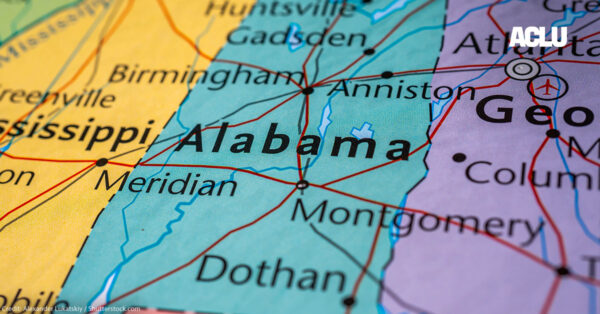
Allen v. Milligan
Whether Alabama’s congressional districts violate Section 2 of the Voting Rights Act because they discriminate against Black voters. We succeeded in winning a new map for 2024 elections which, for the first time, has two congressional district that provide Black voters a fair opportunity to elect candidates of their choosing despite multiple attempts by Alabama to stop us at the Supreme Court. Despite this win, Alabama is still defending its discriminatory map, and a trial was held in February 2025 to determine the map for the rest of the decade.
In May 2025, a federal court ruled that Alabama’s 2023 congressional map both violates Section 2 of the Voting Rights Act and was enacted by the Alabama Legislature with racially discriminatory intent.
U.S. Supreme Court
Apr 2026

Voting Rights
Louisiana v. Callais (Callais v. Landry)
Whether the congressional map Louisiana adopted to cure a Voting Rights Act violation in Robinson v. Ardoin is itself unlawful as a gerrymander.
Mississippi
Dec 2025
Voting Rights
White v. Mississippi State Board of Elections
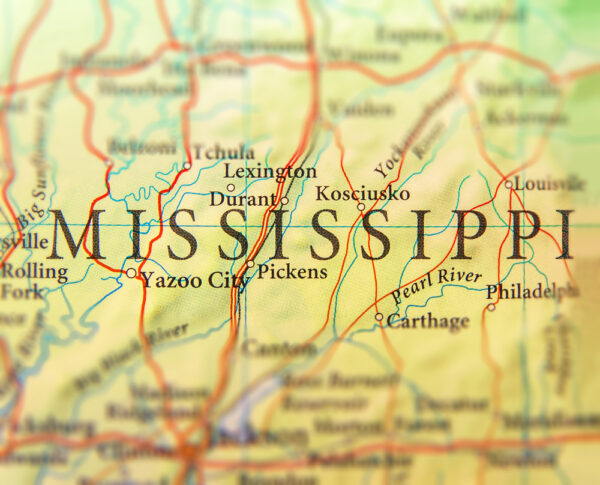
District lines used to elect Mississippi’s Supreme Court have gone unchanged for more than 35 years. We’re suing because the current lines crack the Mississippi Delta and dilute the voting strength of Black Mississippians in state Supreme Court elections, in violation of the Voting Rights Act.
Washington, D.C.
Oct 2025
Voting Rights
League of Women Voters Education Fund v. Trump
On March 25, 2025, in a sweeping and unprecedented Executive Order, President Trump attempted to usurp the power to regulate federal elections from Congress and the States. Among other things, the Executive Order directs the Election Assistance Commission—an agency that Congress specifically established to be bipartisan and independent—to require voters to show a passport or other citizenship documentation in order to register to vote in federal elections. If implemented, the Executive Order would threaten the ability of millions of eligible Americans to register and vote and upend the administration of federal elections.
On behalf of leading voter registration organizations and advocacy organizations, the ACLU and co-counsel filed a lawsuit to block the Executive Order as an unconstitutional power grab.
All Cases
210 Voting Rights Cases
U.S. Supreme Court
Jul 2025
Voting Rights
Bost v. Illinois State Board of Elections (Amicus)
Congressman Michael Bost brought suit trying to prevent Illinois from counting mail ballots that are voted by election day and received within the following fourteen days, consistent with Illinois law. The Seventh Circuit ruled that Congressman Bost lacks standing to sue. Bost sought certiorari from the U.S. Supreme Court on the question whether he has standing as a federal candidate to bring his lawsuit and have it decided on the merits.
While the ACLU strongly opposes Congressman Bost’s position on the merits and has repeatedly defended similar state laws from challenge, the rules that determine whether Bost has standing to even bring his anti-voter lawsuit also apply to civil rights groups when they bring suit to expand or protect the rights of voters.
Explore case
U.S. Supreme Court
Jul 2025
Voting Rights
Bost v. Illinois State Board of Elections (Amicus)
Congressman Michael Bost brought suit trying to prevent Illinois from counting mail ballots that are voted by election day and received within the following fourteen days, consistent with Illinois law. The Seventh Circuit ruled that Congressman Bost lacks standing to sue. Bost sought certiorari from the U.S. Supreme Court on the question whether he has standing as a federal candidate to bring his lawsuit and have it decided on the merits.
While the ACLU strongly opposes Congressman Bost’s position on the merits and has repeatedly defended similar state laws from challenge, the rules that determine whether Bost has standing to even bring his anti-voter lawsuit also apply to civil rights groups when they bring suit to expand or protect the rights of voters.
North Dakota
Jul 2025
Voting Rights
Turtle Mountain Band of Chippewa Indians v. Howe (Amicus)
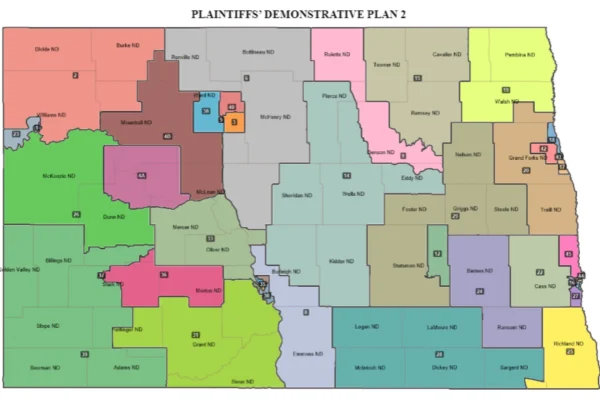
In Arkansas State Conference NAACP v. Arkansas Board of Apportionment, the 8th Circuit became the first federal appeals court to rule that private plaintiffs cannot enforce Section 2 of the Voting Rights Act. In doing so, the court left open the question whether private plaintiffs could enforce Section 2 through an alternative civil rights statute, 42 U.S.C. § 1983. In this case, a divided panel on the 8th Circuit has held that plaintiffs may not use Section 1983, either. If the holding stands, Section 2 of the VRA will be functionally out of reach for voters across the 8th Circuit in Arkansas, Iowa, Minnesota, Missouri, Nebraska, North Dakota, and South Dakota. On behalf of the NAACP Arkansas State Conference and the Arkansas Public Policy Panel, the ACLU and ACLU of Arkansas has filed a brief supporting the plaintiffs’ request that the full Eighth Circuit rehear and correct this decision.
Explore case
North Dakota
Jul 2025
Voting Rights
Turtle Mountain Band of Chippewa Indians v. Howe (Amicus)
In Arkansas State Conference NAACP v. Arkansas Board of Apportionment, the 8th Circuit became the first federal appeals court to rule that private plaintiffs cannot enforce Section 2 of the Voting Rights Act. In doing so, the court left open the question whether private plaintiffs could enforce Section 2 through an alternative civil rights statute, 42 U.S.C. § 1983. In this case, a divided panel on the 8th Circuit has held that plaintiffs may not use Section 1983, either. If the holding stands, Section 2 of the VRA will be functionally out of reach for voters across the 8th Circuit in Arkansas, Iowa, Minnesota, Missouri, Nebraska, North Dakota, and South Dakota. On behalf of the NAACP Arkansas State Conference and the Arkansas Public Policy Panel, the ACLU and ACLU of Arkansas has filed a brief supporting the plaintiffs’ request that the full Eighth Circuit rehear and correct this decision.
U.S. Supreme Court
Jun 2025
Voting Rights
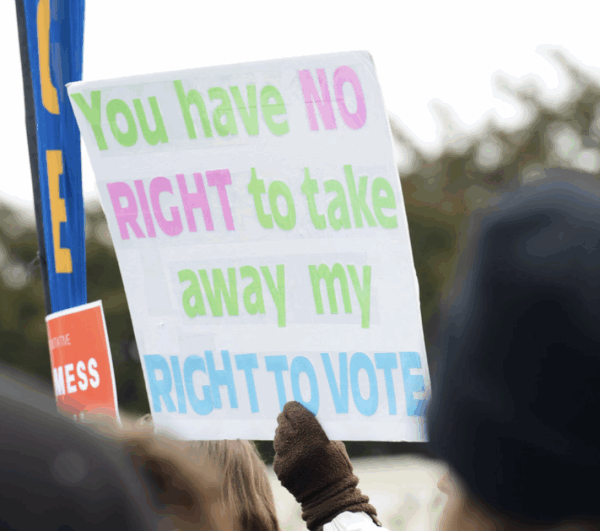
O'Bannon v. King
Virginia permanently disenfranchises all people with felony convictions unless the governor restores their rights. This lawsuit—brought by the ACLU of Virginia and co-counsel partners—argues that the policy violates the Readmissions Act of 1870, which bars Virginia from denying the vote based on convictions that didn’t exist at common law in 1870. The state tried to dismiss the case by invoking sovereign immunity, but the courts rejected that argument. Now, the case moves forward with the potential to restore voting rights to thousands of Virginians.
Explore case
U.S. Supreme Court
Jun 2025
Voting Rights
O'Bannon v. King
Virginia permanently disenfranchises all people with felony convictions unless the governor restores their rights. This lawsuit—brought by the ACLU of Virginia and co-counsel partners—argues that the policy violates the Readmissions Act of 1870, which bars Virginia from denying the vote based on convictions that didn’t exist at common law in 1870. The state tried to dismiss the case by invoking sovereign immunity, but the courts rejected that argument. Now, the case moves forward with the potential to restore voting rights to thousands of Virginians.
Georgia Supreme Court
Jun 2025
Voting Rights
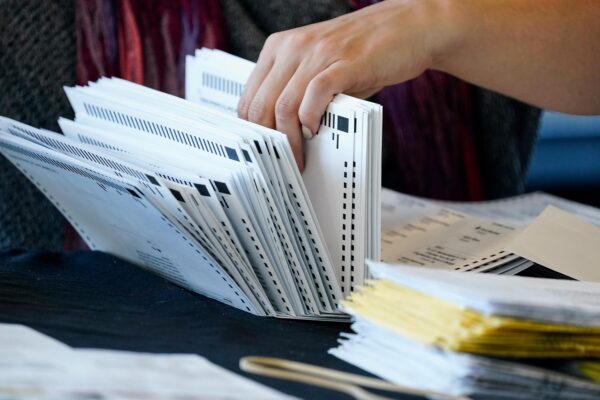
Eternal Vigilance Action, Inc. v. Georgia
The ACLU and partner organizations intervened in this case to represent the rights of voters and voting-rights organizations in a case challenging a number of rules passed by the Georgia State Election Board. We challenged the rule requiring that the number of votes cast be hand counted at the polling place prior to the tabulation of votes. In a critical victory for Georgia voters, in June 2025, the Georgia Supreme Court upheld a lower court’s decision permanently blocking the rule requiring hand counting of ballots at polling places before tabulation — a process widely criticized for risking delays, ballot spoliation, and voter disenfranchisement.
Explore case
Georgia Supreme Court
Jun 2025
Voting Rights
Eternal Vigilance Action, Inc. v. Georgia
The ACLU and partner organizations intervened in this case to represent the rights of voters and voting-rights organizations in a case challenging a number of rules passed by the Georgia State Election Board. We challenged the rule requiring that the number of votes cast be hand counted at the polling place prior to the tabulation of votes. In a critical victory for Georgia voters, in June 2025, the Georgia Supreme Court upheld a lower court’s decision permanently blocking the rule requiring hand counting of ballots at polling places before tabulation — a process widely criticized for risking delays, ballot spoliation, and voter disenfranchisement.
U.S. Supreme Court
Jun 2025
Voting Rights
Republican National Committee v. Genser
Voters in Butler County, Pennsylvania made a mistake in voting their mail ballots in the April 2024 primary election, forgetting to use the required secrecy envelope. Because their mail ballots could not be counted, they went to the polls in Election Day and voted provisional ballots. The County later determined that it would not count their provisional ballots, and the voter’s appealed, arguing that Pennsylvania law requires that when an eligible voter attempts to vote by mail but the mail ballot is rendered void due to some defect like lacking a secrecy envelope, the eligible voter may cast a provisional ballot and have that ballot counted notwithstanding the failed attempt to vote by mail.
Explore case
U.S. Supreme Court
Jun 2025
Voting Rights
Republican National Committee v. Genser
Voters in Butler County, Pennsylvania made a mistake in voting their mail ballots in the April 2024 primary election, forgetting to use the required secrecy envelope. Because their mail ballots could not be counted, they went to the polls in Election Day and voted provisional ballots. The County later determined that it would not count their provisional ballots, and the voter’s appealed, arguing that Pennsylvania law requires that when an eligible voter attempts to vote by mail but the mail ballot is rendered void due to some defect like lacking a secrecy envelope, the eligible voter may cast a provisional ballot and have that ballot counted notwithstanding the failed attempt to vote by mail.