Voting Rights
United States v. Alaska
Representing two Alaska voters, the League of Women Voters of Alaska, and Common Cause, the American Civil Liberties Union and ACLU of Alaska moved to intervene in United States v. Alaska, a frivolous lawsuit seeking to prevent from the State of Alaska from certifying its election results if the incumbent U.S. Senator does not win the election. The lawless suit asserts a single claim based on the purpose language of the National Voter Registration Act (NVRA), that has no basis in any case, legal principle, or arguably tenable reading of the NVRA.
We are seeking dismissal of this suit that aims to deprive Alaskans of their right to vote and right to representation.
Status: Ongoing
View Case
Learn About Voting Rights
Featured
California
Oct 2026
Voting Rights
OCA-Asian Pacific American Advocates v. Department of Homeland Security
The Department of Homeland Security and United States Citizenship and Immigration Services are subjecting thousands of naturalized American citizens to improper investigations questioning their voting eligibility, and they’re using outdated, faulty data and methods to do so. As a result, these citizens face increasing, unwarranted scrutiny from the federal government and, potentially, disenfranchisement. We’re challenging these unlawful actions and the unreliable data behind them to ensure no eligible voter is targeted or silenced because of them.
Washington, D.C.
Oct 2026

Voting Rights
Common Cause v. U.S. Department of Justice
The U.S. Department of Justice has launched an unprecedented and unlawful effort to invade the privacy of millions of American voters and threaten their right to vote. It has demanded that every state and the District of Columbia turn over their entire voter database, including Social Security Numbers, political party affiliation, and voter participation history. And at least a dozen states have complied, submitting their voters’ information for federal review. But the Department of Justice has no authority to dictate when a voter registration should be cancelled, and we are suing to stop the federal government’s overreach and ensure that voters’ information remains secure and free from unlawful interference.
Massachusetts
Sep 2026
Voting Rights
League of Women Voters of Massachusetts v. Trump
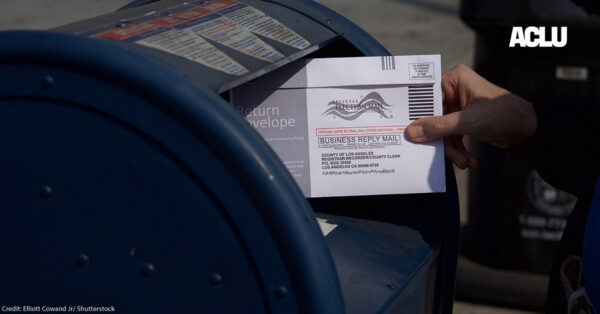
On March 31, 2026, President Trump issued a sweeping Executive Order titled “Ensuring Citizen Verification and Integrity in Federal Elections,” seeking once again to seize control of election administration from Congress and the states. The Order directs federal agencies to compile lists of U.S. citizens and transmit them to states before every election, directs the U.S. Postal Service — an independent agency established by Congress — to create a list of “approved” mail voters, and instructs USPS to refuse to deliver ballots from voters not on that federally created list. If implemented, the Order would threaten the ability of millions of eligible citizens to cast their ballots, particularly military members, overseas citizens, the elderly, recently naturalized citizens, and voters with disabilities who rely on mail voting.
U.S. Supreme Court
May 2026
Voting Rights
Racial Justice
Allen v. Milligan
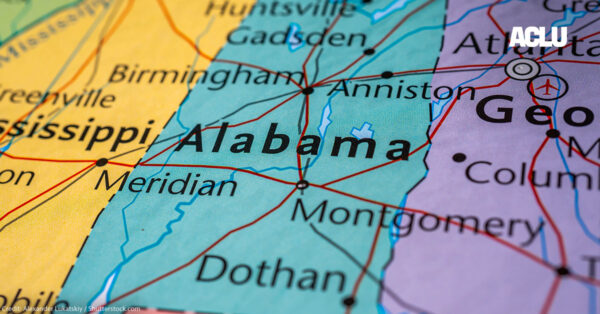
Whether Alabama’s congressional districts violate Section 2 of the Voting Rights Act because they discriminate against Black voters. We succeeded in winning a new map for 2024 elections which, for the first time, has two congressional district that provide Black voters a fair opportunity to elect candidates of their choosing despite multiple attempts by Alabama to stop us at the Supreme Court. Despite this win, Alabama is still defending its discriminatory map, and a trial was held in February 2025 to determine the map for the rest of the decade.
In May 2025, a federal court ruled that Alabama’s 2023 congressional map both violates Section 2 of the Voting Rights Act and was enacted by the Alabama Legislature with racially discriminatory intent.
U.S. Supreme Court
Apr 2026

Voting Rights
Louisiana v. Callais (Callais v. Landry)
Whether the congressional map Louisiana adopted to cure a Voting Rights Act violation in Robinson v. Ardoin is itself unlawful as a gerrymander.
Mississippi
Dec 2025
Voting Rights
White v. Mississippi State Board of Elections
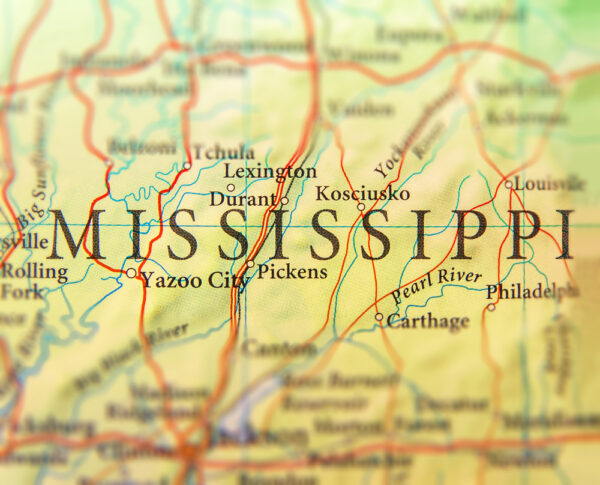
District lines used to elect Mississippi’s Supreme Court have gone unchanged for more than 35 years. We’re suing because the current lines crack the Mississippi Delta and dilute the voting strength of Black Mississippians in state Supreme Court elections, in violation of the Voting Rights Act.
Washington, D.C.
Oct 2025
Voting Rights
League of Women Voters Education Fund v. Trump
On March 25, 2025, in a sweeping and unprecedented Executive Order, President Trump attempted to usurp the power to regulate federal elections from Congress and the States. Among other things, the Executive Order directs the Election Assistance Commission—an agency that Congress specifically established to be bipartisan and independent—to require voters to show a passport or other citizenship documentation in order to register to vote in federal elections. If implemented, the Executive Order would threaten the ability of millions of eligible Americans to register and vote and upend the administration of federal elections.
On behalf of leading voter registration organizations and advocacy organizations, the ACLU and co-counsel filed a lawsuit to block the Executive Order as an unconstitutional power grab.
All Cases
210 Voting Rights Cases
North Carolina
May 2025
Voting Rights
Griffin v. North Carolina Board of Elections (Amicus)
This case arises from the November 2024 election for state supreme court justice in North Carolina. Incumbent State Supreme Court Justice Allison Riggs defeated Court of Appeals Judge Jefferson Griffin, but Griffin has filed a petition seeking to invalidate more than 60,000 votes from the election. He argues that the state Board of Elections impermissibly allowed over 60,000 people to register without providing their driver’s licenses or social security numbers, and that the Board impermissibly allowed thousands of overseas voters to cast absentee ballots without photo identification. The petition has resulted in both federal and state litigation, and the ACLU has submitted amicus briefs in both venues. In the U.S. Court of Appeals for the Fourth Circuit, the ACLU’s Voting Rights Project and the ACLU of North Carolina filed an amicus brief explaining that the petition’s attempt to cancel tens of thousands of votes threatens democratic backsliding in North Carolina. Separately, in the North Carolina Court of Appeals, the ACLU’s State Supreme Court Initiative and the ACLU of North Carolina submitted an amicus brief explaining that, even if the Board did make mistakes, cancelling votes as a consequence of those mistakes would violate the popular sovereignty provision of the North Carolina Constitution because voters relied on the Board to know how to register and vote.
Explore case
North Carolina
May 2025
Voting Rights
Griffin v. North Carolina Board of Elections (Amicus)
This case arises from the November 2024 election for state supreme court justice in North Carolina. Incumbent State Supreme Court Justice Allison Riggs defeated Court of Appeals Judge Jefferson Griffin, but Griffin has filed a petition seeking to invalidate more than 60,000 votes from the election. He argues that the state Board of Elections impermissibly allowed over 60,000 people to register without providing their driver’s licenses or social security numbers, and that the Board impermissibly allowed thousands of overseas voters to cast absentee ballots without photo identification. The petition has resulted in both federal and state litigation, and the ACLU has submitted amicus briefs in both venues. In the U.S. Court of Appeals for the Fourth Circuit, the ACLU’s Voting Rights Project and the ACLU of North Carolina filed an amicus brief explaining that the petition’s attempt to cancel tens of thousands of votes threatens democratic backsliding in North Carolina. Separately, in the North Carolina Court of Appeals, the ACLU’s State Supreme Court Initiative and the ACLU of North Carolina submitted an amicus brief explaining that, even if the Board did make mistakes, cancelling votes as a consequence of those mistakes would violate the popular sovereignty provision of the North Carolina Constitution because voters relied on the Board to know how to register and vote.
Pennsylvania Supreme Court
Mar 2025
Voting Rights
Baxter v. Philadelphia Board of Elections
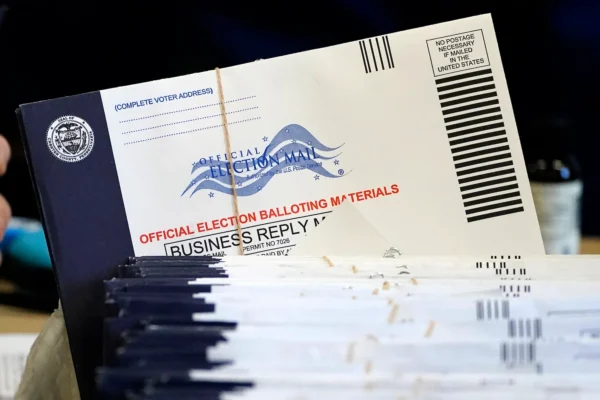
Eligible Philadelphia-area voters who submitted mail ballots in the September 17, 2024 special election only to have their votes set aside because they omitted or miswrote the correct date on their outer return envelope – even though the date is not used for any purpose – sued to have their votes count. Plaintiffs urge the courts to rule that enforcing the irrelevant envelope-dating requirement to disenfranchise eligible voters violates the Pennsylvania Constitution’s Free and Equal Elections Clause.
Explore case
Pennsylvania Supreme Court
Mar 2025
Voting Rights
Baxter v. Philadelphia Board of Elections
Eligible Philadelphia-area voters who submitted mail ballots in the September 17, 2024 special election only to have their votes set aside because they omitted or miswrote the correct date on their outer return envelope – even though the date is not used for any purpose – sued to have their votes count. Plaintiffs urge the courts to rule that enforcing the irrelevant envelope-dating requirement to disenfranchise eligible voters violates the Pennsylvania Constitution’s Free and Equal Elections Clause.
Colorado
Mar 2025
Voting Rights
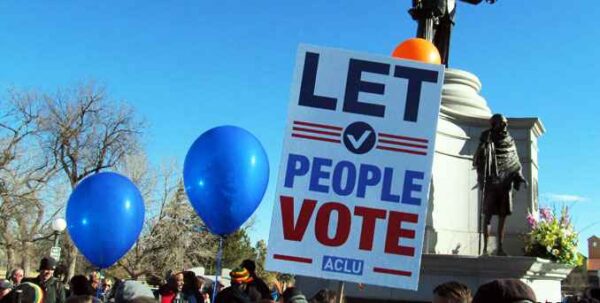
Citizens Project v. City of Colorado Springs
Colorado Springs’s unusually-timed elections suppress voter turnout—disproportionately, among the City’s Black and Hispanic population. This federal court lawsuit challenges the City’s election timing for violating our clients’ right to vote free from denial of abridgment on account of race under the Voting Rights Act of 1965.
Explore case
Colorado
Mar 2025
Voting Rights
Citizens Project v. City of Colorado Springs
Colorado Springs’s unusually-timed elections suppress voter turnout—disproportionately, among the City’s Black and Hispanic population. This federal court lawsuit challenges the City’s election timing for violating our clients’ right to vote free from denial of abridgment on account of race under the Voting Rights Act of 1965.
Colorado Supreme Court
Feb 2025
Voting Rights
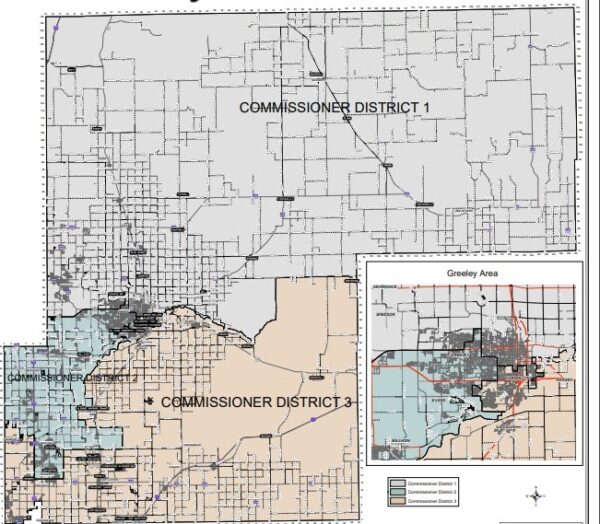
League of Women Voters of Greeley, Weld Cnty. v. Bd. of Cnty. Comm'rs of Weld Cnty.
When drawing its new maps, the Weld County Board of County Commissioners violated Colorado law imposing specific requirements meant to guarantee that county commission districts are drawn transparently and fairly, such that voters are empowered to elect responsive and accountable commissioners. A Colorado district court granted summary judgment to voter plaintiffs who challenged the maps, but the Board appealed the decision, arguing in part that voters lacked standing and a right of action to challenge the unlawful districts.
Explore case
Colorado Supreme Court
Feb 2025
Voting Rights
League of Women Voters of Greeley, Weld Cnty. v. Bd. of Cnty. Comm'rs of Weld Cnty.
When drawing its new maps, the Weld County Board of County Commissioners violated Colorado law imposing specific requirements meant to guarantee that county commission districts are drawn transparently and fairly, such that voters are empowered to elect responsive and accountable commissioners. A Colorado district court granted summary judgment to voter plaintiffs who challenged the maps, but the Board appealed the decision, arguing in part that voters lacked standing and a right of action to challenge the unlawful districts.
New York
Jan 2025
Voting Rights
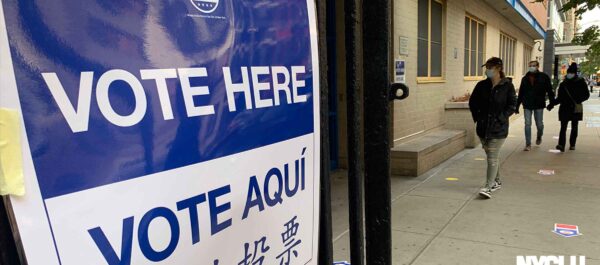
New York Communities for Change v. Nassau County
Voters of color in Nassau County, N.Y., are no strangers to having to organize to ensure their votes count. But in 2023, the county’s Legislature took vote dilution to new heights. In places like Elmont, Freeport, Inwood, Lakeview, South Valley Stream, New Hyde Park, and Uniondale, the Legislature “cracked and packed” communities of color with the effect of squashing their growing electoral power. But the landmark John R. Lewis Voting Rights Act of New York (NYVRA), enacted in 2022, and the New York Municipal Home Rule Law prohibit New York State and localities from diluting the voting strength and political influence of Black, Latino, and Asian residents.
Explore case
New York
Jan 2025
Voting Rights
New York Communities for Change v. Nassau County
Voters of color in Nassau County, N.Y., are no strangers to having to organize to ensure their votes count. But in 2023, the county’s Legislature took vote dilution to new heights. In places like Elmont, Freeport, Inwood, Lakeview, South Valley Stream, New Hyde Park, and Uniondale, the Legislature “cracked and packed” communities of color with the effect of squashing their growing electoral power. But the landmark John R. Lewis Voting Rights Act of New York (NYVRA), enacted in 2022, and the New York Municipal Home Rule Law prohibit New York State and localities from diluting the voting strength and political influence of Black, Latino, and Asian residents.