Fighting Voter Suppression
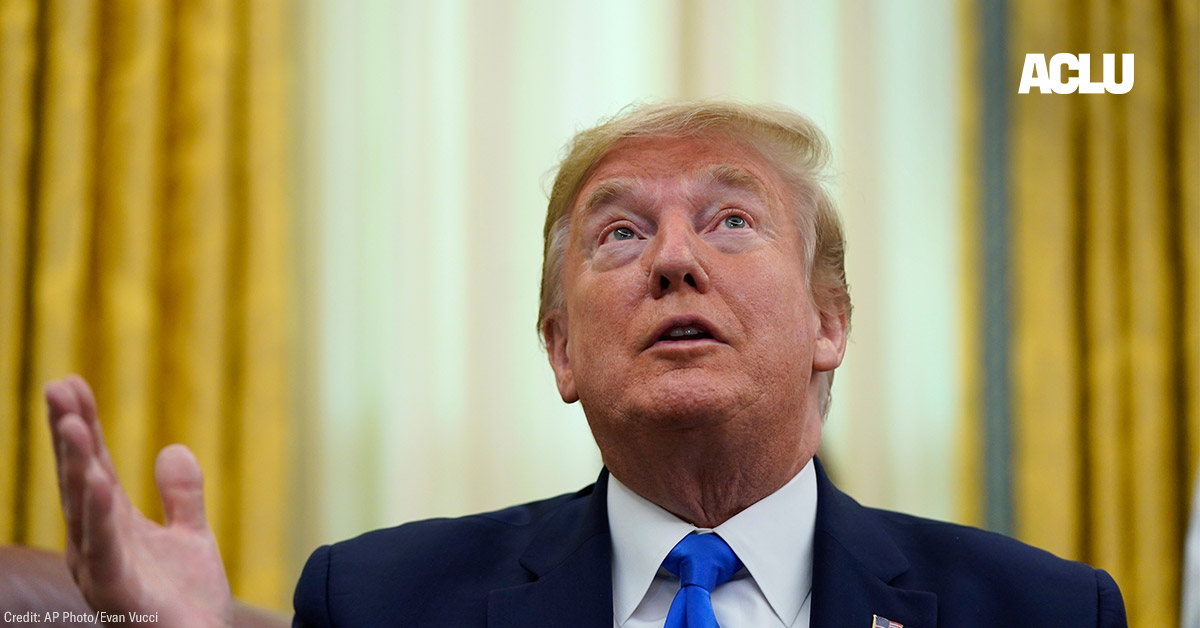
League of Women Voters of Massachusetts v. Trump
On March 31, 2026, President Trump issued a sweeping Executive Order titled "Ensuring Citizen Verification and Integrity in Federal Elections," seeking once again to seize control of election administration from Congress and the states. The Order directs federal agencies to compile lists of U.S. citizens and transmit them to states before every election, directs the U.S. Postal Service -- an independent agency established by Congress -- to create a list of "approved" mail voters, and instructs USPS to refuse to deliver ballots from voters not on that federally created list. If implemented, the Order would threaten the ability of millions of eligible citizens to cast their ballots, particularly military members, overseas citizens, the elderly, recently naturalized citizens, and voters with disabilities who rely on mail voting.
Status: Ongoing
View Case
Learn About Fighting Voter Suppression
Featured
New Hampshire
May 2026
Fighting Voter Suppression
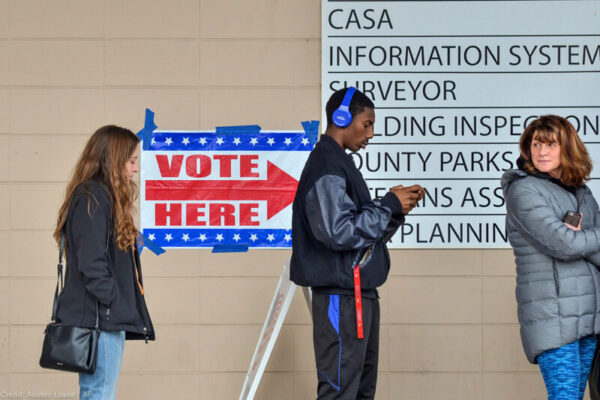
Coalition for Open Democracy v. Scanlan
This lawsuit challenges HB 1569, a new law that will make New Hampshire the only state to require every person to produce documentary proof of citizenship when they register to vote for both state and federal elections. It also challenges HB 1569’s elimination a preexisting protection for voters—namely, an affidavit option that allowed voters who faced surprise challenges to their eligibility at the polls to swear to their qualifications and cast a ballot. Accordingly, HB 1569 violates the First and Fourteenth Amendments of the U.S. Constitution by placing substantial burdens on New Hampshirites at all stages of the voting process, and will arbitrarily disenfranchise hundreds, if not thousands of qualified voters.
Washington, D.C.
Oct 2025
Fighting Voter Suppression
League of Women Voters Education Fund v. Trump
On March 25, 2025, in a sweeping and unprecedented Executive Order, President Trump attempted to usurp the power to regulate federal elections from Congress and the States. Among other things, the Executive Order directs the Election Assistance Commission—an agency that Congress specifically established to be bipartisan and independent—to require voters to show a passport or other citizenship documentation in order to register to vote in federal elections. If implemented, the Executive Order would threaten the ability of millions of eligible Americans to register and vote and upend the administration of federal elections.
On behalf of leading voter registration organizations and advocacy organizations, the ACLU and co-counsel filed a lawsuit to block the Executive Order as an unconstitutional power grab.
All Cases
101 Fighting Voter Suppression Cases
New Jersey
Mar 2026
Fighting Voter Suppression
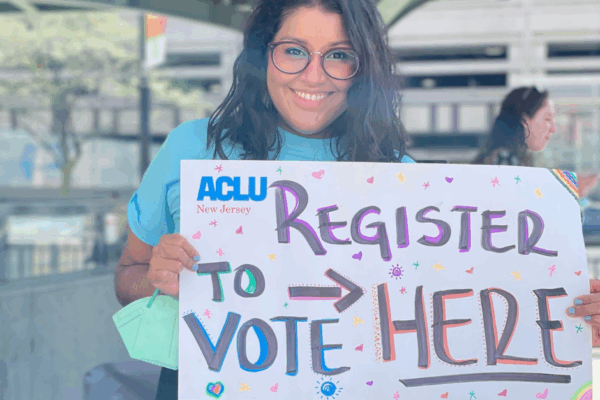
United States v. Caldwell
The Department of Justice (DOJ) sued the State of New Jersey, seeking private, confidential voter data. DOJ’s efforts appear to be part of an effort to build a national voter database without congressional authorization and to improperly question the validity of state voter rolls.
Explore case
New Jersey
Mar 2026
Fighting Voter Suppression
United States v. Caldwell
The Department of Justice (DOJ) sued the State of New Jersey, seeking private, confidential voter data. DOJ’s efforts appear to be part of an effort to build a national voter database without congressional authorization and to improperly question the validity of state voter rolls.
Georgia
Mar 2026
Fighting Voter Suppression
United States v. Raffensperger
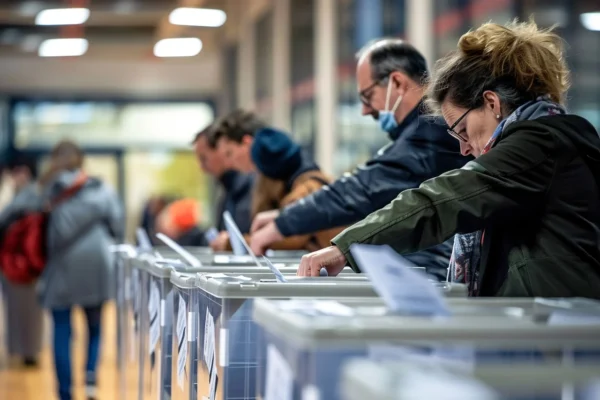
The Department of Justice sued Georgia, demanding the state produce its full, unredacted voter file, which contains highly sensitive and personal data on every voter in the state. This suit appears to be part of the DOJ's efforts to build a national voter database without congressional authorization, improperly question the validity of state voter rolls, and intimidate eligible voters in Georgia and across the country.
Explore case
Georgia
Mar 2026
Fighting Voter Suppression
United States v. Raffensperger
The Department of Justice sued Georgia, demanding the state produce its full, unredacted voter file, which contains highly sensitive and personal data on every voter in the state. This suit appears to be part of the DOJ's efforts to build a national voter database without congressional authorization, improperly question the validity of state voter rolls, and intimidate eligible voters in Georgia and across the country.
Minnesota
Feb 2026
Fighting Voter Suppression
United States v. Simon
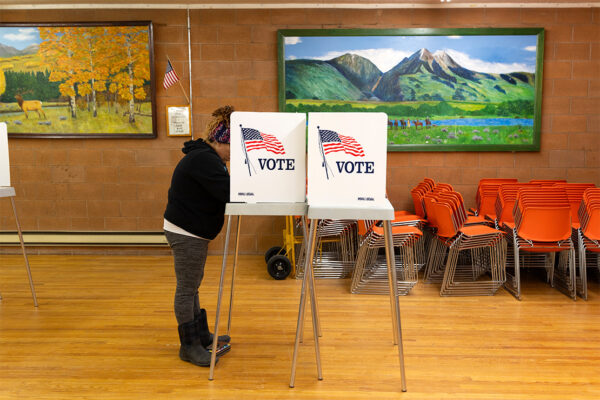
Representing the League of Women Voters Minnesota, Common Cause, and two Minnesota voters with past felony convictions, the ACLU Voting Rights Project and ACLU of Minnesota have filed a motion to intervene in a federal lawsuit over the federal government’s demand that Minnesota turn over its entire voter registration rolls, including with voters’ sensitive personal data such as drivers’ license numbers and partial social security numbers.
Explore case
Minnesota
Feb 2026
Fighting Voter Suppression
United States v. Simon
Representing the League of Women Voters Minnesota, Common Cause, and two Minnesota voters with past felony convictions, the ACLU Voting Rights Project and ACLU of Minnesota have filed a motion to intervene in a federal lawsuit over the federal government’s demand that Minnesota turn over its entire voter registration rolls, including with voters’ sensitive personal data such as drivers’ license numbers and partial social security numbers.
Georgia
Feb 2026
Fighting Voter Suppression
Pitts v. United States (Amicus)
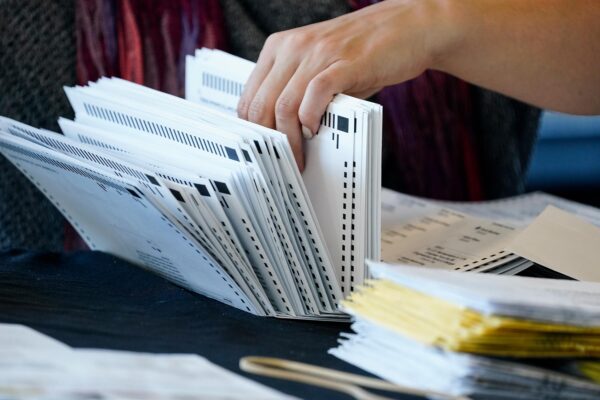
The FBI raided Fulton County, Georgia, seizing ballots and other records from the 2020 election. This unprecedented seizure is a continuation of yearslong efforts to challenge Georgia's 2020 election results, now aided by federal law enforcement. Fulton County is fighting back, suing for the return of the records.
Explore case
Georgia
Feb 2026
Fighting Voter Suppression
Pitts v. United States (Amicus)
The FBI raided Fulton County, Georgia, seizing ballots and other records from the 2020 election. This unprecedented seizure is a continuation of yearslong efforts to challenge Georgia's 2020 election results, now aided by federal law enforcement. Fulton County is fighting back, suing for the return of the records.
Florida
Feb 2026
Fighting Voter Suppression
Hispanic Federation v. Byrd
Of all 50 states, Florida ranks 47th in percentage of its eligible citizens who are registered to vote. Yet, in May 2023, Florida Governor Ron DeSantis signed SB 7050, which bars any noncitizen — regardless of lawful residence status — from working or volunteering for third-party voter registration organizations (3PVROs) who register eligible Floridians to vote. In practice, the law imposes a $50,000 fine on a 3PVRO for each noncitizen who engages in voter-registration work on a 3PVRO’s behalf. This law would silence and put out of business countless community-based groups that rely on both citizens and noncitizens to help eligible voters in their communities participate in their democracy.
Explore case
Florida
Feb 2026
Fighting Voter Suppression
Hispanic Federation v. Byrd
Of all 50 states, Florida ranks 47th in percentage of its eligible citizens who are registered to vote. Yet, in May 2023, Florida Governor Ron DeSantis signed SB 7050, which bars any noncitizen — regardless of lawful residence status — from working or volunteering for third-party voter registration organizations (3PVROs) who register eligible Floridians to vote. In practice, the law imposes a $50,000 fine on a 3PVRO for each noncitizen who engages in voter-registration work on a 3PVRO’s behalf. This law would silence and put out of business countless community-based groups that rely on both citizens and noncitizens to help eligible voters in their communities participate in their democracy.