Washington, D.C.

Common Cause v. U.S. Department of Justice
The U.S. Department of Justice has launched an unprecedented and unlawful effort to invade the privacy of millions of American voters and threaten their right to vote. It has demanded that every state and the District of Columbia turn over their entire voter database, including Social Security Numbers, political party affiliation, and voter participation history. And at least a dozen states have complied, submitting their voters’ information for federal review. But the Department of Justice has no authority to dictate when a voter registration should be cancelled, and we are suing to stop the federal government’s overreach and ensure that voters’ information remains secure and free from unlawful interference.
Status: Ongoing
View Case
Visit ACLU of the District of Columbia
Featured
Washington, D.C.
Oct 2025
Voting Rights
League of Women Voters Education Fund v. Trump
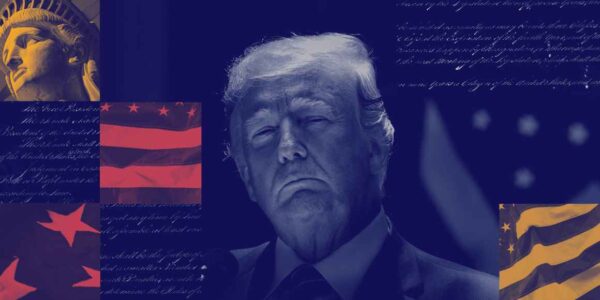
On March 25, 2025, in a sweeping and unprecedented Executive Order, President Trump attempted to usurp the power to regulate federal elections from Congress and the States. Among other things, the Executive Order directs the Election Assistance Commission—an agency that Congress specifically established to be bipartisan and independent—to require voters to show a passport or other citizenship documentation in order to register to vote in federal elections. If implemented, the Executive Order would threaten the ability of millions of eligible Americans to register and vote and upend the administration of federal elections.
On behalf of leading voter registration organizations and advocacy organizations, the ACLU and co-counsel filed a lawsuit to block the Executive Order as an unconstitutional power grab.
Washington, D.C.
Jun 2019
Human Rights
Weir v. U.S.
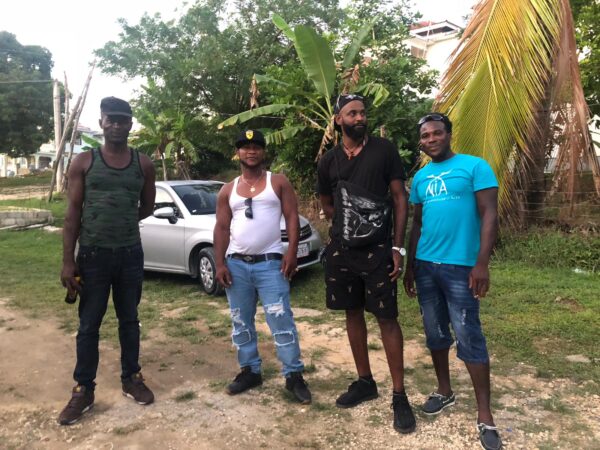
The American Civil Liberties Union filed a federal lawsuit in June 2019 against the United States and the head of the U.S. Coast Guard on behalf of four Jamaican fishermen, who were forcibly removed from their fishing boat and detained for over a month at sea on four U.S. Coast Guard ships in patently inhumane conditions.
All Cases
27 Washington, D.C. Cases

Washington, D.C.
Nov 2026
LGBTQ Rights
Kingdom v. Trump
Three transgender people currently incarcerated in federal custody have filed a class action lawsuit against the Trump Administration and the Federal Bureau of Prisons (BOP) challenging an Executive Order and new BOP policies prohibiting their access to gender-affirming care. The class action lawsuit was filed in federal court in Washington, D.C., on behalf of approximately 2,000 transgender people incarcerated in federal prisons across the United States.
Explore case
Washington, D.C.
Nov 2026
LGBTQ Rights
Kingdom v. Trump
Three transgender people currently incarcerated in federal custody have filed a class action lawsuit against the Trump Administration and the Federal Bureau of Prisons (BOP) challenging an Executive Order and new BOP policies prohibiting their access to gender-affirming care. The class action lawsuit was filed in federal court in Washington, D.C., on behalf of approximately 2,000 transgender people incarcerated in federal prisons across the United States.
Washington, D.C.
Oct 2026
Voting Rights
Comments of the ACLU on "Decennial Census of the Population of Americans" (Proposed Residence Criteria and Proposed Regulations for Demographic Questions)
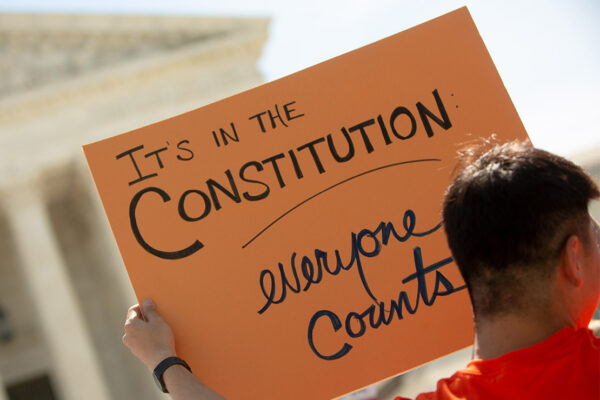
The Census Bureau has proposed rules for the 2030 Census that would remove millions of noncitizens from the population count used to divide congressional seats among the states. This includes many noncitizens living in the United States lawfully. The rules would also change where everyone else is counted and bar the census from asking about race, ethnicity, and sexual orientation. The Constitution requires counting the “whole number of persons in each State,” and every census since 1790 has counted people where they live, regardless of citizenship. The proposal would distort political representation, weaken the count’s accuracy, and eliminate data needed to enforce the Voting Rights Act and other civil rights laws. The ALCU is urging the Bureau to withdraw the rule entirely.
Explore case
Washington, D.C.
Oct 2026
Voting Rights
Comments of the ACLU on "Decennial Census of the Population of Americans" (Proposed Residence Criteria and Proposed Regulations for Demographic Questions)
The Census Bureau has proposed rules for the 2030 Census that would remove millions of noncitizens from the population count used to divide congressional seats among the states. This includes many noncitizens living in the United States lawfully. The rules would also change where everyone else is counted and bar the census from asking about race, ethnicity, and sexual orientation. The Constitution requires counting the “whole number of persons in each State,” and every census since 1790 has counted people where they live, regardless of citizenship. The proposal would distort political representation, weaken the count’s accuracy, and eliminate data needed to enforce the Voting Rights Act and other civil rights laws. The ALCU is urging the Bureau to withdraw the rule entirely.
Washington, D.C.
Oct 2026
Free Speech
Privacy & Technology
In re Appeal From Order Denying Motion to Quash Grand Jury Subpoena in Case No. 1:26-GJ-00022-JEB
Explore case
Washington, D.C.
Oct 2026
Free Speech
Privacy & Technology
In re Appeal From Order Denying Motion to Quash Grand Jury Subpoena in Case No. 1:26-GJ-00022-JEB
Washington, D.C.
Oct 2026
Racial Justice
AAER v. HSF
The Hispanic Scholarship Fund’s (HSF) ability to award scholarships to Hispanic students has been challenged by the American Alliance for Equal Rights. The plaintiff alleges that HSF’s scholarships (1) constitute a contract between HSF and the awardees and (2) discriminate against qualified, non-Hispanic students. We represent HSF to defend their right to make higher education accessible to students by supporting them with charitable resources and opportunities.
Explore case
Washington, D.C.
Oct 2026
Racial Justice
AAER v. HSF
The Hispanic Scholarship Fund’s (HSF) ability to award scholarships to Hispanic students has been challenged by the American Alliance for Equal Rights. The plaintiff alleges that HSF’s scholarships (1) constitute a contract between HSF and the awardees and (2) discriminate against qualified, non-Hispanic students. We represent HSF to defend their right to make higher education accessible to students by supporting them with charitable resources and opportunities.
Washington, D.C.
Sep 2026
Immigrants' Rights
Nathan v. Trump
Explore case